Learn

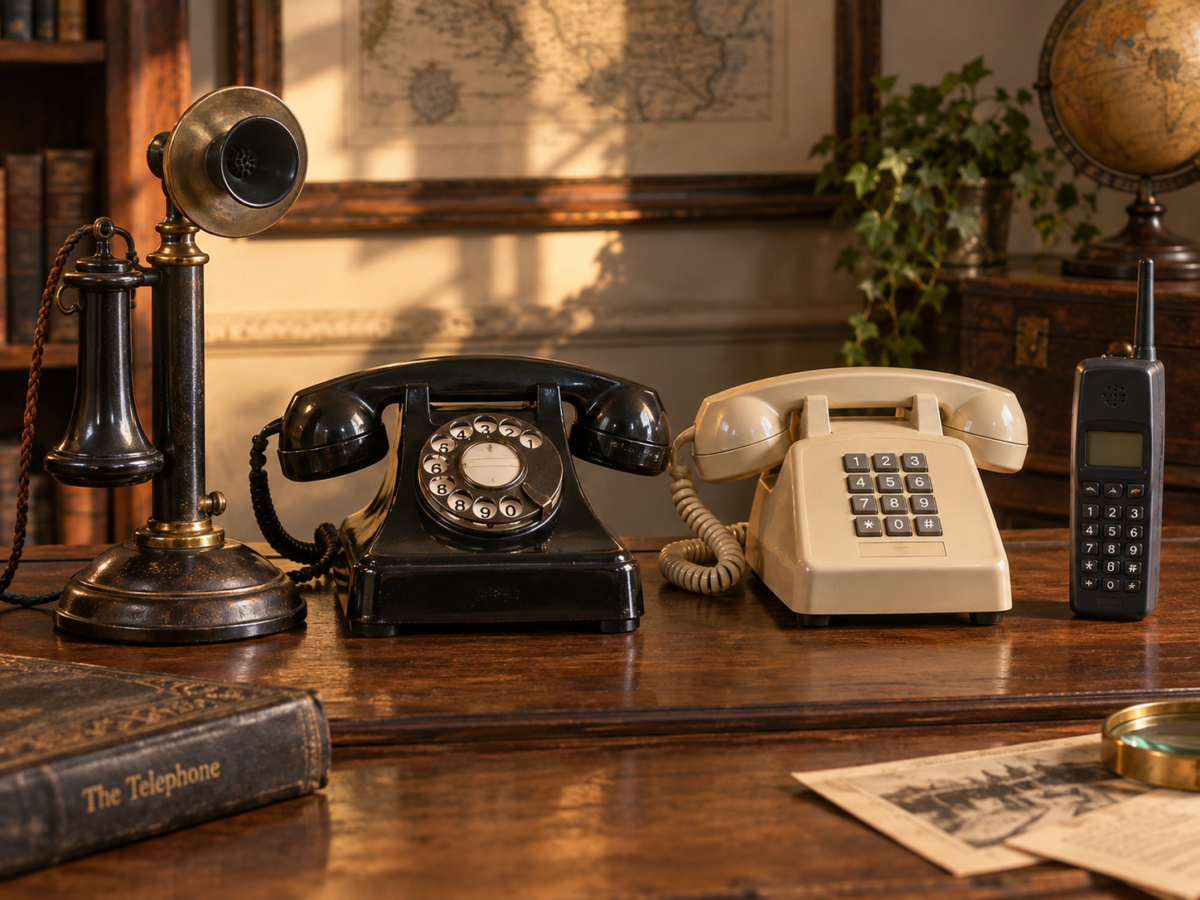
Dialing into History

The word dial has outlived the object that gave it meaning.

For much of the twentieth century, dialing a telephone meant exactly that: placing a finger into a circular wheel, turning it to a stop, and letting a spring-driven mechanism click back into place. Today we still “dial” a number even when we tap a glass screen, choose a saved contact, or simply tell a digital assistant whom we want to call.

That lingering word is a small reminder of how deeply telephone technology became woven into everyday life.

Across roughly a century and a half, the act of reaching another person has moved from asking an operator for assistance to turning a rotary dial, pressing a keypad, selecting a name from a digital address book, and touching an icon on a smartphone. Each stage left behind its own objects, sounds, habits, and collectibles.

Continue reading “Dialing into History”
Mobile Phones and Digital Revolution

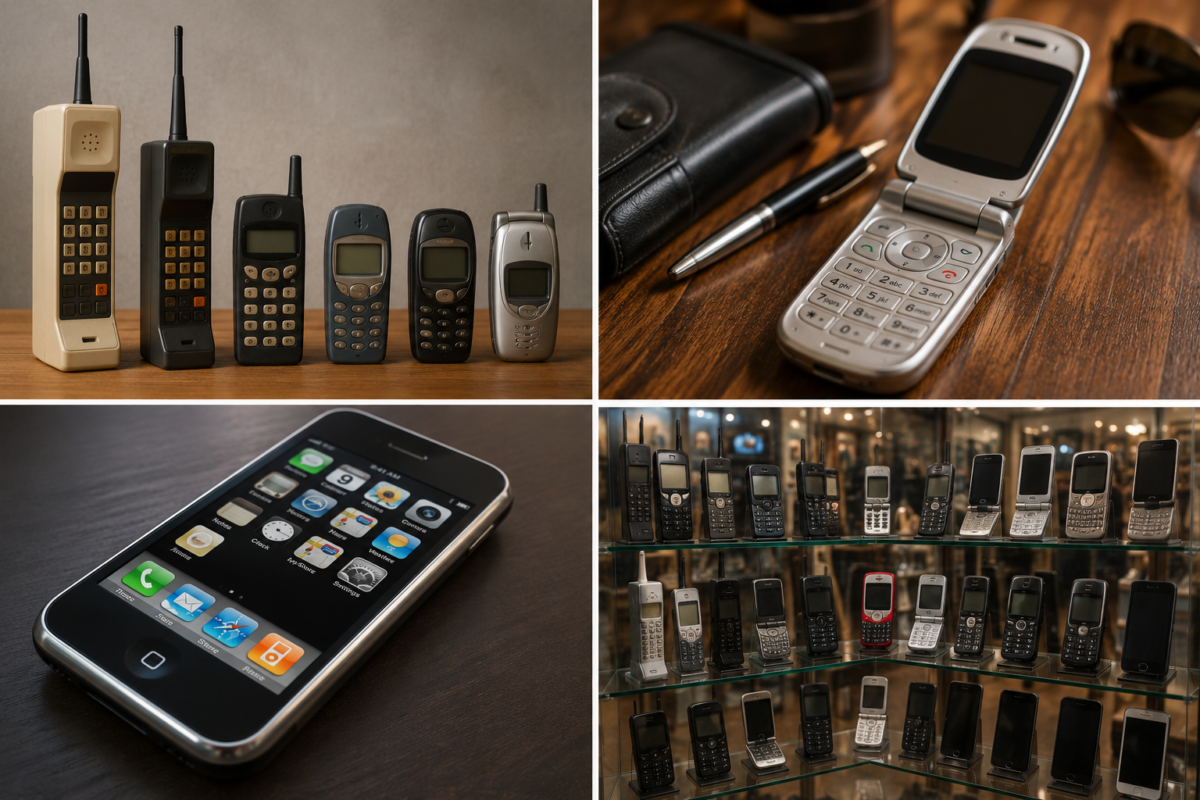
For most of telephone history, the telephone belonged to a place. It sat on a desk, hung on a kitchen wall, waited beside a bed, or stood inside a booth on a street corner. Even when long-distance service allowed voices to travel hundreds or thousands of miles, the instrument itself remained attached to a building by a wire.

The mobile phone changed that relationship completely.

In only a few decades, a telephone that began as expensive, specialized radio equipment became an ordinary personal possession. Along the way, mobile phones shrank from hefty handsets into pocket-sized devices, changed from analog to digital communication, learned to send text messages, absorbed the functions of organizers and cameras, and eventually became handheld computers that also happened to make telephone calls.

Continue reading “Mobile Phones and Digital Revolution”

Rotary Phones and Mid-Century Designs

For generations, making a telephone call involved a small ritual. Lift the receiver. Wait for the dial tone. Place a finger into the correct hole. Turn the dial until it struck the metal stop. Release it and listen to the mechanism click its way back into place.

Then repeat.

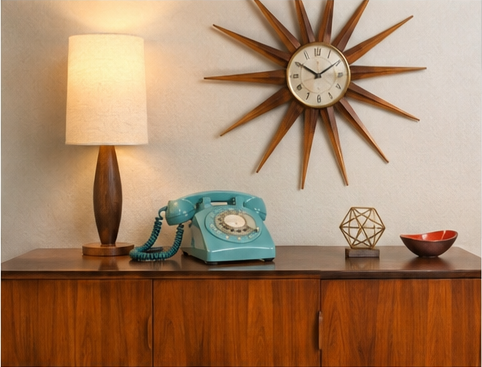
The rotary telephone was slower than the push-button phones that followed, but that deliberate motion became one of the most recognizable sounds and gestures of twentieth-century life. By the middle of the century, the telephone was also changing physically. It was no longer simply a piece of communications equipment assigned a place in the hallway or office. Industrial designers were turning it into something intended to belong in the modern home.

Continue reading “Rotary Phones and Mid-Century Designs”

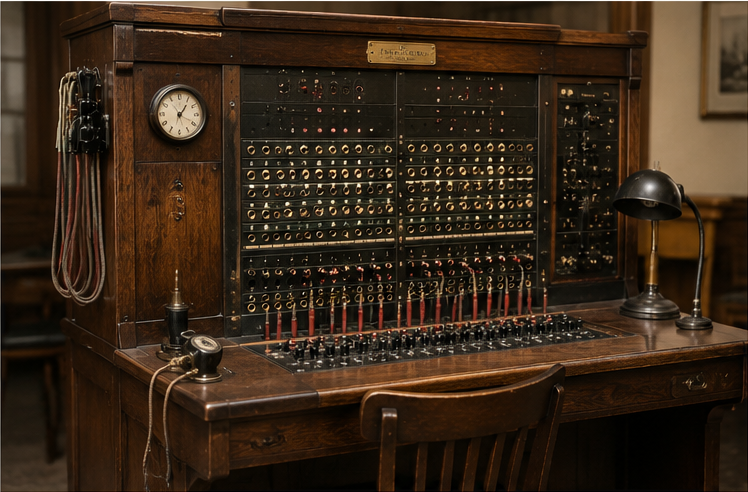
Switchboards and Operator Memorabilia

The invention of the telephone solved one extraordinary problem: it allowed the human voice to travel over a wire. Almost immediately, however, another problem appeared. If hundreds or thousands of people owned telephones, how could any one of them reach any of the others?

Before automatic dialing, the solution was decidedly human. A caller contacted a central telephone exchange, where an operator physically connected one line to another using a switchboard.

For decades, these operators formed the living center of the telephone network. Their work connected homes with businesses, doctors with patients, travelers with hotels, and eventually cities with one another. The switchboard also created an entirely new category of material culture, leaving collectors with everything from enormous wooden exchanges to plugs, headsets, employee badges, photographs, manuals, directories, and other pieces of operator history.

Continue reading “Switchboards and Operator Memorabilia”

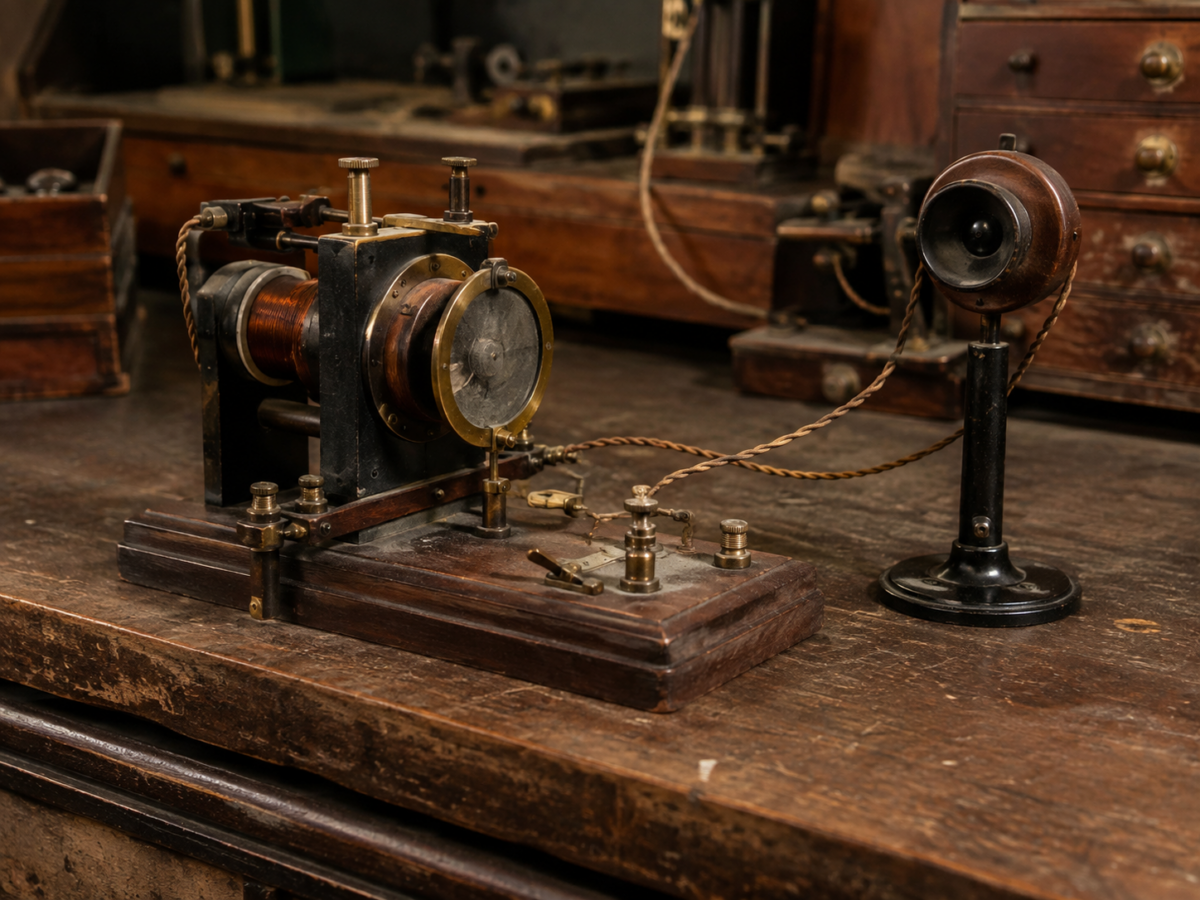
The Birth of the Telephone

For most of human history, a voice traveled only as far as a person could shout. By the middle of the nineteenth century, the electric telegraph had changed long-distance communication, but it still translated information into coded signals that had to be sent, received, and interpreted. The telephone promised something more startling: the ability to send the human voice itself through a wire.

That breakthrough is most closely associated with Alexander Graham Bell and the year 1876, but the telephone did not appear from a single flash of inspiration. It grew from decades of experiments in electricity, acoustics, telegraphy, and speech. Bell’s success was decisive, yet it emerged from a crowded field of inventors trying to solve variations of the same problem.

Continue reading “The Birth of the Telephone”

Rolling History

Horse-drawn carriages have a way of slowing the imagination down. They ask us to think about travel before engines, before paved highways, before the quick turn of a key and the assumption that distance is easy. A carriage belonged to a world where transportation meant planning, care, skill, weather, road conditions, animal power, and human craftsmanship all working together.

Across this series, we have looked at carriages as transportation, craftsmanship, technology, transition, and preservation. Now we end by stepping back and asking why they still matter to collectors today. Because carriages are not only beautiful old vehicles. They are rolling history—objects that carried people, goods, status, labor, ceremony, and memory through everyday life.

For collectors, the carriage world offers many entry points. You might never own a full-size brougham, buggy, surrey, or wagon, but you can still collect the story through lamps, trade catalogs, photographs, harness brass, maker’s plates, lap robes, postcards, and local-history ephemera. The carriage era was large, layered, and full of material culture. That is what makes it so rewarding.

Continue reading “Rolling History”

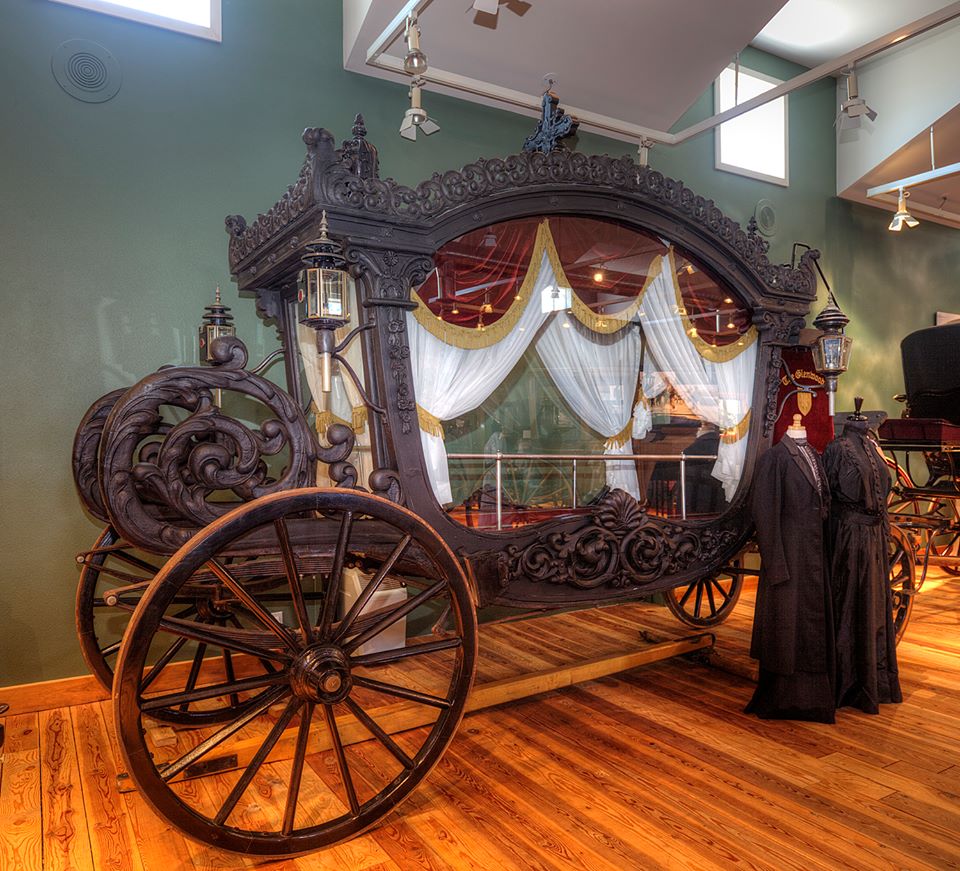
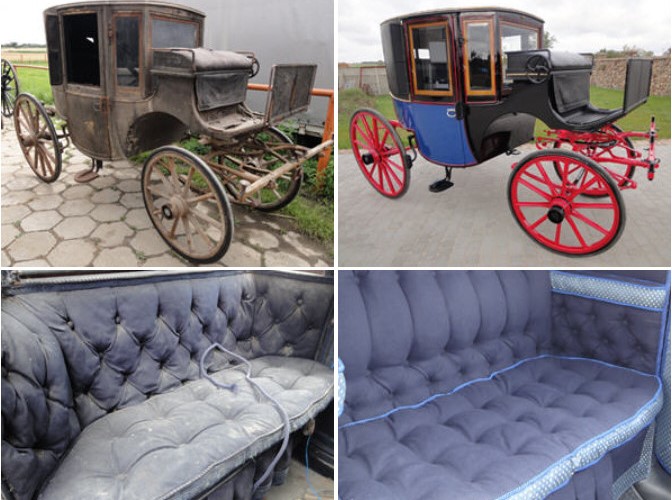
Restoring and Displaying Carriages

A horse-drawn carriage has presence. Even standing still, it feels ready for motion: wheels angled toward the road, shafts waiting for a horse, steps polished by use, lamps set like watchful eyes. But when a carriage survives into the present, it is more than a vehicle. It is also a large, fragile, multi-material antique—wood, iron, steel, leather, fabric, glass, paint, varnish, and sometimes decorative trim all aging at different speeds.

That makes restoration and display both exciting and complicated. A carriage can be made beautiful again, but it can also be over-restored until the original story disappears. For collectors, museums, dealers, and historic-property owners, the real goal is balance: preserve what is authentic, stabilize what is weak, restore only with purpose, and display the carriage in a way that lets people understand it without putting it at risk.

Continue reading “Restoring and Displaying Carriages”

The End of Carriage Era

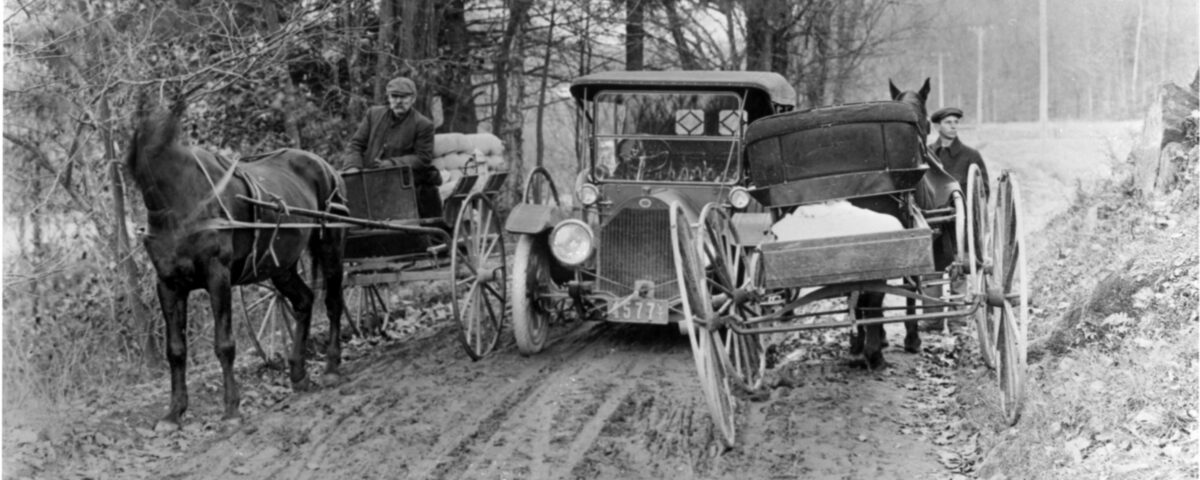
The carriage era did not end with one dramatic day when the horses disappeared and the automobiles took over. For a while, the streets were a noisy mix: carriages, carts, wagons, streetcars, bicycles, pedestrians, and the occasional motorcar all competing for space. In that in-between period, the old world and the new one literally shared the road.

For collectors, that transition is one of the most interesting parts of horse-drawn carriage history. It explains why some carriage companies became automobile companies, why early cars were often called “horseless carriages,” and why carriage-era antiques can feel both old-fashioned and surprisingly connected to the modern world.

The end of the carriage era was not just the replacement of one vehicle with another. It was the fading of an entire system—stables, blacksmiths, wheelwrights, harness makers, coachbuilders, liveries, carriage lamps, lap robes, and all the skills and objects that kept horse-drawn transportation moving.

Continue reading “The End of Carriage Era”

Carriage Makers and Craftsmanship

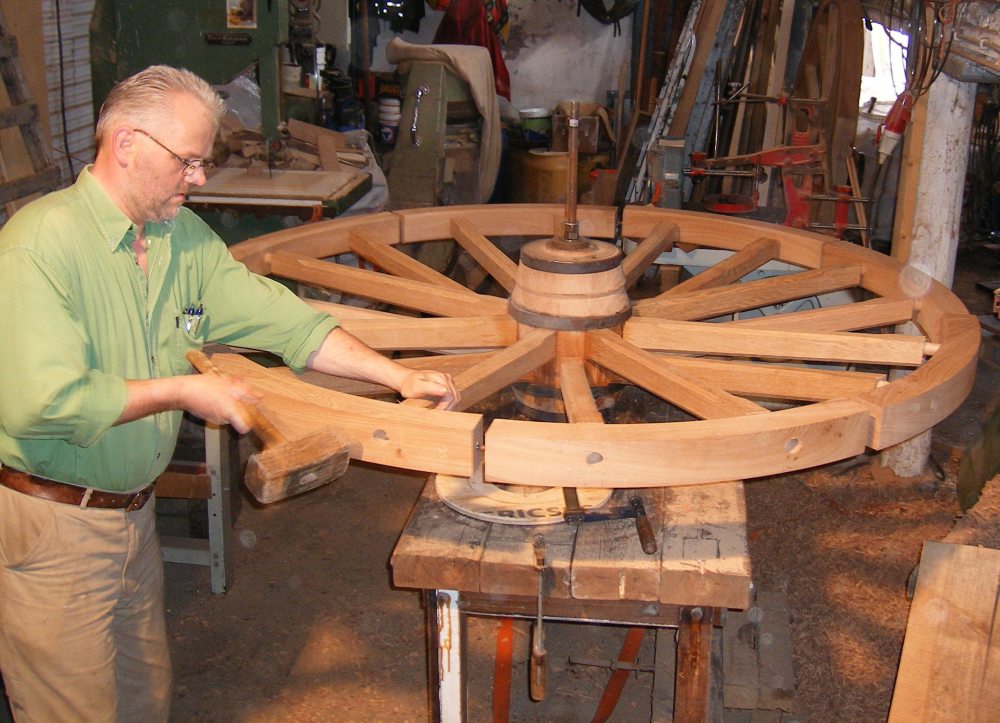
A horse-drawn carriage may look graceful from a distance, but up close it becomes something much more complicated: wood shaped for strength, iron and steel fitted for movement, leather and fabric arranged for comfort, paint and striping applied with remarkable control, and wheels built to survive road after road. A good carriage was not simply “built.” It was engineered, balanced, trimmed, finished, and fitted to the life it was meant to serve.

That is why carriage makers deserve their own place in transportation history. Before automobile factories became symbols of modern industry, coachbuilders, wagon makers, wheelwrights, blacksmiths, painters, trimmers, and harness specialists formed an entire world of skilled trades. Their work carried families, businesses, travelers, mail, goods, and public life through the carriage era.

For collectors, understanding the craftsmanship behind carriages makes the objects more meaningful. A carriage lamp, a maker’s plate, a hub, or a trade catalog is not just an accessory—it is a clue to a highly skilled system of making.

Continue reading “Carriage Makers and Craftsmanship”

Transportation Before the Automobile

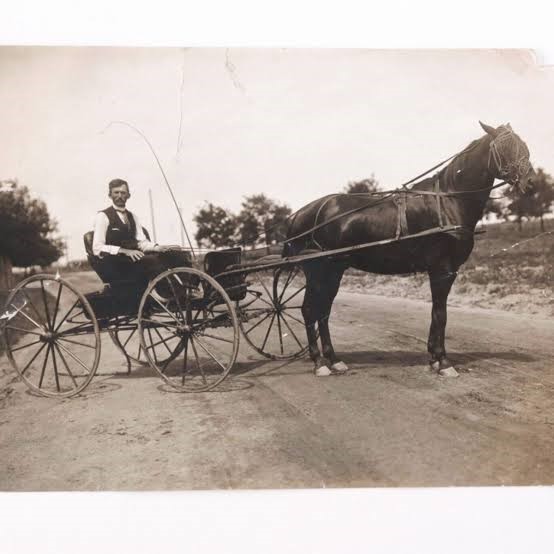
Before the automobile became an everyday sight, roads had their own rhythm: hoofbeats, iron-rimmed wheels, creaking springs, harness bells, and the slow choreography of horses, drivers, passengers, and cargo. Horse-drawn transportation was not one single thing. It was an entire world of vehicles built for work, travel, status, errands, public transit, family outings, and ceremony.

For collectors, horse-drawn carriages offer a fascinating look at how people moved through daily life before cars changed the landscape. A carriage was not just a way to get somewhere. It could show wealth, occupation, region, fashion, and technology. A city cab, a family surrey, a farm wagon, and a gentleman’s coach all tell very different stories.

This series begins with the big picture: what transportation looked like before the automobile, why carriages mattered, and what collectors should notice when they encounter carriage-related antiques today.

Continue reading “Transportation Before the Automobile”

©2025 Dear June Collectibles. All Rights Reserved.

Oh hi there 👋
It’s nice to meet you.

Sign up to receive awesome content in your inbox, every Friday morning.

(If you register as a user, you can comment on posts AND subscribe to the newsletter...two birds one stone)

We don’t spam! Read our Privacy Policy for more info.