
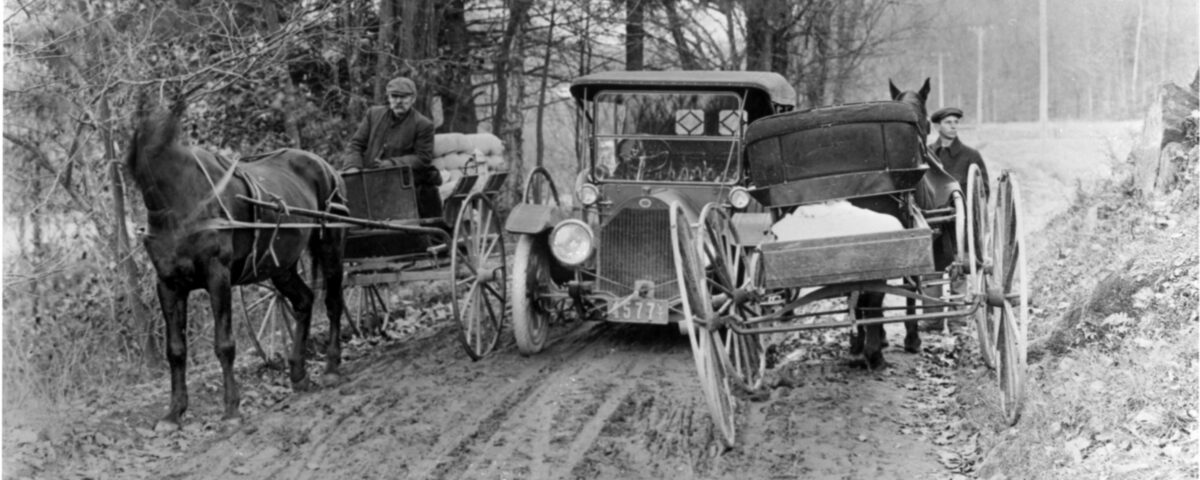
The carriage era did not end with one dramatic day when the horses disappeared and the automobiles took over. For a while, the streets were a noisy mix: carriages, carts, wagons, streetcars, bicycles, pedestrians, and the occasional motorcar all competing for space. In that in-between period, the old world and the new one literally shared the road.
For collectors, that transition is one of the most interesting parts of horse-drawn carriage history. It explains why some carriage companies became automobile companies, why early cars were often called “horseless carriages,” and why carriage-era antiques can feel both old-fashioned and surprisingly connected to the modern world.
The end of the carriage era was not just the replacement of one vehicle with another. It was the fading of an entire system—stables, blacksmiths, wheelwrights, harness makers, coachbuilders, liveries, carriage lamps, lap robes, and all the skills and objects that kept horse-drawn transportation moving.
The Carriage Era Was Already Changing
Transportation historians often use the term “Carriage Era” for the period from the late 17th century into the first decades of the 20th century, when horse-drawn vehicles were central to road travel and urban movement. The Henry Ford notes that as the 19th century advanced, industrialization affected the production, design, and use of horse-drawn vehicles, creating a huge range of styles for different needs and budgets.
By the late 1800s, carriages and wagons were not primitive leftovers. They were highly developed vehicles. There were elegant private coaches, light buggies, commercial delivery wagons, omnibuses, stagecoaches, passenger wagons, horse railway cars, and many specialized forms in between. In many ways, the carriage world had already become as varied as the automobile market would later become.
That is part of what makes the ending so fascinating. The carriage did not vanish because it had failed as a design. It was overtaken by a new technology that promised speed, independence, less animal upkeep, and eventually mass production.
The Urban Horse Problem
In cities, horses were essential—but they were also a serious practical problem. Before automobiles, American cities relied on horses and horse-drawn vehicles to move people, freight, money, and information. By the 1840s, American cities were filled with horse-drawn omnibuses, street railways, stagecoaches, and delivery vehicles.
The scale was enormous. The Henry Ford notes that as late as 1900, Manhattan had about 130,000 horses, Chicago had about 74,000, Philadelphia about 51,000, and St. Louis about 32,000. Those animals made city life possible, but they also created manure, urine, dead-animal removal problems, traffic accidents, disease concerns, and stable costs.
To modern eyes, the automobile does not seem like a “clean” solution, but at the time many city residents saw motor vehicles and electric streetcars as a way to reduce the daily mess and burden of horse-powered streets. The transition was not simply about wanting something new. It was also about solving problems created by depending on thousands of animals in crowded urban spaces.
Electric Streetcars and Motor Vehicles Changed City Streets
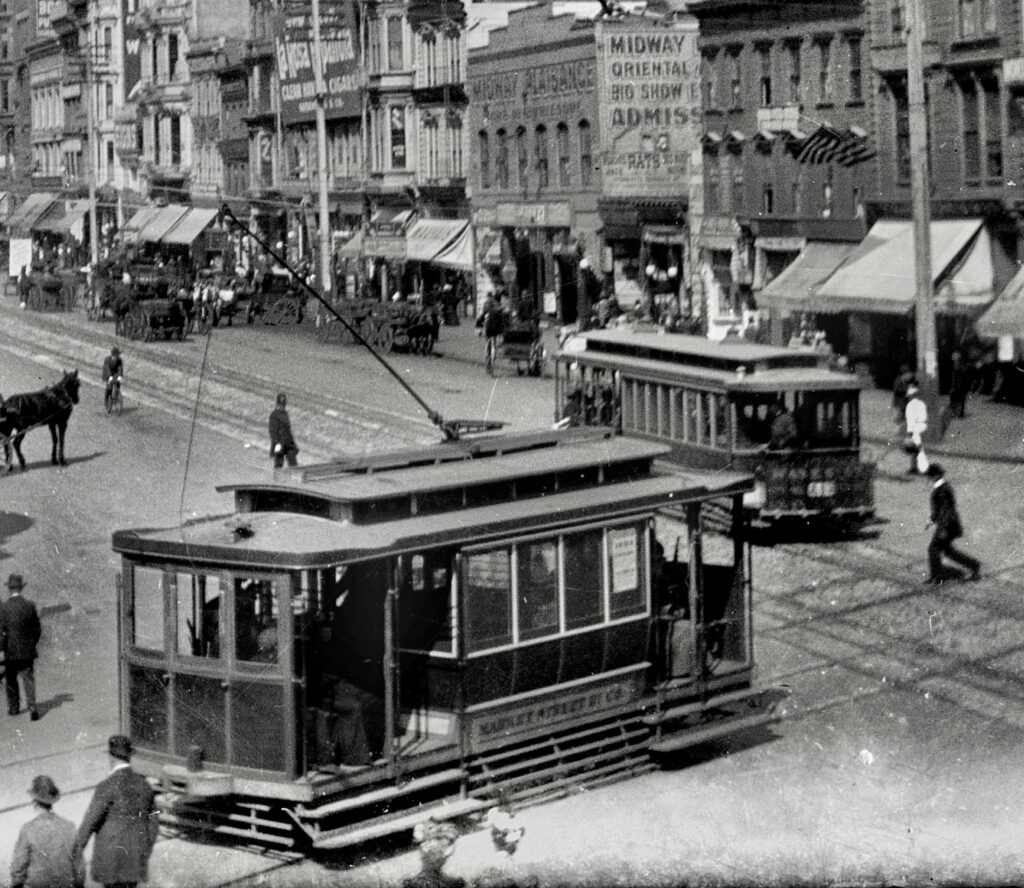
The automobile was not the only force pushing horses out of cities. Electric streetcars were already replacing horse-powered street railways in many places before cars became dominant. The Henry Ford summarizes the shift directly: the combination of electric streetcars and gasoline-powered motor vehicles drove the majority of horses from cities.
That matters because the “end of the carriage era” was really several transitions happening at once:
- public transit moved from horse power to electric power
- delivery work gradually shifted toward motor trucks
- private travel moved toward automobiles
- road expectations changed as motor vehicles became more common
- carriage businesses had to adapt, specialize, or close
The horse did not disappear from every place at once. Rural areas, farms, ceremonial uses, and specialized trades continued using horses longer than busy cities did. But in terms of everyday urban transportation, the shift was decisive.
The Automobile Becomes Practical
Early automobiles were expensive, experimental, and not always trusted. Some looked very much like carriages with engines added, which is why “horseless carriage” made sense as a description. But automobiles improved quickly, and the public began to see them not as curiosities, but as practical transportation.
The Ford Model T became one of the strongest symbols of that shift. Ford introduced the Model T in 1908, and Ford describes it as affordable, simple to operate, and durable. Its mass production and moving assembly-line manufacture helped reduce cost and bring automobile ownership within reach for many buyers.
The numbers tell the story. Ford states that more than 15 million Model Ts were built and sold, and production ended in 1927. By the early 1920s, Ford says more than half of the registered automobiles in the world were Fords.
Collectors should be careful not to treat the Model T as the only reason carriages faded, but it is impossible to ignore its role. The Model T helped make the automobile ordinary—and once cars became ordinary, carriage culture could no longer remain the center of transportation life.
What Happened to the Carriage Makers?
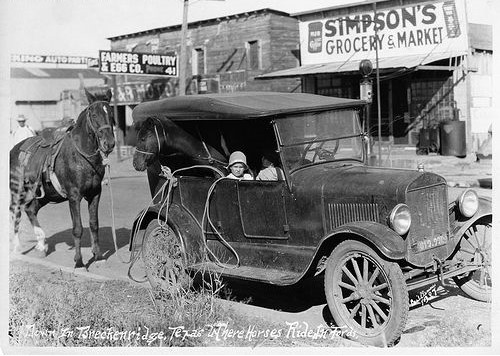
Some carriage makers disappeared. Some stayed in repair work or related trades. Some shifted into automobile bodies, wagons, trucks, or parts. The early automobile industry drew heavily on carriage-making knowledge because coachbuilders already understood bodies, wheels, springs, upholstery, paint, trim, and vehicle proportion.
Studebaker is one of the best-known examples of this transition. The Studebaker National Museum records that Studebaker discontinued all horse-drawn vehicle production in 1920 and began transferring automobile production from Detroit to South Bend.
That moment shows how closely the two eras overlapped. A company could begin in wagons and carriages, then carry its manufacturing experience into automobiles. For collectors, this overlap is valuable because it connects carriage ephemera and automobile ephemera. Old trade catalogs, maker plates, advertising, photographs, and business records can all show a company standing with one foot in each world.
Carriages Did Not Vanish Overnight
Even after automobiles became more common, horse-drawn vehicles continued in many settings. Farmers still used wagons. Delivery and service vehicles lingered where motor trucks were expensive or impractical. Ceremonial carriages remained useful for parades, weddings, funerals, public events, and tourism. In some communities, horse-drawn transportation never fully disappeared.
This is why carriage-era antiques can appear with surprisingly late dates. A wagon or harness piece from the 1920s or 1930s is not automatically “too late” to matter. It may represent the tail end of everyday working horse culture or a specialized use that continued after cars became common.
Collectors should think in terms of transition, not a hard stop.
What Collectors See From the Transition Years
The end of the carriage era produced a rich field of collectibles because old and new transportation overlapped.
Watch for:
- carriage maker trade catalogs advertising both horse-drawn and motor-related products
- photographs showing streets with both carriages and automobiles
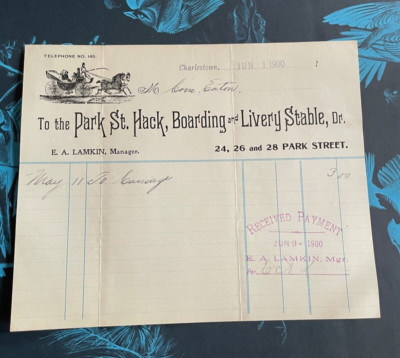
- livery stable paper from the early automobile period
- carriage lamps converted or repurposed
- wagon and carriage maker advertising
- early automobile materials using carriage language
- harness, lap robes, and carriage accessories sold into the early 20th century
- postcards showing “old vs. new” transportation scenes
These pieces are especially interesting because they capture cultural adjustment. People were not only changing vehicles. They were changing habits: how they shopped, commuted, traveled, delivered goods, maintained equipment, and imagined distance.
Condition and Context Matter
When collecting items from the end of the carriage era, context is everything. A plain photograph of a carriage may become more interesting if an automobile is visible in the background. A trade catalog becomes more valuable as a research piece if it shows a maker adapting to the motor age. A carriage lamp may be more desirable if it retains original finish, brackets, lenses, or maker information.
Good collector questions include:
- Is the item clearly horse-drawn, motor-related, or transitional?
- Is there a maker’s name or location?
- Does the piece show original use, later reuse, or restoration?
- Is the condition stable enough for display?
- Does it connect to a larger story—local history, business history, transportation change?
The best transition-era collectibles often do more than look decorative. They explain a moment when the world was changing quickly.
Displaying the End of an Era
This category displays beautifully because it has built-in contrast. You can create a small exhibit around “before and after” transportation:
- a carriage photograph beside an early automobile postcard
- a carriage maker advertisement near an automotive trade card
- a carriage lamp displayed with a Model T-era image
- a livery stable receipt paired with a garage receipt
- a wagon maker catalog page framed with a town street scene
A display like this tells a story immediately. Viewers understand that they are looking at a turning point.
Why the End of the Carriage Era Still Matters
The end of the carriage era was not just about technology. It changed labor, cities, businesses, animals, roads, and daily expectations. It altered the pace of life. A trip that once required care for a horse, access to a stable, and attention to road conditions gradually became a question of fuel, mechanics, tires, and traffic laws.
That is why carriage-era collectibles still speak to us. They preserve the world just before speed became ordinary. They remind us that modern transportation did not arrive all at once—it rolled in unevenly, sharing the street with the very world it was replacing.
For collectors, the end of the carriage era is not an ending at all. It is the bridge between hoofbeats and horsepower.
Let’s Make History—one last carriage ride at a time.
Looking for something related?
Dear June Collectibles carries thousands of antiques, vintage pieces, collectibles, ephemera, books, housewares, jewelry, memorabilia, and unusual finds. Inventory changes constantly.
Found something like this while clearing a home or collection?
Before assuming it should be thrown away, tell us what you found. Dear June Collectibles helps families, collectors, executors, and homeowners sort household contents, collections, and estates and identify realistic resale possibilities.