
A horse-drawn carriage may look graceful from a distance, but up close it becomes something much more complicated: wood shaped for strength, iron and steel fitted for movement, leather and fabric arranged for comfort, paint and striping applied with remarkable control, and wheels built to survive road after road. A good carriage was not simply “built.” It was engineered, balanced, trimmed, finished, and fitted to the life it was meant to serve.
That is why carriage makers deserve their own place in transportation history. Before automobile factories became symbols of modern industry, coachbuilders, wagon makers, wheelwrights, blacksmiths, painters, trimmers, and harness specialists formed an entire world of skilled trades. Their work carried families, businesses, travelers, mail, goods, and public life through the carriage era.
For collectors, understanding the craftsmanship behind carriages makes the objects more meaningful. A carriage lamp, a maker’s plate, a hub, or a trade catalog is not just an accessory—it is a clue to a highly skilled system of making.
More than one craft: the teamwork behind a carriage
Carriage making was a combined trade. A finished vehicle could involve many specialists, each responsible for a different part of the final object.
A complete carriage might require:
- a wheelwright to construct durable wooden wheels
- a blacksmith or coach-smith to make iron fittings, tires, springs, and hardware
- a body maker to build the passenger compartment or vehicle body
- a carriage maker or undercarriage specialist to fit the running gear
- a trimmer to handle upholstery, linings, leather, and interior finish
- a painter to apply body color, varnish, striping, and decorative detail
- a harness maker to create the leather equipment that connected horse to vehicle
This division of labor is one reason carriages can feel so refined. Even practical vehicles were shaped by people who understood strength, weight, motion, comfort, and appearance.
The wheelwright’s art: strength in motion
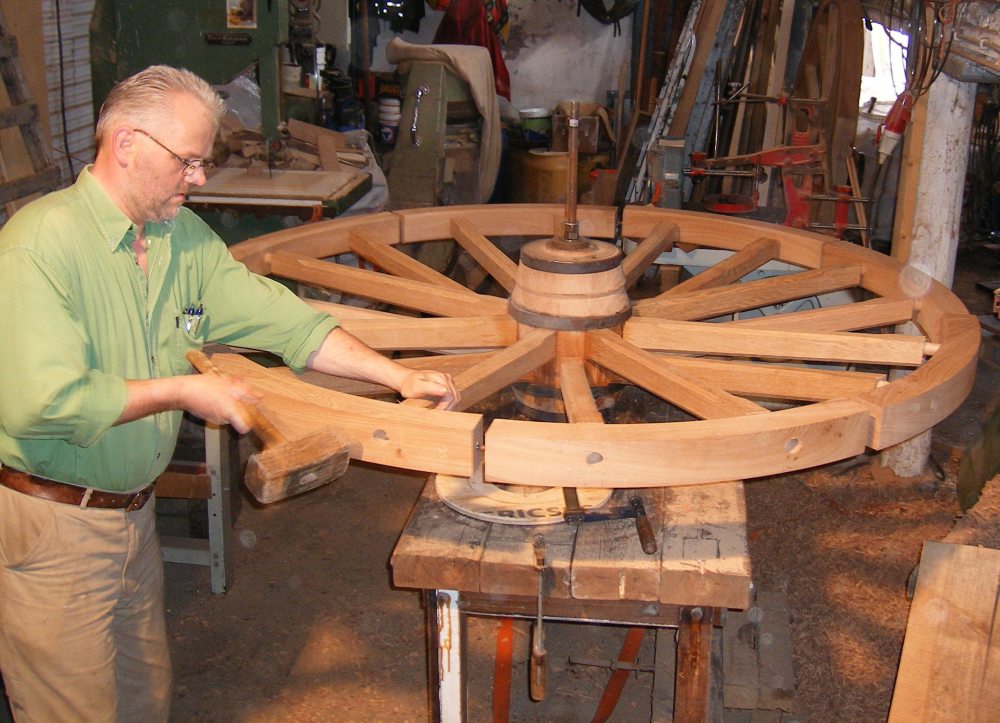
The wheel is one of the most important parts of any horse-drawn vehicle. It had to be light enough for efficient travel, strong enough to handle rough roads, and carefully fitted so the vehicle tracked properly.
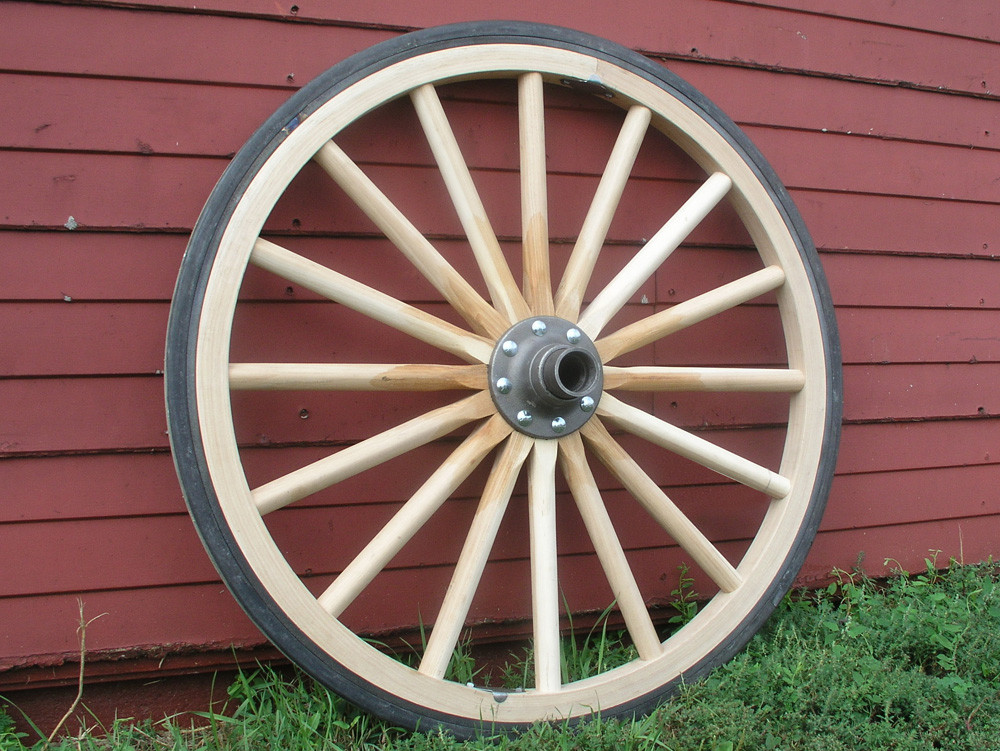
Traditional wooden carriage and wagon wheels used several key parts:
- hub or nave: the center of the wheel
- spokes: the radiating supports
- felloes: the curved outer wooden sections
- iron tire: the metal band fitted around the wheel
A poorly made wheel could wobble, crack, or fail under stress. A well-made wheel distributed force efficiently and helped make the ride smoother and safer. Even today, collectors should pay close attention to wheels because they reveal so much about use, repair, and restoration.
Look for:
- tight spokes
- stable hubs
- no major splitting in felloes
- properly fitted iron tires
- evidence of old repairs or replacements
A carriage can have a beautiful body and still be a major restoration challenge if the wheels are weak.
The undercarriage: where engineering hides
The undercarriage is where much of the real engineering happens. Axles, springs, reaches, perches, shafts, poles, and fifth wheels all determine how the vehicle handles.
Springs were especially important. Road surfaces before modern pavement were often uneven, muddy, frozen, or rutted. A carriage without good suspension could be punishing to ride in. Better springs made travel more comfortable and allowed more refined passenger vehicles to develop.
The undercarriage also had to be matched to the purpose of the vehicle. A light buggy did not need the same structure as a coach. A delivery wagon needed durability more than elegance. A high-style private carriage needed both stability and a graceful outline.
Collector tip: when evaluating a vehicle or part, look under it. Craftsmanship often shows most clearly where casual viewers do not look first.
The carriage body: form follows use
The body of a carriage tells you what the vehicle was meant to do. Open bodies invited visibility and fresh air. Closed bodies offered privacy and weather protection. High seats, folding tops, side doors, rear steps, and storage compartments all served practical needs.
Different forms developed for different users:
- broughams for enclosed, private city use
- phaetons for open, stylish driving
- buggies for practical personal transportation
- surreys for family outings
- coaches for larger passenger service
- wagons for utility, delivery, and trade
A skilled carriage maker did not simply copy a shape. The maker balanced proportions, weight, entry height, seating comfort, visibility, and the power of the horse expected to pull it.
Paint, striping, and varnish: the visible signature
No part of carriage craftsmanship catches the eye quite like paint. A carriage could be plain and practical, but high-quality passenger vehicles often featured deep color, careful striping, and varnish that protected and enhanced the finish.
Carriage painting was a specialized skill. It had to survive weather, dust, mud, handling, and road use. Decorative striping could emphasize the vehicle’s lines, define panels, and add a sense of movement even when the carriage stood still.
Collectors should be cautious with repainting. A bright modern finish may look attractive, but original paint, original striping, and old varnish can carry important historical evidence. In many cases, honest age is more interesting than a surface that has been made too perfect.
Trimming and upholstery: comfort, color, and status
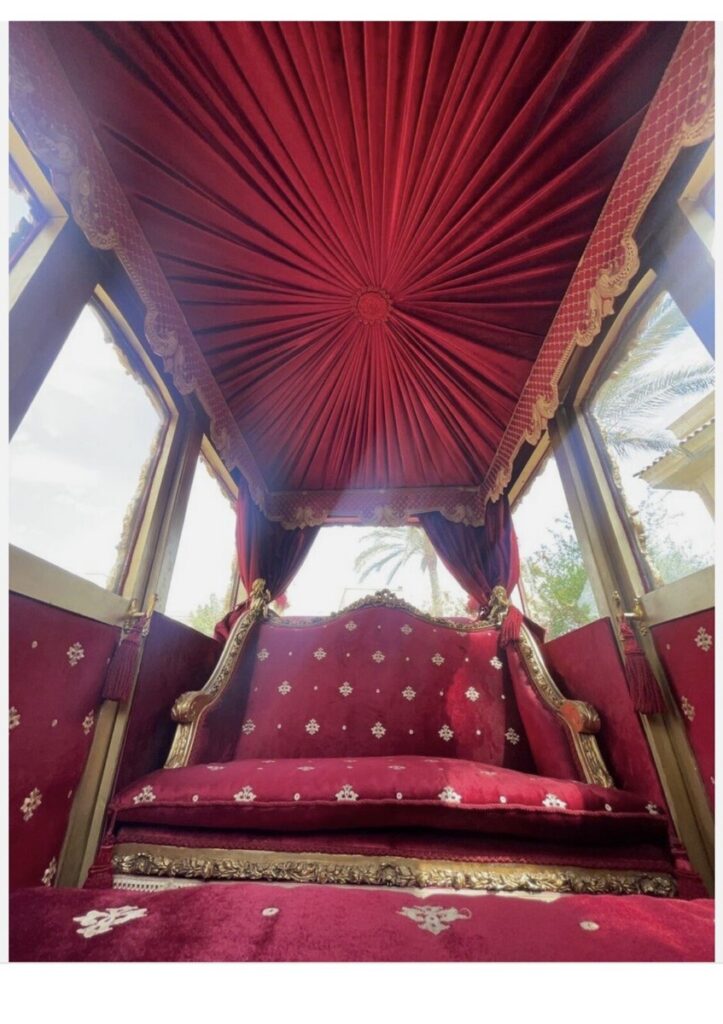
The inside of a carriage could be just as carefully considered as the outside. Trimming included seating, cushions, lining fabrics, leather, carriage lace, carpets, straps, and interior fittings.
Fine vehicles could use rich fabrics, polished hardware, and coordinated colors. More practical vehicles used sturdier materials built for frequent use and easier maintenance.
When collectors examine upholstery and trimming, they should look for:
- original fabric or leather remnants
- replacement material that matches the vehicle’s period and purpose
- stable seams and cushioning
- moisture damage, brittleness, or insect damage
- evidence of past restoration
Interior materials often deteriorate faster than wood and metal, so original trimming can be especially valuable when it survives.
Lamps, hardware, and fittings: small details with big value
Carriage hardware can be collectible even when the vehicle itself is long gone. Lamps, steps, handles, hubcaps, whip sockets, dash rails, brackets, and maker’s plates are all part of the carriage world.
Carriage lamps are especially popular because they display well and often feature attractive metalwork and glass. Maker’s plates can also be important, especially when they identify a known builder or location.
When buying carriage accessories, check:
- whether pairs are truly matched
- whether glass is original or replaced
- condition of brass, iron, or plated metal
- clear maker marks
- missing brackets or mounting pieces
Small parts can tell surprisingly large stories.
Notable makers and industrial change
The carriage trade included small local shops and larger manufacturers. Local carriage makers served towns and regions, repairing vehicles and building practical forms suited to local roads and customers. Larger firms developed broader reputations and sold through catalogs, agents, and showrooms.
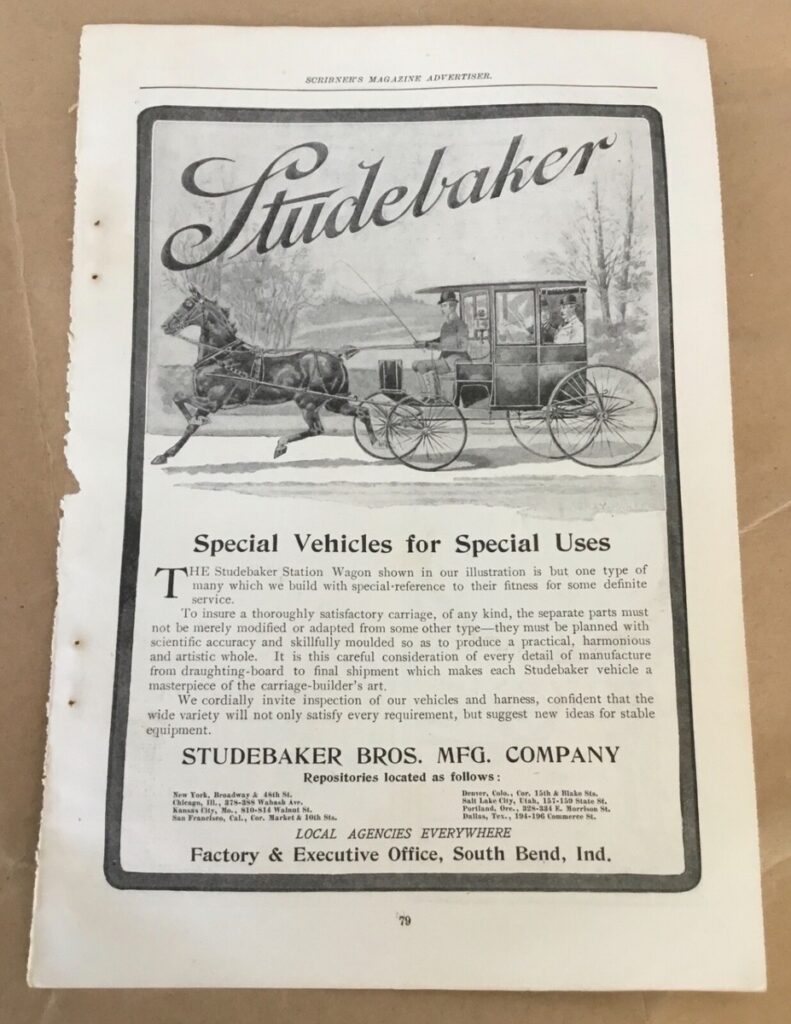
In the United States, Studebaker is one of the best-known names because the company grew from wagon and carriage production into automobile manufacturing. That transition makes Studebaker a useful symbol of the bridge between horse-drawn transportation and the motor age.
Other firms, including luxury coachbuilders such as Brewster & Co., became associated with refined private vehicles and later with custom automobile bodies. This overlap matters: the early automobile industry did not appear from nowhere. It borrowed heavily from carriage design, carriage terminology, carriage factories, and carriage craftsmen.
Trade catalogs: paper windows into the carriage world
For collectors who cannot house a full carriage, trade catalogs are among the most useful and displayable carriage-related collectibles. They show body styles, options, prices, parts, finishes, and the language manufacturers used to sell vehicles.
A catalog page can help identify:
- vehicle types and names
- period terminology
- available finishes and trims
- construction details
- regional maker information
Old advertisements, invoices, letterheads, and photographs are also valuable because they place carriage making in a specific business and community context.
What collectors should look for
Whether you are buying a complete carriage, a part, or a paper item, focus on evidence.
For complete vehicles
Look for:
- maker’s plate or identifying marks
- original paint and striping
- sound wheels and undercarriage
- stable body wood
- intact hardware
- documented restoration history
- provenance or old photographs
For parts and accessories
Look for:
- original finish
- matching pairs
- legible marks
- minimal overcleaning
- signs of real carriage use
- whether the part has display potential
For paper collectibles
Look for:
- clean graphics
- readable maker information
- minimal tears or heavy staining
- complete catalogs when possible
- strong local or regional interest
Why craftsmanship matters to collectors
A carriage is easy to romanticize. We imagine smooth roads, elegant clothes, and leisurely drives. But the real beauty is in the making. These vehicles existed because many trades came together with practical intelligence. They had to move, turn, carry weight, handle weather, and still look appropriate for their owner’s purpose and station.
When collectors learn to see the craftsmanship—wheels, springs, paint, trim, lamps, and maker marks—the whole category opens up. Suddenly a carriage is not just an old vehicle. It is a rolling collaboration of skilled hands.
Let’s Make History—one crafted wheel at a time.
Looking for something related?
Dear June Collectibles carries thousands of antiques, vintage pieces, collectibles, ephemera, books, housewares, jewelry, memorabilia, and unusual finds. Inventory changes constantly.
Found something like this while clearing a home or collection?
Before assuming it should be thrown away, tell us what you found. Dear June Collectibles helps families, collectors, executors, and homeowners sort household contents, collections, and estates and identify realistic resale possibilities.