
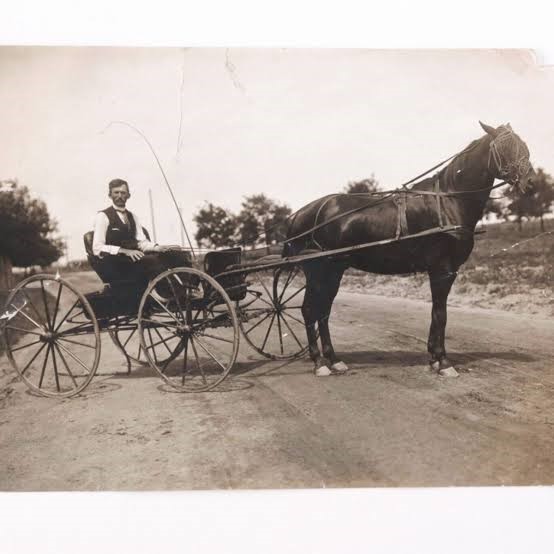
Before the automobile became an everyday sight, roads had their own rhythm: hoofbeats, iron-rimmed wheels, creaking springs, harness bells, and the slow choreography of horses, drivers, passengers, and cargo. Horse-drawn transportation was not one single thing. It was an entire world of vehicles built for work, travel, status, errands, public transit, family outings, and ceremony.
For collectors, horse-drawn carriages offer a fascinating look at how people moved through daily life before cars changed the landscape. A carriage was not just a way to get somewhere. It could show wealth, occupation, region, fashion, and technology. A city cab, a family surrey, a farm wagon, and a gentleman’s coach all tell very different stories.
This series begins with the big picture: what transportation looked like before the automobile, why carriages mattered, and what collectors should notice when they encounter carriage-related antiques today.
A world built around horse power
For much of road-transport history, the horse was the engine. Horses pulled private vehicles, commercial wagons, mail coaches, public omnibuses, hearses, delivery carts, fire apparatus, and farm equipment. Even as railroads transformed long-distance travel in the 19th century, horse-drawn vehicles remained essential for shorter trips, rural travel, city streets, and the final stretch between station and destination.
That is one reason carriage collecting is so broad. It includes not only complete vehicles, but also:
- harness pieces
- carriage lamps
- maker’s plates
- coachman’s tools
- lap robes and carriage blankets
- trade catalogs
- photographs and postcards
- stable and livery items
- parts such as hubs, steps, shafts, and upholstery fragments
A full carriage is dramatic, but even a small accessory can open the door to the larger transportation story.
Carriages, coaches, carts, and wagons: not all the same
The words are sometimes used loosely today, but historically the distinctions mattered.
A carriage generally refers to a horse-drawn passenger vehicle, often with four wheels, though the word can be used broadly. A coach usually suggests a larger enclosed passenger vehicle with springs and a roof. A cart is often simpler and frequently two-wheeled, used for hauling or practical work. A wagon usually points toward heavier utility transport, farm use, freight, or family travel in rugged conditions.
Collectors do not need to memorize every term at once. Instead, look at three basic clues:
- Purpose: passenger, work, public transport, ceremony, or sport
- Construction: open or enclosed, two wheels or four, light or heavy
- Social context: private owner, family use, hire vehicle, commercial use, farm use
Those clues usually tell you more than the label alone.
Stagecoaches and mail coaches: the road before rail convenience
Before railroads spread widely, stagecoaches helped connect towns and cities along scheduled routes. They carried passengers, mail, parcels, and news. Travel could be uncomfortable, dusty, crowded, and slow by modern standards, but stage routes were vital transportation networks.
Mail coaches had their own importance because communication depended on movement. A letter needed roads, horses, drivers, and relay systems before it reached the next town. These vehicles made distance feel more manageable in an age before telephones, email, or motor delivery.
For collectors, stagecoach imagery has lasting appeal because it captures motion and adventure: the road, the team, the driver, and the sense of travel as an event.
City transportation: cabs, omnibuses, and hired vehicles
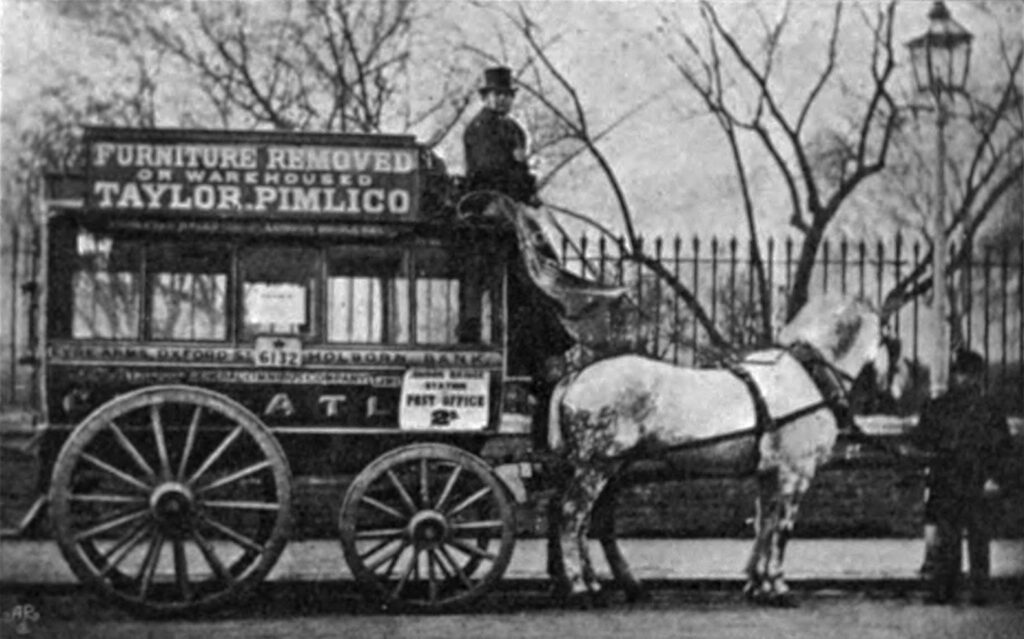
In cities, horse-drawn transportation was not only private. It was also public and commercial.
The hansom cab is one of the most recognizable examples: a two-wheeled vehicle designed for hire, often associated with urban travel before motor taxis. It was low enough for easier boarding and compact enough for busy streets.
The omnibus was another important form of city transportation. Horse-drawn omnibuses carried multiple passengers along set routes and helped make urban movement more available to people who did not own private vehicles.
These vehicles remind collectors that horse-drawn transportation was not only about wealthy families in elegant coaches. It was also about city workers, shoppers, travelers, and ordinary daily movement.
Private carriages: status, comfort, and personal style
A private carriage could say a great deal about its owner. Just as automobiles later developed model names, body styles, and luxury features, carriages came in many forms suited to different uses.
The brougham
The brougham became a popular enclosed carriage design in the 19th century. Compact, comparatively light, and often pulled by one horse, it was practical for city driving while still offering privacy and refinement.
The phaeton
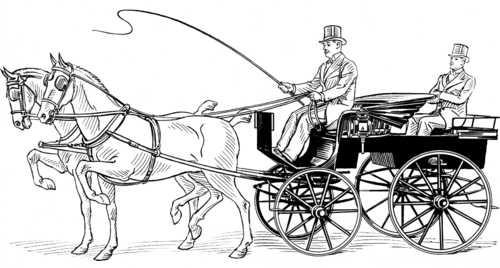
The phaeton was an open carriage associated with stylish driving and leisure. It was lighter and sportier than many enclosed vehicles, and it appealed to people who wanted to be seen driving rather than hidden inside.
The buggy
In American collecting, the buggy is one of the most familiar light passenger vehicles. It was practical, relatively simple, and common enough that many families and small-town users relied on buggy transportation in daily life.
The surrey
The surrey is often remembered as a family carriage, especially in late-19th and early-20th-century American contexts. With seating for more than two and often a folding top, it has become one of the nostalgic icons of carriage-era travel.
Each style carried meaning. Some emphasized comfort, fashion, or affordability and use. Together, they show how specialized horse-drawn transportation became.
Work vehicles: the everyday backbone
Not every horse-drawn vehicle was elegant. Many were built for labor.
Work vehicles included:
- delivery wagons
- farm wagons
- milk wagons
- market carts
- fire wagons
- ice wagons
- freight wagons
- service vehicles
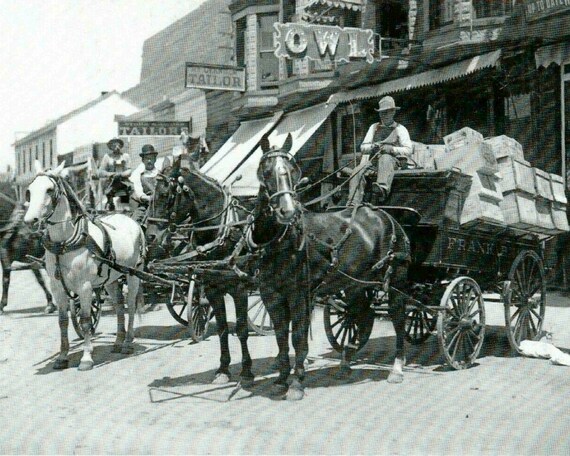
These may not always have the decorative flair of a private carriage, but they are deeply collectible because they reflect the infrastructure of everyday life. Before trucks and vans, horses moved food, furniture, mail, building materials, laundry, tools, and household goods.
For collectors of advertising, general store items, farming tools, or local history, horse-drawn work vehicles connect naturally with other categories.
What collectors look for today
Complete carriages are large, specialized collectibles, but they are not the only way into the category. Many collectors begin with carriage-related smalls, paper, photographs, or accessories.
Condition
For complete vehicles, condition can be complicated. Original paint, striping, upholstery, woodwork, metalwork, wheels, and springs all matter. Restoration may make a vehicle more displayable, but over-restoration can erase evidence of age and use.
For accessories, look for:
- intact maker’s marks
- original finish
- honest wear
- stable leather or metal
- minimal repainting or aggressive cleaning
Provenance
A carriage with a known maker, region, owner, or use history is easier to understand and often more appealing. Even a photograph or receipt can add context.
Completeness
Missing parts matter, especially with harness, lamps, steps, shafts, and upholstery. Some replacement is expected, but collectors should know what is original and what is later.
Display value
Carriage pieces can be very decorative. A pair of lamps, a framed trade catalog page, or a carriage maker’s plate can fit beautifully into a study, entryway, barn-style room, or local history display.
Carriage antiques beyond the vehicle
If you do not have space for a full carriage, this field still offers plenty to collect.
Good entry points include:
- antique carriage lamps
- carriage robe or lap blanket holders
- harness brass and rosettes
- livery stable signs or paper
- cabinet cards or postcards showing carriages
- carriage trade catalogs
- advertising from carriage makers
- old photographs of family buggies or delivery wagons
- horse brass and driving accessories
These smaller items can tell the same transportation story on a more manageable scale.
Why the carriage era still matters
The automobile did not simply replace a vehicle. It replaced a system: stables, blacksmiths, wheelwrights, harness makers, coach builders, drivers, liveries, feed suppliers, road habits, and a whole pace of life.
That is why horse-drawn carriages remain so compelling. They remind us that travel once required planning around animals, roads, weather, class, and craft. Every vehicle had to balance weight, comfort, durability, and the power of the horse in front of it.
To collect carriage history is to collect the world just before modern speed took over—the last great road culture before the engine became king.
Let’s Make History—one turn of the wheel at a time.
Looking for something related?
Dear June Collectibles carries thousands of antiques, vintage pieces, collectibles, ephemera, books, housewares, jewelry, memorabilia, and unusual finds. Inventory changes constantly.
Found something like this while clearing a home or collection?
Before assuming it should be thrown away, tell us what you found. Dear June Collectibles helps families, collectors, executors, and homeowners sort household contents, collections, and estates and identify realistic resale possibilities.