
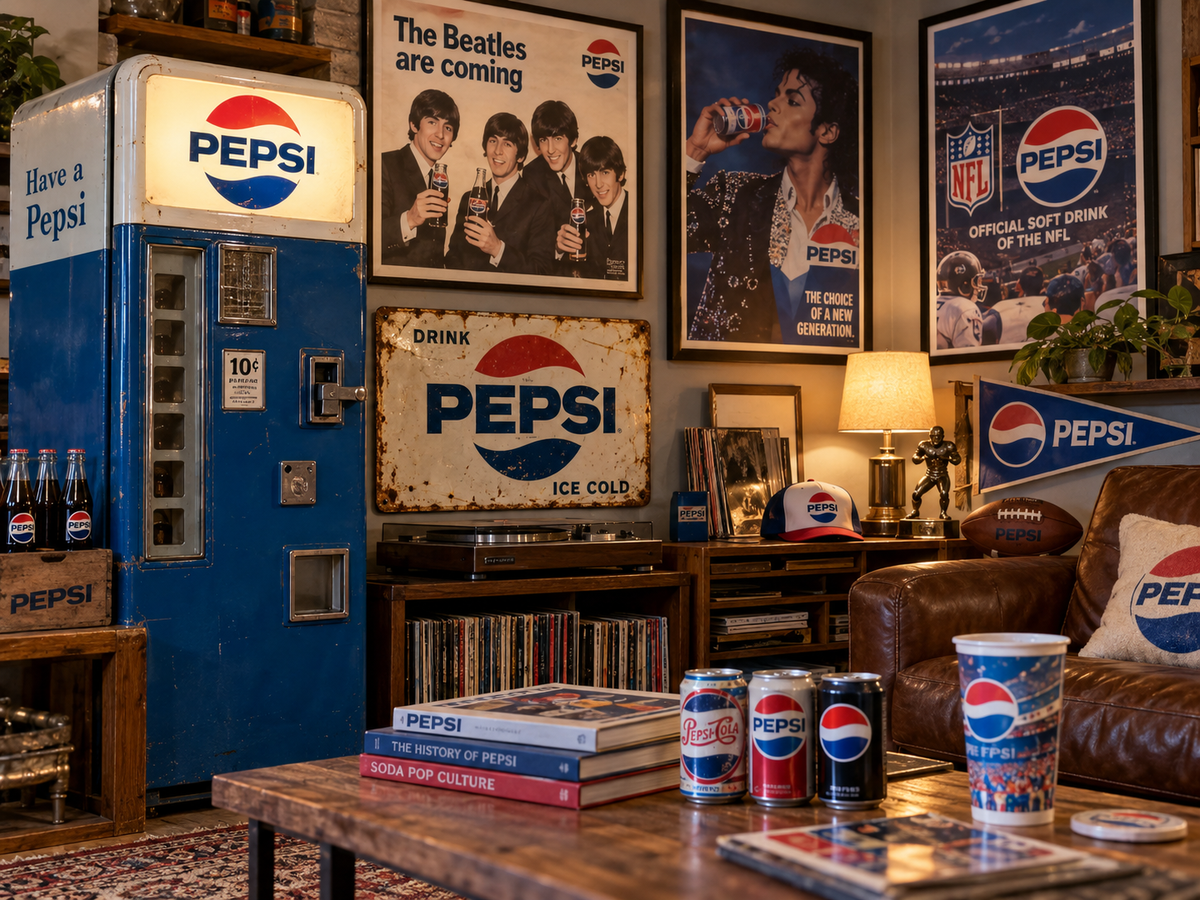
Pepsi began with a pharmacist mixing a fountain drink in New Bern, North Carolina. More than a century later, its logo has appeared on concert stages, football broadcasts, celebrity advertisements, clothing, international packaging, movie tie-ins, vending machines, beach gear, and objects made for markets around the world.
That journey helps explain why Pepsi collecting is much broader than collecting soda bottles.
Across this series, we have followed Pepsi from Caleb Bradham’s early beverage through mid-century advertising, the Pepsi Generation, international expansion, celebrity campaigns, and promotional crossovers. Taken together, those objects document something larger: the transformation of an everyday consumer product into a recurring presence in American—and eventually global—popular culture.
From Selling Cola to Selling an Identity
Early soft-drink advertising usually had a straightforward job. It needed to tell consumers what the product was, where to buy it, what it cost, and why it was refreshing.
Pepsi certainly did that. Its early signs, bottles, trays, newspaper advertisements, and soda-fountain material promoted the drink itself. Depression-era advertising made the 12-ounce bottle and its nickel price central to the message. The famous “Pepsi-Cola Hits the Spot” radio jingle helped turn a simple value proposition into something consumers could remember.
By the 1960s, however, Pepsi advertising was doing something different.
The company was increasingly selling an image of the consumer rather than simply describing the beverage. The “Pepsi Generation” campaign, introduced in 1963, emphasized youthful attitudes, activity, optimism, and modern life. Pepsi advertising executive Alan Pottasch later became closely associated with this shift from discussing product qualities to presenting the lives of the people who drank Pepsi. The Smithsonian’s National Museum of American History preserves extensive advertising, television material, and oral histories documenting these campaigns.
That approach proved remarkably durable.
A bottle or can could be physically redesigned every few years, but the idea that Pepsi represented the current generation could continually be updated. “Come Alive! You’re in the Pepsi Generation” could speak to young adults in the 1960s, while later campaigns could replace those consumers with a new generation and still use essentially the same idea.
For collectors, that transition matters. A 1960s magazine advertisement is not simply an advertisement for cola. The clothing, hairstyles, recreation, cars, photography, and language surrounding the bottle can tell us what advertisers believed modern life was supposed to look like.
Music Changed the Scale
Pepsi’s association with music became one of the most visible parts of its pop-culture identity.
The relationship reached another level during the 1980s. Michael Jackson and his brothers appeared in a Pepsi “New Generation” campaign beginning in 1983, and Pepsi later sponsored Jackson’s Bad tour. The partnership helped establish a model in which a major advertising campaign could resemble entertainment rather than a conventional product commercial.
Other performers followed across several generations. Pepsi campaigns have featured artists including Tina Turner, Ray Charles, Madonna, Britney Spears, Beyoncé, and many others. Pepsi itself later revisited these campaigns as part of its corporate history, including rereleases of music-video-style advertisements and limited-edition packaging featuring earlier music partners.
The connection worked because both sides could benefit. Pepsi borrowed some of the performer’s cultural relevance, while an artist gained exposure through television advertising, retail promotion, packaging, concerts, and international campaigns.
Collectors inherited the physical remains.
A celebrity Pepsi can may appeal to beverage collectors, music fans, packaging collectors, and admirers of the performer. Tour merchandise can belong equally well in a Pepsi collection or a concert memorabilia collection. Store displays, posters, promotional records, cups, shirts, and point-of-sale pieces can cross several collecting fields at once.
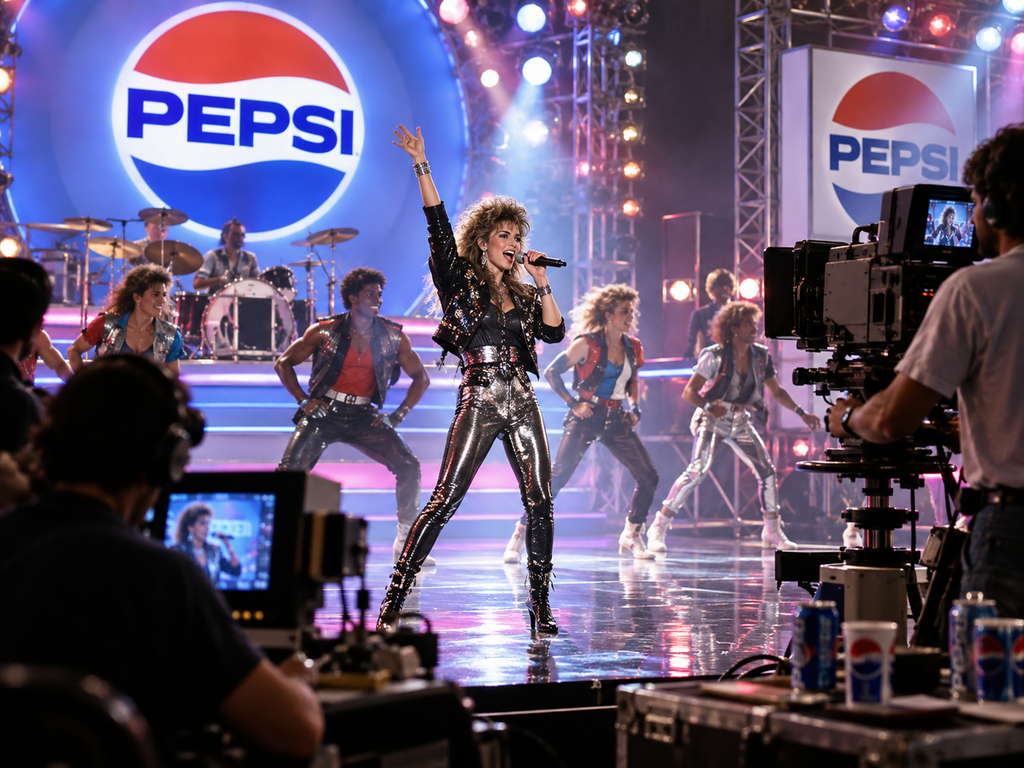
That is one reason Pepsi memorabilia can be difficult to categorize. The logo may be what connects the pieces, but the real historical interest may lie somewhere else entirely.
Sports Became Entertainment Too
Sports offered Pepsi another route into everyday culture.
Advertising tied to football, baseball, soccer, racing, and other sports produced team cans, stadium cups, banners, clothing, retail displays, contests, coolers, and event promotions. These items are often sought by people whose primary interest is the sport or team rather than the beverage company.
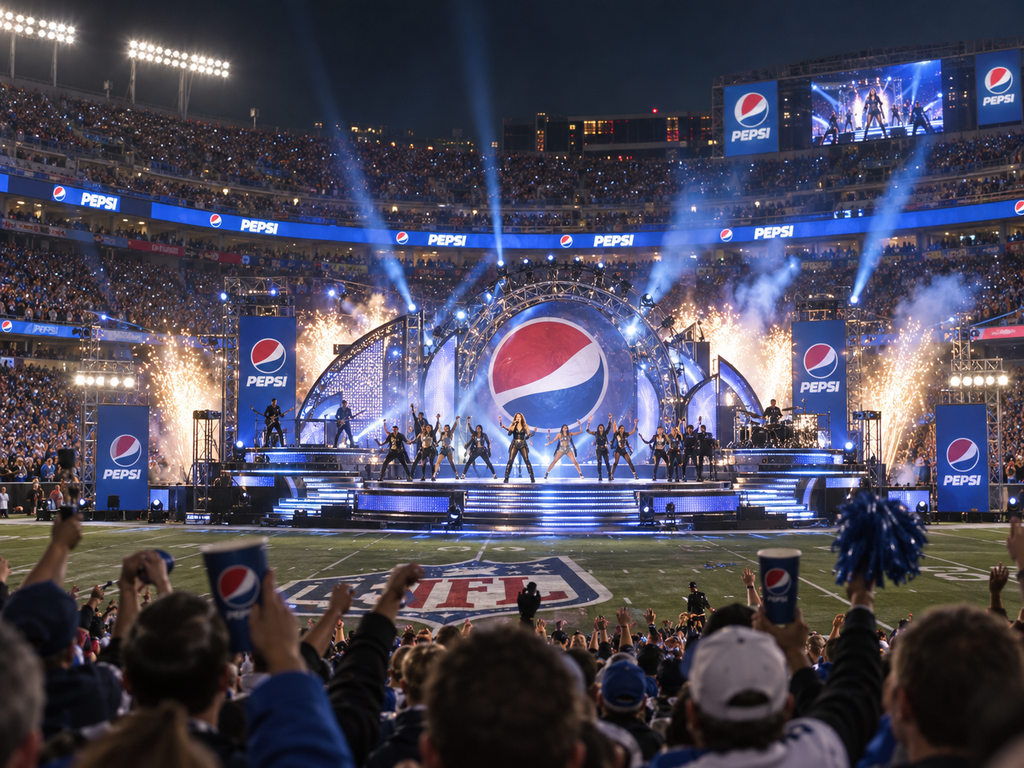
The overlap became especially visible through Pepsi’s relationship with the NFL and the Super Bowl.
In 2012, Pepsi and the NFL announced that Pepsi would sponsor the Super Bowl XLVII Halftime Show in 2013. Over the following years, the Pepsi name became closely associated with one of television’s largest music events, connecting beverage advertising, professional football, celebrity performance, and mass entertainment on the same stage. By Super Bowl LVI in 2022, Pepsi described the event as its eleventh year as title sponsor.
For collectors, events of that scale create many layers of material. There is nationally distributed advertising, but also stadium material, retailer promotions, employee items, regional campaigns, contest pieces, packaging, and short-lived displays.
Some objects may have existed only for a single season.
Others were produced in enormous quantities.
That distinction is important. A recognizable event does not automatically make the associated memorabilia scarce. The most desirable piece may not be the one seen by millions of television viewers, but an obscure local display or temporary promotional object that few people thought to save.
The Brand Learned to Cross Categories
Pepsi’s pop-culture strategy increasingly blurred the boundaries between advertising categories.
One campaign could combine a movie, professional athletes, musicians, retailers, social media, and limited-edition packaging. A 2024 campaign tied Pepsi to Gladiator II, Megan Thee Stallion, and NFL stars including Josh Allen, Derrick Henry, Justin Jefferson, and Travis Kelce—music, film, sports, and beverage promotion functioning simultaneously.
That type of crossover might seem particularly modern, but it follows a pattern Pepsi developed over decades.
The brand repeatedly tried to place itself where cultural attention was already concentrated. In one era that meant radio. In another it meant youth-oriented television advertising. Later it meant pop stars, international tours, football, blockbuster entertainment, digital campaigns, and globally distributed limited packaging.
The advertising medium changed, but the underlying strategy remained surprisingly consistent: associate Pepsi with what feels current.
Why Ordinary Packaging Becomes Historical Evidence
Pop culture can make disposable objects surprisingly important.
A soda can is designed to be emptied and discarded. A cardboard carton exists to transport bottles. A paper cup may survive only a few minutes during normal use.
Once one of those objects carries a celebrity, sporting event, movie promotion, unusual slogan, or market-specific design, however, people may decide to save it.
That is where collecting begins.
Yet “collectible” and “rare” should never be treated as synonyms. Some promotional cans were distributed by the millions. Pepsi’s 2012 Michael Jackson campaign, for example, was planned around imagery appearing on more than one billion cans worldwide. An item can therefore have strong cultural interest without being scarce.
Conversely, mundane objects sometimes become difficult to find precisely because nobody saved them. Temporary cardboard displays, paper cups, local bottler material, employee documents, store decorations, and regional promotions can disappear far more readily than objects specifically marketed as souvenirs.
That is an important lesson for collectors of advertising in general.
Historical significance does not always follow price, rarity, or glamour.
Reading Pepsi Through the Objects
One of the advantages of collecting Pepsi material is that the brand changed frequently enough to leave a visible chronology.
Logos changed. Bottles changed. Slogans changed. Advertising styles changed. Packaging materials changed. Celebrity endorsements reflected different generations. International markets produced their own variations. Even the settings shown in advertising shifted as American life changed.
The Smithsonian’s Pepsi Generation archive demonstrates just how useful advertising material can be as historical documentation. Its holdings include print advertising, television commercials, internal material, and oral histories covering campaigns from the mid-20th century and beyond.
A collector can perform a similar kind of historical reading on a much smaller scale.
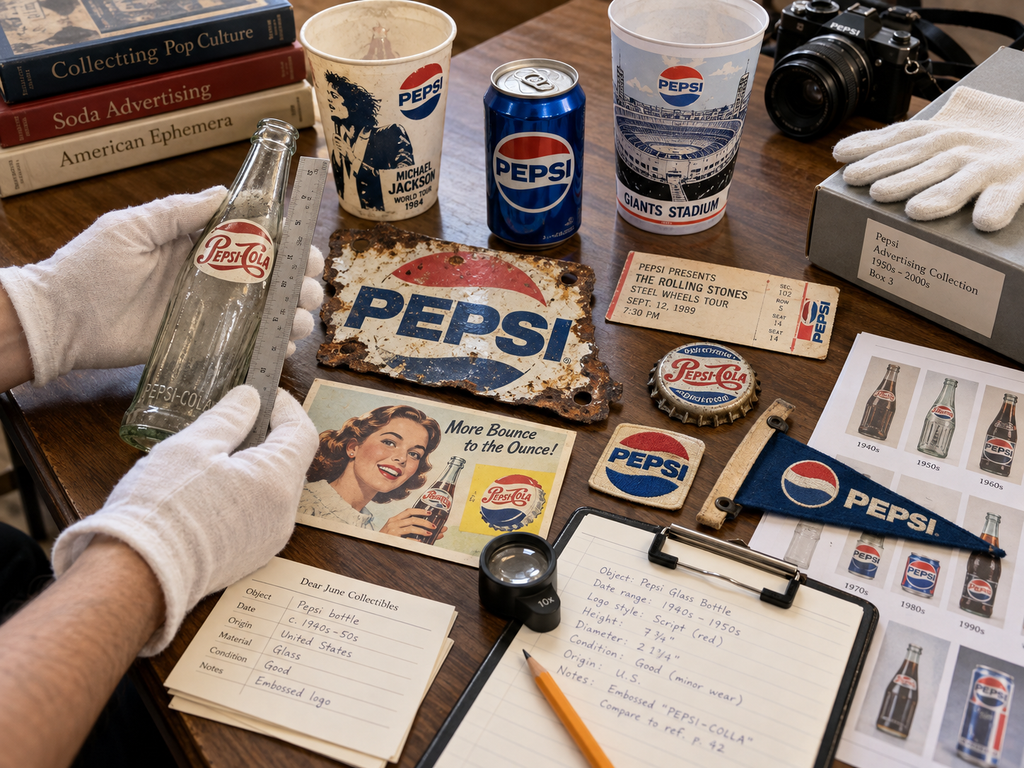
A bottle may reveal where it was filled. A slogan can narrow its advertising period. A promotional can may identify a tour or campaign. Licensing language can connect an object with a performer or entertainment property. Construction details can separate an older sign from a nostalgic reproduction.
Even condition can tell part of the story. Bottle case wear suggests reuse. Fading can indicate years in a storefront. Tack holes or mounting scars may show how an advertising piece was displayed.
These details turn memorabilia into evidence.
Pepsi’s Place in Pop Culture
Pepsi did not become a pop-culture brand because of one famous commercial, one celebrity, or one slogan.
It happened gradually.
The company learned early how memorable music could make advertising more effective. The Pepsi Generation moved attention from the beverage toward the people drinking it. Celebrity campaigns made commercials feel increasingly like entertainment. Sports sponsorships put the brand into shared public experiences. International expansion allowed the same basic identity to appear in very different cultural settings.
By the 21st century, Pepsi could look back on that history and use it as advertising material itself. A 2018 Super Bowl commercial deliberately revisited earlier Pepsi imagery and personalities, including Michael Jackson, Britney Spears, Cindy Crawford, and other recognizable moments from the brand’s past. Pepsi was no longer merely advertising a beverage—it was advertising its own advertising history.
That may be the clearest indication of how deeply the brand entered popular culture.
For collectors, it also explains why there is no single correct way to build a Pepsi collection. Someone can concentrate on bottles, soda-fountain equipment, signs, celebrity advertising, international pieces, sports promotions, paper ephemera, cans, vending material, or one specific era.
Each approach follows a different thread through the same history.
An old Pepsi item can therefore be more than corporate advertising. In the right context, it can document changing graphic design, retailing, entertainment, music, sports, globalization, consumer habits, or the way advertisers imagined successive generations of Americans.
That is what gives the material staying power.
Pepsi has spent more than a century trying to belong to the present. Its collectibles allow us to look backward and see what each version of that present once looked like.
Let’s Make History one generation, campaign, and pop-culture moment at a time.
Discover more from Dear June Collectibles
Subscribe to get the latest posts sent to your email.