Colors and Scarcity

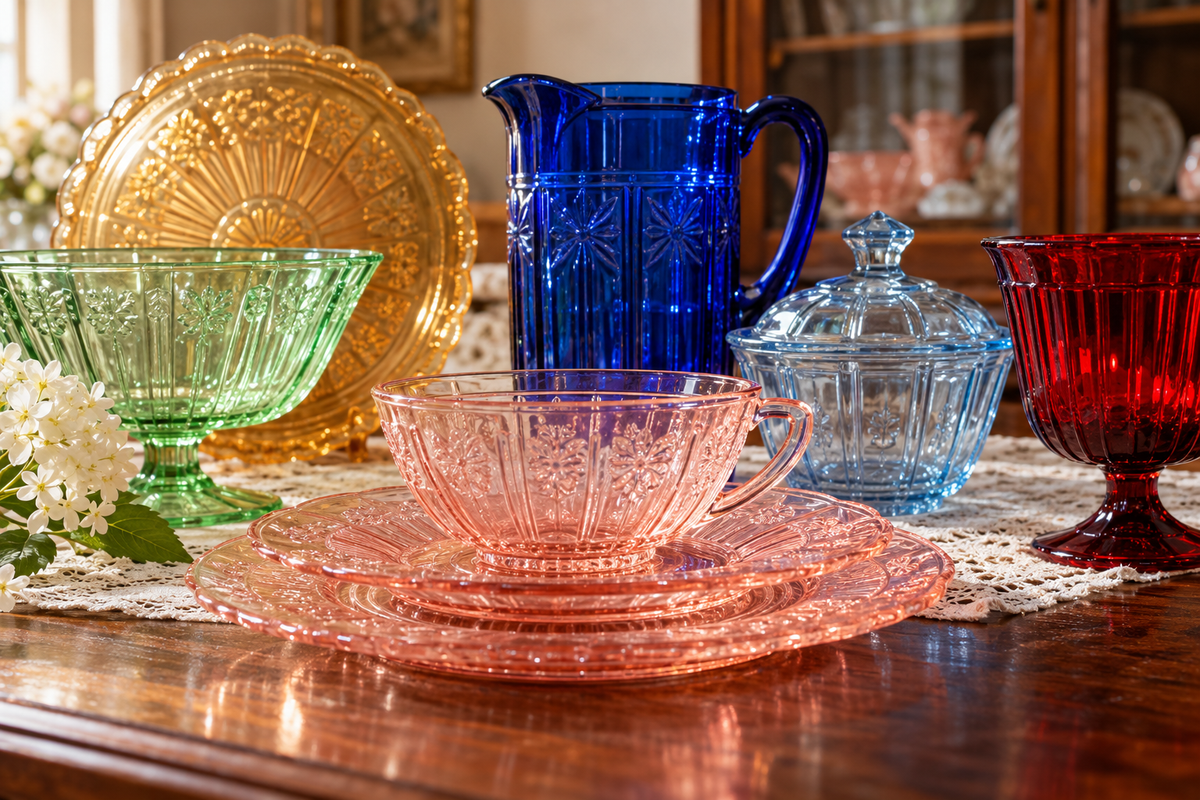
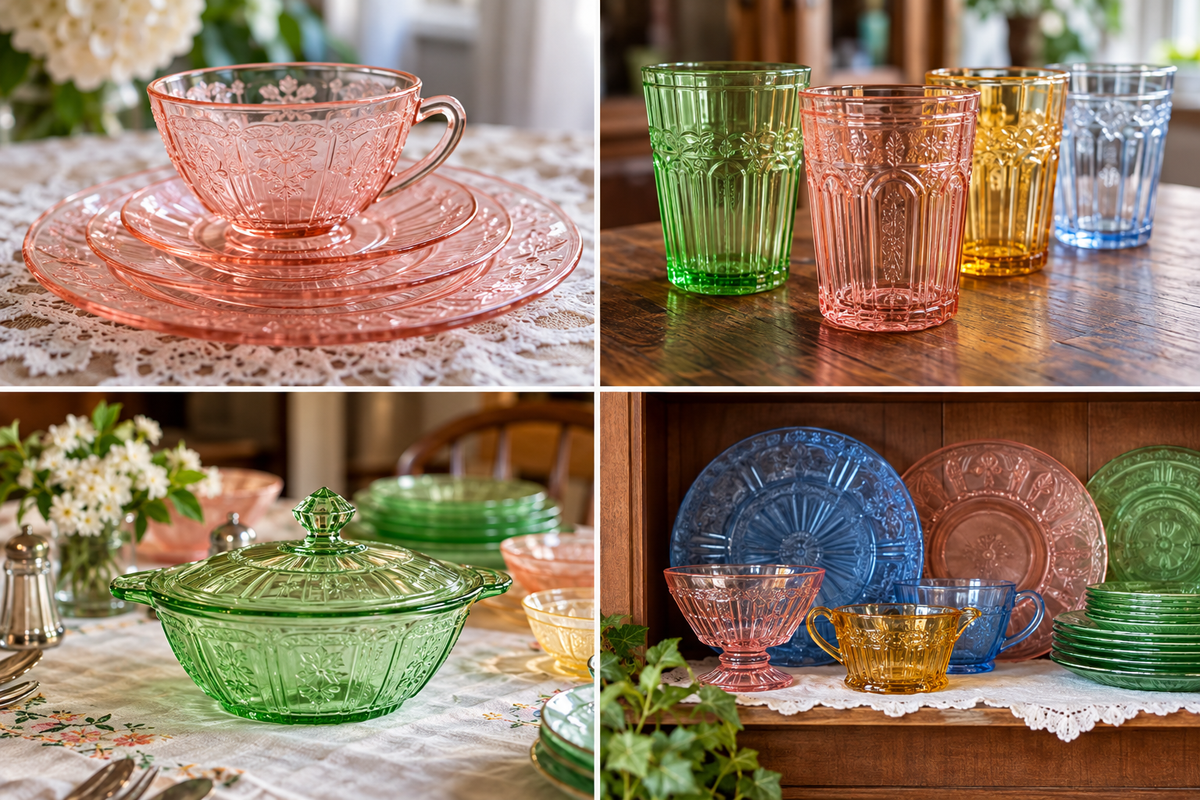
Depression glass colors are often the first thing collectors notice. A pale pink plate catches the light differently from a green tumbler. Amber can give an ordinary serving dish a warm, autumnal look, while cobalt blue or ruby red can stop someone in their tracks from across an antique shop.

Color is also one of the first things people use when trying to judge rarity. That is where collecting gets more complicated. A striking color is not automatically scarce, and a familiar color is not necessarily common in every pattern or piece. With Depression glass, scarcity usually comes from a combination of color, pattern, form, production history, survival, and condition rather than color alone.

Continue reading “Colors and Scarcity”
Famous Patterns-Mayfair, Princess, and More

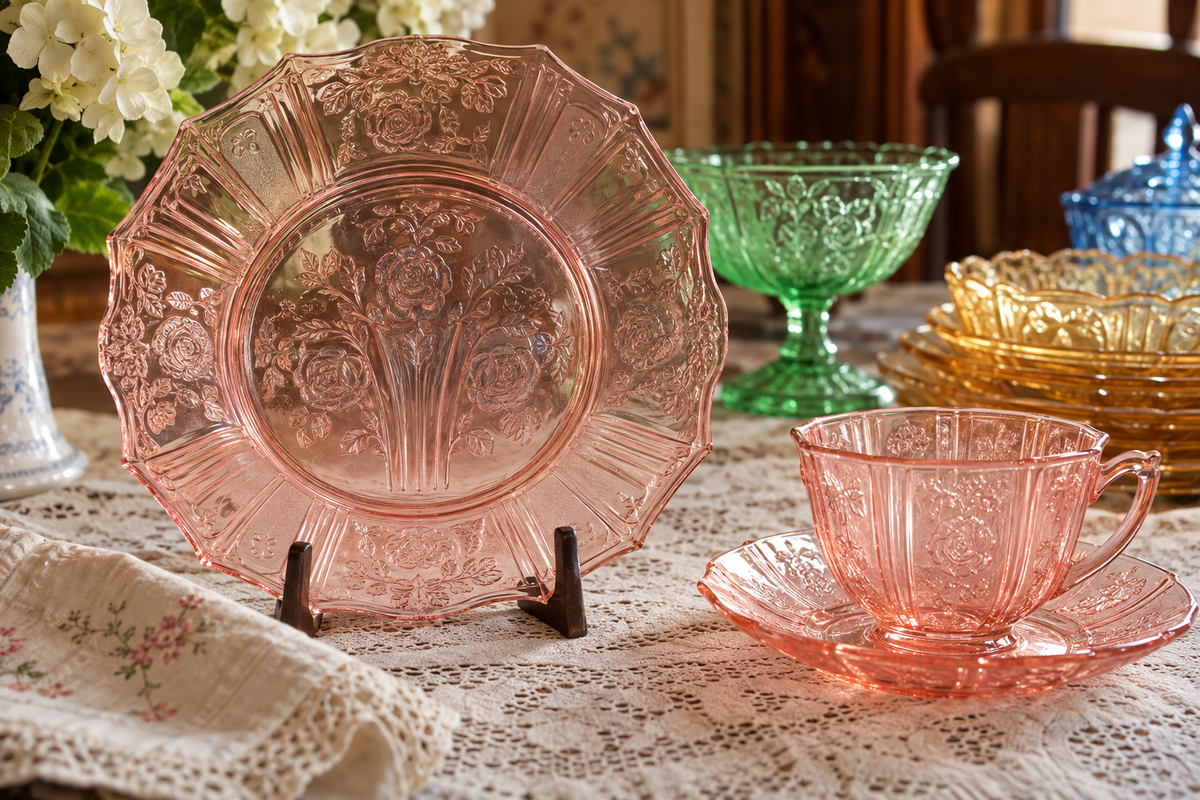
Some Depression glass patterns announce themselves immediately. A rose fills a molded panel. An octagonal plate catches the light. Delicate scrollwork runs around a scalloped rim. Once you learn those visual clues, a shelf of old colored glass stops looking like an assortment of pink and green dishes and begins separating into recognizable families.

That is one of the pleasures of learning Depression glass patterns. Color matters, but pattern is often the stronger identification tool. Mayfair, Princess, Cherry Blossom, Madrid, American Sweetheart, and Royal Lace each developed a visual identity distinctive enough that collectors can often recognize them before turning a piece over.

Continue reading “Famous Patterns-Mayfair, Princess, and More”

What is Depression Glass?

What is Depression glass? For many collectors, the answer begins with color: translucent pink plates, green tumblers, amber serving bowls, or pale blue cups glowing in the light. But Depression glass is more than a palette. It is a distinctly American chapter in the history of mass production, consumer culture, and the effort to bring attractive household goods within reach of ordinary families.

Produced primarily from the 1920s through about 1940, Depression glass was inexpensive, machine-made tableware manufactured in enormous quantities. Much of it was colorful, patterned, practical, and affordable. It appeared in stores, entered homes as promotional premiums, and sometimes arrived one piece at a time until a household had assembled much of a matching set.

Today, those once-common dishes have become collectibles—and surviving pieces offer a surprisingly vivid look at everyday American life between the world wars.

Continue reading “What is Depression Glass?”

©2025 Dear June Collectibles. All Rights Reserved.