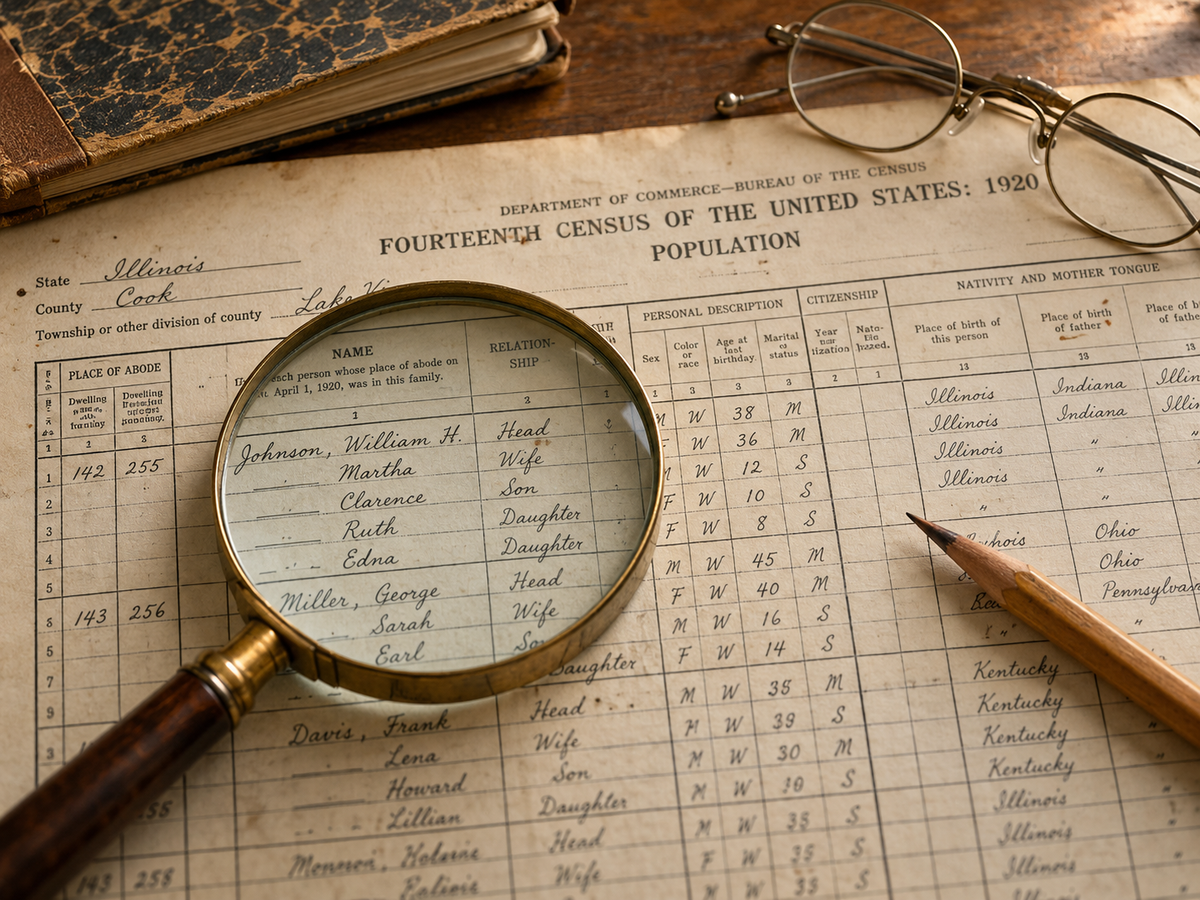
Few records are as useful to a family historian as a census. In a single page, you may find an entire household: names, ages, relationships, birthplaces, occupations, immigration information, property details, and even neighbors who later turn out to be relatives.
That makes census records extraordinarily powerful. It does not make them automatically correct.
One of the most important lessons when using census records for genealogy is to treat each entry as evidence to investigate rather than a finished biography. A census gives us a snapshot of a household at a particular moment. It can suggest where to look next, connect people across generations, and reveal changes in a family’s circumstances. But every fact still needs to be weighed against other records.
Continue reading “A Census Record Is a Clue, Not a Complete Family History”