
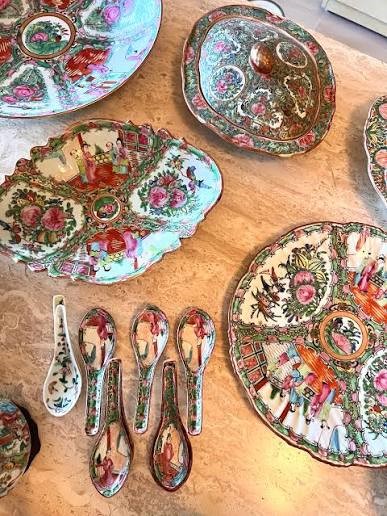
Chinese export porcelain is one of those collecting categories where the more you look, the more you see. At first, a plate may simply look “blue and white” or “covered in flowers.” Then the details begin to separate: a border style, a landscape scene, a family crest, a rose-colored enamel, a figural panel, a pagoda, a fence, a riverbank, a bird, a medallion.
Patterns and styles are the language of Chinese export porcelain. They help collectors describe pieces, compare examples, and understand how Chinese workshops adapted their artistry for Western buyers. Some designs were rooted in Chinese decorative traditions. Others were shaped by European and American taste. Many sit somewhere in between—a visual conversation across oceans.
This post introduces the major pattern and style families collectors are likely to encounter, along with practical tips for looking at decoration, color palettes, and condition.
Pattern Names Are Collector Tools
Before getting too deep into specific styles, it helps to know one important thing: many pattern names used today are collector, dealer, or market terms. They are useful, but they were not always the original names used by Chinese painters or export merchants.
That means a name like “Rose Medallion,” “Canton,” or “Fitzhugh” can help identify a general style, but it should not be treated as a perfect factory label. Chinese export porcelain was made over long periods, in many qualities, and for different markets. Similar designs may appear in several versions.
For collectors, the goal is not to force every piece into a neat category. The goal is to describe what you see clearly and accurately.
Blue-and-White: The Classic Foundation
Blue-and-white porcelain is one of the most recognizable forms of Chinese export porcelain. Made with cobalt decoration under a clear glaze, these pieces are known for their crisp contrast and durability. The style was admired widely in Europe and America and strongly influenced Western ceramic design.
Common blue-and-white export motifs include:
- river landscapes
- pagodas and garden pavilions
- bridges and boats
- willow trees and rocky islands
- floral borders
- lattice and diaper-pattern borders
Blue-and-white pieces can range from refined and carefully painted to more quickly produced commercial wares. That range is part of the category’s appeal. A simple blue-and-white plate may have been everyday tableware, while a larger platter or punch bowl could have served as a display piece.
Collector Tip: Look at the Border
Borders are especially helpful in blue-and-white porcelain. A border may be floral, geometric, spearhead-like, diapered, or built from repeating panels. When trying to identify a piece, don’t only photograph the center scene—photograph the rim and border details too.
Canton and Nanking: Familiar Blue-and-White Export Styles
Two terms collectors encounter often are Canton and Nanking. Both are associated with blue-and-white Chinese export porcelain, especially pieces made in quantity for Western markets.
Canton Style
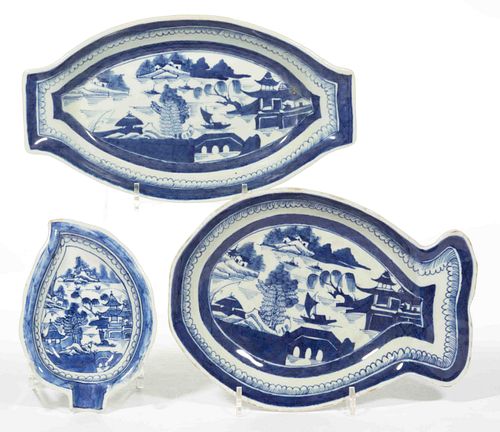
Canton-style pieces often feature loose, lively blue decoration with Chinese landscape elements such as boats, buildings, bridges, and shorelines. The painting can be charmingly irregular, and the overall impression is often practical and decorative rather than highly formal.
Canton-style wares were made in many useful forms: plates, platters, bowls, tureens, covered dishes, and other table pieces. They remain popular with collectors and decorators because they display beautifully and fit easily into blue-and-white interiors.
Nanking Style
Nanking-style pieces are often described as somewhat more refined than Canton, with more carefully organized landscapes and decorative borders. You may see slightly more controlled painting, more defined compositions, and a neater overall presentation.
Collector note: Canton and Nanking are useful terms, but there can be overlap and disagreement in the marketplace. Focus on the visible traits—quality of painting, borders, color tone, and form—rather than relying only on a seller’s label.
Famille Verte: Greens, Iron Red, and Earlier Enamel Traditions
The term famille verte refers to an enamel palette strongly associated with green, along with colors such as iron red, yellow, aubergine, and black. It is often linked with late 17th- and early 18th-century Chinese porcelain styles, though export pieces and later examples can vary widely.
Famille verte decoration can include:
- birds and flowers
- figural scenes
- garden settings
- panels of landscape or architecture
- decorative borders with repeating motifs
The palette often feels crisp and graphic. Greens can dominate, but the best pieces balance several enamel colors in a lively way.
Collector tip: Enamel condition matters. Look for rubbing, flaking, or losses—especially on high points, rims, and areas that would have been handled often.
Famille Rose: The Pink That Changed Everything
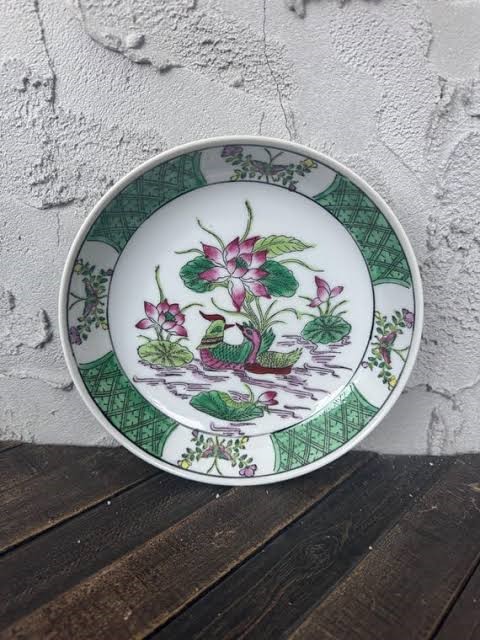
Famille rose became one of the major color palettes of Chinese export porcelain in the 18th century and remained important in later export wares. The name refers to the use of pink and rose-colored enamels, often alongside greens, blues, yellows, and other colors.
This palette allowed for softer shading and a richer range of decorative effects. It appears on everything from delicate tea wares to large punch bowls and elaborate dinner services.
Common famille rose themes include:
- peonies and flowering branches
- birds, butterflies, and garden scenes
- courtly figures and domestic scenes
- shaped panels filled with landscapes or figures
- decorative borders in pink, gold, and green
Famille rose is one of the reasons Chinese export porcelain feels so varied. A piece may be quiet and floral, or it may be bursting with figures, borders, and color.
Rose Mandarin, Rose Medallion, and Rose Canton
By the 19th century, several rose-palette export styles became especially popular, and collectors commonly use terms like Rose Mandarin, Rose Medallion, and Rose Canton.
Rose Mandarin
Rose Mandarin typically features figural scenes—people in interiors, courtly settings, terraces, or garden spaces. These pieces often emphasize storytelling and human activity.
Rose Medallion
Rose Medallion is known for its paneled arrangement, often with alternating reserves of figures, birds, flowers, and decorative motifs around a central medallion. It is one of the most familiar Chinese export styles in the American market.
Rose Canton
Rose Canton generally features flowers, birds, and butterflies without the figural scenes that define Rose Mandarin or Rose Medallion. It can feel slightly quieter and more botanical.
Collector note: These terms are widely used, but the market can apply them loosely. When listing or identifying a piece, describe the visible features: “figural panels,” “bird and flower panels,” “central medallion,” or “no figures present.”
Armorial Porcelain: Coats of Arms and Custom Orders
Armorial porcelain is one of the most research-rich areas of Chinese export collecting. These pieces were decorated with coats of arms, crests, monograms, or heraldic devices, usually for Western families or institutions.
Armorial wares might appear on:
- dinner plates
- chargers
- tea wares
- punch bowls
- serving dishes
- complete or partial services
The appeal is partly visual and partly historical. A crest or motto may connect a piece to a family line, a marriage, a commission, or a particular period of trade.
Collector tip: Heraldic decoration can be repainted or restored, so examine the surface carefully. Look for color differences, overpainting, or restoration around the armorial area.
Fitzhugh: Symmetry and Structure
Fitzhugh is a pattern family collectors often recognize by its orderly layout. It typically features a central medallion surrounded by four repeating clusters or panels, often with decorative symbols or floral elements. It appears in several colors, including blue, green, orange, and other enamel variations.
The pattern’s appeal is its balance. Unlike looser landscape styles, Fitzhugh has a formal, symmetrical quality that looks excellent on plates and platters.
Collector tip: Since Fitzhugh is so pattern-driven, compare the spacing, center motif, and border treatment when identifying examples.
Tobacco Leaf and “Pseudo-Tobacco Leaf”
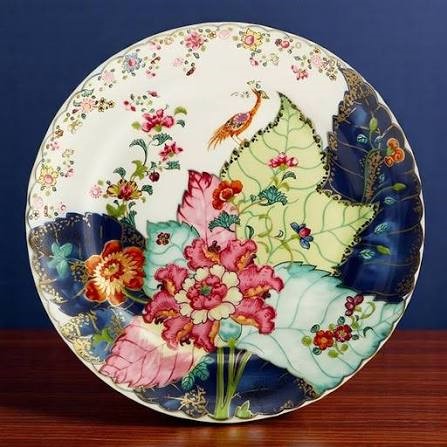
Tobacco Leaf is one of the most visually exuberant Chinese export styles, known for bold leaves, flowers, and vivid color. True Tobacco Leaf pieces are highly desirable, and related “pseudo-tobacco leaf” or tobacco-inspired designs also appear in the market.
These wares often include:
- large overlapping leaves
- bright enamel color
- strong floral decoration
- dense, all-over design
Collector note: Because Tobacco Leaf is popular and valuable, attribution matters. If you’re unsure, describe a piece as “tobacco leaf style” or “tobacco-inspired” rather than making a firm claim.
Mandarin and Figural Scenes
Mandarin-style export porcelain often centers on figures in architectural or garden settings. These scenes appealed to Western buyers fascinated by Chinese life, though the images were often decorative, idealized, and shaped for export taste.
Look for:
- figures seated in interiors
- garden terraces and pavilions
- attendants, scholars, or courtly groups
- decorative borders with flowers and geometric bands
These scenes can be especially appealing because they invite close looking. Tiny faces, robes, furniture, and garden details all become part of the charm.
What Collectors Should Look For
When evaluating patterns and styles, use a simple checklist.
Decoration Quality
Is the painting careful or quick? Are details crisp? Are borders evenly handled? Quality varies widely, and that affects desirability.
Color and Enamel Condition
Look for enamel wear, especially on rims, central high-touch areas, and gilded borders. Gold decoration often wears more easily than underglaze blue.
Form and Pattern Fit
Does the decoration fit the shape well? A pattern that works beautifully on a plate may feel crowded on a smaller cup.
Damage and Restoration
Chinese export porcelain is often found with chips, hairlines, old staple repairs, rim restoration, and enamel touch-ups. Some collectors accept minor wear, especially on older or visually strong pieces, but undisclosed restoration can affect value.
Market Language
Be cautious with overly confident labels. A seller’s “rare Rose Medallion” or “true Tobacco Leaf” should be supported by clear photos and visible pattern details.
The Joy of Learning the Visual Language
Patterns and styles are what make Chinese export porcelain such a rewarding category to study. One piece teaches you borders. Another teaches you enamel palettes. Another teaches you the difference between a landscape plate and a figural panel. Over time, your eye sharpens.
And once it does, these pieces stop being simply “pretty porcelain.” They become readable: a map of trade, taste, adaptation, and artistry painted in blue, rose, green, gold, and iron red.
Let’s Make History—one painted pattern at a time.