Chinese export porcelain has a special kind of magic for collectors. It is beautiful, yes—but it is also evidence of movement: ships crossing oceans, merchants negotiating in unfamiliar ports, dining habits changing in European and American homes, and Chinese artisans adapting their work for buyers they would likely never meet.
Before porcelain became common on Western tables, it was a luxury object. It was admired for qualities that seemed almost impossible: a hard, white body; a smooth glaze; fine painted decoration; and a delicacy that still managed to be durable. To European buyers, Chinese porcelain was unlike the earthenware and stoneware they already knew. It looked refined, exotic, and technically astonishing.
This first post in our Chinese Export Porcelain series looks at the early trade—how porcelain moved from China into Western markets, why it became so desirable, and what collectors can look for when studying early export pieces.
What Is Chinese Export Porcelain?
Chinese export porcelain refers broadly to porcelain made in China for sale outside China. Some pieces were made for regional Asian markets, but in collecting circles the term often focuses on wares made for European and later American buyers.
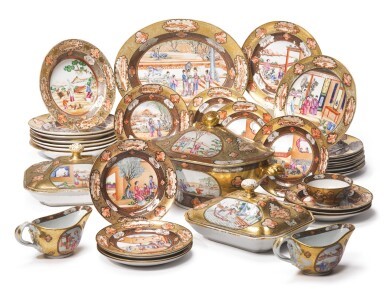
These pieces were not all alike. Some were Chinese forms decorated with designs that appealed abroad. Others were made in shapes specifically requested by Western customers: dinner plates, mugs, punch bowls, tureens, sauceboats, tea wares, and entire dinner services.
That is part of what makes the category so interesting. Chinese export porcelain is not simply “Chinese porcelain that traveled.” It is porcelain shaped by trade—a meeting point between Chinese ceramic skill and Western taste.
Why Porcelain Captivated the West
Porcelain had qualities Western consumers deeply admired. It was hard, smooth, resonant, and often bright white beneath its decoration. Before Europeans successfully produced hard-paste porcelain in the early 18th century, Chinese porcelain had a technical prestige that made it especially desirable.
It was also visually flexible. Blue-and-white decoration could feel crisp and refined. Later enamel palettes added color, delicacy, and richness. Porcelain could serve tea, display wealth, commemorate a family coat of arms, or anchor an entire dining table.
For wealthy Western households, owning Chinese porcelain was a sign of taste and global reach. A cabinet filled with porcelain was not just storage—it was display. It said the owner had access to goods that traveled across the world.
Early Routes: From Curiosity to Commerce
Porcelain moved west through trade routes long before it became a large-scale European import. Chinese ceramics had been valued across Asia and the Islamic world for centuries, and some pieces reached Europe through overland and maritime trade. But the trade changed dramatically when European maritime powers began reaching East and Southeast Asia by sea.
The Portuguese were among the earliest Europeans to participate directly in the China trade in the 16th century. By the 17th century, Dutch, English, and other European trading companies helped expand the market for Chinese porcelain in Europe. These companies carried tea, silk, spices, lacquer, and porcelain across long and risky ocean routes.
At first, porcelain was rare and expensive. Over time, as trade networks grew and demand increased, more porcelain entered Western homes. It remained desirable, but it was no longer only a curiosity for princes and the extremely wealthy. By the 18th century, Chinese export porcelain had become a major presence in Western dining and tea culture.
The Role of Jingdezhen and Canton
Two places are especially important to understanding the export trade: Jingdezhen and Canton.
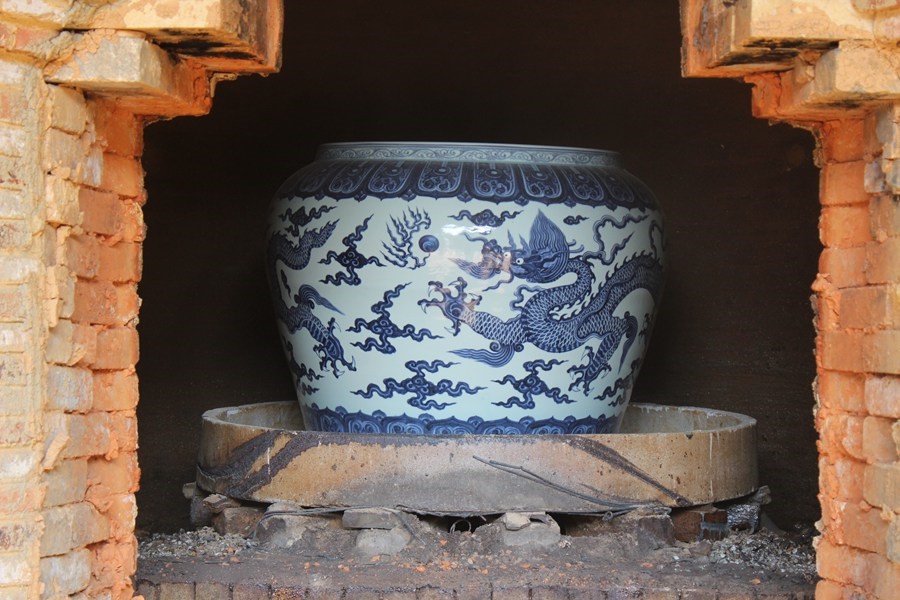
Jingdezhen, long famous for porcelain production, was a major center for making the ceramic bodies that supplied both domestic and export markets. Skilled potters and painters produced enormous quantities of porcelain, from refined wares to more commercial pieces.
Canton—known today as Guangzhou—was central to foreign trade, especially during the period when Western merchants were restricted to trading through designated systems in that port. Some porcelain was decorated or finished in ways connected to the export trade there, and Canton became strongly associated with Western commerce in Chinese goods.
For collectors, this matters because “Chinese export porcelain” often reflects a chain of production and trade rather than a single workshop story. A piece may have been made in one place, decorated or ordered through another, shipped through merchant networks, and finally used in a home thousands of miles away.
Porcelain Made for Western Habits
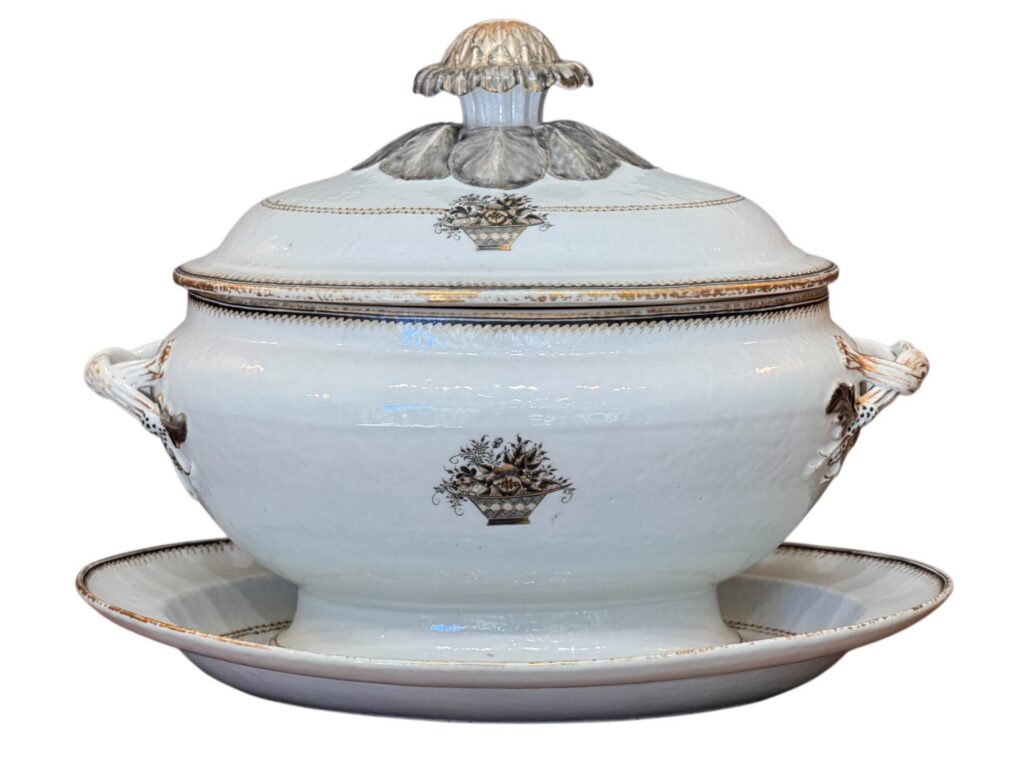
One of the clearest signs of the export market is form. Chinese potters did not simply send whatever they were already making. They also produced pieces suited to Western dining, drinking, and serving customs.
Collectors may encounter export porcelain in forms such as:
- Tea bowls, saucers, and teapots
- Coffee cups and chocolate cups
- Dinner plates and soup plates
- Punch bowls
- Mugs and tankards
- Sauceboats and tureens
- Serving platters
- Armorial dinner services
Some forms were based on European silver or ceramic shapes. Others adapted Chinese forms to Western expectations. That blending of traditions is one reason export porcelain can feel both familiar and foreign at the same time.
A sauceboat, for example, may be a Western dining form, but its decoration and porcelain body speak to Chinese production. A punch bowl might carry European initials or a family crest, while still showing Chinese brushwork, borders, or landscape elements.
Armorial Porcelain: Family Pride in Blue, White, and Enamel
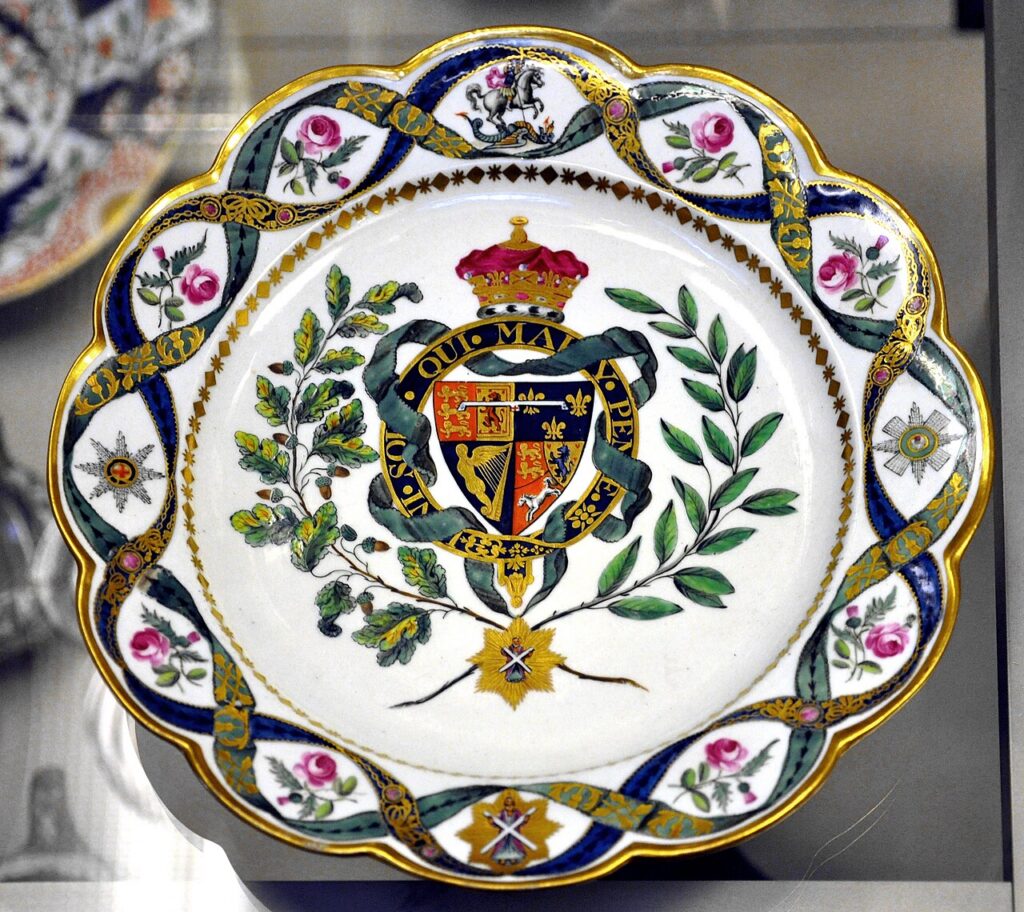
One of the most famous categories of Chinese export porcelain is armorial porcelain—pieces decorated with family coats of arms. These were custom commissions, often ordered by European families who wanted porcelain services bearing their heraldic identity.
Armorial wares are especially appealing to collectors because they combine beauty, social history, and research potential. A crest or motto may allow a piece to be connected to a specific family, region, or period. That does not mean every armorial piece is easy to identify, but it gives collectors a starting point.
These pieces also show how responsive Chinese workshops were to foreign demand. A coat of arms had to be copied from a drawing, print, seal, or model sent from abroad. Sometimes the result is impressively accurate; sometimes there are misunderstandings, reversals, or charming errors. Those details are part of the story.
Blue-and-White: The Early Favorite
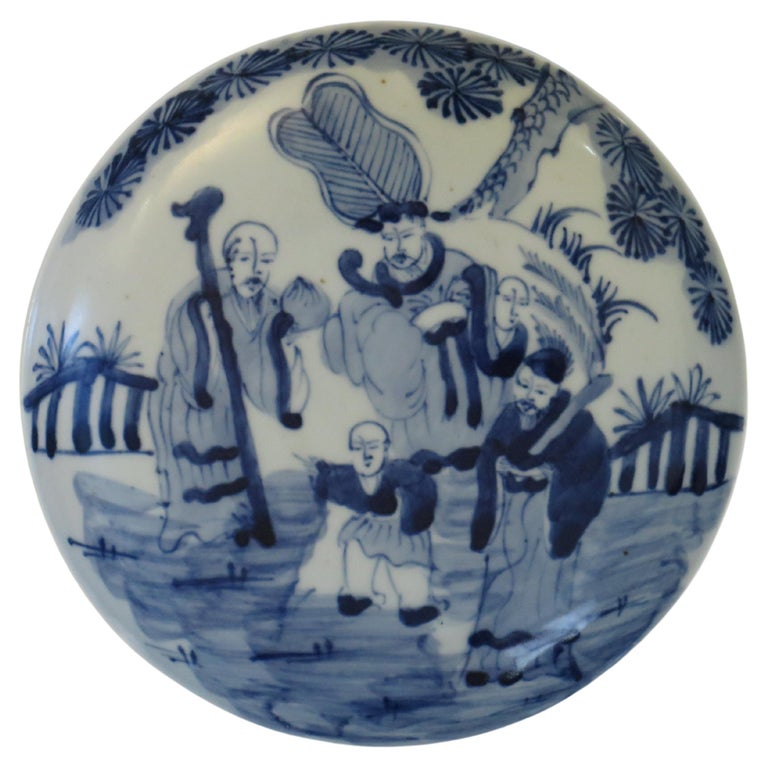
Blue-and-white porcelain was one of the most influential and widely admired types of Chinese ceramic export. Cobalt decoration under a clear glaze produced crisp designs that were durable and visually striking. The palette also traveled well across tastes—it could look refined in a formal cabinet, useful on a table, or decorative on a wall.
Early Western buyers loved blue-and-white porcelain, and European potters later imitated it in tin-glazed earthenware and porcelain. That influence is important: Chinese export porcelain did not just fill Western homes. It changed what Western ceramics looked like.
In later posts we will look more closely at specific patterns and styles, but for this early trade story, blue-and-white is essential because it became one of the visual foundations of the export market.
Tea, Porcelain, and the Table
Tea culture helped drive demand for Chinese porcelain. It came from China, and porcelain was an ideal material for serving it. As tea drinking spread in Europe and the American colonies, the desire for teapots, cups, saucers, and related wares grew alongside it.
This link between tea and porcelain is one reason small export pieces are so collectible today. A tea bowl or saucer may look modest compared to a grand punch bowl, but it connects directly to changing daily habits: how people entertained, how they displayed refinement, and how global trade entered ordinary routines.
What Collectors Should Look For
Chinese export porcelain can be complex, but beginners can train their eyes with a few basic questions.
What is the form?
Is it a Chinese form, a Western form, or a hybrid? A mug, sauceboat, or tureen often points clearly toward Western use.
What is the decoration?
Look for blue-and-white landscapes, floral borders, figural scenes, enamel decoration, monograms, crests, or initials. Decoration can suggest both market and period.
How does the piece feel?
Older porcelain often has subtle irregularities: slight variations in potting, hand-painted details, kiln effects, and signs of use. These are not automatically flaws; they are part of handmade production.
What condition issues are present?
Common concerns include rim chips, hairlines, glaze wear, enamel loss, restoration, staple repairs, and old discolored glue repairs. For display pieces, minor wear may be acceptable. For higher-value pieces, condition becomes much more important.
Is there provenance?
A family history, estate origin, old collection label, or dealer documentation can add context. With export porcelain, provenance can be especially helpful when researching armorial pieces or unusual forms.
Why the Early Trade Still Matters
Chinese export porcelain is more than decorative tableware. It is one of the great material witnesses to early global trade. Each piece carries traces of Chinese craftsmanship, Western demand, maritime commerce, and domestic life.
A plate may have crossed oceans. A tea bowl may have helped introduce a new social ritual. A punch bowl may have sat at the center of a merchant’s table. A custom service may preserve a family’s ambition in painted enamel.
That is the charm of this collecting field. Chinese export porcelain lets us hold a global story in a very human form: something made by hand, shipped with risk, used at a table, and treasured long after its first owner was gone.
Let’s Make History—one porcelain voyage at a time.