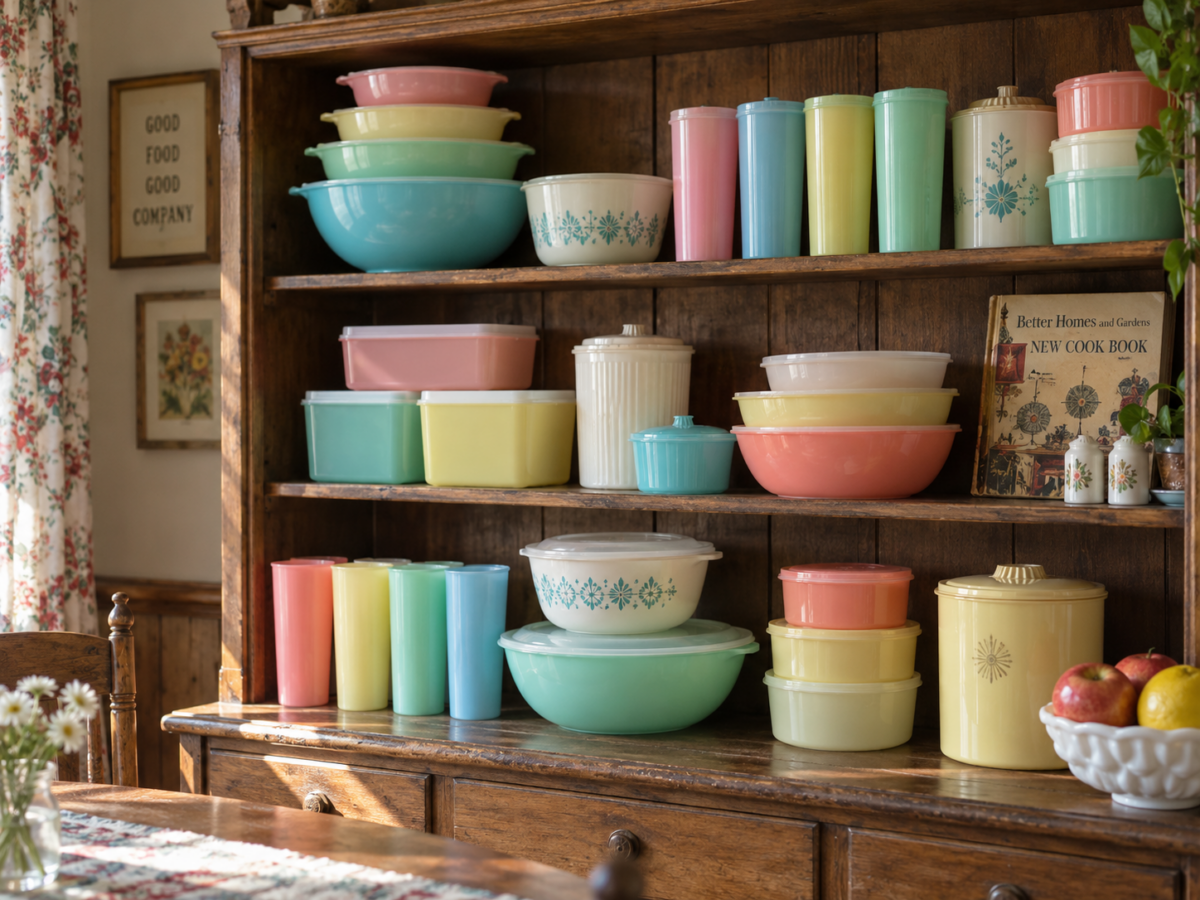
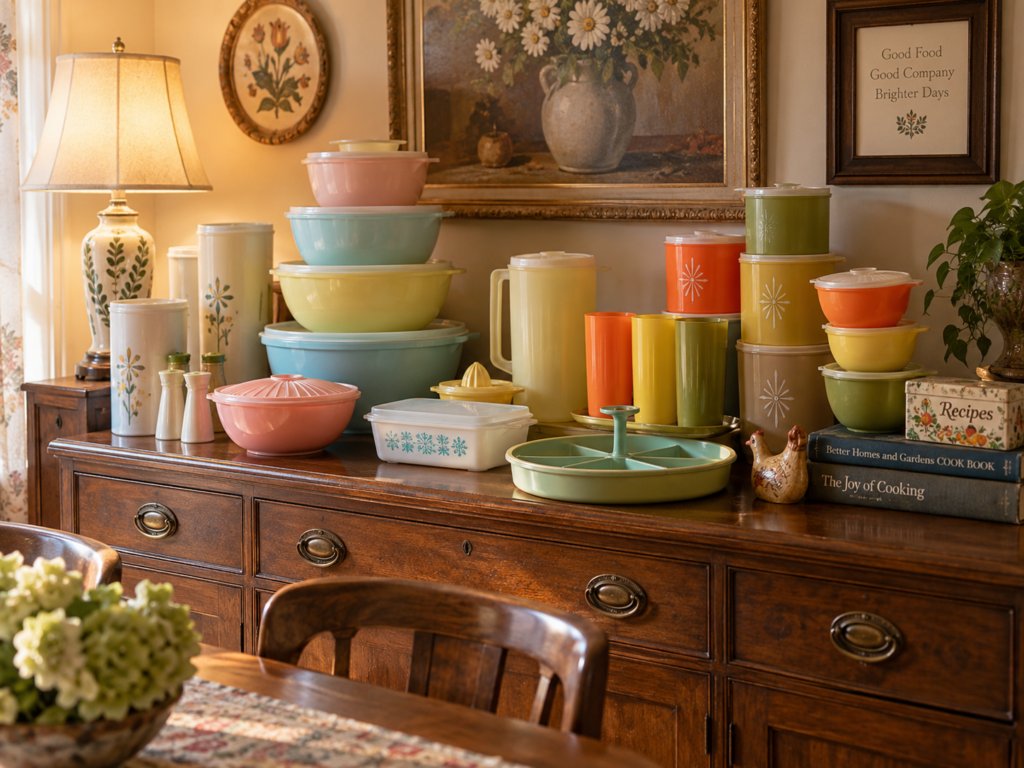
Aqua blue, pale yellow, soft pink, avocado green, harvest gold, burnt orange—sometimes a glimpse of color is all it takes to bring back a kitchen from decades ago.
Vintage Tupperware has that effect. Even people who have never deliberately collected it often recognize a bowl their mother used for potato salad, the pitcher that always held iced tea, or the container that lived permanently in a grandmother’s refrigerator.
Those memories are part of the appeal, but Tupperware’s colors also tell a larger story. As American tastes changed after World War II, the company’s products changed along with them. Shapes evolved, product lines expanded, and color palettes shifted with the kitchens in which the containers were used.
For collectors today, that combination of design, nostalgia, and everyday history has turned once-common plastic housewares into an increasingly interesting field of material culture.
When Plastic Became Something to Show Off
Early Tupperware represented a significant change in the way plastic appeared in the home.
Earl Tupper had developed methods for producing smooth, attractive polyethylene containers at a time when many consumers still associated plastics with industrial applications, inexpensive substitutes, or wartime manufacturing. Rather than disguising the material, his designs took advantage of it.
Tupperware could be light, slightly translucent, softly colored, and molded into clean, rounded forms that would have been difficult to reproduce economically in traditional kitchen materials.
The famous Wonderlier Bowl became one of the defining shapes of early Tupperware. Examples preserved by the Smithsonian date to about 1954 and are made of polyethylene, illustrating how quickly Tupper’s new material entered the postwar household.
Those bowls did not need painted flowers, elaborate decoration, or imitation wood grain. Their form and color were enough.
That simplicity helped make them look strikingly modern.
A Kitchen Could Have a Color Scheme
The postwar kitchen was becoming increasingly coordinated.
Appliance manufacturers offered refrigerators, ranges, and eventually smaller appliances in fashionable colors. Countertops, cabinets, curtains, dinnerware, and kitchen accessories could all contribute to a carefully planned look.
Tupperware fit naturally into that environment.
Instead of purchasing nothing but clear containers, a household could have bowls and storage pieces in appealing shades that complemented the kitchen around them. The products were practical, but they were also part of the room.
The importance of color became even greater as Tupperware expanded.
A household might own mixing bowls, canisters, tumblers, pitchers, refrigerator containers, serving pieces, and specialty items. When several pieces appeared together, their colors created a coordinated visual identity that made Tupperware immediately recognizable.
That recognition eventually became part of the brand’s strength.
From Pastels to Earth Tones
One of the pleasures of collecting vintage kitchenware is watching American taste change from decade to decade.
Tupperware provides an especially good example because many of its products were made for years while colors and related designs changed around them.
Pieces associated with the 1950s often appeal to collectors who enjoy softer mid-century palettes: pale yellows, pinks, blues, and other light or translucent shades. Later decades introduced colors that fit changing decorating fashions.
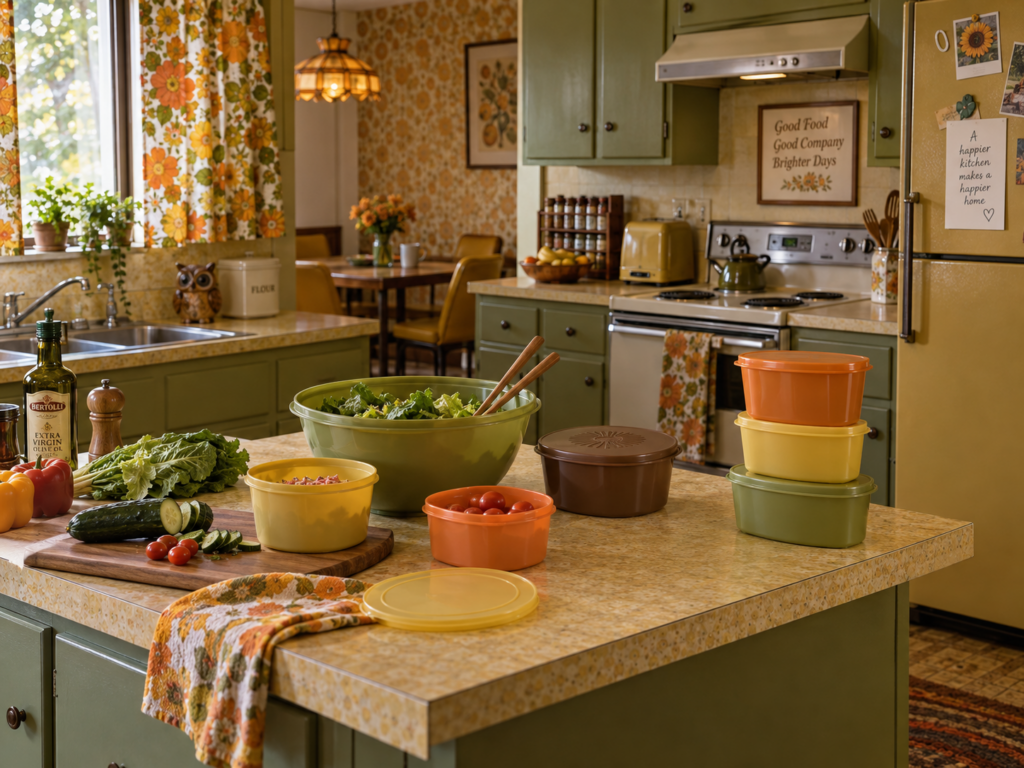
By the 1960s and especially the 1970s, American interiors increasingly embraced stronger colors and earthier combinations. Avocado greens, warm yellows, oranges, browns, and other bold tones became familiar sights in kitchens.
Tupperware participated in those changes rather than remaining visually tied to its earliest products.
That creates an important lesson for collectors: color can suggest a period, but color alone should not be used to date a piece.
Popular designs could remain in production for years. Similar shades could appear again. Pieces could also discolor with age, making an original color appear different from the way it looked when new.
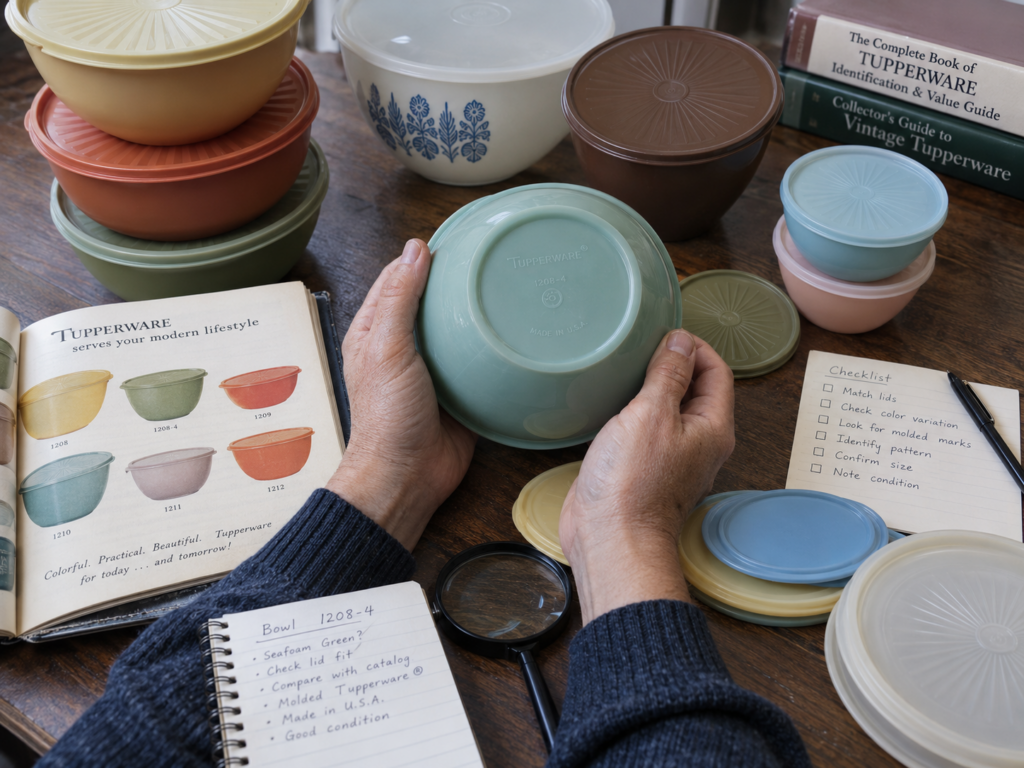
Identification works best when color is combined with shape, molded markings, product numbers, lid construction, size, and period catalogs.
Building a Collection by Color
There is no single correct way to collect Tupperware.
Some collectors pursue particular product lines. Others concentrate on early pieces, unusual serving items, complete sets, promotional material, or objects connected with the famous home-party system.
Color offers another approach.
Someone who loves turquoise can build an entire display around that shade. Another collector might search for examples representing several decades of kitchen design. A complete group of the same item in different colors can show how one basic form was repeatedly refreshed for changing tastes.
That turns collecting into something of a design study.
A bowl that appears ordinary by itself becomes much more interesting when placed beside earlier and later versions.
The same principle applies to related pieces. A group of coordinated canisters, tumblers, serving dishes, or refrigerator containers can recreate the visual language of a particular period far more effectively than a single isolated object.
For collectors interested in decorative display, vintage Tupperware has another advantage: it was intended to be colorful.
These objects do not necessarily need to be hidden in a cupboard to make sense.
Matching Lids Can Be Half the Battle
Tupperware was made to work.
That simple fact creates many of the challenges collectors face today.
Containers were stacked, dropped, washed, taken to picnics, loaned to neighbors, sent home with leftovers, and used for years. Lids disappeared. Bowls became separated from sets. Replacement seals were introduced. Individual pieces from several eras sometimes ended up mixed together in the same kitchen.
Consequently, finding a container does not always mean finding the correct lid.
For a collector trying to assemble an accurate set, the seal deserves as much attention as the container itself. Fit, style, markings, and color can all help determine whether two pieces belong together.
Catalogs are particularly useful for this work. The Smithsonian’s Brownie Wise Papers include Tupperware catalogs spanning 1949 through 1966, along with other company materials documenting the development and promotion of the products.
Period advertising can sometimes answer questions that memory cannot.
What Condition Looks Like in Vintage Plastic
Plastic presents different condition issues than glass, pottery, or metal.
A ceramic bowl may announce its problems with an obvious chip. Vintage plastic can deteriorate more subtly.
Collectors may encounter scratching, staining, fading, warping, surface dullness, hardened seals, lingering odors, or areas that have become brittle with age. Heat and sunlight can also alter plastic over long periods.
Color deserves particularly careful examination.
A bowl and lid that now appear slightly different may once have matched. One piece might have received more sunlight or more frequent washing. Foods can stain certain plastics. Storage conditions can also affect aging.
None of this means that every vintage piece needs to look unused.
Tupperware is fundamentally an everyday collectible. Evidence of ordinary household use can be entirely appropriate, especially when the object remains attractive and structurally sound.
There is a difference, however, between honest wear and serious deterioration.
Collectors planning to display pieces have more flexibility than someone hoping to use vintage containers for food storage. With older plastics, historical and decorative value can be considered separately from whether an item should still perform its original kitchen function.
The Most Interesting Pieces Are Not Always the Oldest
Age is only one part of collectibility.
The earliest surviving Tupperware certainly has historical appeal, but later products can be equally interesting when they capture the design of their own eras.
A distinctive 1970s piece in an unmistakable period color may tell its story just as effectively as an early 1950s bowl.
Product type matters too.
Tupperware produced far more than the familiar nesting bowls. Pitchers, tumblers, canisters, divided servers, condiment containers, specialty food-storage pieces, kitchen tools, and numerous other products appeared over the years.
Then there are pieces connected with the company itself.
Tupperware rallies, jubilees, sales organizations, and dealer activities generated promotional and commemorative material that can cross over into advertising and business-history collecting. The Smithsonian’s Brownie Wise collection preserves not only catalogs but records of Tupperware events and sales activities from the company’s formative home-party years.
A collector therefore has several directions to explore without ever needing to chase the same handful of famous bowls.
Rarity, Value, and the Problem With Asking Prices
Vintage does not automatically mean rare.
Tupperware was enormously successful, and many products were sold in very large quantities. Common bowls and storage containers can still surface regularly at estate sales, thrift stores, flea markets, and household cleanouts.
That abundance is part of the fun.
It also means collectors should be careful when encountering dramatic prices online.
An asking price tells you what someone hopes to receive. It does not establish what similar examples actually sell for.
Actual desirability can depend on the specific product, color, condition, completeness, age, and how often comparable examples reach the market. Unusual promotional items or difficult-to-complete sets may attract different interest from ordinary containers produced in enormous quantities.
A modestly priced common piece can still be a worthwhile collectible if it fills a gap or completes a display.
Collecting does not require every object to be rare.
The Colors of Everyday Life
Tupperware is an excellent reminder that material culture does not have to be expensive, handmade, or centuries old to be historically interesting.
These objects lived ordinary lives.
They held leftovers after dinner, carried food to church suppers and family picnics, and sat on countertops during parties. They even traveled between relatives and neighbors and sometimes never found their way home again.
Their colors helped make an emerging material feel friendly and modern.
Decades later, those same colors can instantly evoke the kitchens in which the containers were once used.
That is ultimately what makes vintage Tupperware worth examining. Beneath the nostalgia is a record of changing technology, changing design, changing domestic habits, and changing ideas about what belonged in the American home.
Sometimes history survives in a museum case.
Sometimes it survives in a turquoise bowl at the back of Grandma’s cupboard.
Let’s Make History—one colorful container at a time.