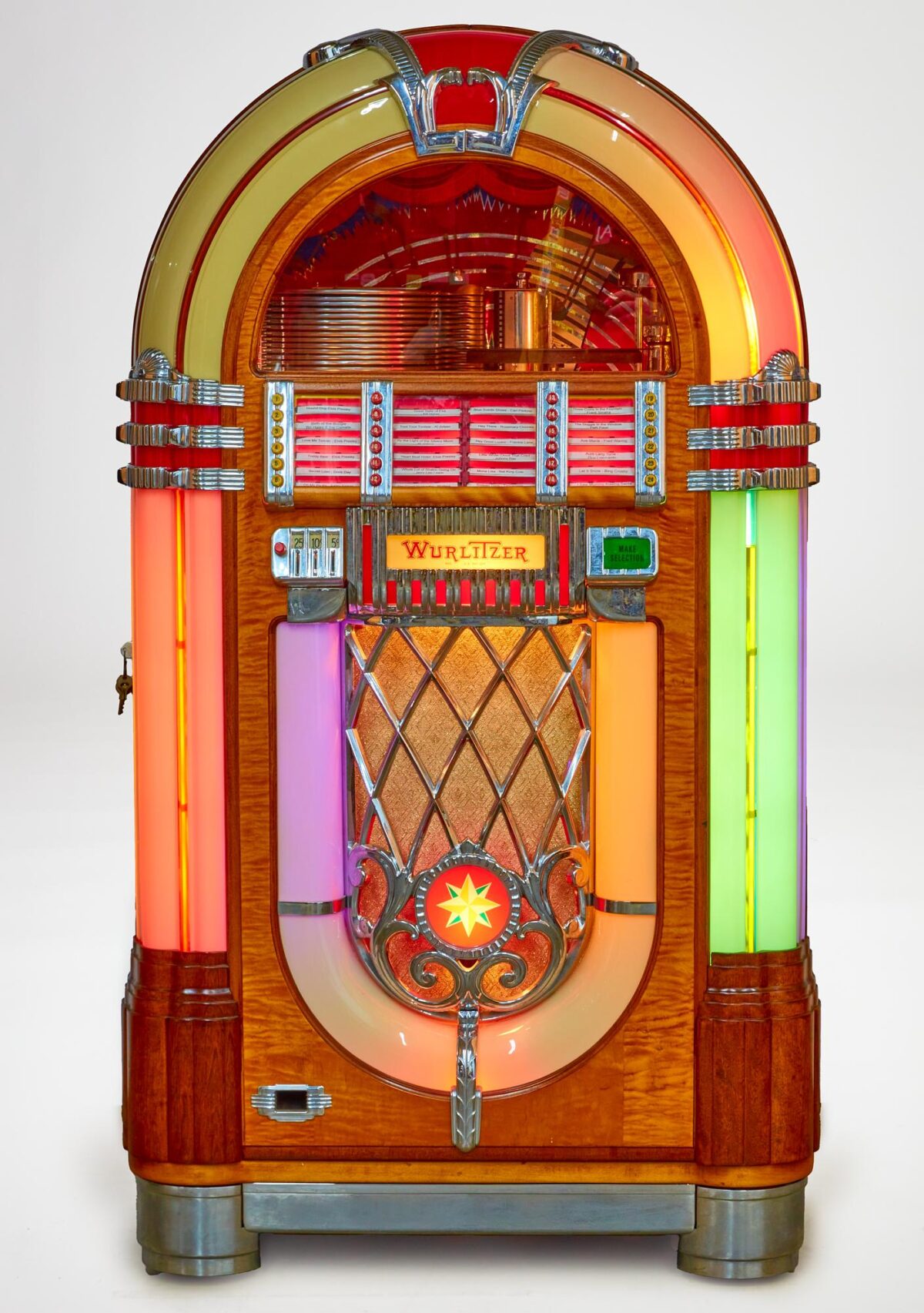
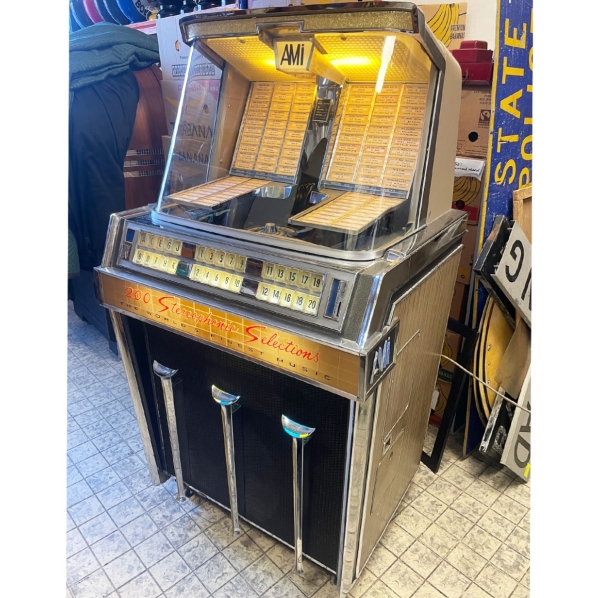
If the 1940s–50s were the jukebox’s “movie-star” years—big chrome smiles and glow-from-across-the-room presence—the 1960s through the 1980s were its working years. This is when jukeboxes adapted to new music, new venues, and new technology: rock and soul taking over the charts, louder rooms, faster turnover, bigger selection expectations, and the slow shift from purely mechanical systems to electronics that started to feel almost computer-like.
Collectors love this era because it’s where the jukebox becomes a true bridge between worlds. You still have the satisfying, tactile ritual of vinyl—dropping in a coin and hearing a 45 crackle to life—but you also start seeing digital selection, solid-state sound, remote wallboxes, and finally, the first wave of compact disc machines at the end of the 1980s. In other words: this is the era where the jukebox evolves from a classic object into a modern machine.
Let’s walk through what changed, what stayed the same, and how collectors can approach 1960s–80s jukeboxes with confidence.
Continue reading “1960s-1980s-From Vinyl to Digital”