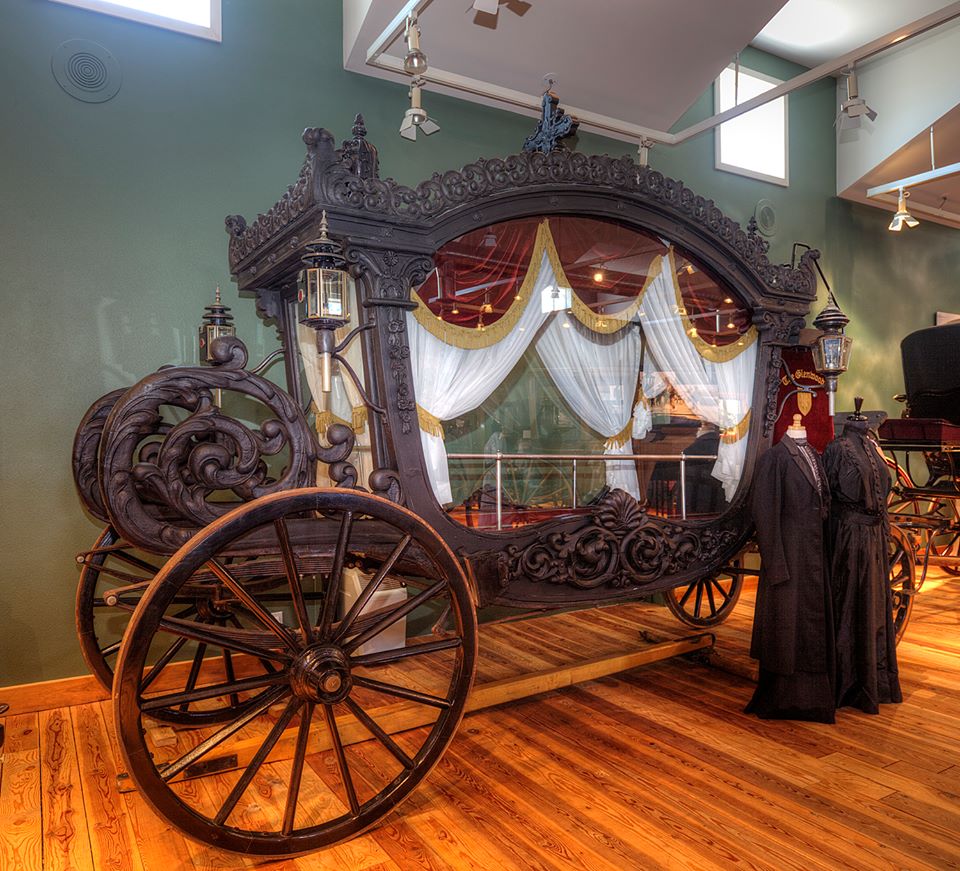
Horse-drawn carriages have a way of slowing the imagination down. They ask us to think about travel before engines, before paved highways, before the quick turn of a key and the assumption that distance is easy. A carriage belonged to a world where transportation meant planning, care, skill, weather, road conditions, animal power, and human craftsmanship all working together.
Across this series, we have looked at carriages as transportation, craftsmanship, technology, transition, and preservation. Now we end by stepping back and asking why they still matter to collectors today. Because carriages are not only beautiful old vehicles. They are rolling history—objects that carried people, goods, status, labor, ceremony, and memory through everyday life.
For collectors, the carriage world offers many entry points. You might never own a full-size brougham, buggy, surrey, or wagon, but you can still collect the story through lamps, trade catalogs, photographs, harness brass, maker’s plates, lap robes, postcards, and local-history ephemera. The carriage era was large, layered, and full of material culture. That is what makes it so rewarding.
Carriages as everyday history
It is easy to romanticize carriages as elegant vehicles for formal occasions, but most horse-drawn transportation was practical. People needed to get to town, deliver goods, visit neighbors, move farm produce, carry mail, reach church, transport tools, and haul supplies.
A carriage or wagon was not just a “nice old thing.” It was part of daily infrastructure.
That matters because collectors often encounter carriage history in ordinary forms:
- a family photograph with a buggy in the background
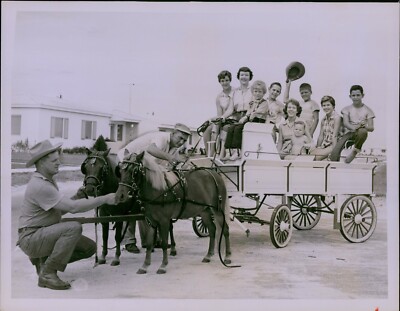
- a delivery wagon pictured in front of a store
- a carriage lamp pulled from a barn
- a livery stable receipt
- a wheel hub saved as rustic décor
- a lap robe folded in an old trunk
These pieces may seem small, but they are evidence of how people moved through the world before motor vehicles became dominant.
The carriage as a social object
Horse-drawn vehicles also reflected social life. A carriage could signal wealth, profession, practicality, or public service. An elegant private carriage told a different story than a farm wagon. A city cab had a different purpose than a family surrey. A hearse, fire wagon, milk wagon, stagecoach, or mail coach each belonged to its own social and working world.
For collectors, this means context is everything. Two vehicles may both be horse-drawn, but they do not carry the same meaning.
Ask:
- Who used it?
- Was it private, commercial, public, ceremonial, or agricultural?
- Was it built for comfort, utility, speed, status, or durability?
- Does it connect to a local business, family, farm, town, or institution?
That context turns an object into a story.
The craftsmanship is part of the appeal
A carriage is a collaboration of trades. Wheelwrights, blacksmiths, coachbuilders, trimmers, painters, harness makers, and finishers all contributed to the finished vehicle. Even practical vehicles required design intelligence: the weight had to be right, the wheels had to hold, the springs had to work, and the horse had to be able to pull it efficiently.
This is why carriage details are so collectible. A pair of lamps, a maker’s plate, a painted spoke, or a strip of surviving upholstery is not just a part. It is evidence of skill.
Collectors should train the eye to notice:
- wheel construction
- iron tires and hubs
- springs and undercarriage details
- hand-applied striping
- original upholstery or leather
- maker marks and plates
- repairs made during the vehicle’s working life
The more closely you look, the less “simple” a carriage becomes.
The transition to automobiles makes carriage history even richer
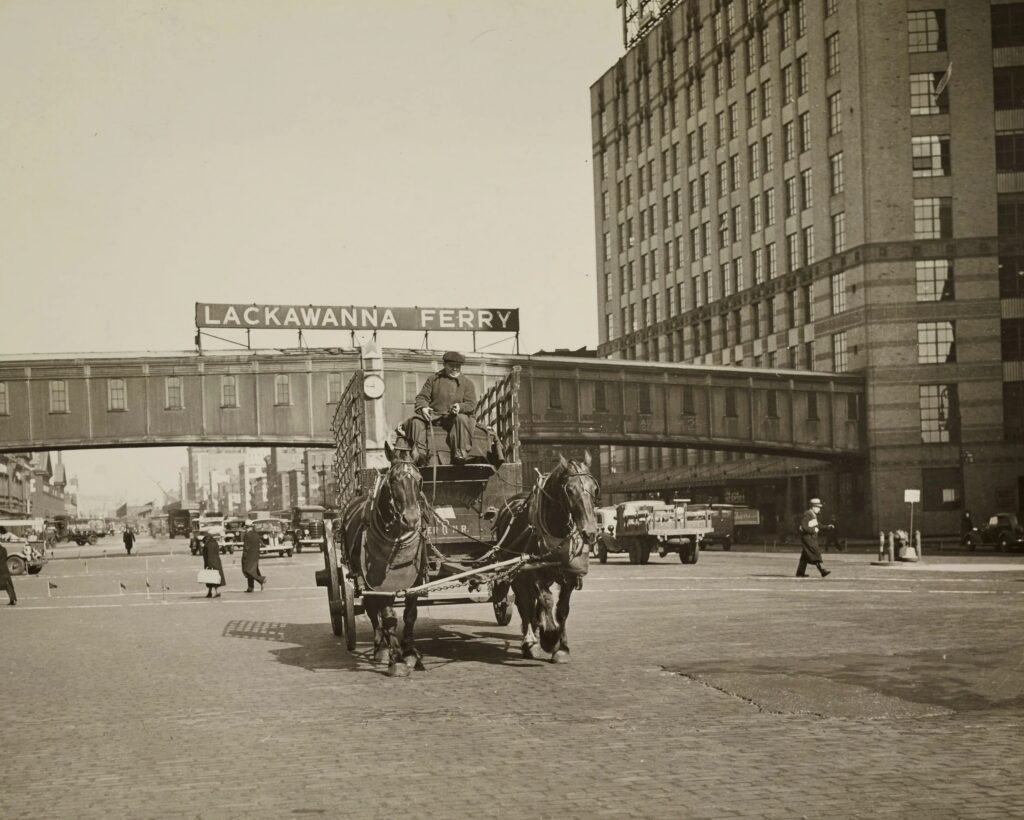
The carriage era did not disappear in one clean moment. Horses, streetcars, bicycles, wagons, and automobiles shared roads for years while the transportation world changed around them. That transition left behind fascinating collectibles.
This is where horse-drawn carriage collecting overlaps with early automobile history. Some carriage makers adapted to automobile bodies. Some wagon businesses shifted into motor-related work. Early cars borrowed language, body styles, upholstery practices, and construction knowledge from carriage building.
For collectors, transition-era material is especially interesting:
- carriage maker catalogs that overlap with motor-era advertising
- street photographs showing both horses and automobiles
- livery stable documents from the early 20th century
- early auto ephemera using carriage language
- Studebaker-related wagon and early automobile material
- carriage lamps, robe rails, and hardware repurposed or preserved after use
The end of the carriage era is not just a decline story. It is a bridge story.
Collecting the full carriage
Owning a complete carriage is a serious commitment. These are large, fragile, multi-material antiques that require space, stable storage, and careful handling. But when properly preserved, a full carriage can be a remarkable centerpiece.
Collectors evaluating a complete vehicle should look at:
- structural stability
- condition of wheels, hubs, spokes, and iron tires
- body wood and joints
- springs, axles, shafts, and poles
- paint, striping, and finish
- upholstery, leather, and trim
- maker’s plate or identifying marks
- signs of restoration or replacement parts
- provenance and documentation
A carriage does not need to be perfect to be important. In fact, original surfaces, honest wear, and visible repair history can make a vehicle more meaningful than a shiny restoration that has erased its past.
Collecting carriage history in smaller forms
Most collectors will never have room for a full carriage, and that is perfectly fine. Their history is rich with smalls and paper items that are easier to store, display, and research.
Carriage lamps
Carriage lamps display beautifully and often include glass, metalwork, brackets, and maker details. Matched pairs are especially attractive.
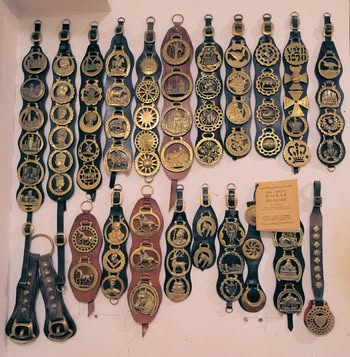
Harness brass and rosettes
These pieces connect directly to the horse and harness system. They are small, decorative, and easy to group in displays.
Trade catalogs and advertisements
Carriage catalogs are excellent reference material. They show body styles, pricing, finishes, terminology, and maker information.
Photographs and postcards
Images can show carriages in use—on streets, farms, at storefronts, or in family portraits. These are some of the best ways to understand real-life context.
Maker’s plates and hardware
A maker’s plate can connect an otherwise anonymous object to a specific shop, town, or company. Hardware pieces also show the practical engineering of the carriage world.
Display ideas for carriage collectors
Carriage-related collections work especially well when displayed as a story rather than a pile of parts.
Try these approaches:
The “road before cars” display
Combine a carriage photograph, a lamp, a harness piece, and a trade catalog page to tell a transportation story in one small space.
The maker’s display
Focus on one carriage or wagon maker. Use advertisements, plates, catalog pages, receipts, and photographs if you can find them.
The transition display
Pair horse-drawn items with early automobile ephemera to show the shift from hoofbeats to horsepower.
The local-history display
Collect items tied to your town or region: livery stables, delivery wagons, local carriage shops, farm wagons, or parade images.
The craftsmanship display
Show parts as evidence of skill: a hub, lamp, spoke, piece of trim, or blacksmith-made fitting.
Good display turns objects into conversation.
Preservation basics for carriage material
Whether you collect full vehicles or small accessories, preservation starts with stable conditions.
Complete carriages:
- avoid outdoor exposure whenever possible
- protect from direct sun, dampness, pests, and dust
- support weak parts properly
- document repairs and replacements
- do not repaint or refinish without careful thought
Paper:
- use archival sleeves or folders
- avoid direct light
- keep away from damp storage
- do not tape photographs or catalog pages to display boards
Metal:
- clean gently
- avoid over-polishing
- preserve marks and patina when possible
- store away from moisture
For leather and textiles:
- avoid oils or treatments unless you know they are appropriate
- support fragile pieces
- keep away from heat and direct sun
The goal is not to freeze objects in time, but to slow damage and preserve evidence.
Why carriage collecting still resonates
Carriages connect to themes collectors already love: transportation, craftsmanship, local history, advertising, photography, farming, fashion, social status, and industrial change. They sit at the crossroads of many collecting categories.
They also remind us that history is not only found in famous events. It is found in ordinary movement:
- going to market
- delivering milk
- visiting family
- riding to church
- traveling between towns
- carrying mail
- arriving at a wedding or funeral
- taking goods from rail station to storefront
A carriage made those moments possible.
That is why carriage history is still worth collecting. It shows us a world where travel was slower, more physical, more local, and more dependent on craft. It reminds us that every road once had a different sound.
Horse-drawn carriages are not simply relics of a vanished past. They are rolling records of how people lived, worked, traveled, and adapted. Whether you collect a full vehicle or a single carriage lamp, you are holding one small piece of that movement forward.
Let’s Make History—one rolling story at a time.
Looking for something related?
Dear June Collectibles carries thousands of antiques, vintage pieces, collectibles, ephemera, books, housewares, jewelry, memorabilia, and unusual finds. Inventory changes constantly.
Found something like this while clearing a home or collection?
Before assuming it should be thrown away, tell us what you found. Dear June Collectibles helps families, collectors, executors, and homeowners sort household contents, collections, and estates and identify realistic resale possibilities.