
Some collectibles feel important because of what they are. Others feel important because of who touched them.
Dance memorabilia becomes especially powerful when it connects to a known dancer: a signed photograph, a worn pair of shoes, a costume piece, a program from a historic performance, a letter, a rehearsal note, or a piece of choreography notation. These objects help anchor an art form that is famously difficult to preserve. Dance happens in motion. It lives in bodies, rhythm, timing, breath, and space. Then the performance ends.
Artifacts give us something to hold onto.
For collectors, famous dancer memorabilia sits at the intersection of performance history, celebrity culture, costume, photography, theater ephemera, and personal devotion. But it also requires care. The more famous the name, the more important provenance becomes. A real artifact connected to a major dancer can be fascinating. A vague “said to be” claim can be risky.
This post explores why famous dancer artifacts matter, what kinds of items collectors look for, and how to evaluate them with both excitement and caution.
Why Famous Dancer Artifacts Matter
Dance is one of the most temporary arts. A painting remains on canvas. A sculpture remains in stone or bronze. A dance performance exists in a moment, shaped by a specific body at a specific time.
That is why dancer artifacts carry such emotional weight. They help preserve the edges of something that cannot be fully captured.
A dancer’s artifact might show:
- what they wore
- how they trained
- where they performed
- how they were photographed
- how audiences remembered them
- how their career was promoted
- how their image became part of popular culture
When an artifact is tied to a known dancer, it does more than decorate a collection. It helps document a career.
The Big Categories: What Collectors May Find
Famous dancer memorabilia can appear in many forms. Some pieces are affordable and widely available. Others are museum-level artifacts that require serious documentation and conservation.
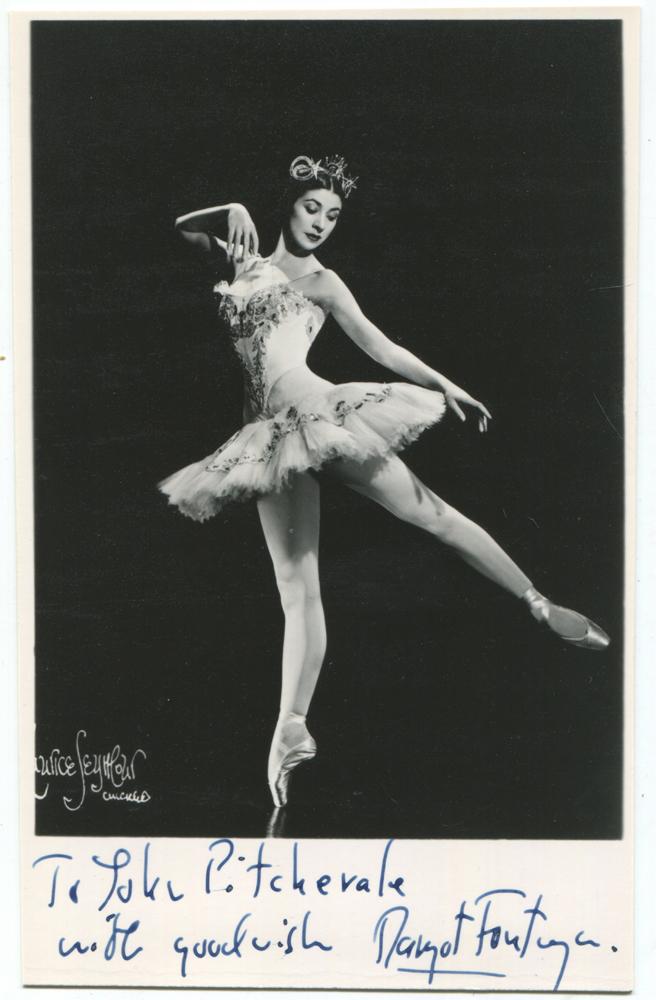
Signed photographs and portraits
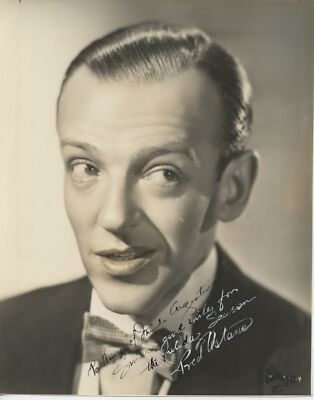
Autographed photographs are one of the most common entry points. They may show a dancer in costume, in a studio portrait, in a publicity pose, or in a later career image.
Collectors look for:
- clear signature placement
- good image quality
- photographer or studio marks
- inscription to a named person
- period paper and printing style
- evidence that the signature is authentic
A signed photo of a famous dancer can be wonderful, but signatures should be approached carefully. Autographs are among the easiest types of memorabilia to misattribute, misread, or reproduce.
Programs and performance ephemera
Programs are often the best documented paper artifacts because they place a dancer in a specific performance context. A program may identify the venue, date, role, company, conductor, choreographer, and cast.
A program becomes more collectible when it is tied to:
- a debut
- a farewell performance
- a famous role
- an original cast
- a major tour
- a historic company
- an autograph or inscription
A plain program is useful. A program with a ticket stub, cast insert, and dancer signature becomes much stronger.
Shoes, costumes, and wearable artifacts
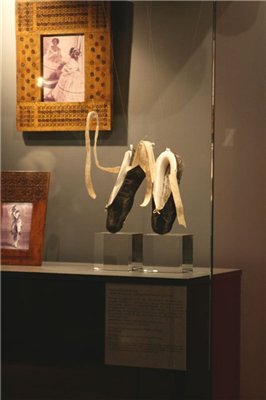
Shoes and costume pieces are among the most emotionally immediate dance artifacts. They show the physical reality of dance: wear, strain, alteration, repair, and use.
Examples include:
- pointe shoes
- ballet slippers
- tap shoes
- character shoes
- rehearsal clothing
- costume fragments
- headpieces
- gloves, fans, sashes, or accessories
These pieces require the strongest provenance. A pair of shoes “like the ones worn by” a dancer is different from a pair actually worn by that dancer. A costume “from a production” is different from a costume worn by a named performer on a specific date.
Letters, notes, and personal papers
Personal papers can be deeply valuable because they show the dancer as a working artist, not only as a public image.
These may include:
- correspondence
- rehearsal notes
- contracts
- tour documents
- teaching notes
- diaries or journals
- studio records
- choreographic notes
Institutions such as the Library of Congress and the New York Public Library preserve major dance-related archives because paper trails help researchers understand how performances were created, funded, toured, reviewed, and remembered.
Awards, medals, and presentation items
Some dancers received medals, plaques, honorary awards, and commemorative objects. These can be highly desirable when they are clearly documented and tied to a known career moment.
As with all high-profile memorabilia, documentation matters. An award with an engraved name, date, organization, and supporting provenance is much stronger than an unidentified trophy with a dramatic story.
Famous Names Collectors Often Encounter
The dance world is broad, and “famous” depends on genre, era, and collecting community. Ballet collectors may focus on one group of names, while musical theater, tap, modern dance, ballroom, or film dance collectors may focus on another.
Collectors may encounter material connected to figures such as:
- Anna Pavlova
- Vaslav Nijinsky
- Tamara Karsavina
- Margot Fonteyn
- Rudolf Nureyev
- Mikhail Baryshnikov
- Martha Graham
- Alvin Ailey
- Katherine Dunham
- Isadora Duncan
- Josephine Baker
- Fred Astaire
- Ginger Rogers
- Gene Kelly
- Gregory Hines
- Bob Fosse
This list is not a ranking. It simply shows how wide the field can be. Dance memorabilia crosses ballet, modern dance, tap, film, theater, nightclub performance, concert dance, and popular entertainment.
The Difference Between “Associated With” and “Used By”
This is one of the most important collector lessons in the category.
An item can be connected to a dancer in several different ways:
Produced during their career
A program, magazine, or photograph may come from the dancer’s active period but not have been owned or handled by them.
Signed by the dancer
A photograph or program may have an autograph, making it personally connected even if it was not used in performance.
Owned by the dancer
An object may come from an estate, collection, or sale and have documentation showing ownership.
Worn or used in performance
This is usually the strongest claim—and the one that needs the strongest evidence.
Attributed to the dancer
“Attribution” means there is a claim or belief, but the evidence may not be complete. Attributed items can still be interesting, but they should be labeled honestly.
For collectors, these distinctions matter because they affect both value and ethical description.
Provenance: The Heart of Famous Dancer Collecting
The more important the name, the more important the paper trail.
Good provenance can include:
- auction records from a reputable sale
- estate documentation
- letters from the dancer, family, company, or archive
- photographs showing the item in use
- wardrobe labels or production tags
- matching images from a known performance
- inscriptions with dates and names
- original owner notes from the time of acquisition
Weak provenance includes phrases like:
- “believed to be”
- “from the estate of”
- “said to have been worn by”
- “purchased from someone who knew the dancer”
- “looks like the one in the photo”
Those phrases are not automatically false, but they are not proof by themselves. A good listing or collection label should make the level of certainty clear.
Autographs: Delightful, but Not Foolproof
Signed dancer memorabilia can be very collectible, especially when the signature appears on a program, photo, or souvenir book connected to a specific performance.
When evaluating autographs, consider:
- Does the ink look appropriate to the claimed period?
- Does the signature sit naturally on the item?
- Is it personalized to someone?
- Does the handwriting resemble known examples?
- Is there a photo or note documenting when it was signed?
- Are there multiple signatures that make sense for the cast or company?
Be cautious with overly perfect signatures on low-quality reproductions. Also remember that secretarial signatures, printed signatures, and stamped signatures exist in many celebrity categories.
Photographs: Public Image and Performance Identity
Dance photographs are among the most beautiful artifacts in this collecting field. They freeze motion, costume, and personality in a way that can become iconic.
Collectors should look for:
- period printing
- photographer stamps
- press captions
- agency labels
- handwritten identifications
- costume or role notes
- evidence of later reproduction
A press photograph may have crop marks, stamps, labels, or editorial notations. These marks can actually add interest because they show how the image circulated publicly.
Studio portraits, meanwhile, often show the dancer as they wanted to be remembered: elegant, powerful, graceful, romantic, modern, comic, or dramatic.
Costumes and Shoes: The Most Personal Artifacts
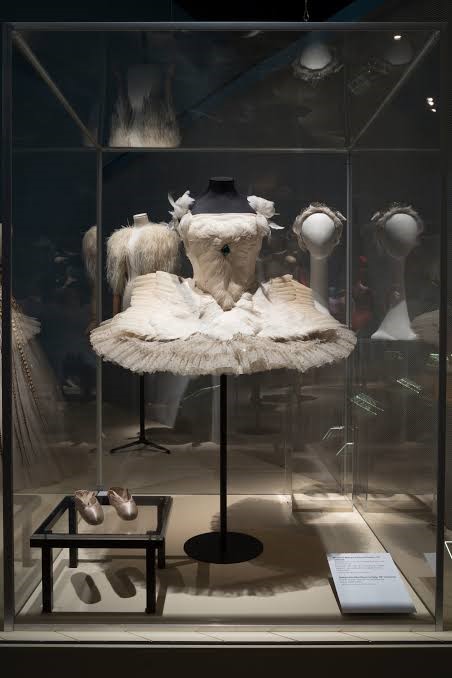
Shoes and costumes sit closest to the dancer’s body, which makes them emotionally compelling. They also present the biggest preservation challenges.
Textiles can fade, shatter, stain, crush, attract pests, and suffer from poor storage. Shoes may become brittle, misshapen, or unstable. Sweat, stage makeup, rosin, and repairs are all part of the object’s life.
When evaluating shoes or costume pieces, ask:
- Is the dancer identified?
- Is the production identified?
- Is the date or era identified?
- Is there a label, tag, or inscription?
- Is there supporting documentation?
- Is the item stable enough to preserve?
- Has it been altered, repaired, or displayed poorly?
A worn artifact can be more moving than a perfect one, but active deterioration should be taken seriously.
Film, Television, and Musical Theater Dance Artifacts
Not all famous dancer memorabilia comes from ballet or concert dance. Film and stage dance created some of the most recognizable dancer images of the 20th century.
Collectors may look for:
- lobby cards
- movie stills
- theater programs
- pressbooks
- sheet music
- cast recordings
- signed photos
- choreography notes
- rehearsal images
- costume design sketches
Film dancers and musical theater performers are often collected across multiple categories at once: dance, cinema, theater, music, and celebrity memorabilia. That crossover can increase demand, especially for well-known names.
What Makes a Famous Dancer Artifact Valuable?
Value depends on several overlapping factors.
Importance of the dancer
Major figures generally attract more interest, but fame within a specific dance community can matter just as much as mainstream recognition.
Importance of the object
A signed later photograph is collectible. A documented performance-worn costume from a signature role is far more significant.
Specificity
The more specific the connection, the stronger the piece:
- who
- what
- where
- when
- how it was used
- how it was obtained
Condition
Condition matters, especially for paper and photographs. However, performance-used items may show wear as part of their value.
Provenance
For famous dancer artifacts, provenance can be the difference between a conversation piece and a serious collectible.
Care and Display Tips
Dance artifacts are often fragile. Good care should protect the item without erasing its history.
Paper and photographs
- Store in acid-free sleeves or folders.
- Avoid damp spaces.
- Keep away from direct sunlight.
- Do not use household tape for repairs.
- Frame with UV-protective glazing when possible.
Shoes and textiles
- Support with acid-free tissue.
- Avoid crushing or hanging fragile garments long-term.
- Keep away from light, moisture, and pests.
- Use shadow boxes or covered cases for display.
- Avoid frequent handling.
Autographed items
- Keep signatures away from strong light.
- Avoid touching inked areas.
- Do not laminate or permanently mount valuable signed paper.
- Document authentication or provenance separately.
Display Ideas for Famous Dancer Memorabilia
A strong display tells the story clearly.
Try pairing:
- a signed photo with a program from the same production
- a ticket stub with a cast photograph
- pointe shoes with a dancer biography card
- a costume sketch with a production program
- a film still with sheet music or a lobby card
- a performer autograph with a period advertisement
The goal is not just to show the item. It is to show why the item matters.
Why These Artifacts Still Move Us
Famous dancer artifacts remind us that brilliance is physical. Dancers train, travel, rehearse, sweat, perform, age, and leave behind traces. A shoe, a program, a photograph, or a signature is not the dance itself—but it is a doorway back to it.
That is why these pieces matter. They preserve the human presence behind the performance.
Let’s Make History—one signature step at a time.
Looking for something related?
Dear June Collectibles carries thousands of antiques, vintage pieces, collectibles, ephemera, books, housewares, jewelry, memorabilia, and unusual finds. Inventory changes constantly.
Found something like this while clearing a home or collection?
Before assuming it should be thrown away, tell us what you found. Dear June Collectibles helps families, collectors, executors, and homeowners sort household contents, collections, and estates and identify realistic resale possibilities.