By the time cigar labels reached their golden age of color, they had already become more than packaging. They were miniature showpieces—bright lithographed scraps of advertising art with portraits, medals, factories, flags, tropical scenes, elegant women, famous names, and ornate lettering. It is no surprise that people began saving them.
Between roughly 1890 and 1920, cigar labels and bands fit perfectly into a larger culture of collecting paper: scrapbooks, trade cards, albums, postcards, die-cuts, advertising labels, and colorful printed “scraps.” Cigar labels had all the right ingredients for a craze. They were attractive, plentiful, varied, and often available to ordinary people through cigar boxes, shops, printers, and leftovers from the trade.
For today’s collectors, this period is especially fascinating because it helps explain why so many labels survived—and why they still feel so collectible now. The original cigar may be long gone, but the paper art still works.
Why 1890–1920 Was Prime Collecting Territory
The late 19th and early 20th centuries were ideal conditions for cigar label collecting. The cigar industry was competitive, printing technology was visually impressive, and consumers were already used to saving attractive paper.
Cigar makers needed labels that could stand out in a crowded marketplace. Lithographers responded with increasingly elaborate designs: bold color, metallic gold, embossing, dramatic portraits, decorative borders, and eye-catching typography.
That meant labels were not just useful. They were desirable objects in their own right.
A customer, shopkeeper, child, printer, or paper collector could look at a label and see something worth saving. It was colorful, detailed, and it had a subject. It could be pasted into a scrapbook, traded, sorted by theme, or kept as a souvenir of a brand, place, person, or image.
Scrapbook Culture and the Joy of Saving Paper
To understand the cigar label collecting craze, we have to think like a paper saver.
Before digital images, printed scraps were everywhere—and they were worth looking at. People saved calling cards, trade cards, greeting cards, postcards, advertising labels, ticket stubs, magazine clippings, die-cuts, and chromolithographed images. Scrapbooks became places where everyday print culture was preserved, rearranged, and enjoyed.
Cigar labels fit naturally into that world.
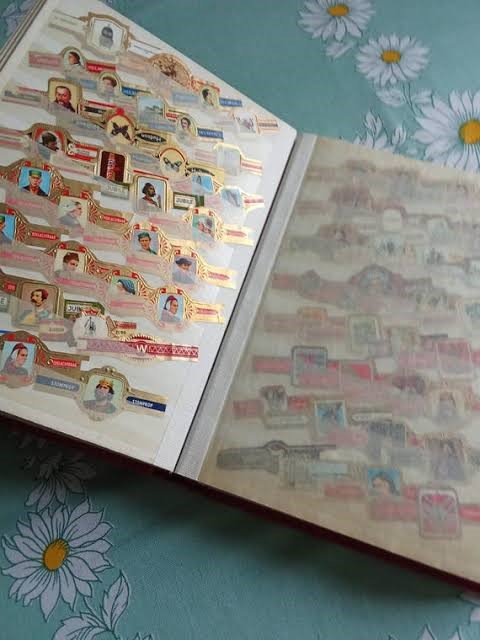
A cigar label could be pasted into an album beside trade cards, political cartoons, theater scraps, or magazine illustrations. Cigar bands, because they were smaller and more uniform, could be arranged in rows, sorted by color, brand, country, or design.
That album habit is one reason collectors today still find old cigar bands and labels in scrapbooks. Sometimes they were carefully mounted, sometimes they were glued in heavily, and sometimes they were mixed with other ephemera in a way that tells us as much about the collector as the labels themselves.
Cigar Bands: Small, Colorful, and Perfect for Albums
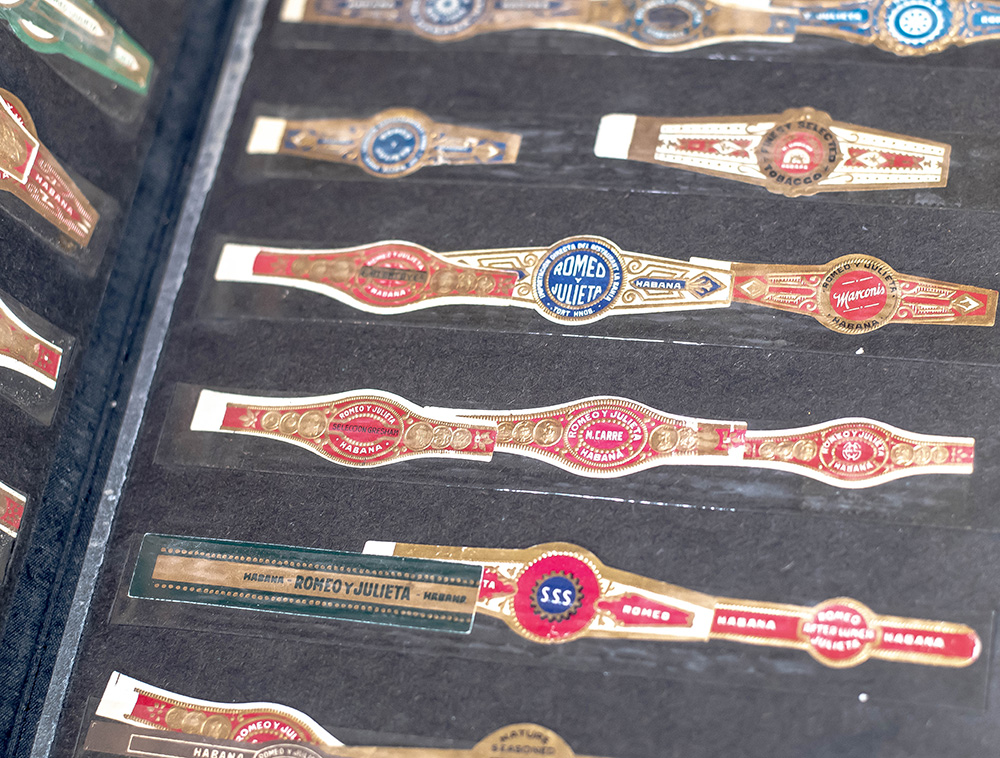
Cigar bands were especially suited to collecting. They were small, decorative, and available in quantity. A band could be removed from a cigar, saved from a box, acquired from a shop, or traded with another collector.
Collectors liked them because they worked well visually:
- Similar size made them easy to arrange.
- Bright colors created strong album pages.
- Gold accents and crests gave them a jewel-like look.
- Brand names and designs offered endless variety.
A page of antique cigar bands can feel almost like a stamp album. The pieces are tiny, but together they create a rhythm of color, typography, and ornament.
Today, cigar band albums are collectible both as groups of individual bands and as documents of collecting behavior. An intact old album may tell a better story than the same bands separated and sold one by one.
Box Labels: Bigger, Bolder, and Built for Display
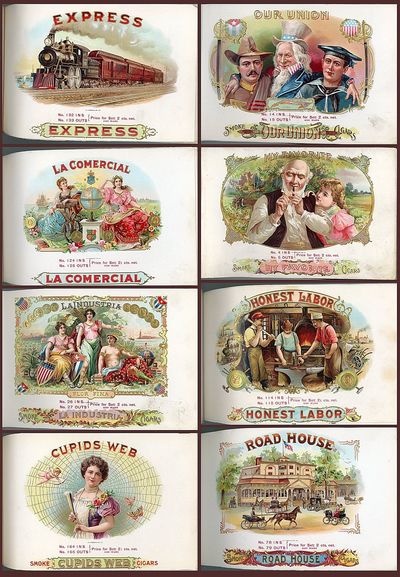
Cigar box labels offered a different kind of collecting pleasure. They were larger than bands and often more dramatic. A full inner box label could include a complete scene: a landscape, portrait, political image, romantic figure, ship, factory, medal display, or elaborate brand presentation.
These labels were made to impress from the inside lid of a cigar box, but collectors quickly saw their display potential. Once removed from the box—or saved as unused printer’s stock—they could be mounted, framed, or stored as colorful examples of advertising art.
Box labels tend to appeal to collectors who like:
- Lithography and printing history
- Advertising art
- Americana
- Political memorabilia
- Local or regional brands
- Tropical and Cuban-themed imagery
- Strong graphic design
They are also highly visual, which makes them easy to enjoy even without deep knowledge of tobacco history.
Printer’s Proofs, Sample Books, and Trade Material
Not every surviving cigar label passed through a cigar shop. Some came from the printing side of the industry.
Printers produced proofs, sample sheets, and reference materials for cigar labels. These items can be especially interesting because they preserve the production process: color stages, unused labels, alternate designs, and examples meant to show what a lithographic firm could do.
Collectors prize this kind of material because it offers a behind-the-scenes view. A finished label shows the sales image. A proof or sample book shows the working world that created it.
When looking at printer-related material, pay attention to whether the labels are:
- Loose finished labels
- Progressive proofs
- Bound sample pages
- Salesman’s or trade samples
- Sheets with multiple labels
- Labels never applied to boxes
These pieces may not have the same “used in a shop” history as a label still attached to a cigar box, but they can have stronger printing-history appeal.
What People Collected: Themes and Categories
The collecting craze was helped by the sheer variety of designs. There was always another subject to chase.
Common collecting themes included:
Famous people and public figures
Presidents, military leaders, actors, writers, athletes, and political figures appeared on labels. These cards and labels appealed beyond tobacco collecting because they tied into broader popular culture.
Women and beauty imagery
Many labels featured idealized women in elegant clothing, theatrical poses, or decorative settings. These pieces remain popular because they are visually strong and often beautifully printed.
Patriotic designs
Flags, eagles, shields, Capitol scenes, military imagery, and national symbols made labels feel authoritative and timely.
Animals and novelty subjects
Animals, comic figures, mascots, and unusual brand names created memorable designs that were easy to save and trade.
Sports and leisure
Baseball, horse racing, boating, hunting, fishing, billiards, and other leisure themes connected cigar branding to masculine recreation and social spaces.
Tropical and Cuban imagery
Palm trees, tobacco fields, ships, Spanish-sounding brand names, and island scenes helped sell romance, origin, and atmosphere.
For modern collectors, these themes still matter. A label’s subject can drive desirability just as much as age or brand.
Trading, Sorting, and the Collector’s Eye
Although we should be careful not to imagine one single organized “cigar label club” culture everywhere, the collecting impulse was real: people saved, sorted, exchanged, and albumed these pieces.
A collector might organize by:
- Brand name
- Color
- Country or place name
- Subject matter
- Portrait type
- Animals
- Fancy gold labels
- Bands vs. box labels
- Personal favorites
This kind of collecting helped turn commercial leftovers into preserved ephemera. The label’s first job was to sell a cigar. Its second life was to become part of someone’s paper world.
Why the Craze Helped Labels Survive
Many paper collectibles survive by accident. Cigar labels survived both by accident and by intention.
They survived because:
- Wooden cigar boxes were reused in homes and workshops.
- Labels were attractive enough to save.
- Bands fit neatly into albums.
- Scrapbookers pasted them alongside other printed scraps.
- Printers kept proofs and samples.
- Some unused stock remained after brands changed or disappeared.
This is why cigar labels today can come from many sources: intact boxes, loose labels, albums, proof books, dealer stock, estate collections, and mixed ephemera lots.
Each source affects condition. A label saved loose may be clean but curled. A scrapbooked label may have glue damage. A box label may have hinge wear. A printer’s proof may be crisp but lack retail-use history.
What Collectors Should Look For Today
When evaluating cigar labels and bands from the 1890–1920 collecting period, look for a combination of visual strength, condition, and context.
Strong graphics
The best pieces command attention quickly. Look for bold portraits, unusual subjects, crisp lettering, and rich colors.
Complete borders
Many labels lose corners or outer edges when removed from boxes or scrapbook pages. Complete margins are a major display advantage.
Color and gold
Bright color, intact metallic detail, and visible embossing can make a label far more appealing.
Clean paper
Foxing, staining, fading, tears, and glue residue all affect value. Some flaws are acceptable, but they should be reflected in price.
Album context
An album page or old scrapbook can add historical interest. Before removing labels from an album, consider whether the page itself tells part of the story.
Subject appeal
A common label with a wonderful subject may be more desirable than a scarcer label with weak artwork.
The Collector’s Dilemma: Remove or Preserve?
One of the biggest questions with scrapbooked cigar labels is whether to remove them.
The safest answer is usually: don’t rush.
Old scrapbook paper can be brittle, and old glue can be stubborn. Removing a label may thin the paper, tear corners, or leave stains. In some cases, the album page is historically interesting because it shows how the original collector arranged the pieces.
Consider preserving the page intact if:
- The arrangement is attractive.
- The labels relate to each other.
- There are notes, dates, or other ephemera on the page.
- Removal would likely damage the labels.
If you do need conservation, avoid water, steam, tape, and household solvents. Paper ephemera is easy to harm with “quick fixes.”
Displaying a Cigar Label Collection
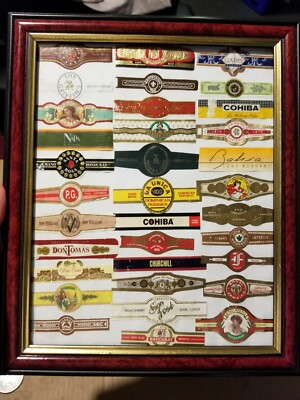
Cigar labels from this era display beautifully because they were designed to catch the eye.
Good display options include:
- Archival binder pages for cigar bands
- Acid-free folders for loose labels
- Framed single labels with UV-protective glass
- Shadow boxes for bands, box pieces, and related ephemera
- Grouped displays by theme: patriotic, tropical, portraits, animals, or sports
Avoid direct sunlight. Reds, blues, and metallic effects are part of the appeal, and light damage can flatten them permanently.
If a label remains attached to a box, think carefully before separating it. The whole box may have stronger appeal than the label alone.
Why This Craze Still Matters
The 1890–1920 collecting craze matters because it proves something collectors know instinctively: people have always saved the things that caught their eye.
Cigar labels were not made as fine art. They were made to sell a product. But once color lithography, brand competition, and paper-saving culture came together, these labels became collectible almost naturally.
That is why they still work today. They are small, bright, historically layered objects that connect advertising, printing, popular culture, and personal collecting habits. A cigar label album is not just a group of brands. It is a record of what someone found beautiful enough to keep.
Next in the series, we’ll look at what happened after the golden age: Decline and Nostalgia Collecting, when changes in taste, packaging, smoking culture, and advertising shifted the place of cigar labels in everyday life.
Let’s Make History—one saved scrap at a time.
Looking for something related?
Dear June Collectibles carries thousands of antiques, vintage pieces, collectibles, ephemera, books, housewares, jewelry, memorabilia, and unusual finds. Inventory changes constantly.
Found something like this while clearing a home or collection?
Before assuming it should be thrown away, tell us what you found. Dear June Collectibles helps families, collectors, executors, and homeowners sort household contents, collections, and estates and identify realistic resale possibilities.