

Imagine gliding down a Victorian lane perched atop a wheel taller than most people. The high-wheel bicycle – better known as the penny-farthing – was more than just an eye-catching way to get around. In the late 19th century, this quirky cycle with one giant wheel and one tiny wheel embodied innovation, status, and a dash of daredevil pride. Fast-forward to today, and antique penny-farthings are beloved collector’s items, restored and displayed with the same awe they inspired over a century ago. In this post, we’ll explore how the penny-farthing was invented and how it worked, the cultural pride it sparked in its heyday, and what it’s like to collect these high-wheel wonders now.
Continue reading “The High-Wheel Era – Penny-Farthings and Pride”Author: Richard
Scrimshaws: A Window into Maritime Life
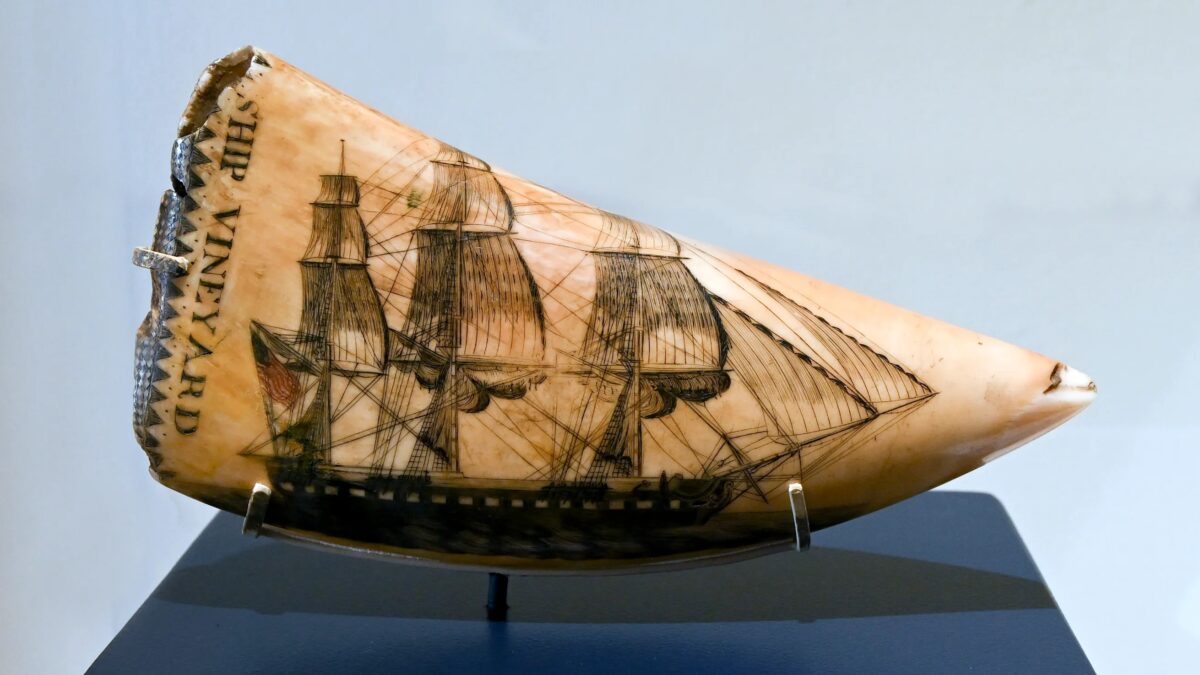
Scrimshaw is often introduced as “whalers’ folk art,” but that phrase can be almost too neat. These pieces weren’t made in calm studios with clean tools and steady light. They were made on working ships—on voyages that could last years—by people who lived in cramped quarters, ate what the ship could carry, and learned to measure time by watches, weather, and the next sighting.
That’s why scrimshaw has such pull for collectors. Yes, it’s beautiful. Yes, it’s skilled. But more than that, it’s intimate. The best scrimshaw pieces feel like small, portable diaries: ships and whales, distant ports, sweethearts, jokes, prayers, flags, flowers, and symbols that meant something to the person who cut them into ivory or bone.
This post looks at scrimshaw as a kind of primary-source snapshot—what it can tell us about shipboard work, emotion, travel, identity, and the everyday texture of maritime life.
Continue reading “Scrimshaws: A Window into Maritime Life”Scrimshaws: Fakes, Reproductions, and Care
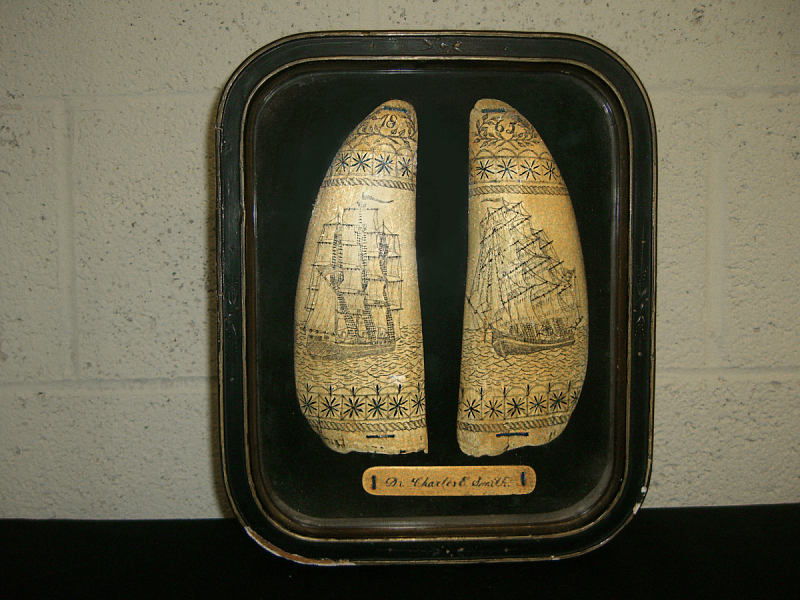
Scrimshaw has a special kind of magnetism for collectors. It’s maritime folk art you can hold in your hand—engraved lines, patient shading, and images that feel like they came straight off the deck of a whaleship.
That appeal is exactly why scrimshaw is also a category where you need a sharper collector’s eye. For well over a century, scrimshaw has been copied, reinterpreted, “improved,” and outright faked. Some reproductions are honestly sold as decorative pieces. Others are made to look older, rarer, or more valuable than they really are. And even when a piece is authentic, scrimshaw materials can be sensitive to light, oils, and improper cleaning.
This post is your practical, collector-friendly guide to three things:
- the most common types of scrimshaw fakes and reproductions you’ll encounter,
- what to look for when evaluating authenticity, and
- how to care for scrimshaw so it stays stable and display-ready.
Scrimshaw Themes and Imagery
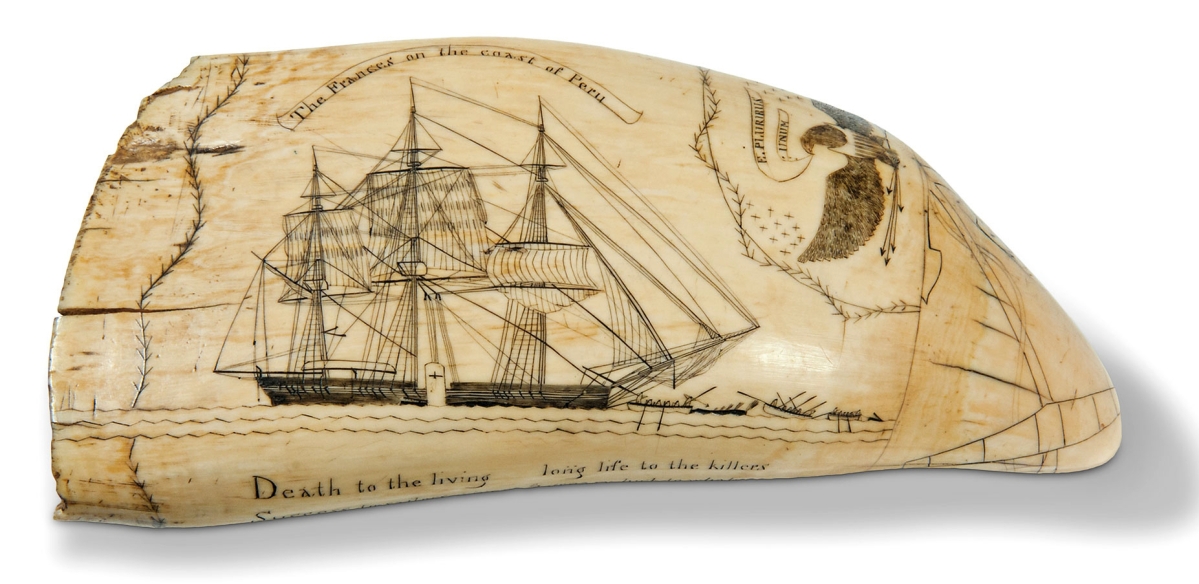
One of the most captivating things about scrimshaw is that it’s rarely “just decoration.” These pieces were made by people who lived at sea for months—or years—at a time, and the images they chose often reveal what they missed, what they feared, what they admired, and what they wanted to remember.
Collectors sometimes fall in love with scrimshaw for the craftsmanship first: the fine lines, the patient shading, the way pigment settles into a cut so clean it still reads centuries later. But the real hook is the imagery. Scrimshaw is storytelling—sometimes documentary, sometimes romantic, sometimes symbolic, and sometimes surprisingly whimsical.
This post explores the most common themes you’ll see in traditional scrimshaw, what those images may have meant to the sailors who carved them, and how collectors can “read” a piece with more confidence.
Continue reading “Scrimshaw Themes and Imagery”Scrimshaw Materials and Techniques
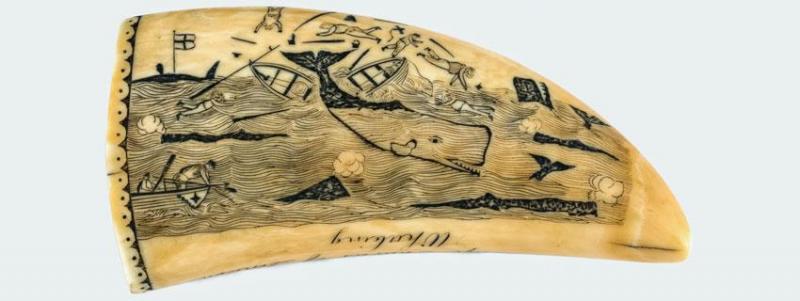
Scrimshaw is one of those collectible worlds where the “how” matters just as much as the “what.” A carved tooth isn’t only about the scene on the surface—it’s also about the material beneath it, the tools that made the lines, and the shipboard ingenuity that turned whaling byproducts into folk art.
For collectors, learning materials and techniques pays off in three ways. First, it helps you appreciate what you’re holding (scrimshaw is often more labor-intensive than it looks). Second, it helps you describe pieces accurately. And third, it gives you a sharper eye when you’re comparing examples—because different materials age differently, and different techniques leave different “handwriting” in the lines.
This post is a tour of the traditional scrimshaw maker’s toolkit: what whalers used, how they prepared the surface, how they transferred designs, and how they got those dark lines to pop against ivory and bone.
Continue reading “Scrimshaw Materials and Techniques”Whalers and the Birth of Scrimshaw
Picture this: It’s the 1840s, and you’re a crewman on a whaling ship in the middle of the Pacific. The thrill of the last whale chase has faded, and now endless weeks stretch on with no whales in sight. The days are long, the nights even longer, and boredom bites harder than the ocean wind. What do you do to keep sane? If you’re like many whalers of the time, you pull out a spare whale tooth or a piece of bone and start carving – whittling away until an image, a design, something – begins to take shape. In those idle hours, a unique art form was born.
That art form is scrimshaw – the engravings and carvings that whalers etched onto whale ivory and bone during long sea voyages. Scrimshaw started as a shipboard pastime in the late 18th and early 19th centuries, turning the tedium of months at sea into creative output. In this post, we’ll explore how scrimshaw came to be, what materials and tools made it possible, and the role these carved treasures played in maritime culture. By the end, you might just see that humble whale’s tooth in a whole new light.
Continue reading “Whalers and the Birth of Scrimshaw”Happy New Year 2026 from Dear June Collectibles

Happy New Year, everyone! I hope 2026 is off to a fantastic start for you. Here’s wishing you a happy, safe, and productive 2026, filled with exciting new adventures—both in life and in collecting. As we turn the page to this fresh year, I want to take a moment to thank each and every one of you for your incredible support throughout 2025. Your enthusiasm and camaraderie are what keep Dear June Collectibles going strong, and I’m so grateful to have you along on this journey.
Continue reading “Happy New Year 2026 from Dear June Collectibles”Thank You for a Wonderful 2025

As 2025 comes to a close, I want to extend a heartfelt thank you to every reader, collector, and visitor who has been part of DearJuneCollectibles.com this year. Whether you followed our educational blog posts, browsed the category features, or added a vintage treasure from our eBay store to your own collection, thank you for making this journey so rewarding. Your enthusiasm for history’s tangible pieces – from quirky flea-market finds to cherished family heirlooms – is what keeps this community vibrant and fun.
Continue reading “Thank You for a Wonderful 2025”Collecting Trivets from Stove to Table
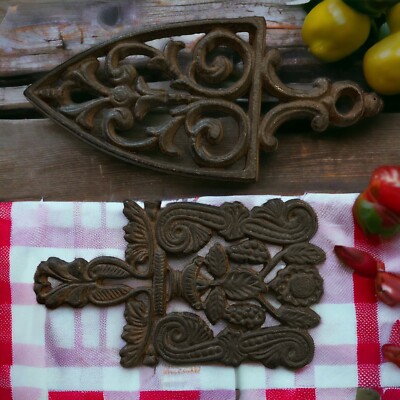
If you collect trivets long enough, you’ll notice something funny: they’re “small” until they aren’t. One turns into a stack. A stack turns into a drawer. A drawer turns into a whole shelf—cast iron next to tile next to brass next to something whimsically shaped like a pineapple that you swear you didn’t need, but somehow couldn’t leave behind.
Trivets are one of the most satisfying kitchen collectibles because they sit right at the crossroads of useful and decorative. They were made to protect tables, sideboards, counters, and linens from heat—yet many were designed with real style: openwork patterns, floral motifs, patriotic themes, animals, advertising, even clever mechanical stands that fold flat.
This post is about building a coherent trivet collection “from stove to table”—not just buying random pieces, but collecting with intention. We’ll cover how to choose a focus, how to pair trivets with related kitchen items, how to store and care for mixed materials, and how to collect on a budget. We’ll finish with a gentle collector’s checklist you can keep in your pocket for your next thrift run.
Continue reading “Collecting Trivets from Stove to Table”
Decorative and Souvenir Trivets
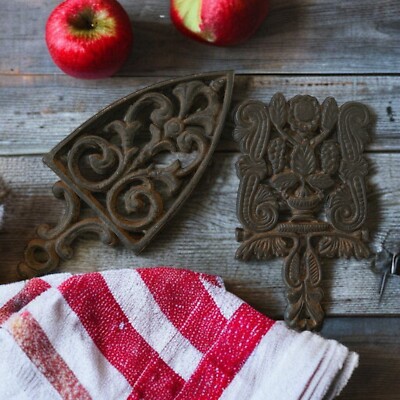
Trivets are the kind of collectible that sneaks up on you. You start with one—maybe a sweet little tile trivet from a favorite trip, or a heavy cast-iron piece that looks like it belonged in your grandmother’s kitchen—and suddenly you’re noticing them everywhere. In antique malls. In estate lots. Hanging on walls as “kitchen art.” Tucked into souvenir boxes like a forgotten postcard.
And that’s the charm: decorative and souvenir trivets sit right at the intersection of usefulness and memory. They’re small enough to display, sturdy enough to survive decades of kitchens, and personal enough to feel like a tiny time capsule.
Let’s talk about what makes these trivets special, how to spot the good ones, and why they’re one of the most satisfying (and display-friendly) categories to collect.
Continue reading “Decorative and Souvenir Trivets”