By the late Middle Ages, the small Venetian island of Murano had become the epicenter of world-class glassmaking. In 1291, the Venetian Republic ordered all glass furnaces to be moved off the crowded main city—not only to reduce the risk of fire but also to guard closely held secrets of the craft. On Murano, entire families devoted themselves to the art of glass. Over generations, their experiments with sand, fire, and mineral colorants transformed molten material into shimmering works of art. Among their most dazzling achievements were beads: small, portable jewels that would travel the globe and carry the prestige of Venice into markets, courts, and villages far beyond the Adriatic.
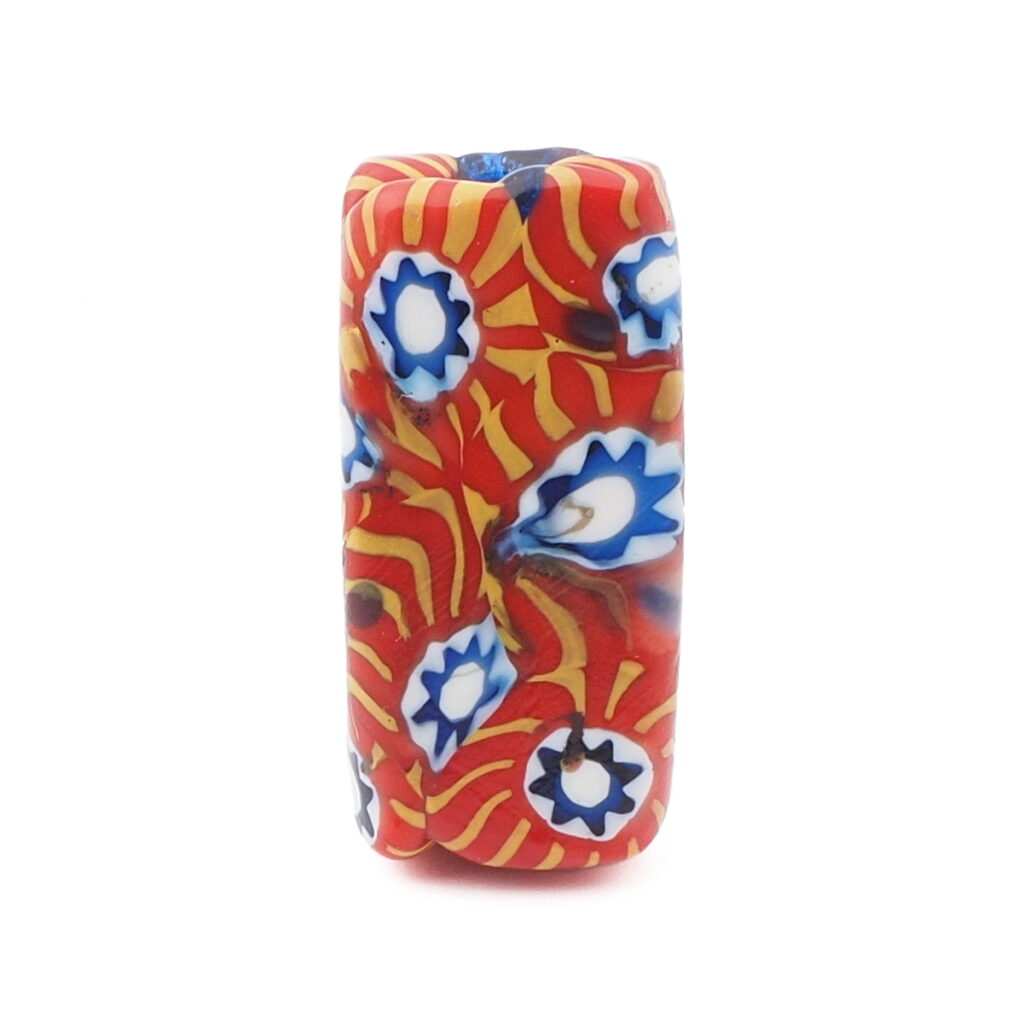
The Millefiori Magic
One of the most iconic Murano techniques was millefiori—literally “a thousand flowers.” Craftsmen fused together rods of differently colored glass into a single cane, then sliced that cane into thin cross-sections. Each slice revealed a miniature flower, star, or geometric burst, perfectly preserved in glass. These were then encased, shaped, or layered into beads.
The result was unlike anything else in Europe. No two beads were exactly alike, and each seemed to hold a garden of color within. Millefiori beads became coveted across the continent, worn by nobles and commoners alike as jewelry, sewn into clothing, or used as talismans. Their compact size made them ideal for trade: portable, durable, and endlessly varied. A single string could carry the brilliance of Murano’s furnaces into the hands of someone who had never seen Venice itself.
The Chevron: A Starburst Across the Seas
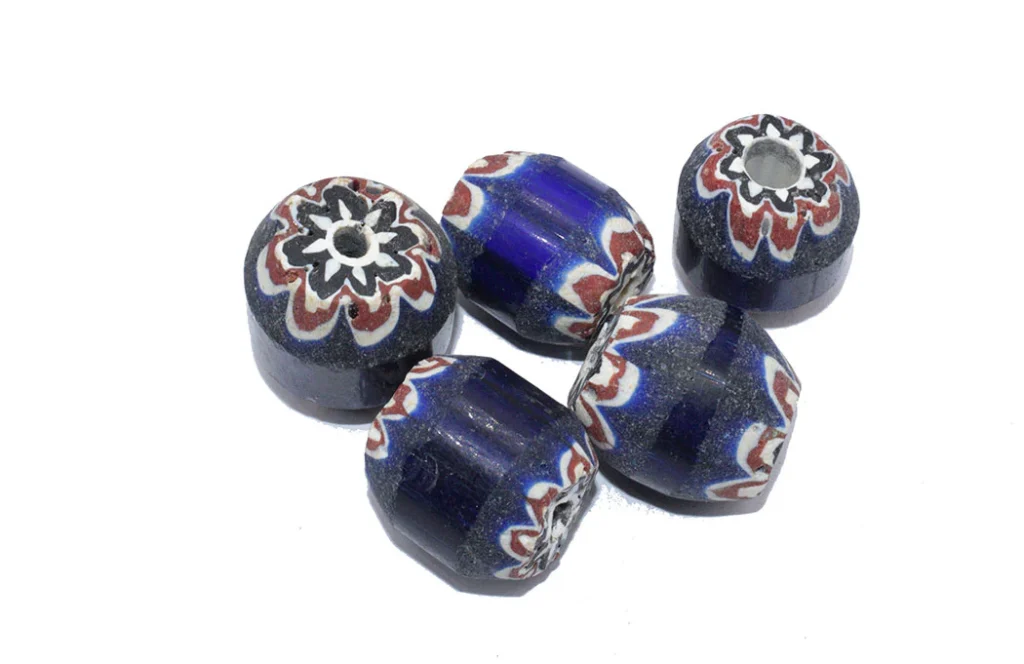
Perhaps the most famous Murano bead is the Chevron, first created around the late 1400s. Unlike millefiori’s floral imagery, Chevrons were built from layered canes of different colors—often red, white, and blue—cut at sharp angles to reveal a starburst or arrow-like pattern. The craftsmanship was so distinctive that Chevrons were immediately recognizable, even from a distance.
These beads soon left the canals of Venice for the caravans and ships of global trade. By the 16th century, they were traveling to Africa, the Americas, and Asia. In West and Central Africa, Chevrons became symbols of wealth and status. Chiefs and kings wore them as regalia, and in some regions, they were reserved for ceremonies, initiation rites, or burial. The layered construction—color stacked upon color—was often interpreted as a sign of depth, continuity, and spiritual power.
So valued were Chevrons that they sometimes functioned as currency, exchanged for ivory, gold, or spices. They became part of the complex and often troubling history of European trade, including their role in the transatlantic slave trade. Yet despite these dark associations, they also entered African traditions in a way that gave them new life, incorporated into crowns, collars, and art that spoke of resilience and beauty. Today, antique Chevrons remain highly prized by collectors, fetching remarkable prices and carrying with them centuries of global connection.
Beyond Murano: The Rise of Bohemia
Murano was never alone in beadmaking, though it set the standard. By the 17th and especially the 18th century, new centers of glass production emerged. The most important was Bohemia—modern-day Czech Republic. Unlike Murano’s focus on intricate artistry, Bohemian beadmakers developed a different specialty: uniform, affordable seed beads.
These tiny beads, often less than 2mm across, were produced in huge quantities. Their affordability meant they quickly became staples in bead embroidery across continents. In Africa, they were woven into elaborate waist belts, crowns, and ceremonial garments. In North America, Czech beads arrived through trade and soon transformed Native regalia. Moccasins, bags, and clothing became canvases for beadwork that told stories, recorded history, and expressed tribal identity.
Where Murano’s Chevrons dazzled as singular treasures, Bohemia’s seed beads democratized adornment, making it possible for large, colorful designs to spread across the world.
Beads as Story and Symbol
Across cultures, beads were rarely “just decoration.” They carried meanings layered into color, pattern, and placement. In Native American traditions, for example, beadwork often told family histories or spiritual stories. A garment could speak as eloquently as a written record. In Africa, specific colors and combinations could signal age, marital status, or community.
This universality—beads as carriers of identity—helped glass beads from Europe find new life abroad. They were not foreign curiosities but raw materials absorbed into living traditions, adapted and reimagined into forms deeply rooted in local culture.
The Modern Legacy
Today, Murano glass beads remain luxury items, celebrated for their craftsmanship and centuries-old tradition. On the island itself, visitors can still walk narrow streets where workshops fire glass in ways not so different from the Renaissance. Family studios pass down techniques generation after generation, producing millefiori, Chevrons, lampworked beads, and new variations that keep the art alive.
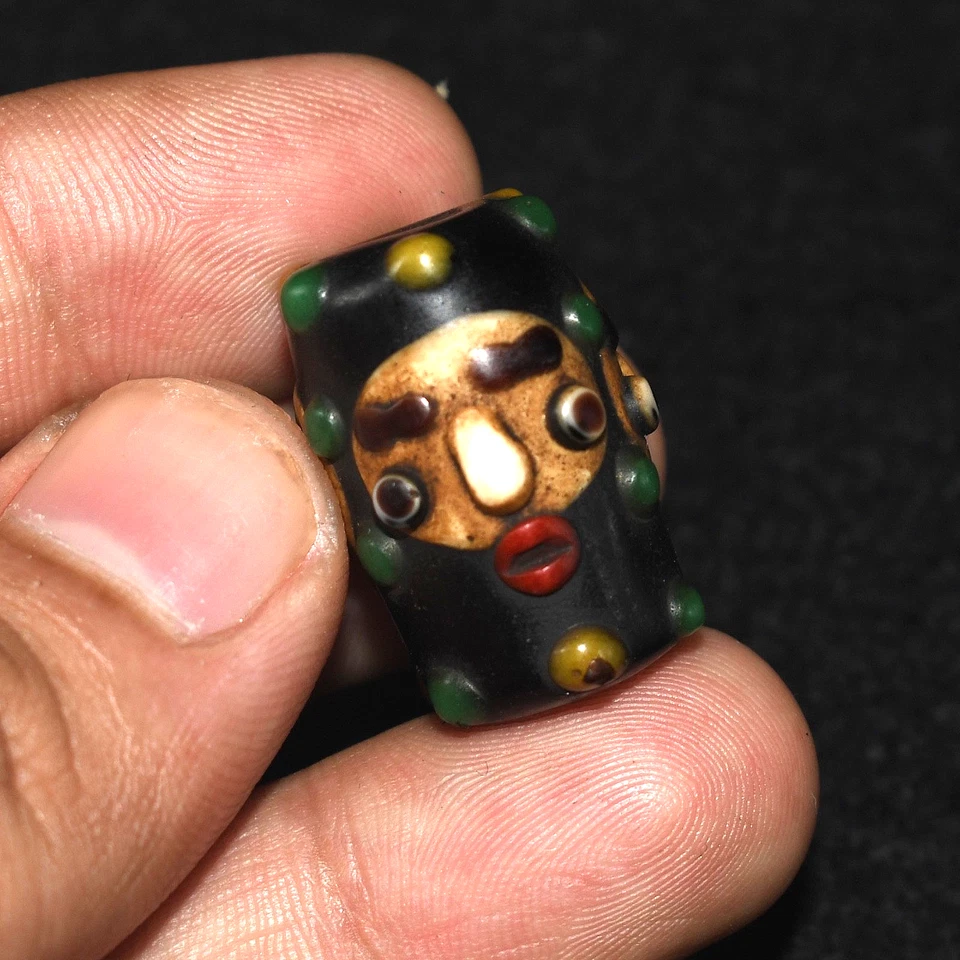
At the same time, contemporary artists around the world have embraced glass beadmaking, often inspired by Murano but not bound to it. Lampworking technology allows modern beadmakers to create astonishingly detailed miniatures—flowers, animals, abstract swirls—on a single bead. Others combine Murano-style artistry with modern aesthetics, experimenting with metallic finishes, dichroic glass, and sculptural forms.
Collectors today prize both antique beads with centuries of history and modern works of wearable art. Museums host exhibitions that trace how something so small could carry such vast cultural weight. And bead enthusiasts, from jewelry makers to cultural historians, continue to marvel at how glass threads the story of human creativity across continents and centuries.
Reflection: Tiny Portals Into the Past
From the glow of a Venetian furnace to the regalia of an African king, from the moccasins of a Plains artisan to the necklace of a Renaissance merchant’s wife, Murano’s glass beads remind us of the extraordinary journey of human art. These tiny objects are more than adornment. They are vessels of story, identity, and exchange.
When we hold a glass bead—whether centuries-old Chevron or freshly made millefiori—we touch a thread that runs through trade routes, rituals, and personal lives. We see proof that beauty, once created, rarely stays in one place. It travels, adapts, and becomes part of something larger.
Do you collect art glass beads or jewelry? Share your favorite piece in the comments and tell us what draws you to it—color, craftsmanship, history, or sheer beauty. Together, we keep this story alive. Let’s make history—one colorful bead at a time.