When we think of antique infant-feeding vessels, the first image that comes to mind is usually a plain, cylindrical glass bottle with measurement marks. But look again — some of the most charming (and perplexing) nursing bottles in history were anything but utilitarian. Many were whimsical, decorative, and even promotional.
“Novelty” nursing bottles sit at the crossroads of childcare, marketing, folk art, and domestic design. Today, they provide a fascinating window into how families once blended nurture, sentiment, and aesthetics in the nursery.
Victorian Charm and Sentiment
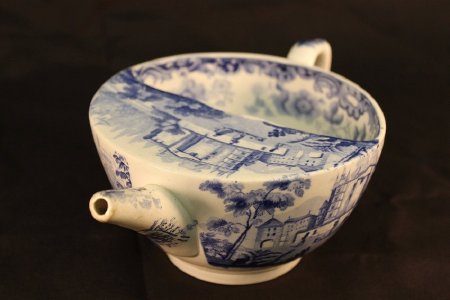
During the 19th century, as feeding technology evolved from pap boats and pewter cups to blown-glass bottles, manufacturers discovered that decoration helped their wares stand out. The era’s love of ornamentation soon reached the nursery.
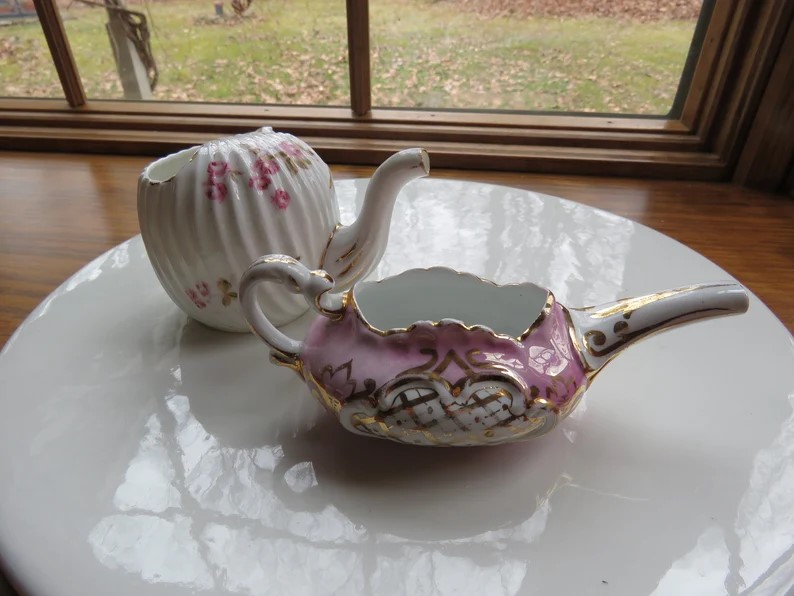
Porcelain and ceramic feeders appeared painted with delicate floral motifs, pastoral scenes, embossed hearts, or cherubic figures. Some bore gilded edges or baptismal inscriptions, transforming a practical vessel into a keepsake. These pieces were often presented as christening gifts or mementos of early childhood — cherished long after the baby outgrew them.
Such decorative feeders reflected Victorian ideals of home, propriety, and domestic refinement. A porcelain bottle with gold trim might have been displayed on a nursery shelf as a token of gentility rather than used daily for feeding. As scientific understanding of hygiene grew later in the century, families increasingly reserved these ornate pieces for sentiment and display rather than practical use.
Anecdote: One late-Victorian porcelain feeder, now held in a British museum collection, is molded in the shape of a lamb and painted with small roses along its sides. While it was likely decorative rather than functional, it captures the tenderness and innocence associated with infancy — a piece designed to soothe the eye as much as the child.
The Rise of Novelty Glass and Promotional Feeders
With the dawn of the 20th century came new materials and marketing possibilities. Glass manufacturers, dairies, and pharmacies began to see nursing bottles not only as feeding tools but also as opportunities for branding and charm.
Glass offered many advantages: it was transparent, non-porous, and easier to sterilize than ceramic or horn. It also lent itself to complex molded forms. Companies experimented with bottles shaped like bears, lambs, reclining babies, or even small milk churns. Some were sold in retail shops; others were given away as promotional gifts by milk suppliers or baby-care brands.
Embossed logos and slogans appeared on the sides of some bottles, advertising purity or modernity. These items blurred the line between nourishment and marketing — a theme that would later define much of 20th-century consumer culture.
Not all novelty bottles were practical. Their fanciful shapes could trap milk in curves or corners, making thorough cleaning difficult. Yet their appeal lay precisely in that blend of playfulness and domestic sentiment. A bear-shaped feeder might not have been ideal for sanitation, but it delighted parents and made the nursery feel more cheerful.
Historical context: The Alimentarium Museum of Food and Nutrition notes that baby bottles “varied in shape and material — some taking animal forms or resembling toys.” These designs echoed a long tradition of merging function with artistry, even when hygiene science was still developing.
Why Collectors Love Decorative and Novelty Bottles
For collectors of domestic artifacts, novelty and decorative nursing bottles are a special category — part medical history, part folk art. Their appeal lies as much in their human story as in their rarity.
Unusual forms draw attention. A feeder shaped like a rabbit, lamb, or baby instantly stands out among standard cylindrical bottles.
Promotional appeal. Bottles embossed with dairy or pharmacy logos bridge advertising and childcare history — objects of both commerce and nurture.
Sentimental value. Many decorative bottles were given as birth or christening gifts. Even when they were never used, they preserved emotional histories of motherhood and family pride.
Design and artistry. Embossing, color, glaze, and mold design all contribute to desirability. In some cases, the artistry outweighs age in determining value.
Condition and provenance. Because decorative feeders were often displayed rather than used, many survive in good condition — though intact rubber teats are extremely rare.
Collector Tip: Seek out animal-shaped feeders, early 20th-century novelty glass in clear or light blue hues, and promotional bottles marked with dairy or baby-supply company names. Handle them carefully; residues inside can indicate authentic use but also risk deterioration.
Decorative Bottles as Cultural Mirrors
These bottles reveal more than changing design tastes — they reflect how society viewed motherhood, childhood, and even commerce.
- Marketing and motherhood: A milk company offering a molded animal bottle as a freebie blurred boundaries between care and advertising, signaling the rise of brand loyalty in the nursery.
- Changing infant care: As germ theory reshaped parenting, glass bottles symbolized “modern motherhood” — a hands-on approach distinct from the era of wet nurses.
- Domestic aesthetics: From Victorian florals to Art Deco sleekness, decorative feeders mirrored interior design fashions. By the 1950s, pastel-colored plastics and novelty shapes echoed mid-century optimism.
- Nostalgia and display: By mid-century, novelty bottles were more likely to be displayed on nursery shelves than used — their purpose shifting from feeding tool to sentimental décor.
Imagine a 1920s nursery shelf: lace booties, a silver rattle, and a porcelain feeding bottle shaped like a lamb. The line between necessity and ornament blurred beautifully — an embodiment of love and domestic artistry.
The Deep Roots of Whimsy
Interestingly, the impulse to decorate infant feeders long predates the Victorians. Archaeologists have discovered ceramic “baby bottles” from Bronze and Iron Age Europe (roughly 1200–450 BCE) shaped like animals or fantastical creatures. Chemical residue analysis showed traces of animal milk inside, suggesting these vessels were used to feed infants or small children.
While vastly older and simpler than modern novelty bottles, these finds show that humans have long linked nurture with imagination — turning even the humblest feeding vessel into an object of beauty and play.
Getting Started with Decorative and Novelty Bottles
If you’re intrigued by these delightful artifacts, consider a few guidelines for collecting:
- Define your scope. Will you collect purely decorative ceramics, novelty glass, or both? Some collectors specialize in a single era, such as Victorian porcelain or early 20th-century molded glass.
- Check condition. Avoid cracks or internal residue that could weaken the glass. Painted decorations should be intact and unfaded.
- Seek provenance. Items with stamped logos, patent marks, or documented origins (such as Hygeia or Alexandra models) add historical value.
- Clean gently. Never use harsh solvents; a mild soap rinse preserves delicate paint or glaze.
- Display with care. Keep them out of direct sunlight to prevent fading or cracking.
While novelty bottles may not command the high prices of rare medical instruments, they remain prized for their design, story, and sentimental power.
Why This History Matters
Decorative and novelty nursing bottles remind us that objects of care can also be works of design and storytelling. Each vessel embodies the spirit of its time — whether Victorian domestic virtue, 1920s marketing creativity, or mid-century nostalgia.
In their small, often overlooked forms, they preserve a record of how families expressed love, status, and imagination through the act of feeding.
Whether you’re drawn by the whimsy of a bear-shaped feeder or the elegant restraint of a gilded porcelain keepsake, each piece connects us to the timeless story of nurture and invention.
Let’s Make History — one adorable bottle at a time.