World’s fairs were built to impress. For a few months, visitors could wander through enormous exhibition halls, encounter unfamiliar cultures, see experimental architecture, examine new machinery, and glimpse competing visions of what the future might become. Then the gates closed, the crowds departed, and many of the spectacular buildings disappeared.
The souvenirs remained.
That temporary nature is part of what makes world’s fair memorabilia so compelling today. A spoon, postcard, medal, drinking glass, booklet, or miniature building may seem modest compared with the immense exposition it commemorated, yet these objects became portable pieces of an experience their owners wanted to remember. World’s fairs have been held in many forms since London’s Great Exhibition of 1851, which brought exhibitors from 25 countries together at the Crystal Palace to showcase industry and technological progress. The exhibition model spread internationally, combining education, commerce, entertainment, national promotion, and spectacle on a remarkable scale.
Taking the Fair Home
Souvenir makers faced an interesting challenge: how do you reduce something enormous enough to occupy acres of land into an object small enough to carry home?
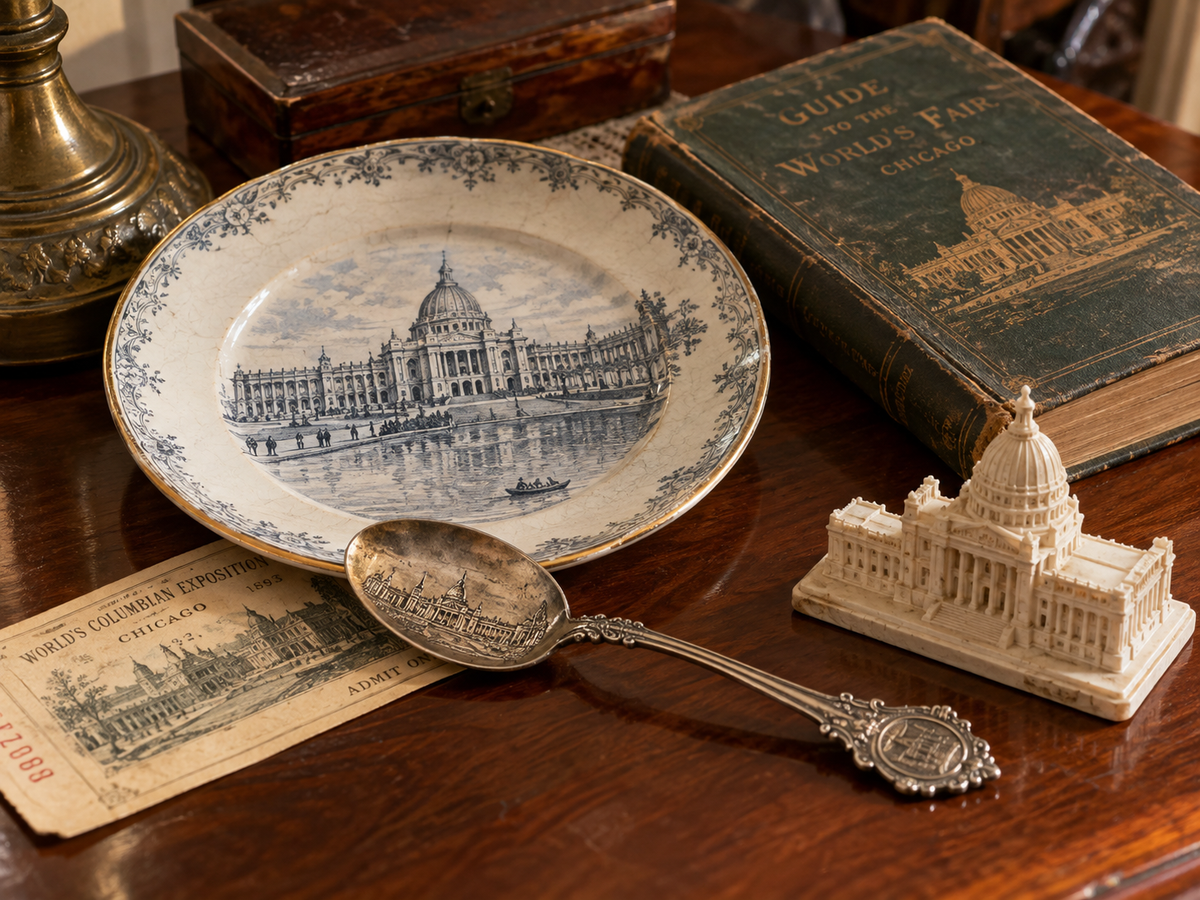
One answer was to reproduce the fair’s most recognizable imagery. Buildings, monuments, logos, transportation systems, mascots, and architectural landmarks appeared on everything from ceramics to jewelry. The Smithsonian’s extensive holdings from the 1893 World’s Columbian Exposition include bowls, tumblers, paperweights, boxes, dishes, and other household objects decorated with views of individual fair buildings and the exposition grounds.
These were not merely objects bearing the words “World’s Fair.” They often functioned as miniature visual records of places that were never intended to survive indefinitely.
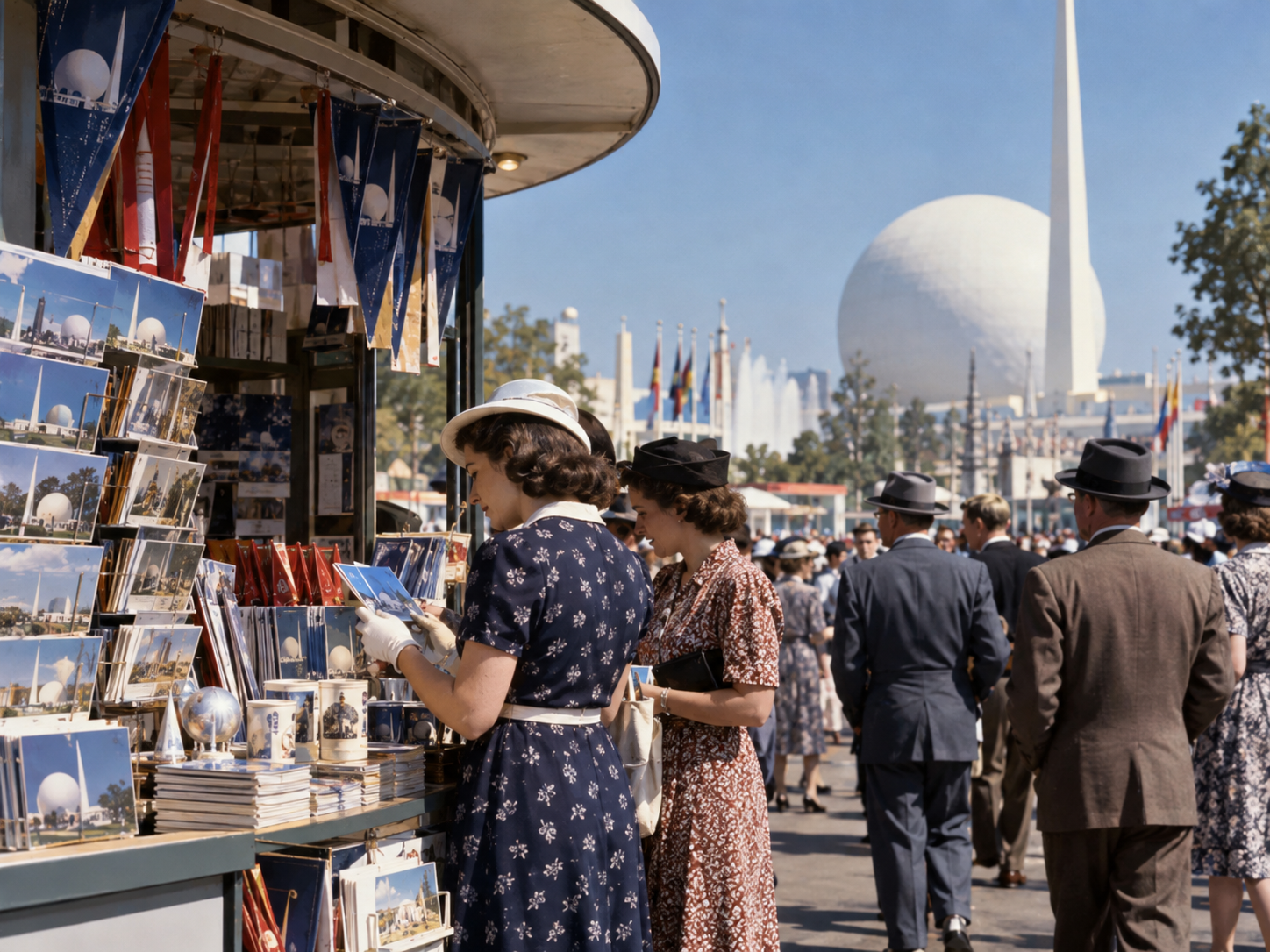
That quality becomes even more important with fairs whose architecture was deliberately futuristic. At the 1939 New York World’s Fair, for example, the Trylon and Perisphere became unmistakable symbols of the exposition’s vision of the “World of Tomorrow.” Their shapes appeared on an extraordinary variety of merchandise. A surviving chromium-plated scale model in The Henry Ford collection demonstrates how visitors could literally take a miniature version of the fair’s architectural centerpiece home with them.
Souvenirs transformed temporary architecture into permanent household memory.
More Than Trinkets
The word souvenir can sometimes suggest something inexpensive or frivolous, but world’s fair material ranges from simple mass-produced keepsakes to beautifully made decorative objects, promotional pieces, advertising material, books, photographs, and specialized items created for exhibitors or participants.
Some souvenirs were practical. Others were meant entirely for display. Still others blurred the boundary between souvenir and commercial product.
At the 1939–1940 New York World’s Fair, Eastman Kodak sold a special-edition Bullet camera whose faceplate featured the Trylon and Perisphere. The camera was both a working consumer product and a piece of fair memorabilia. That combination captures something central to world’s fair collecting: these objects often tell several stories at once.
A fair souvenir might document tourism, but it may also reveal changes in industrial design, packaging, advertising, manufacturing, fashion, transportation, or domestic life. The materials themselves can be historically revealing. Older fairs produced elaborate engraved metalwork and decorated ceramics alongside printed ephemera. By the twentieth century, collectors encounter streamlined metals, plastics, enamel, modern graphics, and increasingly sophisticated mass production.
Even something as ordinary as a postcard or postage stamp can lead into a much larger story. The U.S. Post Office issued the nation’s first commemorative postage stamps for the 1893 Columbian Exposition, beginning a tradition that would later connect American expositions with commemorative stamp issues for fairs including St. Louis in 1904, Chicago in 1933, New York in 1939, Seattle in 1962, and others.
Souvenirs Sold the Future
World’s fairs did more than celebrate what already existed. They frequently presented idealized visions of what life might become.
That made souvenirs especially powerful. They allowed visitors to carry those visions into ordinary homes.
The 1939 New York World’s Fair is an excellent example. General Motors’ enormous Futurama attraction presented visitors with a model of a possible future America shaped by high-speed highways, modern cities, and planned transportation. Visitors leaving the attraction received buttons declaring, “I Have Seen the Future.”
The phrase turned an inexpensive button into something more than advertising. It announced that the wearer had personally experienced a celebrated vision of tomorrow.
Other fairs used equally recognizable imagery. Chicago’s 1933–1934 Century of Progress emphasized science, technology, industrial development, and modern design during the difficult years of the Great Depression. Surviving souvenirs include medals, tokens, mugs, plates, trays, and spoons featuring fair buildings and imagery, often using the streamlined forms and bold design associated with the period.
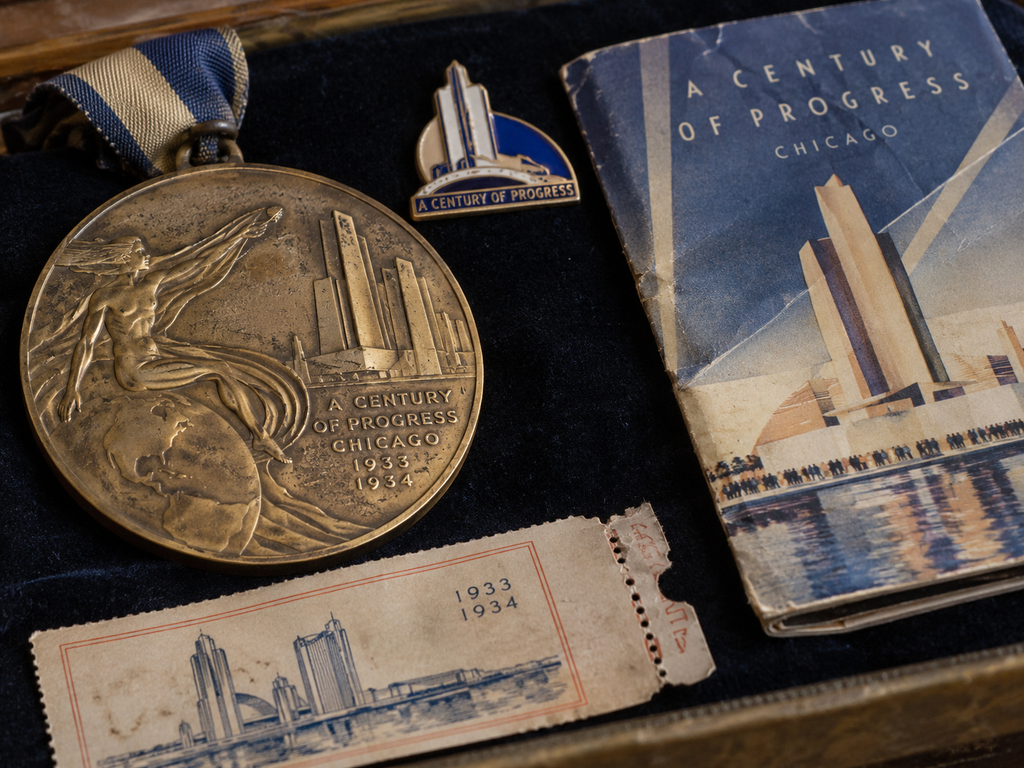
For modern collectors, this is one of the great attractions of the field. World’s fair souvenirs are snapshots of optimism—not necessarily of the future as it actually arrived, but of the future people imagined at a particular moment.
Reading the Object
Because such a wide variety of merchandise was produced, identifying world’s fair material can sometimes require more than spotting a familiar fair name.
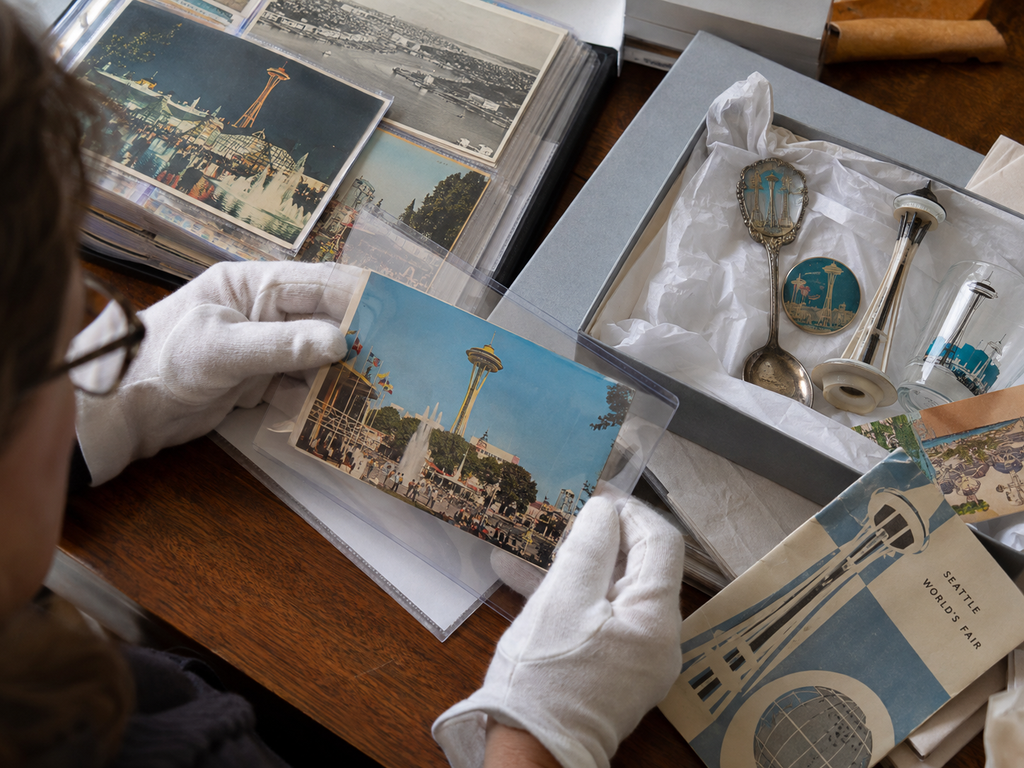
Dates and locations are useful starting points, but imagery can be equally important. The Eiffel Tower, Chicago’s White City, the Trylon and Perisphere, Seattle’s Space Needle, or Montreal’s Expo 67 symbols can quickly place an object within a particular exposition. Manufacturer’s marks, copyright notices, pavilion names, exhibitor information, and original packaging can provide additional evidence.
Collectors should also distinguish between objects actually associated with the fair and later commemorative material. Anniversaries, reproductions, and nostalgia pieces can resemble original souvenirs, particularly when iconic exposition imagery is involved.
Condition varies considerably by material. Paper items may suffer from fading, brittleness, tears, or adhesive damage. Metal pieces may show tarnish, plating loss, or corrosion. Ceramics and glass can acquire chips and cracks, while plastics may discolor or become brittle. Original boxes, tags, envelopes, or printed inserts can be surprisingly important because they sometimes help establish how an object was marketed and sold.
Yet signs of age do not automatically make a fair souvenir undesirable. Many surviving objects were carried through crowded fairgrounds, packed into suitcases, used at home, stored in drawers, and passed from one generation to another. Appropriate wear can be part of that history.
Building a Collection
The breadth of world’s fair material makes the field accessible from many directions. A collector might concentrate on one exposition, one city, one period, one type of souvenir, or one recurring subject.
Someone interested in architecture might seek miniature buildings, plates, postcards, and paperweights showing exposition structures. A transportation collector could follow railroads, automobiles, aviation, monorails, or futuristic transit displays. Others might concentrate on advertising, medals, jewelry, glassware, photographs, maps, guidebooks, or material from individual corporate pavilions.
That flexibility is one reason world’s fair collecting can become so absorbing. The fairs themselves brought together technology, commerce, decorative arts, popular entertainment, architecture, travel, and cultural representation. Their souvenirs inherited the same diversity.
The Smithsonian’s collections even preserve the story of collector Larry Zim, who visited the 1939 New York World’s Fair as a child. That experience sparked a lifelong interest in world’s fair books and souvenirs, many of which eventually entered the Smithsonian collections.
The Fair After the Fair
World’s fairs were designed around temporary experiences, but their souvenirs created a second life for them.
A visitor who carried home a small spoon or inexpensive badge probably did not imagine that someone would study it nearly a century later. Yet today such pieces can reveal how an exposition promoted itself, which buildings became icons, what materials manufacturers were using, what visitors considered worth remembering, and how ideas about progress were packaged for ordinary consumers.
They are fragments of enormous events reduced to human scale.
That may be the real appeal of world’s fair souvenirs. The monumental structures are often gone, the dazzling exhibits dismantled, and the crowds long vanished. What survives are the things people chose to carry away—a miniature tower, a souvenir glass, a booklet, a medal, a postcard, or some other small reminder that, for one extraordinary day, they had stepped into a world built to make the future seem possible.
Let’s Make History—one souvenir of wonder at a time.
Discover more from Dear June Collectibles
Subscribe to get the latest posts sent to your email.