
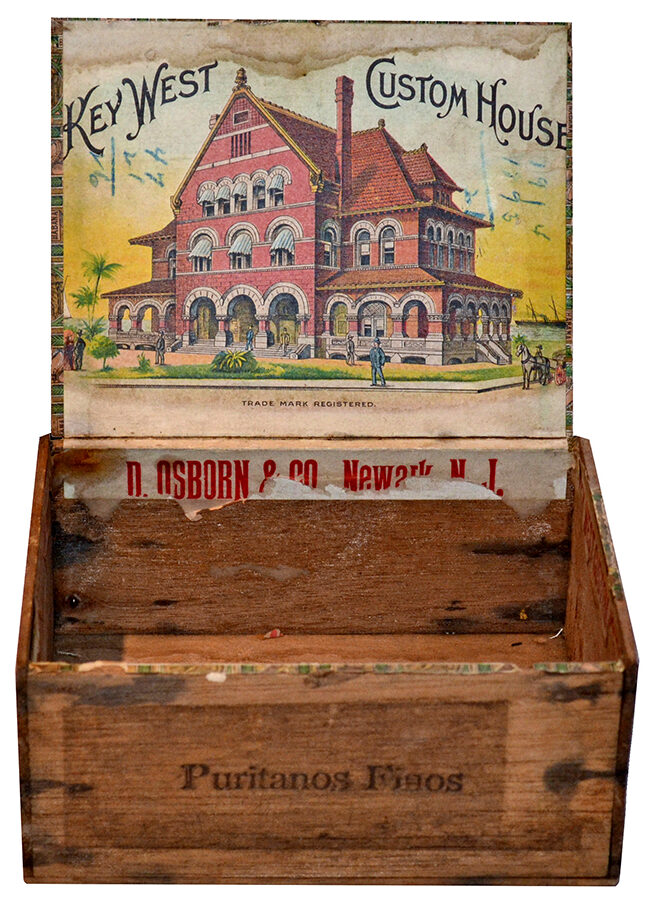
A cigar label is easy to admire before you know anything about cigars. The colors are rich, the lettering is dramatic, the borders are ornate, and the images can feel like miniature posters: heroic portraits, elegant women, tropical landscapes, patriotic symbols, ships, factories, medals, coats of arms, and gold so bold it still catches the eye more than a century later.
For collectors, antique cigar labels and bands are more than tobacco packaging. They are advertising art, printing history, branding history, and social history all in one small paper form. They tell us how companies competed for attention, how products were dressed up for the marketplace, and how lithographers turned a wooden box into a colorful sales pitch.
This first post in our Cigar Bands & Labels series looks at how the cigar label rose from practical packaging to collectible art—and why these pieces still have such strong visual power today.
What Is a Cigar Label?
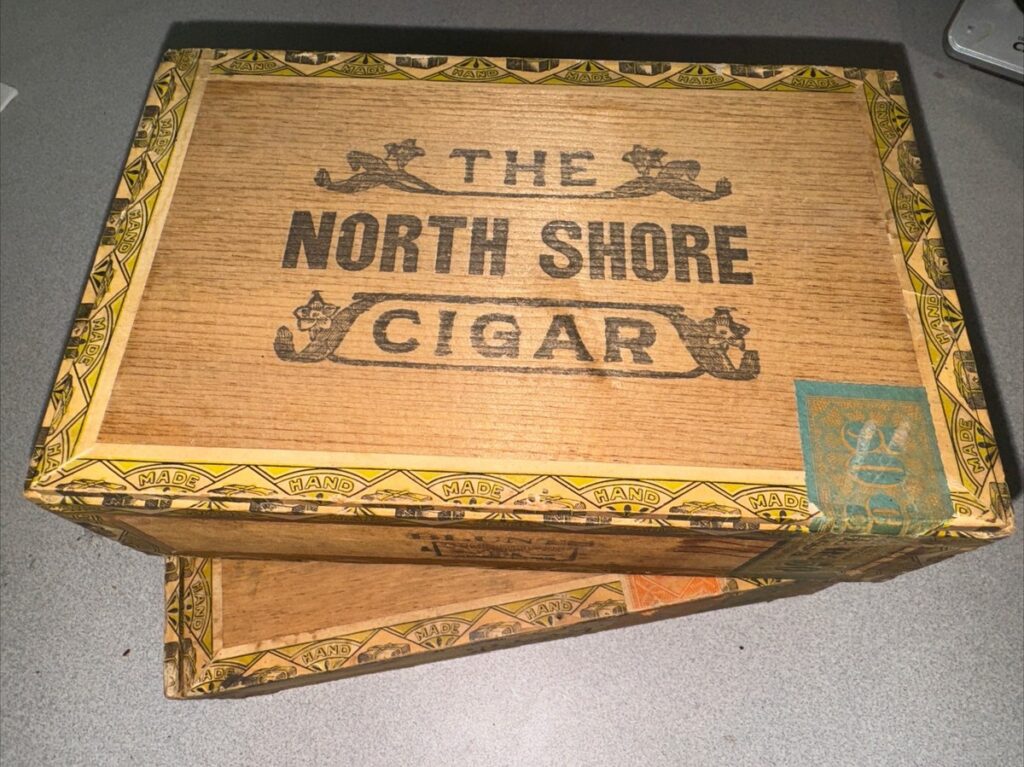
In collecting, “cigar label” usually refers to the decorative paper label used on or inside a cigar box. These labels were meant to identify the brand, attract buyers, and give the cigars a sense of quality, origin, personality, or prestige.
Collectors may also encounter related paper pieces, including:
- Inner box labels: large decorative labels placed inside the cigar box lid
- Outer labels: labels used on the outside of the box
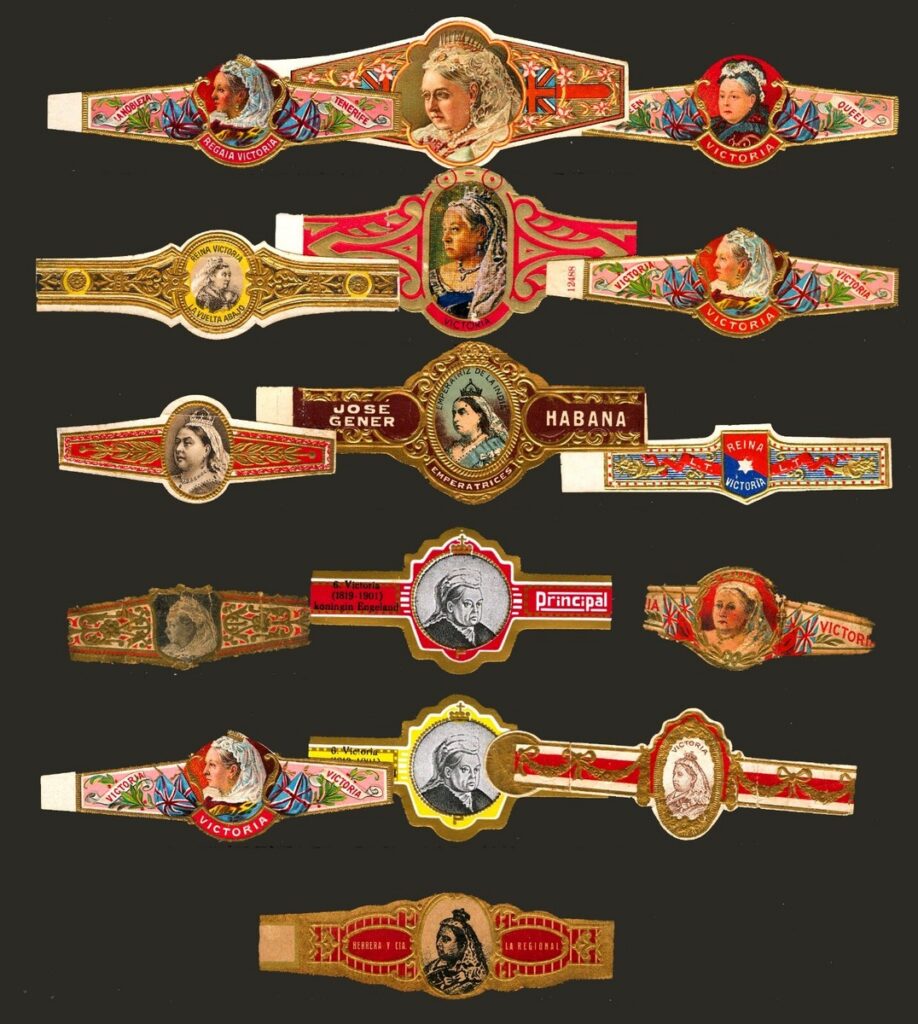
- Cigar bands: small paper rings wrapped around individual cigars
- Box trimmings: decorative edging, seals, or side labels
- Tax or revenue stamps: official seals tied to regulation and taxation
- Sample/proof labels: printer’s examples, sometimes never used on boxes
Together, these pieces form a category of tobacco-related paper ephemera that is collected largely for its artwork, age, printing quality, and historical context.
Before the Label: Why Packaging Needed an Identity
Early cigar packaging did not always rely on elaborate paper art. A box could be identified with a brand, stencil, stamp, branded wood, or simpler marking. But as the cigar trade grew, packaging had to do more than hold the product. It had to sell it.
A cigar box sitting on a retailer’s shelf was competing with other boxes. The label needed to answer several questions quickly:
- What is the brand?
- Does it look trustworthy?
- Does it seem premium?
- Does it suggest Cuba, luxury, politics, patriotism, romance, or adventure?
- Will the customer remember it?
That is where the cigar label became powerful. It turned a simple wooden box into an advertisement.
Branding in a Crowded Market
By the late 19th century, the cigar market was crowded. Many small manufacturers, regional makers, importers, and larger companies were competing for attention. A memorable label helped distinguish one brand from another, even when customers could not inspect the cigars closely before purchase.
A label could make a product feel:
- Prestigious: with medals, crowns, crests, and gold accents
- Exotic: with tropical scenery, palm trees, ships, or Cuban references
- Patriotic: with flags, eagles, military scenes, presidents, or Capitol imagery
- Fashionable: with elegant women, leisure scenes, and refined typography
- Modern: with factories, trains, steamships, or industrial imagery
- Local: with city names, regional references, or political figures
In this way, cigar labels worked like early brand storytelling. They sold an idea before the customer ever opened the box.
The Role of the Cigar Band
While cigar box labels decorated the package, cigar bands marked the individual cigar. The band served a practical branding purpose: once a cigar was removed from the box, the paper ring still identified the maker or brand.
Collectors often discuss cigar bands separately from box labels because they are smaller, more uniform, and sometimes collected in albums. But they belong to the same broader story. Both labels and bands helped transform cigars from anonymous goods into branded products.
Cigar bands could be simple or ornate. Some showed only a name or monogram. Others used bright colors, gilt details, portraits, shields, or tiny decorative borders. The challenge was scale: the design had to be readable and appealing in a very small space.
That is part of their charm today. A good cigar band feels like a tiny badge of identity.
Color Lithography Changes Everything
The rise of the cigar label is inseparable from the rise of commercial color lithography. As printing improved, cigar labels became more elaborate, colorful, and visually competitive.
This is the point where packaging becomes art. Labels could include multiple colors, detailed shading, embossed effects, metallic gold, ornate borders, and layered visual scenes. Printers and lithographers were not just making labels; they were producing miniature advertising posters.
The next post in this series will focus more deeply on color lithography and artistry, but for this origin story, the important point is simple: better printing made better labels possible, and better labels helped brands stand out.
Why Cigar Labels Look So Grand
One of the first things collectors notice is how extravagant many cigar labels look. They often seem almost too grand for the product they sold. That was intentional.
A cigar label might borrow the visual language of:
- Fine art prints
- Diplomas and certificates
- Currency and banknotes
- Political campaign imagery
- Theater posters
- Travel advertising
- Military honors
- Trade cards and premium labels
This visual richness made the product feel established, desirable, and legitimate. A label with medals and gold embossing suggested award-winning quality. One with a stately portrait suggested importance. A label with a tropical scene suggested origin, romance, or escape.
It was advertising psychology in paper form.
Common Themes in Early Cigar Labels
Collectors quickly learn that cigar labels repeat certain themes. Those themes are part of what makes the category so enjoyable to study.
Portraits and famous figures
Labels often featured presidents, politicians, military leaders, performers, writers, and other public figures. Sometimes the connection to the product was direct; often it was simply a way to borrow fame, authority, or recognition.
Women and romantic imagery
Idealized women appear frequently, often surrounded by flowers, jewels, elegant clothing, or theatrical settings. These images were designed to suggest refinement, beauty, and desirability.
Patriotic and political symbols
Flags, eagles, the Capitol, military scenes, campaign themes, and national heroes appear often—especially when companies wanted to tap into public pride or current events.
Tropical and Cuban imagery
Because cigars were strongly associated with Cuba and the Caribbean, labels often used palm trees, island landscapes, tobacco fields, ships, and Spanish-language or Cuban-inspired branding.
Industry and progress
Factories, railroads, steamships, machinery, and city scenes showed modern production and commercial confidence.
Animals, humor, and novelty
Not every label was solemn. Some used animals, comic imagery, puns, or unusual brand names to catch attention.

Labels as Popular Culture
Cigar labels are valuable to collectors because they reflect the culture around them. They show what people admired, recognized, fantasized about, and trusted.
A label might reveal:
- Political popularity at the time
- Changing ideas of masculinity and leisure
- Romanticized views of Cuba and tropical luxury
- Period fashion and beauty standards
- Industrial pride and national identity
- The visual language of late 19th- and early 20th-century advertising
That makes cigar labels useful beyond tobacco collecting. They appeal to people who collect advertising, lithography, Americana, political memorabilia, trade cards, printing history, and graphic design.
Why So Many Labels Survived
Unlike a paper wrapper thrown away with use, a cigar box label had several paths to survival.
Some labels survived because the box survived. Wooden cigar boxes were often reused for nails, buttons, keepsakes, tools, sewing supplies, postcards, and household odds and ends. The box might remain in a workshop or drawer long after the cigars were gone.
Other labels survived because people collected them. As printing became more colorful and affordable, labels were saved in scrapbooks and albums. Printer’s proofs and sample books also preserved unused examples that never went through ordinary retail handling.
That survival history matters. A label removed from a box, a full box with labels intact, and a printer’s proof sheet are all collectible—but they tell slightly different stories.
What Collectors Look For
Cigar labels are paper collectibles, so condition and visual impact matter. A label does not have to be perfect to be desirable, but collectors should know what they are seeing.
Key factors include:
- Color strength: Bright, unfaded color is always appealing.
- Gold and embossing: Metallic detail and raised texture can add visual value.
- Subject matter: Political figures, attractive portraits, unusual themes, and strong graphics often draw interest.
- Completeness: Missing corners, cut-down edges, or trimmed borders can reduce appeal.
- Condition: Tears, stains, foxing, glue residue, and heavy creases matter.
- Association: Labels tied to known places, makers, events, or political figures may have crossover interest.
- Format: Inner labels, outer labels, bands, proof sheets, and intact boxes all attract different kinds of collectors.
A common label in excellent condition can be more appealing than a scarcer label with heavy damage. With paper, condition is often the difference between “interesting” and “display-worthy.”
Common Condition Problems
Because cigar labels were made of paper and often attached to boxes, they can show predictable wear.
Look for:
- Torn edges from removal
- Glue residue or paper thinning on the back
- Foxing or brown age spots
- Faded reds, blues, or gold
- Water staining from storage
- Abrasion on embossed or metallic areas
- Creases from being folded or scrapbook-mounted
- Trimmed margins that remove part of the original border
With cigar bands, watch for split seams, missing ends, glue stains, and flattening damage. Bands are small, so even minor issues can affect display quality.
Buying Tips for New Collectors
If you are new to cigar labels, start by collecting visually strong examples rather than chasing every “rare” claim.
A good beginner strategy:
- Pick a theme you enjoy—political labels, women, animals, ships, tropical scenes, local brands, or gold-embossed examples.
- Buy clean condition first. Learn with attractive, intact pieces.
- Look at printing quality. Crisp registration, strong color, and good embossing teach your eye.
- Check the edges. Borders and corners are easy to hide in photos.
- Ask about mounting. Labels glued into scrapbooks may have hidden back damage.
For online purchases, request photos of the full front, corners, back, and any embossed or metallic areas at an angle.
Displaying Cigar Labels Without Damaging Them
Cigar labels are perfect for display because they are colorful, flat, and graphic. But they still need paper-safe handling.
Good options include:
- Archival sleeves in a binder
- Acid-free mats and UV-protective framing
- Shadow boxes for intact bands and box pieces
- A rotating display so pieces are not exposed to light year-round
- Digital scans for frequent viewing while originals stay stored safely
Avoid tape, glue sticks, spray adhesive, and direct sunlight. If a label is still attached to a box, consider preserving the whole object rather than removing the label. The box adds context and can help tell the object’s full story.
The Collector’s Takeaway
The rise of the cigar label is the story of packaging becoming art. What began as a practical need—to identify and sell a product—became a colorful world of lithography, branding, popular culture, and collectible design.
For today’s collectors, cigar labels and bands offer a remarkable blend of beauty and history. They are small enough to store, bold enough to display, and rich enough to connect with many collecting interests: advertising, printing, politics, Americana, and paper ephemera.
In the next post, we’ll look more closely at the art behind the labels: Color Lithography and Artistry, where stone, ink, embossing, and gold turned cigar packaging into tiny printed showpieces.
Let’s Make History—one printed label at a time.
Looking for something related?
Dear June Collectibles carries thousands of antiques, vintage pieces, collectibles, ephemera, books, housewares, jewelry, memorabilia, and unusual finds. Inventory changes constantly.
Found something like this while clearing a home or collection?
Before assuming it should be thrown away, tell us what you found. Dear June Collectibles helps families, collectors, executors, and homeowners sort household contents, collections, and estates and identify realistic resale possibilities.