Chinese export porcelain is one of the most beautiful reminders that collecting is rarely about one culture standing still. These pieces were born from movement: merchants ordering goods, ships carrying cargo, Western households changing their table settings, and Chinese workshops adapting designs for buyers whose customs, dining habits, and symbols were often very different from their own.
That is what makes Chinese export porcelain so fascinating. It is not simply “Chinese porcelain in the West.” It is a ceramic conversation. The clay body, glaze, and painting skill came from China. The forms, family crests, dining rituals, and some decorative requests often came from Europe and America. The finished piece sits between worlds.
For collectors, that blend is the heart of the category. A plate, punch bowl, tea cup, or sauceboat can reveal how trade changed taste—and how ceramics became one of the most enduring places where East met West.
A Trade Object With Two Audiences
Chinese export porcelain had to satisfy two sets of expectations. It needed to be well-made enough to survive long shipping journeys and refined enough to appeal to buyers who saw porcelain as a sign of taste and status. But it also had to fit the way those buyers lived.
That is why export porcelain appears in so many Western forms:
- dinner plates and soup plates
- tea bowls, cups, and saucers
- sauceboats and tureens
- punch bowls
- mugs and tankards
- platters and chargers
- armorial services with family crests
Some forms were not traditional Chinese table forms in the same way they were used in Europe or America. Chinese potters and painters responded to foreign demand, creating porcelain that could sit comfortably on a Western table while still carrying Chinese materials, techniques, and decoration.
The Power of Blue and White
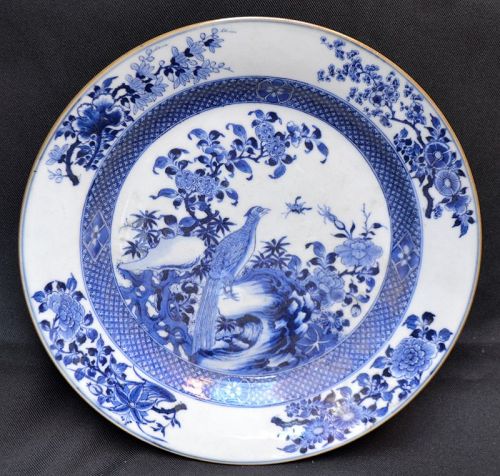
One of the most important East-meets-West stories is blue-and-white porcelain. Chinese potters perfected the use of cobalt blue under a clear glaze long before Western factories could make true porcelain on their own. The crisp blue decoration on a white body became enormously influential.
Western buyers loved the look. European potters copied it in tin-glazed earthenware, especially in places such as Delft, where blue-and-white wares became a major ceramic tradition in their own right. Later, English transferware and other Western ceramics also borrowed from the visual world of Chinese landscapes, pagodas, bridges, willow trees, borders, and river scenes.
That influence is important because it shows that export porcelain was not only imported and admired. It changed what Western ceramics looked like.
Chinoiserie: Admiration, Imagination, and Interpretation
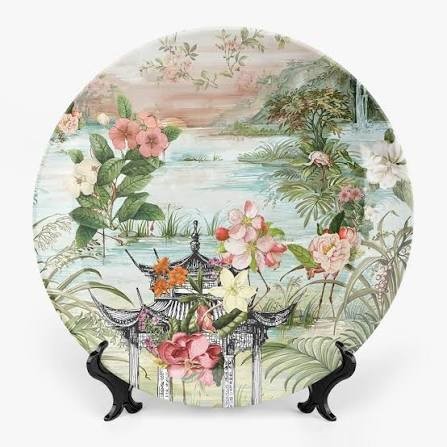
The word chinoiserie refers to Western decorative art inspired by Chinese and East Asian motifs. It is not the same thing as Chinese art itself. It is a Western interpretation—sometimes admiring, sometimes fanciful, sometimes inaccurate, and often shaped by European imagination.
In ceramics, chinoiserie can include:
- pagodas and garden pavilions
- figures in imagined “Chinese” landscapes
- birds, flowers, and decorative scrolls
- asymmetrical arrangements
- blue-and-white scenic decoration
- exoticized scenes made for Western taste
Chinese export porcelain helped feed this fascination. At the same time, Western chinoiserie designs influenced what merchants requested from China. This creates a fascinating loop: Chinese porcelain inspired Western designs, Western tastes shaped new export orders, and Chinese workshops adapted to meet those tastes.
For collectors, chinoiserie is best approached carefully. It is historically important and often visually beautiful, but it also reflects Western fantasy as much as direct cultural understanding.
Porcelain Made to Order: Crests, Ships, and Western Symbols
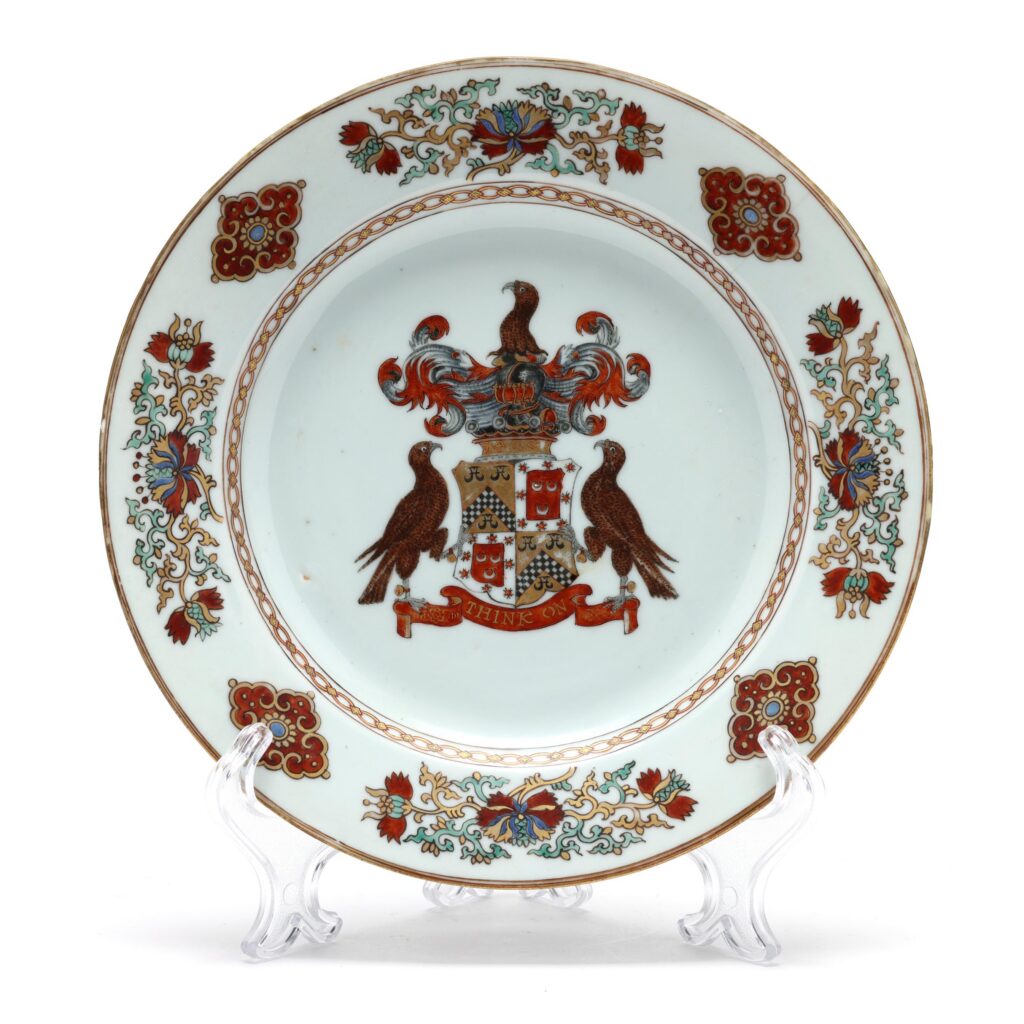
Some of the clearest East-West blending appears in custom Chinese export porcelain. Western families and institutions ordered pieces decorated with:
- coats of arms
- initials and monograms
- ships
- patriotic symbols
- merchant emblems
- commemorative designs
A Chinese painter might be working from a drawing, print, seal, or written request sent from abroad. Sometimes the result was highly accurate. Other times, details were misunderstood, reversed, simplified, or interpreted through the painter’s own visual vocabulary.
Those small mismatches can be part of the charm. They remind us that this was not instant global communication. It was long-distance commission work carried out across languages, oceans, and artistic traditions.
Western Forms, Chinese Hands
One of the joys of collecting Chinese export porcelain is noticing familiar Western forms made through Chinese ceramic skill.
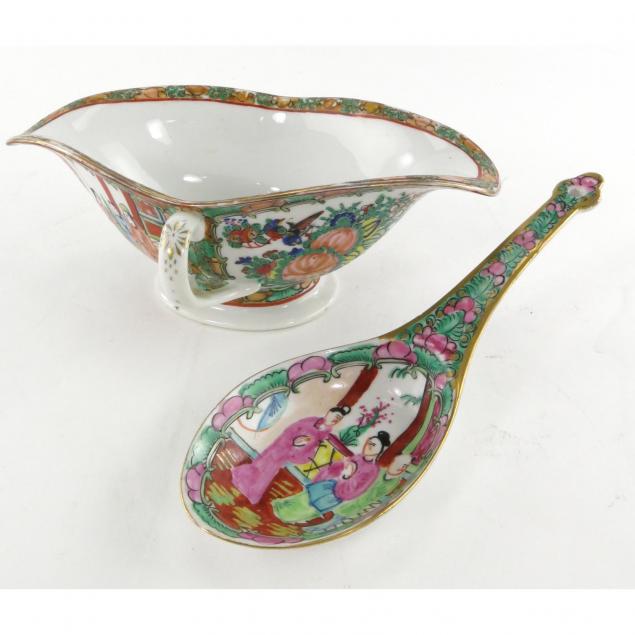
A sauceboat is a good example. The form belongs to Western dining habits, but the porcelain body and painted decoration may be entirely Chinese in execution. A punch bowl may have been used in an American or British social setting, but its surface might show Chinese landscapes, famille rose flowers, or export-style figural panels.
This blending often gives export porcelain its distinctive personality. It is useful and decorative at the same time. It belongs to the table, the cabinet, and the trade route.
Influence on Western Ceramic Makers
Chinese porcelain created both desire and competition. European ceramic makers spent years trying to imitate the beauty, hardness, whiteness, and translucency of Chinese porcelain. In the early 18th century, European hard-paste porcelain production developed at Meissen, which became one of the most important turning points in Western ceramic history.
But even after Europeans learned to make porcelain, Chinese export wares remained influential. Western factories continued borrowing Chinese-inspired motifs, adapting blue-and-white landscapes, and producing chinoiserie-style decoration for consumers who loved the look.
Collectors can see this influence across many related categories:
- Delftware
- English transferware
- Meissen and other European porcelains
- Staffordshire blue-and-white wares
- later decorative “China trade” style pieces
If you collect across ceramic categories, Chinese export porcelain becomes a key to understanding why so many Western wares look the way they do.
American Taste and the China Trade
In America, Chinese export porcelain became especially meaningful through port cities and the China trade. Tea wares, punch bowls, platters, and dinner services connected American households to global commerce. A piece decorated with an eagle, ship, monogram, or family crest could express identity and status while still being made in China.
American-market export porcelain can feel particularly personal because it often brings together public history and domestic life. A punch bowl might suggest merchant hospitality. A tea bowl might suggest the social ritual of tea. A platter might point to a household that wanted imported refinement at the dinner table.
This is where “East meets West” becomes more than a design phrase. It becomes a lived experience inside homes.
What Collectors Should Look For
When studying East-West influence in Chinese export porcelain, look for the places where cultures meet visibly.
Form
Ask whether the shape was made for Chinese use, Western use, or a blend of both. Sauceboats, mugs, tankards, tureens, and punch bowls are especially useful clues.
Decoration
Look for Chinese landscapes, famille rose panels, blue-and-white scenery, Western crests, monograms, ships, or patriotic symbols. These details help place the object within the export market.
Technique
Notice whether decoration is underglaze blue, overglaze enamel, gilding, or a combination. Different techniques age differently and affect both care and value.
Condition and Restoration
Because these pieces were used and shipped long distances, chips, hairlines, rim wear, enamel loss, and old repairs are common. Restoration is not unusual, but it should be disclosed and understood.
Story and Provenance
A piece with old collection notes, family history, dealer labels, or armorial research can be especially rewarding. Provenance helps connect the object to the human side of trade.
Displaying the Blend
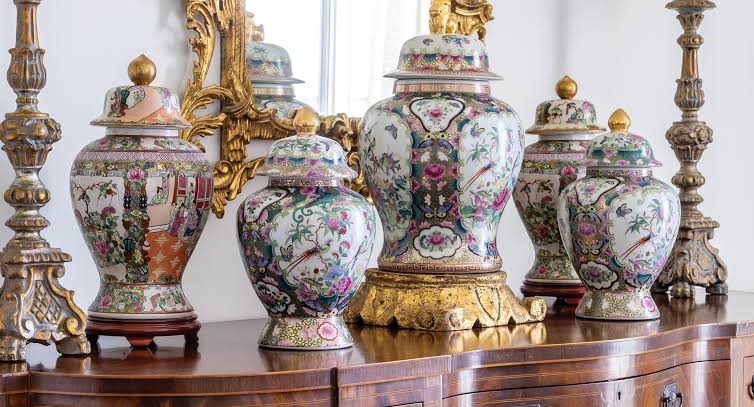
Chinese export porcelain displays beautifully because it works in so many visual languages. Blue-and-white pieces feel classic and crisp. Famille rose pieces add color and movement. Armorial pieces bring formal history. Punch bowls and large platters create strong focal points.
A few display ideas:
- Group blue-and-white export porcelain with Delft or transferware to show influence.
- Display a Western-form piece, like a sauceboat or tureen, beside a more traditionally Chinese form.
- Build a cabinet around one palette: blue-and-white, famille rose, or armorial pieces.
- Use labels or small notes for pieces with known provenance so the story stays attached.
A good display helps visitors see the conversation: Chinese materials and artistry, Western forms and requests, and the trade routes that brought them together.
Why This Series Ends Here
Chinese export porcelain is not only about porcelain. It is about exchange. It shows how objects travel, how tastes change, and how artisans adapt to markets without losing the evidence of their own skill.
The early trade brought porcelain west. Patterns and styles gave collectors a visual language. The American market showed how deeply these pieces entered domestic life. Preservation and market awareness help us care for them responsibly today.
And finally, East meeting West reminds us why the category matters at all: every piece is a small, fired, painted record of a larger world becoming connected.
Let’s Make History—one ceramic conversation at a time.
Looking for something related?
Dear June Collectibles carries thousands of antiques, vintage pieces, collectibles, ephemera, books, housewares, jewelry, memorabilia, and unusual finds. Inventory changes constantly.
Found something like this while clearing a home or collection?
Before assuming it should be thrown away, tell us what you found. Dear June Collectibles helps families, collectors, executors, and homeowners sort household contents, collections, and estates and identify realistic resale possibilities.