
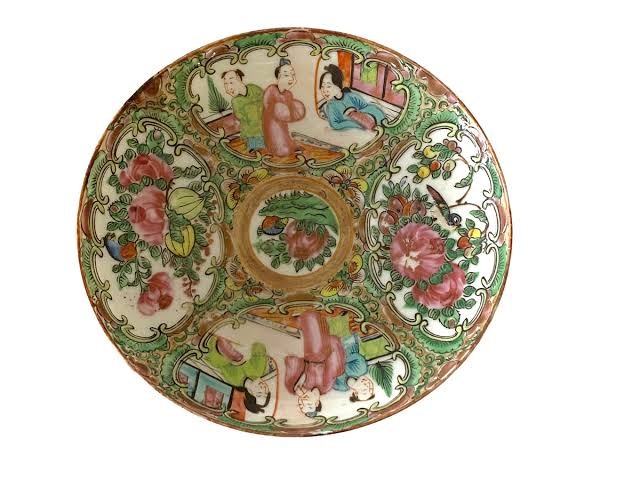
Chinese export porcelain is one of those collecting categories where beauty and fragility live side by side. A plate may have survived a sea voyage, a family dining room, several estate moves, and a century in a cabinet—but one careless cleaning session or unstable display shelf can still do damage in a moment.
That is why preservation matters so much. Chinese export porcelain was made to be admired and often used, but collectors today are usually caring for pieces that are centuries old or at least historically meaningful. The goal is not to make every plate or bowl look brand new. The goal is to protect the surface, respect the history, and understand how condition affects both value and collectibility.
This post looks at two sides of the modern Chinese export porcelain world: how to preserve these pieces safely, and how today’s collectors think about condition, restoration, rarity, and market appeal.
Why Preservation Matters in Chinese Export Porcelain
Porcelain is durable in some ways. It is hard-fired, often thin but strong, and capable of surviving generations when handled properly. But it also has vulnerable points:
- rims and foot rings chip easily
- handles and spouts break under stress
- enamel decoration can wear or flake
- gilding can rub away
- old repairs can discolor or fail
- hairline cracks can spread if handled carelessly
Chinese export porcelain also carries historical value beyond decoration. A plate may show trade patterns, family heraldry, Western dining habits, or a style popular in a specific period. Preserving the piece helps preserve that story.
Handling: The First Line of Protection
Most damage happens during handling. A plate slips. A tureen lid is lifted by the finial. A cup is picked up by the handle alone. These small mistakes are easy to avoid with better habits.
When handling export porcelain:
- Use clean, dry hands. Smooth porcelain can be slippery, and bulky gloves may reduce grip.
- Always use two hands, especially with plates, bowls, and larger serving pieces.
- Support lids from underneath instead of lifting only by knobs or finials.
- Pick up cups by the body, not just the handle.
- Remove jewelry or bracelets that could strike the glaze.
- Move one piece at a time.
If a piece already has a hairline, restoration, or old staple repair, treat it as structurally weaker than it looks.
Cleaning: Gentle Is Usually Best
A common mistake with antique porcelain is over-cleaning. Collectors want a piece to look fresh, but harsh cleaning can damage enamel, gilding, glaze, or old restoration.
For ordinary dust:
- use a soft, dry brush or microfiber cloth
- avoid scrubbing across enamel decoration
- support the object while cleaning, rather than holding it in midair
For light washing:
- use lukewarm water, not hot water
- use mild soap only
- line the sink with a towel or wash basin pad
- wash one piece at a time
- dry immediately with a soft cloth
Avoid dishwashers, bleach, abrasive powders, harsh chemicals, and prolonged soaking. These are especially risky on pieces with enamel decoration, gilded borders, hairlines, or old repairs.
Special Concern: Enamels and Gilding
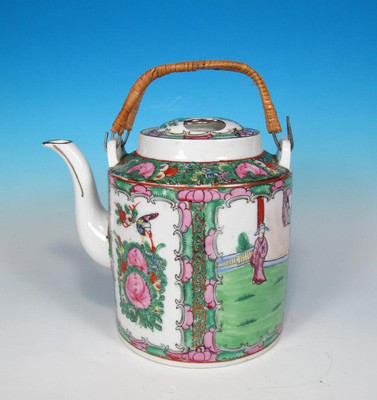
Many Chinese export pieces, especially famille rose, Rose Medallion, armorial wares, and later export styles, depend on overglaze enamel decoration. Unlike underglaze blue, which is protected beneath the glaze, overglaze enamels and gilding sit more exposed on the surface.
That means they can be vulnerable to:
- rubbing from repeated handling
- abrasive cleaning
- soaking around damaged glaze
- contact with acidic residues
- old restoration solvents or overpainting
Collector tip: if the decoration is colorful, raised, or gilded, assume it needs gentler treatment than a plain blue-and-white plate.
Storage: Preventing Chips Before They Happen
Good storage is simple: reduce friction, weight, and sudden movement.
Plates and shallow dishes:
- use plate dividers, acid-free tissue, or soft separators when stacking
- avoid tall stacks, especially with heavy chargers or platters
- store valuable pieces vertically in a stable rack if appropriate
Cups, mugs, and tea wares:
- avoid stacking cups unless they are designed and padded for it
- protect handles from pressure
- keep saucers separated with soft dividers
Tureens and covered forms:
- store lids and bases together, but padded so they do not grind against each other
- never store a heavy lid loosely where it can slide or fall
A cabinet is only safe if the shelf is sturdy and the pieces are not crowded. Porcelain needs breathing room.
Display: Beauty Without Risk
Chinese export porcelain was often meant to be seen, so displaying it is part of the pleasure. But display should be stable and thoughtful.
Good display habits:
- use proper plate stands or wall hangers designed for ceramics
- avoid spring-loaded hangers that put pressure on fragile rims
- keep pieces away from high-traffic edges
- do not display heavy pieces above places where people sit or sleep
- avoid direct sunlight, especially for enamel-rich pieces
- use museum putty cautiously and only where it will not damage the surface
For large punch bowls, tureens, and platters, the safest display is usually a stable, level shelf with enough depth to prevent tipping.
Restoration: Disclosure Matters
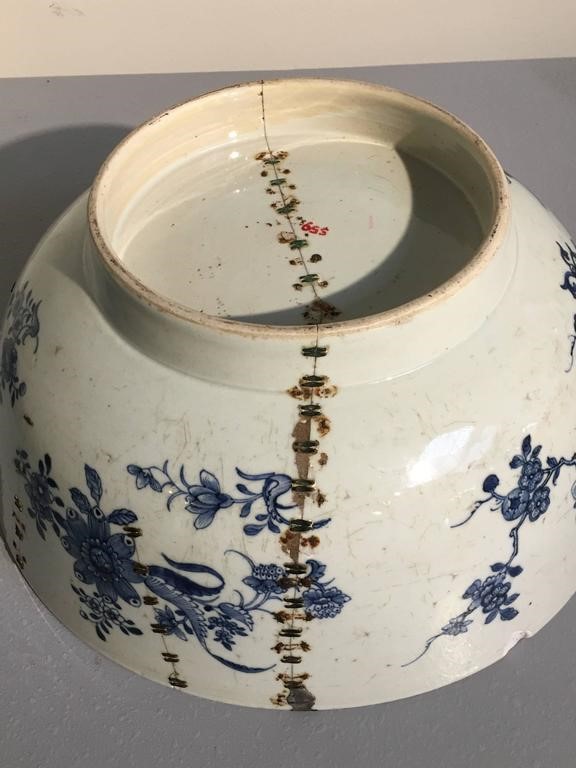
Restoration is common in Chinese export porcelain. These pieces were used, shipped, repaired, inherited, and collected over long periods. You may encounter:
- filled rim chips
- overpainted enamel losses
- repaired handles
- restored spouts
- staple repairs
- reglued breaks
- touched-up gilding
Restoration does not automatically make a piece uncollectible. In fact, old repairs can be historically interesting. But restoration does affect value, and undisclosed restoration can create problems for both buyers and sellers.
Collectors should use strong light and close inspection to look for:
- color differences in restored areas
- surfaces that feel smoother or duller than surrounding glaze
- repair lines visible under angled light
- enamel that looks too fresh compared with the rest of the piece
- old staple holes or filled drill marks
When selling, describe restoration plainly. Careful disclosure builds trust.
Condition and Value: What the Market Rewards
In today’s market, condition matters, but it is not the only factor. Chinese export porcelain values are shaped by a combination of:
- age
- form
- decoration
- rarity
- provenance
- size
- condition
- restoration quality
- current collector demand
A rare armorial charger with minor rim wear may still be desirable. A common plate with a large crack may have mostly decorative value. A Canton platter with good color and strong display presence may appeal to decorators even if it is not the rarest form.
The key is context. Condition should be judged against the piece’s age, type, rarity, and visual strength.
Market Trend: Provenance and Specificity Matter
Modern collectors are increasingly interested in pieces with a clear story. Provenance can include:
- family history
- old dealer labels
- estate documentation
- auction records
- connection to a known collection
- identifiable armorial or monogram research
A well-documented piece is easier to understand, easier to describe, and often easier to sell. This is especially true for armorial porcelain, American-market pieces, ship-decorated wares, and unusual forms.
If you own Chinese export porcelain, keep any paperwork. Even a small note can matter.
Market Trend: Decorative Appeal Still Drives Demand
Not every buyer is a specialist. Many collectors and decorators are drawn to Chinese export porcelain because it looks beautiful in a room.
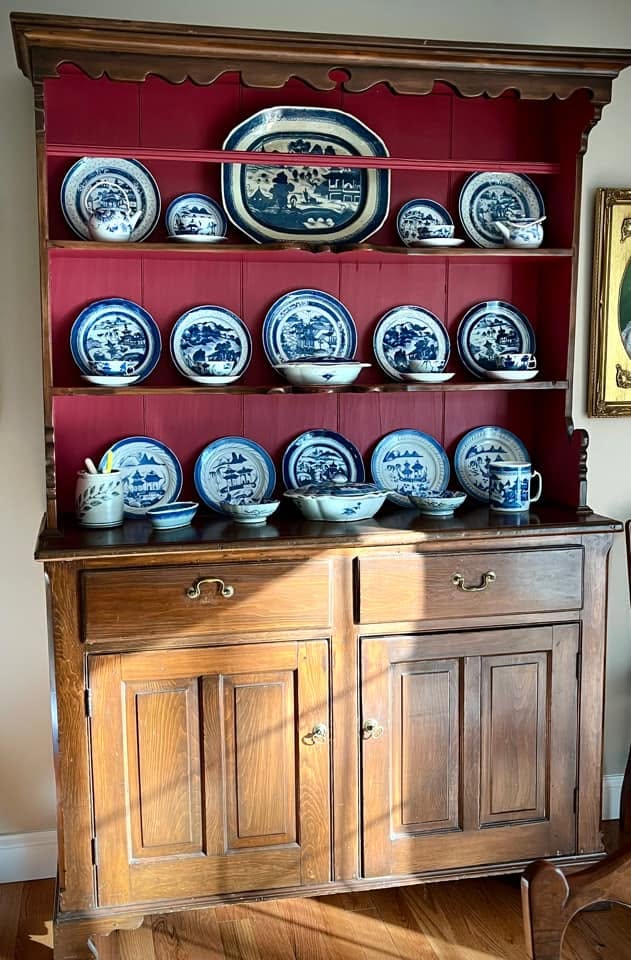
Blue-and-white Canton and Nanking-style pieces remain popular for display because they work well with traditional, coastal, and collected interiors. Rose Medallion and famille rose pieces attract buyers who love color and visual richness. Punch bowls, large platters, and tureens often draw attention because they have strong shelf or table presence.
This means there is room in the market for both scholarly collecting and decorative collecting. A piece can be valuable because it is rare, but it can also be desirable because it displays beautifully.
Market Trend: Restoration Is Accepted—But Priced In
Because old Chinese export porcelain often shows use, many collectors accept minor wear, small chips, or old restoration. What matters is honesty and degree.
Generally:
- minor rim fritting may be acceptable on older pieces
- hairlines reduce value but may not ruin display appeal
- major repairs should be clearly disclosed
- poor overpainting can hurt value more than honest visible wear
- professional restoration is usually more acceptable than sloppy repair
For buyers, the question is: does the condition match the price and your intended use? For sellers, the question is: have you described it clearly enough that the buyer will not be surprised?
Market Trend: Online Buying Raises the Photo Standard
Chinese export porcelain is now commonly bought and sold online, which makes photography essential.
A strong listing should include:
- full front view
- back view
- rim close-ups
- foot ring close-up
- detail photos of decoration
- photos of chips, hairlines, or repairs
- angled-light photos if restoration is suspected
- measurements
For buyers, lack of detail photos should be a caution sign. For sellers, good photos are not optional—they are part of the description.
A Practical Collector Checklist
Before buying a piece, ask:
- What form is it?
- What style or decoration does it show?
- Is the decoration underglaze blue, overglaze enamel, gilding, or a mix?
- Are there chips, cracks, hairlines, or restoration?
- Is the foot ring stable?
- Does it display well?
- Is there provenance or documentation?
- Is the price appropriate for the condition?
These questions keep you grounded. They also prevent the most common mistake: falling in love with the front of a piece and forgetting to check the rim, back, and base.
Preserving the Story Along With the Porcelain
The best collectors preserve more than objects. They preserve information.
Keep a simple record for each piece:
- where and when you acquired it
- what it was sold as
- measurements
- condition notes
- restoration notes
- any provenance
- photos of front, back, and details
This turns your collection into a small archive. It also helps future owners understand what they are looking at.
Chinese export porcelain has already traveled far—through kilns, ports, ships, homes, collections, and markets. Our job is to make sure it travels forward with its beauty and story intact.
Let’s Make History—one preserved porcelain story at a time.