
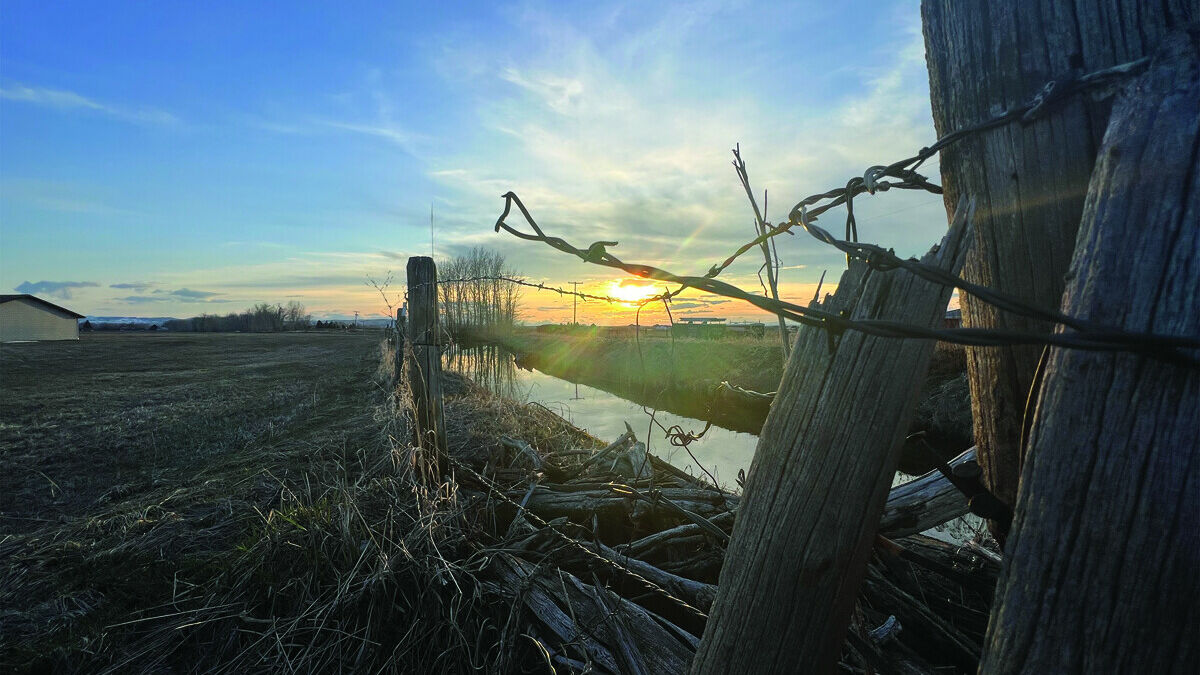
Barbed wire is one of those inventions that looks almost too simple to be world-changing—two strands of wire and a repeating line of sharp points. But that simplicity is exactly why it mattered. It was inexpensive, scalable, and brutally effective at turning open land into controlled space.
In the late 1800s, the American West was colliding with itself: ranching, farming, railroads, growing towns, and shifting ideas about ownership and boundaries. The problem was practical as much as political. Traditional fencing materials—especially wood—were scarce or expensive across huge stretches of prairie. If you wanted to keep livestock in (or out), you needed something that could be made in volume, shipped long distances, and installed quickly.
Barbed wire answered that need. And once it arrived, it didn’t just reshape property lines. It reshaped economies, ecosystems, and daily life—creating one of the most collectible “industrial artifacts” of the frontier era.
Why the West Needed a New Kind of Fence
When people picture the “open range,” they often imagine endless grassland with cattle moving freely and boundaries enforced by custom rather than clear lines. While that picture is simplified, it captures something important: fencing the plains was hard.
A fence on the prairie had to do a lot of work:
- withstand weather and wind
- endure pressure from livestock
- be buildable with limited local materials
- cover long distances without breaking budgets
Wood fencing was common in places where timber was plentiful. But across much of the plains and prairie regions, timber could be scarce and expensive to haul. Stone wasn’t always practical. And simple wire fencing, before barbs, could be pushed through or broken by determined animals.
The West didn’t just need “a fence.” It needed a fence that matched the scale of the landscape.
The Invention: From “Thorny Wire” to the Design That Took Over
Barbed wire didn’t spring fully formed from one mind in one perfect moment. Like many practical inventions, it evolved through experimentation, competing designs, and improvements that solved real problems.
The key challenge: keeping the barbs in place
Early wire fence designs struggled with a basic issue: if the sharp points slide or rotate, they lose effectiveness. A truly useful design needed barbs that stayed put and stayed painful to test.
In the United States, a major step forward came in the late 1860s with designs that used twisted wire construction to help secure barbs. Then, in the early 1870s, an improved approach helped create a design that could be manufactured efficiently and hold its barbs firmly in place.
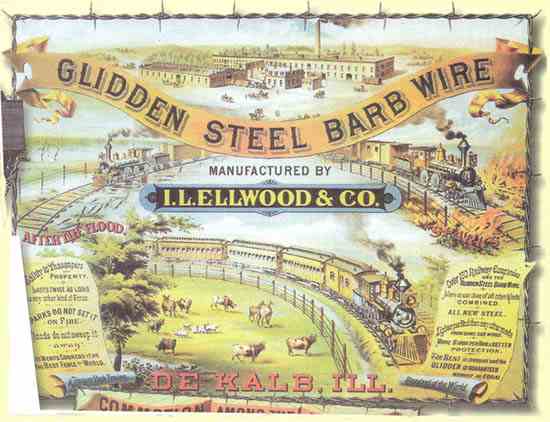
One of the most historically significant patents was granted to Joseph Glidden in 1874 for a design often associated with the rapid spread of barbed wire fencing across the West. Whether you think of Glidden as “the inventor” or “the inventor who made it workable at scale,” his role is central to why barbed wire became the fence material for a generation.
The collector takeaway: barbed wire history is a patent and pattern story. Many types existed, but a few practical designs rose because they were easier to manufacture, easier to install, and more reliable in the field.
Why It Spread So Fast
Barbed wire won because it solved multiple problems at once.
It was scalable
Wire could be produced in large quantities, shipped by rail, and sold widely. This mattered enormously in a period when the West was being connected by transportation networks.
It was affordable compared to alternatives
Cost matters when you’re fencing large acreage. Barbed wire made enclosing land possible for far more people than expensive traditional fencing.
It worked
The effectiveness is the uncomfortable truth. Barbs discouraged animals from leaning through or pushing against the fence. Even a few strands could create a strong psychological barrier.
It fit the moment
Barbed wire arrived when settlement patterns were changing. As more farming communities formed and land use intensified, boundaries became more urgent—and conflict over boundaries became more likely.
Barbed Wire and the End of the Open Range
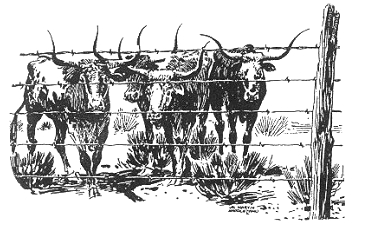
Few inventions are so strongly tied to a turning point in the popular imagination as barbed wire is to the “closing” of the open range. Once large areas could be fenced quickly and cheaply, land that had functioned as shared grazing space became divided.
That shift rippled outward:
- Ranchers faced new obstacles to moving herds along traditional routes.
- Farmers gained tools to protect crops and claim boundaries.
- Communities argued—sometimes violently—over who had the right to fence what, and where.
- Fence cutting and “range war” conflicts became part of the West’s real, messy transition from open land customs to stricter property enforcement.
Barbed wire didn’t create those tensions alone, but it made them visible—literally drawn across the land.
The Human Side: A Fence That Changed Daily Life
It’s easy to discuss barbed wire as economics and infrastructure, but its impact was personal.
Homesteaders and farmers, fencing could mean:
- protecting a family’s livelihood
- keeping animals out of crops
- establishing clear boundaries in a landscape that felt contested
Ranchers accustomed to open movement, it could mean:
- disrupted grazing patterns
- blocked routes and water access
- a sense that the land was being “taken” in lines of wire
Towns, railroads, and expanding settlement, it often meant:
- more predictable land use
- fewer wandering animals
- clearer rules—at least on paper
The fence became both protection and provocation, depending on where you stood.
Why Barbed Wire Is a Collectible Category
Barbed wire collecting is one of the most fascinating “industrial Americana” niches because it blends:
- invention history (patents and designs)
- material culture (wire construction, barbs, makers)
- regional history (where certain patterns were used or sold)
- and visual variety (some patterns are surprisingly beautiful)
Collectors often love barbed wire for the same reason they love old tools, signs, and bottles: it’s a practical object with a story that’s bigger than the object itself.
What collectors commonly collect
Barbed wire collecting can range from modest to deeply specialized. Common collecting paths include:
- Single examples as frontier artifacts (one coil or a few mounted strands)
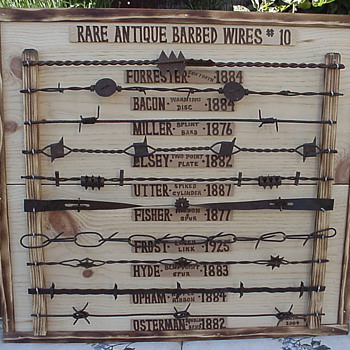
- Pattern collecting (different barb shapes and twist styles)
- Patent-era and maker-focused collecting (tracking specific designs and origins)
- Regional collections (wires associated with specific states, ranching areas, or rail corridors)
- Related objects (fence staples, insulators, tools, catalogs, and advertising ephemera)
A Beginner-Friendly Guide to Recognizing “Types” Without Getting Lost
One reason new collectors feel intimidated is the sheer number of patterns. A helpful way to start is to look at broad features:
Twist construction
- Single-strand vs. double-strand wire
- How tightly the strands are twisted
- Whether the twist looks uniform or irregular
Barb style
- Two-point vs. four-point barbs
- Sheet-metal barbs vs. wire barbs
- Long, aggressive points vs. smaller “spur” points
Barb spacing and consistency
- Regular spacing can suggest standardized manufacturing
- Irregularities can suggest field repairs, age, or less standardized production
You don’t need to identify everything immediately. The goal is learning how to describe what you see—then building knowledge from there.
What to Look For When Buying Barbed Wire Collectibles
Because barbed wire is both historic and hazardous, collectors tend to evaluate it through two lenses: authenticity and safe preservation.
1) Condition and integrity
- Heavy rust can be expected, but look for structural failure if you plan to display tensioned strands.
- Be cautious with wire that’s brittle or flaking aggressively.
2) Provenance and context
Barbed wire becomes far more interesting when it comes with a story:
- Found on an old ranch property
- Removed during a known land transition or redevelopment
- Associated with a specific region or family history
Even a simple note of where it was found can add meaning.
3) Pattern clarity
If you’re collecting by pattern, you want barbs that are still identifiable—clear enough to photograph and compare.
4) Safety and handling
This seems obvious, but it’s worth saying: barbed wire is not a “handle it casually” collectible. Gloves, careful transport, and responsible display mounts matter.
Display Ideas That Feel Historic (and Safe)
Barbed wire can display beautifully if done thoughtfully. A few collector-friendly options:
- Shadow box display: Mounted strands with a label card describing location and approximate era.
- Framed section: A short length mounted inside a deep frame to keep points contained.
- Mounted board or rack: Horizontal strands on a stained wood backer, mimicking fence-line aesthetics.
- Paired with ephemera: Patent-style illustrations, vintage ranch photographs, maps, or agricultural catalogs (as visuals—without suggesting you have to own rare originals).
The goal is to preserve the object and protect people and pets. A great display makes it clear the wire is historic—without making it accessible to accidental contact.
Why This Invention Still Matters
Barbed wire isn’t just “old fence wire.” It’s a symbol of how technology can change the meaning of land. It marks a shift from open movement to fixed boundaries, from custom to enforcement, from shared space to controlled space.
It’s also a reminder that transformative inventions are often not glamorous. Sometimes the thing that changes everything is a cheap, scalable improvement that fits the moment perfectly.
And for collectors, that’s exactly why barbed wire belongs on the shelf (or in the frame) alongside other artifacts of American change. It doesn’t just represent the West—it helped remake it.
Let’s Make History—one strand at a time.