
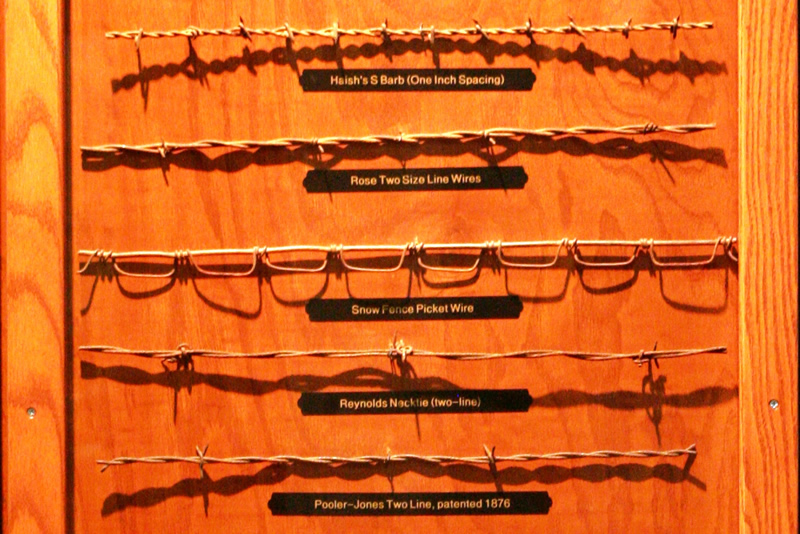
At first glance, barbed wire can look like one invention repeated endlessly: two strands of wire, a set of sharp points, and a long line meant to say “not past here.” But once you start looking closely—really closely—you realize why barbed wire became a collectible category all its own.
Barbed wire is a world of patterns: different barb shapes, different twists, different spacing, and different ways inventors tried to solve one stubborn problem—how to create a fence that was affordable, durable, and effective across huge stretches of land. In the late 1800s, that problem wasn’t theoretical. It was urgent. And it sparked a flood of creativity (and competition) that left behind thousands of identifiable variations.
This post is your collector-friendly guide to that hidden complexity: why there were so many patents, what makers were actually trying to improve, how patterns became “signatures,” and how modern collectors can start recognizing what they’re looking at without getting overwhelmed.
Why So Many Patents? Because the Details Were the Invention
Barbed wire wasn’t a single “eureka” moment so much as a rapid series of improvements. Everyone understood the basic idea—add something sharp to wire—but making it practical at scale required solving real engineering challenges.
Inventors fought over questions like:
- How do you keep the barbs from sliding along the wire?
- How do you prevent barbs from spinning out of position?
- How do you make barbs that stay sharp and effective after weather and pressure?
- How do you build it cheaply enough to fence large acreage?
- How do you manufacture it quickly and consistently?
Each “small” improvement could mean a big difference in the field. And because fencing was a massive market, even slight advantages were worth patent battles and aggressive competition.
The Core Problem: Holding the Barb in Place
If you want to understand barbed wire patterns, start with this: the barb has to stay where it’s put.
Early forms of “thorny wire” existed, but many designs struggled because the points could shift or loosen. One reason the familiar two-strand twist became so dominant is that twisting can act like a clamp. The wire itself becomes part of the locking system.
This is why so many patterns involve variations on:
- two strands twisted tighter or looser
- barbs that are wrapped, clasped, or “captured” by twist tension
- barbs shaped so they naturally bite into both strands
- additional methods to keep spacing consistent
In other words, the pattern isn’t decorative. It’s functional problem-solving you can see with your eyes.
A “Patent Era” Object: Barbed Wire as Competitive Technology
In collecting, “patent era” usually means a period when a category exploded with inventions and variations because the market was new, valuable, and not yet standardized. Barbed wire is exactly that kind of category.
In the 1870s and 1880s, inventors were competing to create:
- a better barb
- a better way to attach it
- a better way to manufacture it
- and a better way to win the market
That created two things collectors love:
- A huge variety of identifiable patterns
- A story-rich paper trail of patents, catalogs, and legal battles
Even if you never memorize patent numbers, you can collect barbed wire as a visible record of “invention culture.”
The Famous Names—and What They Represent to Collectors
You’ll often see the same names come up in barbed wire history. They matter because they represent key moments in the competition to create effective, manufacturable designs.
Rather than treating these as trivia, think of them as “anchors” that help you understand why the patterns look the way they do:
- Inventors and makers were trying to create a wire that would work reliably and sell widely.
- The most influential designs are often the ones that were easiest to produce at scale and easiest to install in real conditions.
For collectors, this is where the hobby gets satisfying: you’re not just looking at sharp wire—you’re looking at a design decision.
Pattern Vocabulary: How Collectors Describe What They See
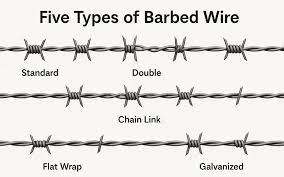
If you want to talk about barbed wire patterns like a collector (without drowning in jargon), learn to describe four basic features:
1) Wire construction
- Single strand vs. double strand
- Tight twist vs. loose twist
- Uniform twist vs. irregular twist
- Round wire vs. other shapes (less common, but worth noting)
2) Barb construction
- Two-point vs. four-point barbs
- Wire barbs vs. sheet-metal barbs
- Short “spur” barbs vs. longer, more aggressive points
- Barbs made from one piece vs. multiple pieces
3) Attachment method
- Barbs wrapped around one strand and locked by twisting the second strand
- Barbs clasping both strands (shaped to grip)
- Barbs secured by additional wrapping or crimping
- Barbs that appear “free” (often a red flag unless you understand the design)
4) Spacing and rhythm
- Regular spacing suggests standardized production
- Uneven spacing may indicate a different manufacturing approach, field repair, or heavy wear
Once you can describe these four, you can start comparing patterns confidently—even if you can’t name them yet.
Why Some Patterns Look “Artistic” (Even Though They Weren’t Trying to Be)
Collectors often describe certain barbed wire patterns as beautiful, intricate, or even elegant. That can feel strange because barbed wire is, at heart, defensive.
But the beauty comes from visible problem-solving:
- symmetry created by regular spacing
- geometry created by barb shapes
- repetition created by manufacturing consistency
- and the contrast between straight tensioned wire and sharp repeating points
It’s the same reason people collect old tools or industrial signage: function creates form, and form becomes aesthetic.
The “Standardization Effect”: Why Some Wires Feel Common (and Others Feel Special)
As the industry matured, certain patterns became widespread because they were:
- durable in the field
- relatively easy to produce
- and effective enough that they became the default
For collectors, this creates a useful reality:
- Some patterns are “baseline” and appear often.
- Others are scarcer because they were short-lived, regional, patented but not widely adopted, or produced by smaller makers.
A rare pattern doesn’t have to be the most complex. Sometimes it’s rare because it simply didn’t catch on.
Starting a Pattern Collection Without Getting Overwhelmed
Barbed wire collecting can feel intimidating because there are so many varieties. The trick is to start with a collecting goal you can actually enjoy.
Here are three easy entry approaches:
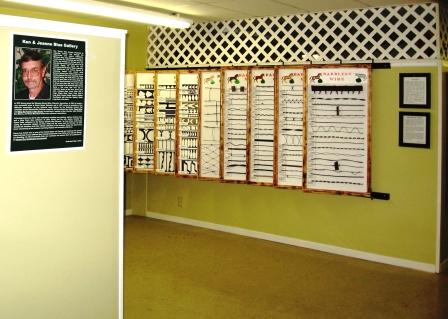
1) The “comparison board” approach
Collect a handful of clearly different patterns and mount them side-by-side. Your goal is not to identify everything—it’s to train your eye.
Look for variety in:
- barb shape
- twist style
- spacing
- overall “feel”
2) The “one from each idea” approach
Instead of trying to collect “everything,” collect representative examples:
- a classic two-strand twist with wire barbs
- a sheet-metal barb style
- a different locking method
- a pattern with unusually shaped barbs
- a specimen with clear provenance from a specific property
3) The “region story” approach
Collect wire tied to a place you care about:
- family land
- a local ranching or farming region
- a known historic corridor
- a property undergoing redevelopment where old fencing is being removed
This approach makes even common patterns meaningful because the story is the point.
What to Look for When Buying Pattern-Driven Barbed Wire
Because barbed wire is hazardous and often weathered, collectors usually balance three factors: clarity, condition, and context.
Clarity: can you still “read” the pattern?
If you’re collecting patterns, you want barbs that are:
- visible enough to photograph
- intact enough to compare
- not so corroded that the shape is lost
Condition: stable, not actively crumbling
Rust is normal. But watch for:
- wire that snaps easily when moved
- flaking that leaves sharp debris
- sections that have become structurally fragile
Context: provenance makes it more than wire
A note that says “from Grandpa’s ranch fence line” can add more lasting value (and personal meaning) than a rarer pattern with no story.
If you can document where it came from—state, county, property type, approximate age—do it. That documentation becomes part of the collectible.
Displaying Pattern Collections Safely
Because patterns are easiest to appreciate side-by-side, display is a big part of this niche. The key is safe containment.
Collector-friendly display ideas:
- Mounted boards with secured strands and labeled pattern notes
- Deep shadow boxes that keep barbs away from hands
- Wall-mounted racks with clear spacing and protective framing
- Museum-style labeling (even simple index cards) with location and acquisition date
Practical tip: If you’re mounting wire, choose methods that secure it firmly without creating stress points that could snap older, brittle wire.
The Big Takeaway: Barbed Wire Is an Invention Story You Can See
Barbed wire collecting isn’t just about “sharp old fence wire.” It’s about the invention race that reshaped landscapes—one improvement at a time. Every twist and barb shape represents someone trying to solve a real problem and win a real market.
That’s why patterns matter. They’re not minor variations. They’re the fingerprints of an era when technology and land use were changing fast—and the fence line became one of the most visible places those changes showed up.
Let’s Make History—one patented twist at a time.