A bottle starts life with a simple job: hold something and keep it contained. But somewhere along the way—through color, shape, embossing, wear, and the stories attached to it—some bottles stop reading like “containers” and start reading like objects. They become décor, collectibles, and they become the kind of thing you display on purpose, even if you never plan to put a drop of anything inside.
That shift—from utility to art—is one of the most satisfying themes in bottle collecting. It’s also one of the reasons the hobby has such a wide tent. You can collect bottles as local history, manufacturing history, advertising history, or purely as design. And you can build a collection that’s as strict (one town, one decade, one closure type) or as visual (all cobalt, all embossed, all sculptural silhouettes) as you want.
This post is a collector-friendly look at how bottles became art in the eyes of makers and collectors—and how you can curate, display, and care for your own “glass gallery” with confidence.
When a Container Becomes Design
The moment bottles become “art” isn’t always a single invention or a single era. It’s a gradual shift driven by a few forces that show up again and again:
- Branding: Makers realized the bottle itself could advertise. A distinctive shape or bold embossing is a label that never falls off.
- Material beauty: Glass can be clear, smoky, aqua, emerald, amber, cobalt—and it can catch light in ways other materials can’t.
- Mass production + variety: As bottle making became more standardized, it also became easier to produce special molds and repeat a signature look.
- Home display culture: People have long kept attractive objects on shelves and mantels. Bottles fit naturally into that tradition—especially when they came in rich colors or had dramatic shapes.
Collectors today are the final step in this arc: we’re the ones who take bottles that were once “ordinary” and treat them like curated objects.
The Visual Language of Bottles: What Makes One Feel “Artful”?
Some bottles feel like art the second you see them. Others become art when you know what you’re looking at. Either way, the same design elements tend to create that “display pull.”
Color and light
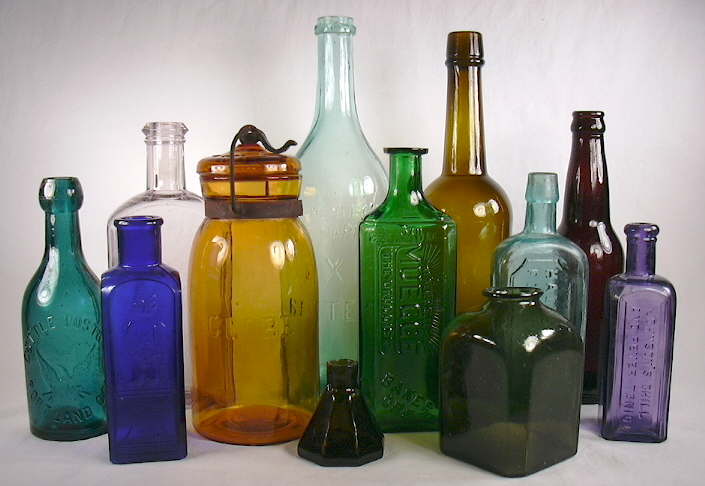
Color is often the first hook. Deep amber glows warmly. Cobalt looks jewel-like. Aqua reads “old” and nostalgic. Green can feel botanical or bar-cart cool. Even clear bottles can become dramatic when the embossing and shape are strong.
Shape and silhouette
A bottle with a confident shoulder, a stout body, or an unusual neck profile often reads as sculptural. The silhouette matters even when the label is gone.
Texture and embossing
Embossed words, paneling, ribbing, faceting, and molded designs turn a bottle into a tactile object. Embossing is also “permanent storytelling”—place names, product names, and maker identities written in glass.
Evidence of handwork or era
Collectors love clues: subtle asymmetry, tool marks, seam behavior, base wear. Those aren’t flaws; they’re a readable history that modern packaging doesn’t have.
Category One: Apothecary Bottles as Shelf Art
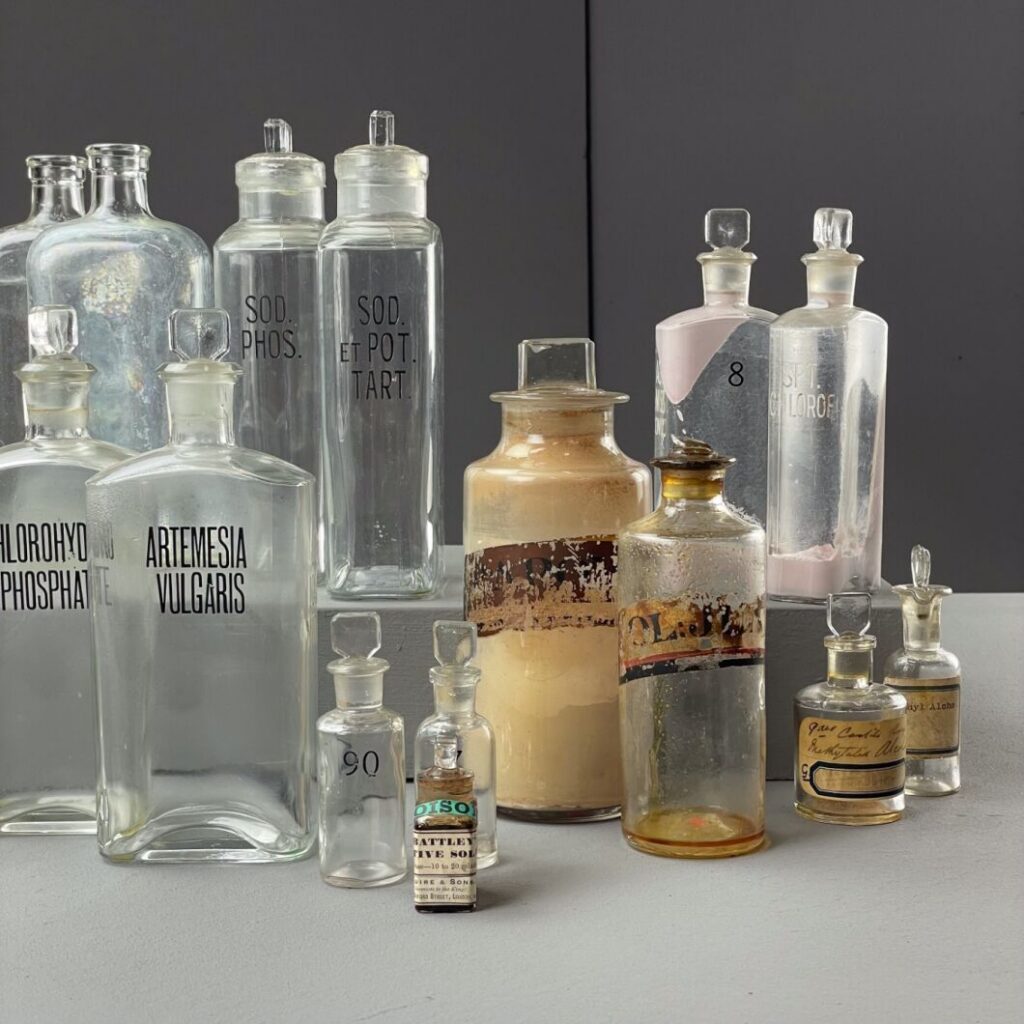
Apothecary bottles are a perfect example of utility becoming aesthetic. Originally, these were work tools—organized storage for chemicals, tinctures, powders, and compounds. But they also have natural display appeal:
- strong, stable shapes
- glass stoppers and clean lines
- classic amber and clear glass palettes
- label panels or embossed markings that feel archival
Today, a row of apothecary bottles can look like a still life—especially when displayed with consistent heights or grouped by glass tone.
Collector-friendly idea: build a “pharmacy shelf” vignette with varied heights (short squat bottles, medium jars, taller stoppers) to create visual rhythm.
Category Two: Bitters, Medicines, and the Bottle as Advertisement
If apothecary bottles are “quiet beauty,” bitters and patent medicine bottles are “bold personality.” This is where bottles become art through marketing design.
Collectors love these because:
- embossing is often deep and graphic
- shapes can be distinctive and memorable
- many bottles carry local or brand identity in a way that reads instantly
This category is also where bottles can cross into sculptural territory. Novelty silhouettes and unusually proportioned forms were created specifically to stand out on shelves—because shelf presence meant sales.
Display tip: group by “voice.” Put bold embossed bottles together (they read like signage). Put label-panel bottles together (they read like minimalist design).
Category Three: Soda Bottles and the Beauty of Sturdiness
Soda bottles often become art through engineering. Thick glass, sturdy profiles, and strong finishes exist because carbonation demanded it. That strength creates a visual language that collectors respond to:
- weight in the hand
- confident proportions
- industrial clarity
- local bottler embossing that feels place-specific
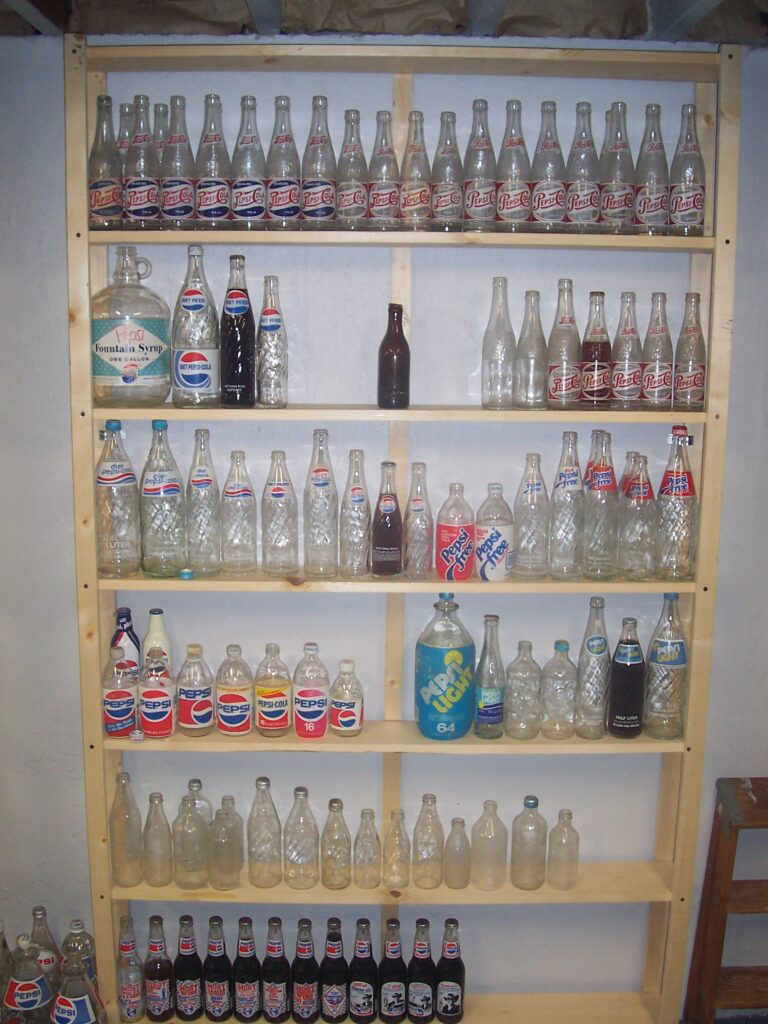
A shelf of soda bottles can look like a history of local businesses—especially when towns and bottlers are named right in the glass.
Collector idea: build a regional set—one bottle from each nearby town or county. It’s a “map” you can display.
Category Four: Household Bottles and the Charm of Everyday Form
Household bottles—vinegar, extracts, bluing, ink, cleaning solutions—often become art through specificity. They were made for particular tasks, so they developed distinctive shapes and sizes. Even when the original contents are long gone, the bottle’s form still tells you how it was used.
What makes household bottles artful:
- unusual silhouettes (tall narrow extracts, squat pantry bottles, narrow-neck utility forms)
- surprising colors (especially when a product favored a specific glass tone)
- embossed branding that feels graphic and direct
These bottles also create excellent “kitchen history” displays. A small cluster can suggest an entire era of domestic routine.
Category Five: Barware, Decanters, and Bottles Made to Be Seen
Some bottles were always meant to be displayed. Decanters and bar bottles turn utility into ceremony: the pour itself becomes part of hosting, celebration, and style.
Collectors gravitate to:
- cut-glass looks and strong faceting
- dramatic stoppers
- novelty or themed decanters from later eras
- sets that create a “bar shelf” story
This is one of the best categories for people who want bottles that behave like décor without needing historical deep-dives. The design is the point—and the designs can be spectacular.
Category Six: Studio and Art Glass Bottles
At a certain point, bottle-making moves fully into the art world: bottles made not as packaging, but as forms. Hand-blown bottles can feature:
- intentional asymmetry
- applied trails and textured details
- controlled color layering
- sculptural necks and experimental shapes
Even if you don’t collect studio glass specifically, it’s useful to understand that bottles aren’t only “old packaging.” They’re also a form that artists have used to explore shape, color, and light.
Collector tip: if you’re mixing studio pieces with antique bottles, group by visual harmony (color family or silhouette) so the shelf looks curated rather than chaotic.
Modern “Bottle Art”: Upcycling and Display Culture
One of the newest chapters in “utility to art” is what people do with bottles now. You’ll see bottles turned into:
- lamps and candle holders
- vases and bud jars
- window displays and bottle trees
- shelf styling objects for modern interiors
Even when you don’t love every craft trend, it’s worth noticing: modern décor culture has made bottles a design object again—sometimes without any connection to the original contents at all.
How to Build a Collection That Looks Intentional
If you want your bottle collection to read like a gallery instead of a random assortment, choose one organizing idea and let it guide you.
Option 1: Collect by color
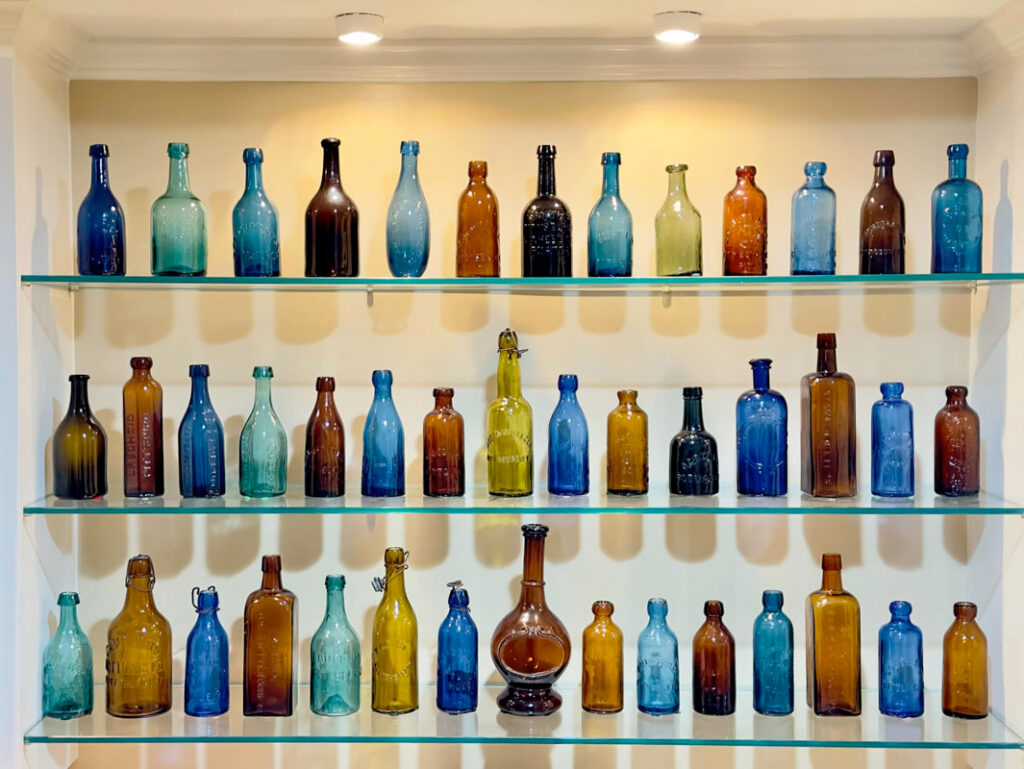
All cobalt, amber, or aqua. Or a planned gradient from clear to dark. Color shelves photograph beautifully and feel cohesive fast.
Option 2: Collect by function
Apothecary shelf. Soda shelf. Kitchen shelf. Bar shelf. This creates a “room story” and makes your collection easy to explain.
Option 3: Collect by region
Local dairies, druggists, bottlers, and businesses. This is one of the most satisfying paths because every bottle connects to a place.
Option 4: Collect by texture/embossing
Bold embossing only. Ribbed and paneled forms only. Label-panel minimalism only. This creates a strong design identity.
Display Tips That Make Bottles Look Like Art
A few simple choices can dramatically improve how bottles look on a shelf.
- Use backlighting gently: ambient light from the side or behind makes embossing readable.
- Vary height: tall + medium + small creates visual rhythm.
- Leave breathing room: bottles need space; crowded shelves look cluttered fast.
- Use risers carefully: a subtle riser in the back row creates depth without instability.
- Mind the weight: bottles are heavier than they look—use sturdy shelves and stable spacing.
Collector note: avoid direct sunlight long-term. Sunlight can fade labels and change how glass reads over time.
Care and Safety: Treat Antique Bottles as Display Objects
A bottle may look like it wants to be used again, but most antique bottles are best treated as display-only unless you know exactly what you have and it’s intended for modern food contact.
Practical care habits:
- wash with mild soap and warm water when appropriate
- use soft brushes (avoid abrasives that scratch)
- avoid harsh chemicals that can etch glass
- don’t aggressively “restore” haze or staining without understanding the risk
Safety habits:
- never taste or test residues
- treat unknown contents as potentially hazardous
- be cautious with sealed bottles or bottles with residue—keep them sealed and handle carefully
The goal is not to make every bottle look new. The goal is to preserve the bottle’s surface, structure, and story.
Why “Utility to Art” Is the Best Bottle Theme of All
Bottle collecting is ultimately about transformation. A bottle designed to hold vinegar becomes a décor object. A medicine bottle becomes an advertising artifact. A soda bottle becomes local business history. A hand-finished bottle becomes evidence of skilled labor. A shelf of glass becomes a curated story.
Once you start seeing bottles this way, the hobby becomes less about “stuff” and more about design, history, and the quiet pleasure of objects that still carry their purpose—even when they’ve moved beyond it.
Let’s Make History—one bottle at a time.