Behind every great illusion is a stage humming with possibility. Magicians don’t simply perform with objects — they perform through them. For audiences past and present, the top hat, the wand, a ring of polished steel, a seemingly ordinary table, and the hidden seam of a trapdoor aren’t just tools. They’re partners in a shared act of wonder.
Across the last two centuries, these props have shaped the language of modern magic. Today, the surviving examples are prized by collectors not just for their clever engineering but for the history and personality etched into their surfaces.
The Top Hat: Symbol and Secret Chamber
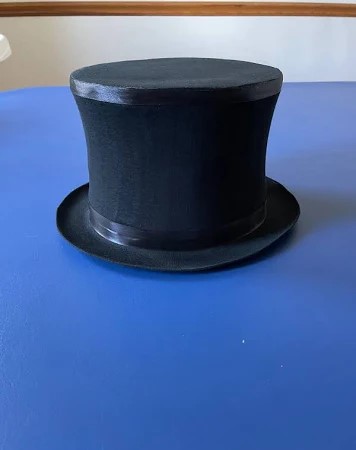
Few images define stage magic as clearly as the top hat. While magicians didn’t invent the hat, they certainly turned it into an icon. The famous “rabbit from a hat” routine grew popular during the 19th century, when formal evening dress — including high top hats — was standard stage attire.
A top hat’s deep crown and rigid structure made it ideal for concealing small animals, silks, or collapsible devices. Although the outside appeared ordinary, working hats were often modified with hidden pockets, false bottoms, stiffened walls, and other discreet adaptations.
Even when a hat wasn’t central to the trick, it became a shorthand for magic in posters and handbills. One glance at a hat silhouette told audiences: expect a surprise.
The Wand: Precision, Misdirection, and Stagecraft
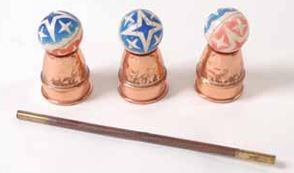
The magician’s wand isn’t a spell-casting rod — it’s a tool of focus and rhythm. Modern stage wands evolved from earlier staffs and pointers, gaining popularity between the 18th and 19th centuries as magic shifted from street demonstrations to refined theatrical performance.
A wand allows a performer to:
- mark the timing of a sleight
- direct the audience’s gaze
- disguise the moment of a secret action
- create a visual “beat” that frames the illusion
Wands ranged from simple ebony rods to ornate pieces with metal tips or decorative inlays. Some even unscrewed into sections to hide small gimmicks or loads.
Collectors often look for signs of use: worn finishes where a performer gripped the wand, tiny dents from nightly routines, or the balance and weight that shaped a magician’s style.
Linking Rings: Mechanics and Choreography
The Linking Rings illusion — where solid metal rings appear to link, unlink, and dance through each other — is one of magic’s most enduring classics. Versions of the effect have roots in traditional Chinese performance, and by the mid-19th century it had become a fixture of Western stage magic.
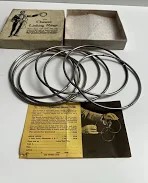
Ring sets vary in diameter depending on the venue, but the principle is the same: a combination of solid rings and a specially prepared ring, used with precise choreography, creates the illusion that metal passes through metal.
The beauty of the routine lies not in the rings alone but in the performer’s timing, posture, and rhythm. The smooth clicks and swings form a kind of kinetic poetry.
Collectors prize sets that belonged to notable performers or that were produced by historically significant magic suppliers.
The Magician’s Table and the Servante: Furniture With Secrets
A magician’s table may look plain from the front, but the working side is another world entirely. Throughout the 19th and 20th centuries, tables used for magic often contained secret drawers, drop panels, false tops, and concealed compartments.
At the heart of many routines is the servante — a hidden shelf or pouch attached to the back of a table. Unseen by the audience, this simple device allows the magician to ditch items, retrieve prepared ones, or execute switches while maintaining a natural flow.
Servantes varied widely in design. Some were fixed wooden shelves; others were collapsible, fabric-based, or designed to blend seamlessly into the table’s trim. Many were crafted by specialized builders who created furniture that was both decorative and mechanically ingenious.
Collectors especially value tables with known provenance, as few complete examples survive in good condition.
Trapdoors, Lifts, and the Architecture of Illusion
Some of magic’s most dramatic effects — sudden vanishings, unexpected appearances, and instantaneous substitutions — relied on the stage itself. By the 19th century, many theaters included trapdoors and lifts as part of their standard design, used not only by magicians but in operas, melodramas, and pantomimes.
Magicians made excellent use of these features, often building illusions around them. For venues without built-in traps, performers developed portable versions: collapsible platforms, folding stages, and engineered floor sections that could be assembled quickly on tour.
Because many trap systems were part of theater infrastructure, original pieces rarely survive. Most knowledge comes from archival drawings, photographs, and written accounts. When a portable trap or lift with verified stage use appears on the market, it becomes a prized artifact.
Escape Apparatus: Where Hardware Meets Legend
The rise of escape acts in the late 19th and early 20th centuries introduced a new category of props: locks, restraints, boxes, crates, and confinement devices.
Some of these props were entirely ordinary — escape artists relied on skill, dexterity, and knowledge of lock mechanisms. Others were specially manufactured or modified to allow for controlled releases, collapsible structures, or hidden openings.
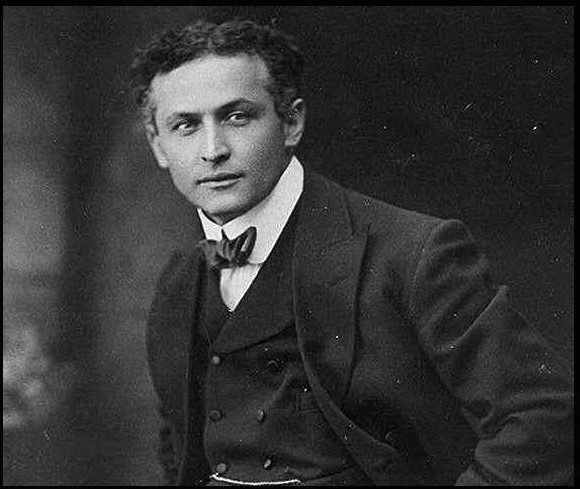
The most famous example remains Harry Houdini, whose props — handcuffs, lock picks, mailbags, and challenge devices — are among the most sought-after pieces in the field. Items tied to known performers carry both historical and emotional weight, making them centerpiece collectibles.
Cabinets, Trunks, and the Mechanical Art of Illusion
Large apparatus illusions — such as substitution trunks, production boxes, and spirit cabinets — are masterpieces of stage engineering. These props combine carpentry, metalwork, textiles, and mechanical principles to create effects that must function flawlessly under the pressure of live performance.
The Substitution Trunk (often associated with the famous “Metamorphosis” routine) remains one of the best-known examples: a sturdy-looking trunk designed for lightning-fast exchanges.
Because these props were expensive to build and took heavy wear on tour, many were altered repeatedly or dismantled once retired. Surviving examples are rare and treasured — especially those with verified use by a particular magician.
Why Collectors Love the Details
Collectors of magic paraphernalia often look for small, telling signs of the object’s life in performance:
- paint rubs where stagehands lifted a table night after night
- scratches inside a trunk showing repeated resets
- tour labels listing the theaters visited
- a faint stamp from the original builder’s workshop
- repaired hinges or patched panels revealing a prop’s long service
These details transform a prop from an object into a witness — evidence of a performer’s craft, a show’s travel, or an audience’s reaction.
Provenance adds tremendous value. A simple wand or hand-built servante with confirmed ties to a known performer can become far more meaningful than a pristine but anonymous piece.
Preserving Secrets, Preserving History
Magic props are surprisingly scarce today. Reasons include:
- many were destroyed intentionally to protect methods
- equipment wore out quickly on tour
- props were often repurposed for new illusions
- bulkier items were discarded to reduce travel costs
For these reasons, surviving pieces — especially those retaining original mechanisms — are invaluable to historians. Museums and expert collectors often preserve props “as found,” valuing wear and patina as part of the item’s story.
In magic collecting, signs of use aren’t flaws — they’re historical fingerprints.
The Lasting Power of Magician Paraphernalia
Magician paraphernalia fascinates because it sits at the crossroads of craft and storytelling. Each prop represents a moment when the lights dimmed, the audience leaned forward, and something impossible unfolded onstage.
A wand balanced just right.
A table hiding a secret shelf.
A trunk engineered for a perfect switch.
A ring set polished by decades of practice.
These objects bridge the gap between the visible illusion and the hidden art that makes it come alive. In preserving them, collectors keep alive a lineage of ingenuity, performance, and showmanship.
And just as magicians once transformed these props into moments of wonder, today we preserve them as pieces of living history. Let’s Make History-one magical moment at a time.