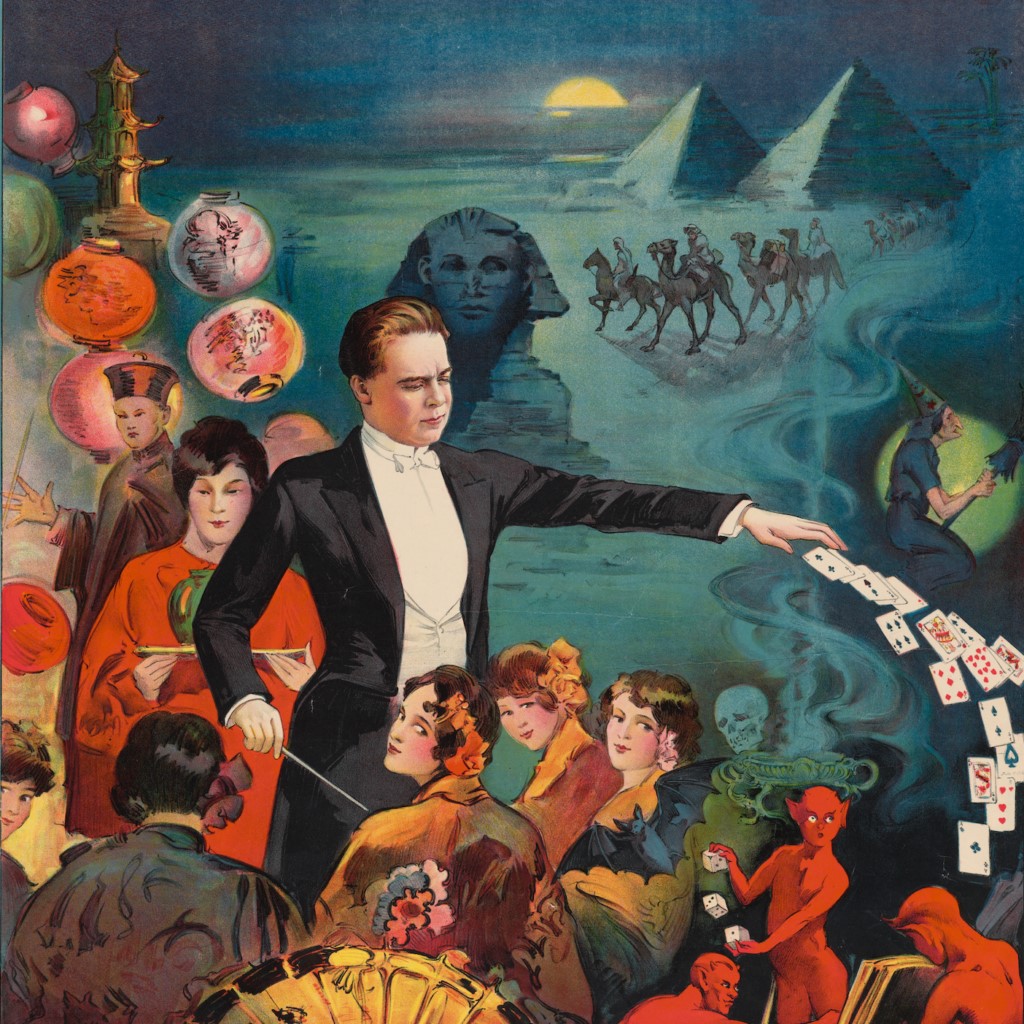
During the late 19th and early 20th centuries, magic posters became one of the most striking and memorable forms of advertising in the entertainment world. Long before audiences stepped into a theater, these oversized sheets of vivid color created an entire universe of mystery. Printed using chromolithography and displayed on city walls, theater facades, billboards, and traveling show wagons, they turned magicians into recognizable public figures. In a time before widespread radio broadcasting, the poster was one of the most powerful tools a performer had to capture public attention.
Magic posters did far more than announce a show—they set the tone. Bright colors, dramatic shading, fantastical imagery, and bold typography transformed performers into icons even before they appeared on stage. They invited passersby into a world where anything seemed possible: women floating in mid-air, ghostly figures materializing from shadows, and illusions portrayed as feats that defied earthly explanation.
The Rise of the Illustrated Magician
Historians often refer to the late 1800s through the early 20th century as the “Golden Age of Magic,” a period when live entertainment flourished and illusionists achieved international celebrity. Competition was fierce, and a captivating poster could be the difference between an average turnout and a sold-out theater.
Magicians knew their posters needed to communicate more than a name or date—they had to instantly convey a persona. Performers adopted memorable identities, such as:
- The exotic mystic
- The refined gentleman conjurer
- The spiritualist performer
- The modern, scientific magician
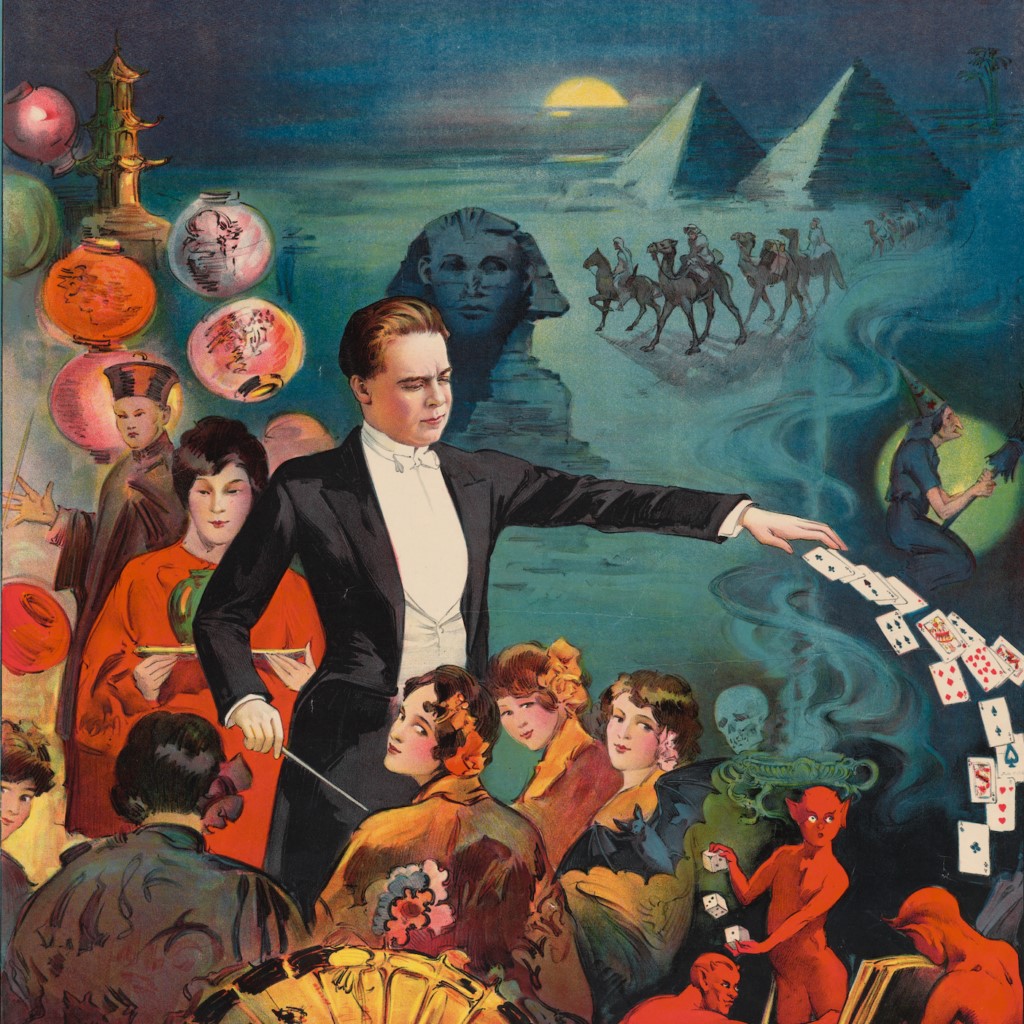
Poster artists amplified these identities using imagery inspired by mythology, spiritualism, fantasy, and the era’s fascination with the supernatural. Even today, collectors recognize the hallmarks of magic posters: rich reds and golds, dramatic contrasts, sharp outlines, and scenes filled with movement and mystery.
The Lithographers Behind the Magic
Behind every legendary magician stood the lithographers—artists and printers whose craftsmanship brought these fantastical worlds to life. Two American firms became especially influential:
Strobridge Lithographing Company (Cincinnati)
Renowned for posters featuring Harry Kellar and Howard Thurston, Strobridge was known for:
- Deep, saturated colors
- Intricate shading
- Dramatic, narrative-like compositions
Their posters often included magical creatures, swirling smoke, eerie lighting, and assistants poised dramatically beside the magician.
Otis Lithograph Company (Cleveland)
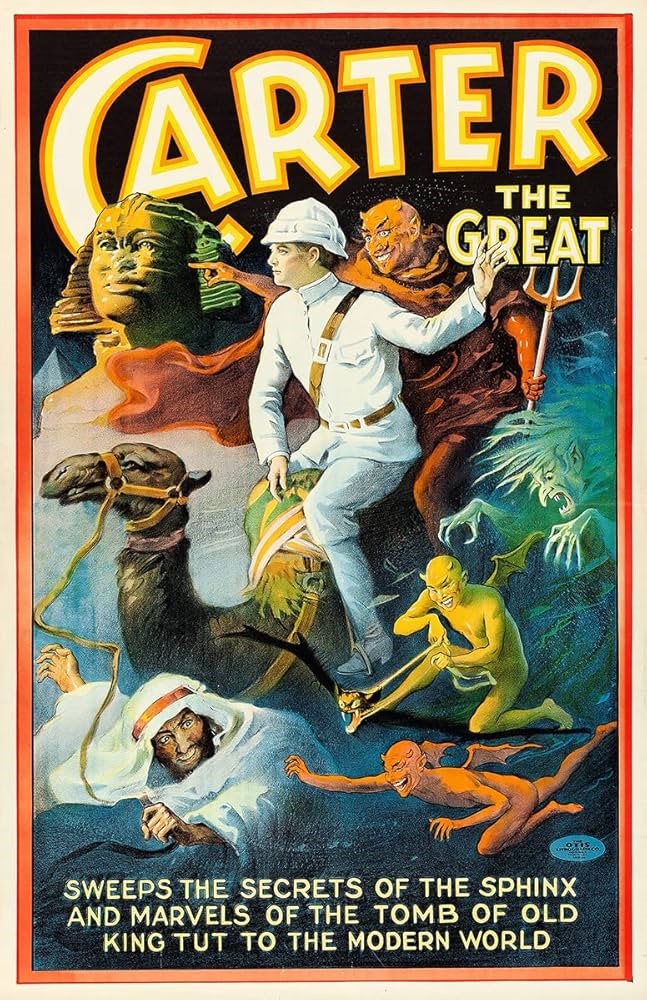
Best known for their work with Carter the Great and other touring illusionists, Otis Litho specialized in:
- Vivid, high-contrast palettes
- Fast-moving action scenes
- Bold, eye-catching layouts
Both firms were part of a larger global industry. European printers in France, Germany, and the United Kingdom also produced significant work, each with recognizable stylistic traits—such as French Art Nouveau curves or German typographic weight—that allow experts to identify posters’ origins even when the printer’s name is not visible.
Devils, Ghosts, Levitation: The Imagery of Illusion
Magic posters embraced symbolism and spectacle. While some presented magicians in a dignified, portrait-style pose, many others exploded with supernatural imagery meant to catch the eye and spark curiosity.
Devilish Helpers
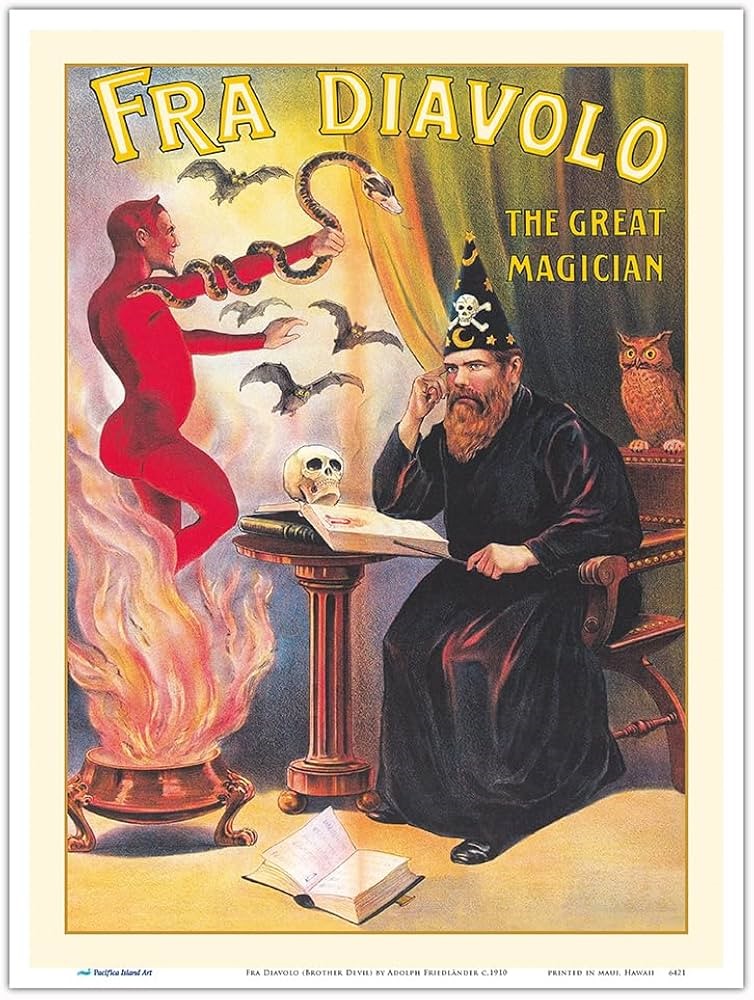
One of the most enduring motifs is the mischievous red imp or devil, famously seen in posters for Kellar and later Thurston. These figures weren’t meant to suggest real supernatural power. Instead, they symbolized:
- Trickery
- Mischief
- Illusion
- The playful deceit at the heart of stage magic
Victorian audiences understood these symbols as theatrical metaphors rather than literal claims.
Levitation Imagery
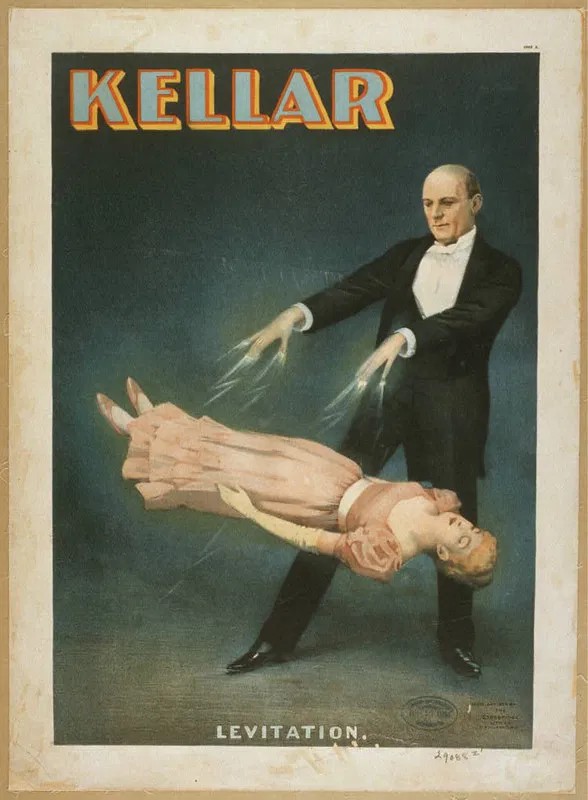
Levitation acts were among the most popular illusions of the era, and the posters reflected that popularity. Images of floating assistants or suspended bodies became almost synonymous with stage magic. Kellar, Thurston, and other performers frequently used levitation scenes to promote their shows.
Ghosts and Spirits
With spiritualism sweeping the Western world, audiences were fascinated by ghostly imagery. Magicians incorporated this interest into their stage illusions—and their posters—using:
- Floating heads
- Translucent figures
- Swirling mist and shadows
Magicians typically made it clear these were illusions, not real supernatural contact, especially given the era’s highly publicized debunkings of fraudulent mediums.
Orientalist Motifs
Many magicians adopted so-called “mystical Eastern” personas, a reflection of Western fascination with Asian and Middle Eastern cultures. Posters often featured stylized temples, turbans, exotic backdrops, and decorative fonts. While historically common, these depictions are now understood as products of their time and steeped in cultural stereotyping.
Posters as Powerful Marketing Tools
Before mass electronic media, posters were essential for building a performer’s brand. They served to:
- Create a recognizable visual identity
- Stand out in crowded entertainment districts
- Convey the spectacle of illusions more effectively than text
- Generate curiosity and excitement among potential audiences
Some magicians—Kellar, Thurston, and Carter the Great among them—commissioned dozens of posters for a single tour, each highlighting a different illusion or dramatic theme. The poster itself became part of the magic.
Collecting Magic Posters Today
Magic posters from roughly 1880 to 1930 are highly sought after by collectors. Their value is influenced by several key factors:
- Artistic quality: The chromolithography of the era remains admired for its depth and craftsmanship.
- Historical insight: Posters reveal trends in entertainment, fashion, stage design, and cultural imagery.
- Rarity: Most posters were destroyed by weather or discarded after use. Few survive in good condition.
- Subject: Posters featuring Kellar, Thurston, Carter the Great, Houdini, and the Blackstones are especially desirable.
- Condition: Tears, fading, and missing sections are common. Linen-backed examples are considered the gold standard for preservation.
Because many designs were produced in limited quantities, some surviving posters are known in only a handful of copies worldwide.
A Window Into a Bygone Era
Magic posters continue to fascinate because they capture the imagination of an era when stage illusions were among the most thrilling forms of live entertainment. They reflect a time when mystery, spectacle, and theatrical artistry collided in the streets, on billboards, and inside crowded theaters.
More than a century later, these posters still command attention. Whether once pasted to a brick wall in 1905 or now framed on a collector’s wall, they continue to spark the same sense of anticipation and wonder they were created to inspire. Let’s make history-one magical poster at a time.