
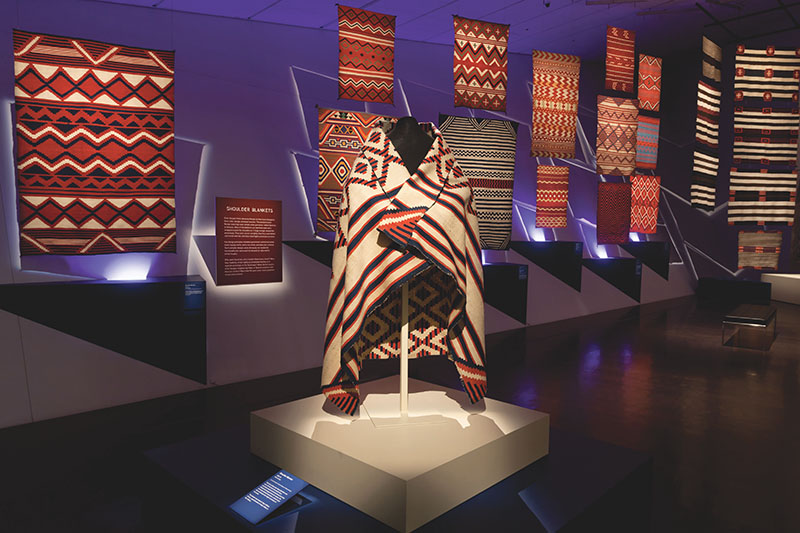
If you’re new to Navajo (Diné) textiles, one of the first confusing things you’ll hear is people using the words “blanket” and “rug” almost interchangeably. Sometimes that’s harmless shorthand. Other times it changes the whole story of a piece—because a textile made to be worn and a textile made to be used on the floor aren’t just different in function. They reflect different markets, different buyer expectations, and in many cases different design decisions.
This post is about that shift. Not to reduce Diné weaving to “what sold,” but to explain how economic change, trading posts, tourism, and outside demand helped reshape what was made—and how we talk about it today. Understanding the difference between rugs and blankets helps collectors describe pieces more accurately, spot clues in structure and proportions, and build collections that honor the textiles as both art and cultural work.
First, the Language: Why “Blanket” Doesn’t Always Mean Blanket
Historically, many Diné textiles were wearing blankets—meant to be draped, wrapped, or worn. Over time, the market for rugs grew dramatically, especially among non-Native consumers who wanted floor coverings and home décor. As rugs became the dominant commercial form in many settings, people still used the word “blanket” out of habit—especially in older collecting circles.
So here’s a collector-friendly rule of thumb:
- Blanket often implies a textile intended to be worn or used like a wrap.
- Rug implies a textile intended primarily for floor or decorative household use.
- In practice, sellers may call many things “blankets,” even when the form and size are rug-oriented.
When in doubt, describing a piece as a Diné textile (and then specifying size, structure, and intended use if known) is often the most accurate and respectful approach.
The Practical Difference: How a Rug and a Wearing Blanket Live
A wearing blanket and a rug have different “jobs.” That difference tends to show up in a few predictable ways.
Wearing blankets: drape, flexibility, and body comfort
Textiles meant to be worn generally benefit from:
- a cloth that drapes rather than sits stiffly
- edges that behave well when wrapped
- sizes and proportions that make sense for the human body
That doesn’t mean they’re flimsy—many are dense and durable—but the textile needs to move with the wearer.
Rugs: weight, stability, and floor presence
Rugs (especially those made for outside buyers) often lean toward:
- a heavier hand (thicker feel)
- a size and proportion that fits a room or a defined floor space
- strong borders and framed designs that “read” from above and across a room
Many collectors also notice that rugs are often designed to be visually complete as décor: bold central fields, crisp borders, and a finished presence that works in a home interior.
Structure Clues Collectors Can Look For
You can’t always know original intent from a glance, but you can build a strong “likely” assessment by looking at a few clues.
Proportion and size
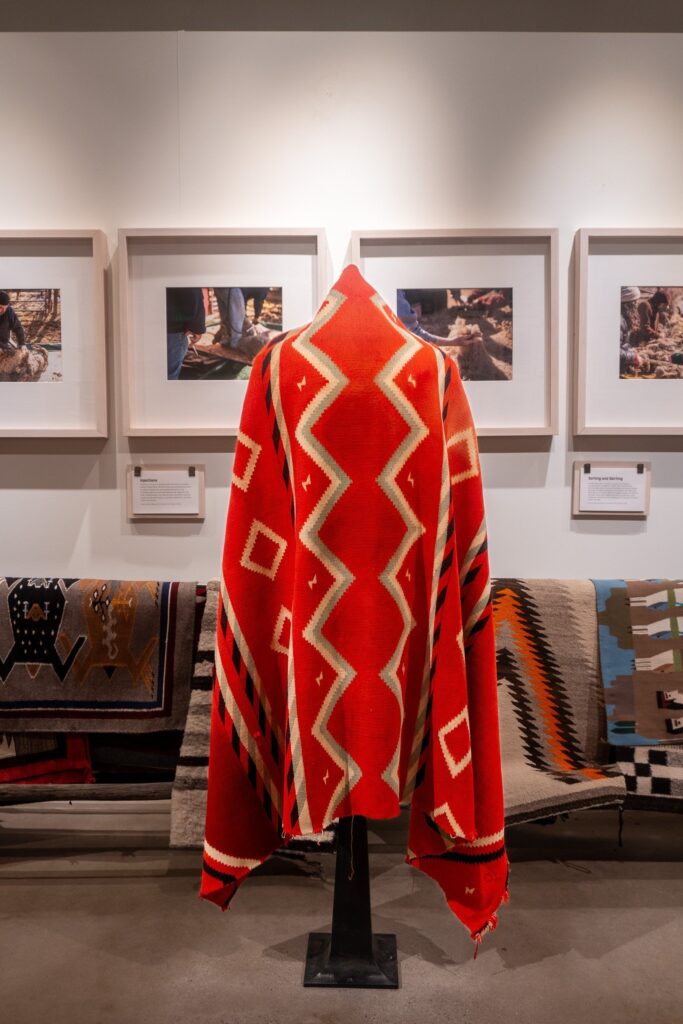
- Wearing blankets often have proportions that make sense as a wrap.
- Rugs often look more like room-friendly rectangles intended to be placed rather than worn.
If you’re shopping in person, carry a tape measure. If you’re shopping online, don’t buy without dimensions.
Density and stiffness
- A textile with a softer drape may be more consistent with wearing use.
- A thicker, heavier-feeling textile may be more consistent with rug use.
This isn’t absolute—there’s overlap—but it’s a helpful collector instinct.
Edge treatment and finishing
Look at the edges and ends:
- Are the edges clean and stable?
- Are there signs of long-term floor wear (evenly abraded high points, concentrated wear where feet would land)?
- Does the finishing suggest décor-first presentation?
Also note: many textiles have been used in ways the maker did not intend. A blanket can become a rug in a household, and a rug can become a wall hanging. Your job as a collector is to describe what you see, not assume a single life story.
The Market Shift: Why Rugs Became the Dominant Form
The short answer is demand. As the Southwest became more connected to national markets, outside buyers increasingly wanted textiles as home furnishings rather than clothing.
A few forces commonly discussed in the broader history of Southwestern trade include:
- Trading posts as intermediaries: traders bought, sold, and marketed textiles to outside buyers.
- Tourism and travel culture: visitors wanted portable, beautiful souvenirs and décor.
- Home décor trends: rugs fit easily into non-Native homes as functional art.
- Cash economy pressures: predictable demand for certain sizes and styles could provide more consistent income opportunities.
The result: many weavers adapted to a market that rewarded rug formats. This doesn’t mean weavers stopped making wearing blankets, but rugs became a major commercial lane—especially where trading posts were strongly involved in distribution.
Trading Posts and Standardization: When Size and Style Start to “Set”
A wearing blanket can be whatever the maker and wearer need. A commercial rug market often pushes toward recognizable “product categories.” That’s one reason the rug era is associated with more standardized expectations around:
- common sizes (so a buyer can picture it in a room)
- recognizable regional looks (so the rug can be marketed as a style)
- consistent color palettes (so buyers know what they’re getting)
Traders and buyers didn’t invent Diné design, but they did influence what designs and palettes were rewarded in certain markets. Over time, that influence helped create widely recognized regional style identities.
For collectors, this is a practical takeaway: rugs often connect strongly to market categories, while blankets often connect strongly to wearing and intertribal trade history. Both are meaningful; they simply sit in different economic stories.
Design Differences: What Changed When the Floor Became the Destination
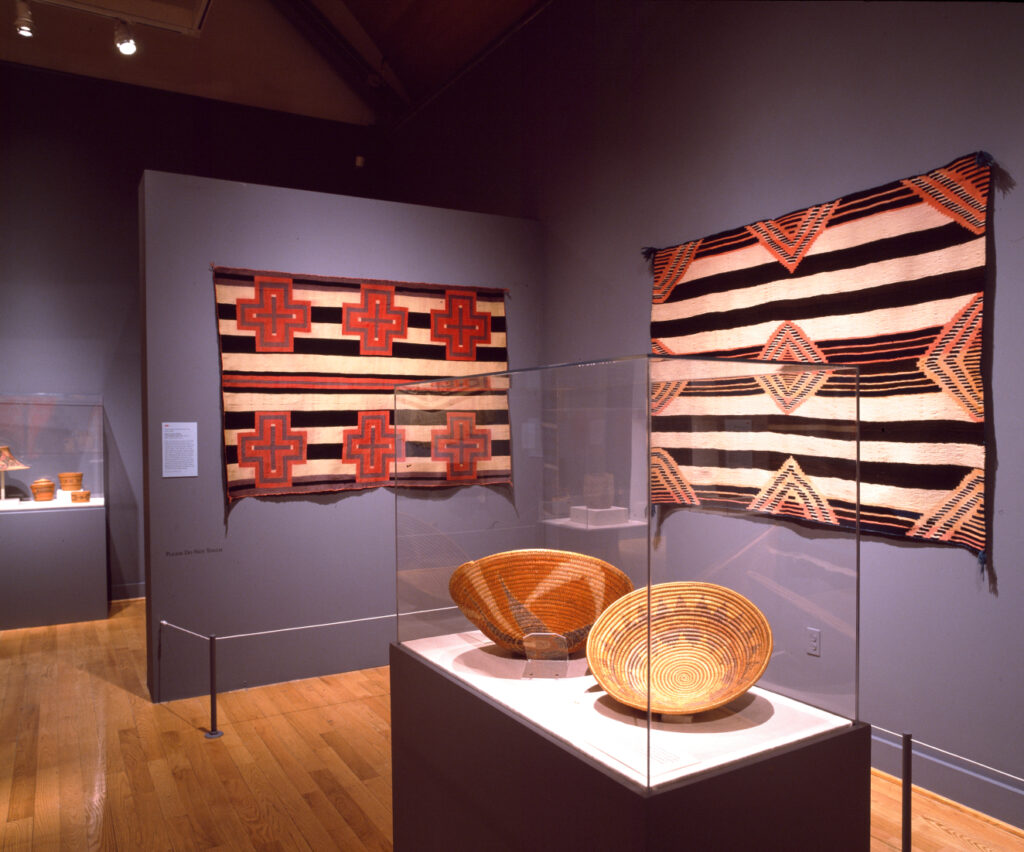
When a textile is meant to be worn, the design reads while moving with the body. When it’s meant to be a rug, it reads on the floor and in the room.
Here are a few ways that shift can influence design decisions:
Strong borders become even more important
Borders frame a rug like a picture frame. They help a design look finished and intentional in a space. While borders appear in many periods, rug markets often rewarded strong framing because it fits interior décor expectations.
Central medallions and “room-reading” compositions
Rugs often use a central focus or balanced field that reads clearly from a distance. That can mean:
- bold central diamonds
- repeated pattern fields with strong symmetry
- clear banding that anchors the eye
Color palettes respond to buyer taste
As markets changed, palettes often changed too—sometimes toward bolder contrasts, sometimes toward harmonizing “room-friendly” tones, depending on time period and what buyers were seeking.
This is why a collector can sometimes “feel” a piece as blanket-era or rug-era even before getting into detailed analysis. The design often tells you who the piece was speaking to.
How This Affects Collectors Today
Modern collecting still reflects this history.
Blankets often attract history-driven collectors
Wearing blankets—especially classic style families—tend to attract collectors interested in:
- 19th-century trade history
- weaving structure and early materials
- the prestige-textile reputation of blankets in intertribal exchange
Rugs often attract décor-driven and style-focused collectors
Rugs remain popular because they:
- display beautifully on walls, floors, and furniture backs
- come in a huge range of styles and palettes
- can anchor a room like art
Neither approach is “better.” They simply reflect different collecting motivations.
A Smart Buying Mindset: Describe What You Know, Avoid What You Can’t Prove
Because labels can be inconsistent, the safest way to buy (or list) these textiles is to focus on what you can verify:
- Exact measurements
- Material observations (wool, cotton warp presence if visible, yarn character)
- Weave and condition notes
- Provenance if it exists (estate origin, collection notes, purchase history)
What to avoid without documentation:
- declaring a specific weaver, community, or era based solely on appearance
- treating “Chief’s blanket” as a guarantee of age or market tier
- assigning a trading post association without support
Collectors respect careful language. It protects you and it respects the textile.
The Biggest Modern “Use” Shift: Floors to Walls
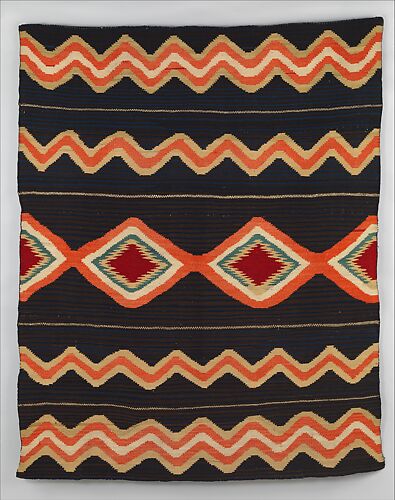
Even though many pieces were made as rugs, many collectors today display them as textile art—hung on walls, draped over furniture, or displayed in protected spaces. That shift is often a preservation choice as much as a style choice. Floors can be hard on any historic textile.
If you collect these pieces, it’s worth thinking about how you want them to live in your home. A rug can be art without being stepped on. A blanket can be displayed without being folded sharply. The market may have changed the form, but collectors can choose the future.
Why This Story Matters
“Rugs vs blankets” is not just a terminology debate. It’s a window into how Diné weaving interacted with the outside world—how artistry endured while markets changed, and how weavers navigated demand while maintaining a powerful design tradition.
When you understand that shift, you don’t just see a textile. You see a piece of economic history, design history, and living cultural practice—all woven into one object.
Let’s Make History—one textile story at a time.