
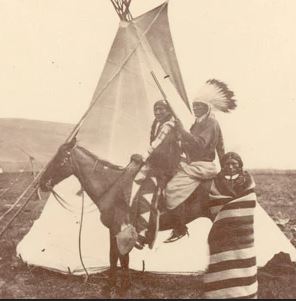
If you spend any time around Navajo (Diné) textiles, you’ll hear the phrase “Chief’s blanket” spoken with a kind of reverence. These are the pieces collectors point to when they want to explain why Diné weaving became one of the most admired textile traditions in North America: dense, even weaving; confident, graphic design; and a history shaped by trade, value, and changing markets.
But the phrase “Chief’s blanket” can also be misleading if it isn’t explained. These textiles weren’t made only for chiefs, and Diné society didn’t function with the same centralized “chief” leadership structure found in some Plains communities. The label is largely a trader/collector term—one that grew out of the blankets’ high status and their popularity in intertribal trade.
In this post, we’ll do two things: first, break down what “Chief’s blankets” are and how collectors typically understand their major style phases; and second, explain how trading posts helped reshape the Navajo textile market—affecting materials, designs, and the shift from wearing blankets toward rugs in the late 19th and early 20th centuries.
What “Chief’s Blanket” Means (and What It Doesn’t)
In everyday collecting language, “Chief’s blankets” usually refers to a family of high-quality Navajo wearing blankets that were especially prized in the 19th century. They were valued for:
- Tight, weft-faced weaving that created a dense, durable cloth
- Strong, legible design—often stripes or bold geometric elements
- Status and trade value, particularly in intertribal exchange networks
The name is a collector shorthand
Museums often note that the term became popular because these blankets were highly valued and were eagerly acquired through trade—especially by Plains peoples who did have centralized leadership structures with chiefs. Over time, the idea that “chiefs wore them” became attached to the style name. Many sources also emphasize that both men and women wore these textiles, and that “chief” refers more to status/value than an exclusive wearer category.
If you want to use respectful language while still speaking collector, “Chief’s-style blanket” is a good habit. It recognizes the common name while signaling that it’s a style label, not a strict statement about who wore what.
Chief’s-Style Blankets: The Three Common “Phases” Collectors Discuss
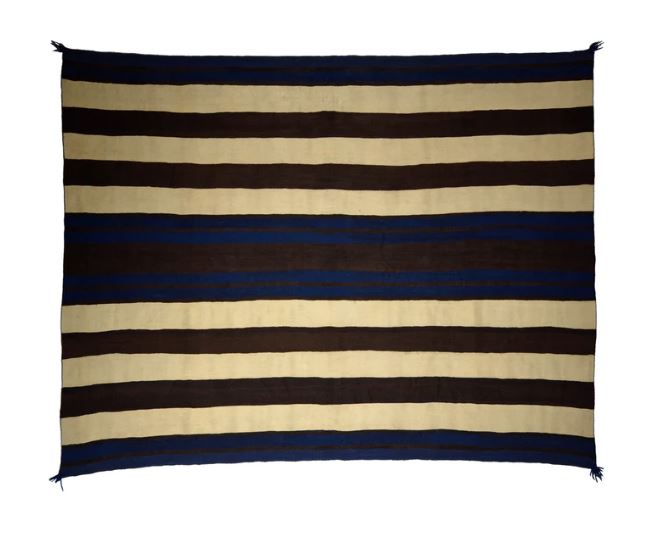
Collectors often describe classic Chief’s-style blankets in three broad phases, based on design evolution and available materials. These “phases” are a helpful learning tool, but it’s best to treat them as style groupings, not rigid categories that cover every blanket ever woven.
First Phase: Bold stripes and restrained power
First Phase examples are usually associated with simple banded striping, often with a strong sense of balance—light and dark fields, narrow accent lines, and an overall clarity that feels almost modern. Many First Phase blankets are celebrated for how much visual impact they achieve with relatively few elements.
Collector cues often include:
- banded stripes that run across the width
- minimal internal motifs compared to later phases
- a “clean architecture” look—structured, not busy
This is the phase that often converts people into collectors: it’s elegant, graphic, and unmistakably intentional.
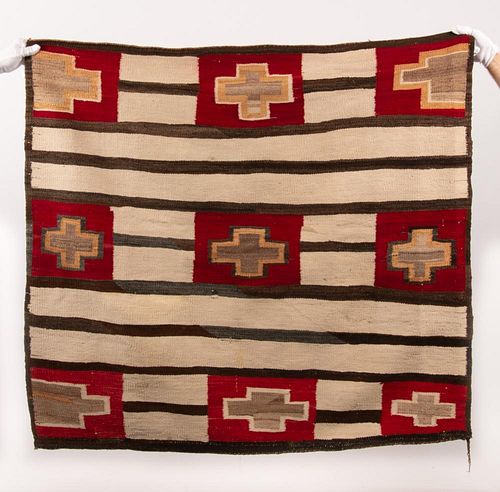
Second Phase: The rectangle motif enters
Second Phase blankets are commonly recognized by the addition of red (or dark) rectangles/blocks layered into the striped framework. This is also where collectors frequently discuss the influence of bayeta—a fine, imported red cloth that was often unraveled for yarn.
Collector cues often include:
- rectangular blocks added to a striped field
- a sense of “pattern punctuation”—the blocks create rhythm and emphasis
- richer contrast, especially when deep reds appear
Even when you don’t know the pattern terminology, these blankets are visually memorable because the rectangles feel like a deliberate design shift—more structured than stripes alone, and a clear bridge toward later geometric complexity.
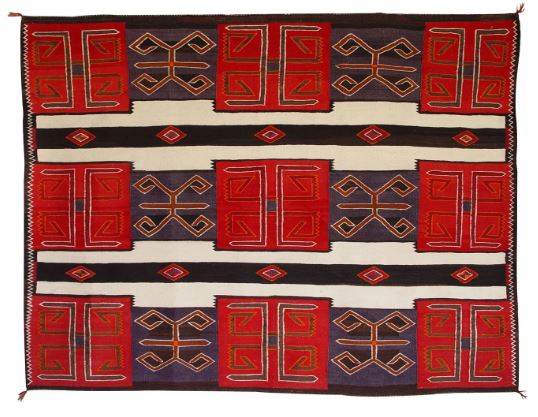
Third Phase: Diamonds, zigzags, and bolder geometry
Third Phase examples are often described as the most geometrically complex, frequently featuring stepped motifs, zigzags, and diamond-like forms. In collector terms, this is where the style feels more obviously “pattern-driven,” with larger interior elements that dominate the field.
Collector cues often include:
- strong central or repeating geometric motifs
- more internal structure than earlier stripe-based layouts
- design energy that reads as bold and assertive
If First Phase feels “classic minimal,” Third Phase often feels “graphic statement.”
Why These Blankets Were So Valued in Trade
Chief’s-style blankets gained exceptional reputations because they were labor intensive and highly wearable. A tightly woven blanket takes time, skill, and consistent tension. The result is a textile that wears well, drapes beautifully, and can shed weather better than looser weaves.
They also traveled. Many were traded far beyond Diné homelands, entering broader networks of exchange that included neighboring communities and, notably, Plains groups who valued them as prestige textiles. That wide circulation is part of why Chief’s-style blankets became a “headline category” in collecting: they weren’t only local objects—they were regional status goods.
Enter the Trading Post: A New Kind of Middleman
Trading posts became central hubs in the Southwest economy in the late 19th and early 20th centuries. They weren’t just general stores; they were market makers. Traders bought wool, sold supplies, acted as intermediaries with outside buyers, and—crucially—helped shape what kinds of textiles would sell to non-Native consumers.
This is where collectors need a nuanced view. Trading posts didn’t “invent” Navajo weaving, and Diné weavers maintained agency and artistry throughout. But trading posts did influence:
- what materials were easiest to obtain
- what colors and yarns became popular
- what designs were encouraged or rewarded with higher prices
- what forms (blankets vs rugs) were demanded by outside markets
The Market Shift: From Wearing Blankets to Rugs
One of the biggest changes associated with trading-post influence was the gradual shift from wearing blankets (meant to be wrapped and worn) toward rugs (meant for floors and home décor in Anglo-American households).
Why did that happen?
- Outside buyers increasingly wanted floor coverings rather than garments.
- Traders recognized they could sell rugs into broader markets—tourists, rail travelers, and home decorators.
- Rug sizes and proportions adapted to those uses, and regional “rug styles” became associated with specific trading posts and communities.
This wasn’t a sudden flip. Wearing blankets continued, and many weavers navigated both worlds. But over time, the rug market became the dominant commercial lane for many trading-post systems.
Trading Posts and Materials: Yarns, Dyes, and Supply Chains
Trading posts weren’t only buying finished textiles. They were also part of the supply chain that shaped how textiles could look.
Commercial yarns and brighter palettes
By the late 1800s into the early 1900s, commercially spun yarns (including brightly dyed yarns often associated with “Germantown” yarn) became more available through traders. These yarns could:
- speed up weaving compared to full handspun preparation
- introduce brighter, more consistent color options
- encourage certain bold, high-contrast aesthetics
This doesn’t make textiles “less authentic.” It makes them part of a real economic and material history—artists working with what was available and what buyers wanted, while still producing remarkable design.
“Trader-influenced” design encouragement
Some traders are well known for encouraging certain color palettes, borders, and pattern preferences—and for marketing those looks as regional styles. In many collector conversations, trading posts become tied to style names (Ganado, Crystal, Two Grey Hills, and others), because the post served as a hub where certain design preferences became consistent.
A good way to understand this is: trading posts helped create regional “brand identities” for weaving—sometimes through suggestion, sometimes through supply choices, and often through pricing incentives.
Collecting Tips: How to Look at Chief’s Blankets Through a Trading-Post Lens
If you’re shopping for Navajo textiles, especially when a seller uses the phrase “Chief’s blanket,” focus on fundamentals before labels.
1) Orientation and proportions
Many Chief’s-style wearing blankets are woven with proportions that differ from later rugs. If a piece feels sized and shaped to be worn rather than walked on, that’s a clue worth noting.
2) Weave density and hand
Chief’s-style textiles are often admired for their tight weave. Look at:
- how firm the cloth feels
- whether design edges look crisp
- whether the surface reads as “solid fields” rather than loose texture
3) Yarn character
Without becoming overly technical, you can still notice:
- lively, slightly varied handspun texture vs very uniform commercial yarn
- natural fleece tones vs bright, consistent dyed colors
Neither automatically dates a piece on its own, but it helps you understand what material world the textile came from.
4) Don’t overpromise yourself on “phase”
If a piece is being sold as “First Phase” or “Second Phase,” treat that as a claim that should be supported by clear design cues, construction quality, and (when possible) provenance. Many blankets are “Chief’s-style” without being a textbook phase example.
5) Provenance and documentation matter
Because these textiles can be high value, documentation is meaningful:
- where it came from (estate, collection, trading-post origin story)
- any receipts, labels, or historical notes
- photographs or prior appraisals (when available)
A Respectful Way to Collect This Category
Chief’s-style blankets are not only beautiful objects; they’re part of Diné cultural production and history. Trading posts shaped markets, but weaving remained a living, evolving practice rooted in Diné knowledge and artistry.
A respectful collector mindset looks like this:
- use “Chief’s-style” when possible and avoid implying “chief-only” use
- describe what you can see (materials, weave, design) rather than guessing stories
- value provenance and ethical sourcing
- remember that these textiles are not just décor—they’re works created within a living community
Chief’s-style blankets sit at a crossroads: intertribal trade, Southwestern commerce, and extraordinary craft. When you understand that crossroads, you don’t just see a pattern—you see a textile that moved through history.
Let’s Make History—one woven legacy at a time.