
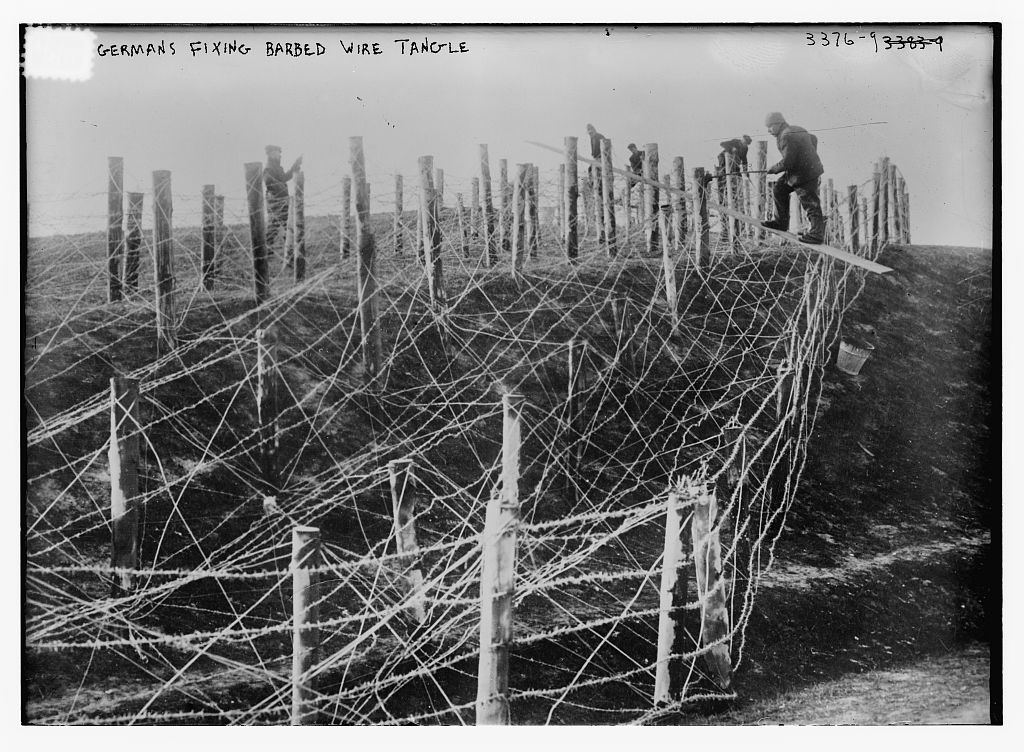
Barbed wire was invented to manage livestock and mark property lines, but it didn’t stay a farm tool for long. Once militaries saw what it could do—stop movement, channel people into narrow paths, and buy defenders time—barbed wire became one of the most important “quiet” technologies of modern warfare. Not because it was glamorous, but because it was brutally practical.
In military terms, wire is an obstacle. It doesn’t have to be impregnable. It only has to delay and disrupt long enough for defenders to respond. That’s why barbed wire shows up again and again: in colonial-era camps and fortified settlements, in the trenches of World War I, across World War II beach defenses, around Cold War bases, and in modern security perimeters. It’s a piece of infrastructure that turns open ground into controlled space—fast.
This post explores how barbed wire became a military tool, what it looked like in different eras, how soldiers dealt with it, and what collectors should know when they come across wire with wartime context.
Why Wire Works: The Military Logic of a Simple Obstacle
To understand barbed wire in military history, it helps to think like an engineer rather than a historian for a moment. A wire obstacle is designed to do three things:
- Disrupt: break up formations and slow momentum
- Delay: force a pause for cutting, climbing, or detouring
- Channel: steer movement into predictable lanes (“killing zones”)
That’s the power of wire: it shapes behavior. Even if the wire is “only” a few strands, the barbs create hesitation. Under fire, hesitation becomes danger.
Modern military doctrine still treats wire as part of a layered defense plan—used to protect positions, shape the battlefield, and support other defenses. The concept is timeless, even as materials and deployment methods evolve.
Early Military Adoption: From Field Boundaries to Fortified Control
Barbed wire’s earliest uses were agricultural, but militaries and colonial administrations quickly recognized its utility for controlling space. By the late 19th and early 20th centuries, wire was being used to:
- create defensive perimeters around camps
- harden positions with quick barriers
- restrict movement near fortified sites
- create controlled corridors and checkpoints
This period also includes some of the darker chapters of modern history, where wire was used not only as a defensive barrier but as a tool of confinement around civilian compounds in colonial conflicts. For collectors, that’s an important reminder: barbed wire artifacts can carry heavy context. Provenance matters, and so does how we talk about what wire was used to do.
World War I: Barbed Wire Becomes a Battlefield Language
If barbed wire has a defining military “image,” it’s World War I. Trench warfare made wire essential because the front lines were relatively fixed, and defenders needed obstacles that could be installed, repaired, expanded, and combined into complex systems.
Entanglements and “no man’s land”
Wire wasn’t usually a neat single strand on a post. It was often layered into belts, fences, and tangled fields designed to be hard to cross quickly. These entanglements were positioned to slow attackers before they reached trench lines.
Installing wire: dangerous, exhausting work
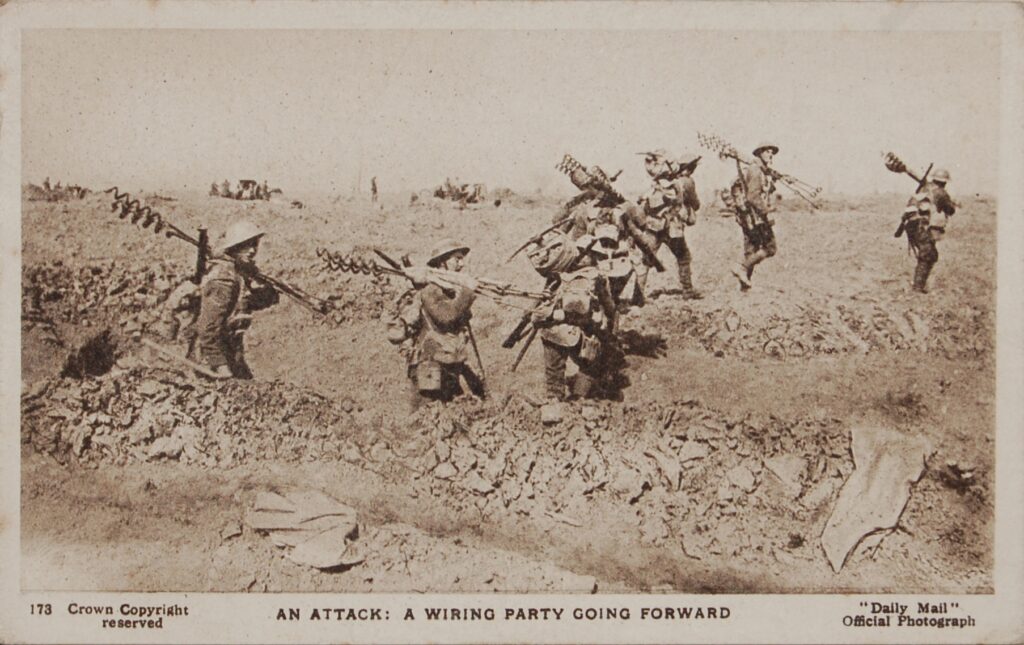
Wire-laying wasn’t romantic. It was risky labor done under threat. Wiring often happened at night because doing it in daylight invited enemy fire. The work required carrying posts, coils, tools, and then installing everything quietly and quickly.
In many armies, this became a dreaded assignment. Soldiers and engineers had to build and repair wire in exposed areas, often with limited visibility and under constant stress. Even the vocabulary of trench life reflects this reality—“wiring parties” and cutting missions became part of routine operations.
Cutting wire: the problem attackers couldn’t ignore
The moment wire became widespread, attackers had to solve it. Options included cutting with tools, using artillery to blast paths (with mixed success), or attempting to force a way through under fire. Wire wasn’t the only defensive measure, but it was a key ingredient in why frontal assaults became so costly.
For collectors, WWI wire history is one reason this category can be more than “industrial scrap.” The wire itself is tied to a huge shift in how warfare was fought—and to the everyday experience of soldiers who lived in that landscape.
Between the Wars: Wire Becomes Standard Practice
After World War I, wire wasn’t a novelty—it was established military infrastructure. Defensive planning across the world incorporated wire as a normal part of fortification, base security, and field engineering.
This interwar period is also when you see:
- more formalized obstacle planning
- more standardized training in wire construction
- increasing use of wire as part of layered defenses
Wire had proven its value. It was cheap relative to many alternatives, adaptable to terrain, and effective when paired with observation and firepower.
World War II: Obstacles at Scale
World War II expanded wire use into larger, more complex defensive systems. Wire wasn’t just guarding trenches; it was shaping coastlines, protecting installations, and reinforcing defensive belts.
Coastal defenses and fixed fortifications
Where defenders anticipated invasion or assault, wire obstacles became part of the landscape—installed alongside mines, anti-tank obstacles, and fortified firing positions. The goal remained the same: slow, disrupt, and channel.
The rise of portable wire obstacles
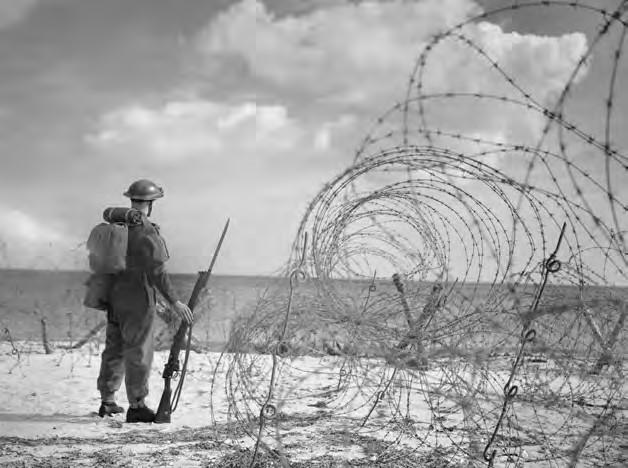
This era also pushed the military need for wire that could be deployed quickly and moved as lines shifted. Coiled wire obstacles—designed to be carried, rolled out, and anchored—made it easier to create barriers without building traditional post-and-strand fences. Variations of concertina-style obstacles become part of the modern visual language of military wire.
Wire as a security perimeter
Beyond battlefield use, wire surrounded:
- depots and ammunition sites
- airfields
- prisoner enclosures
- sensitive infrastructure
As war became more industrial and global, the need to secure space grew—and wire was one of the fastest ways to do it.
Cold War to Modern Use: From Battlefield Obstacles to Perimeter Control
In the second half of the 20th century, wire becomes increasingly associated with:
- base and facility security
- border control infrastructure
- riot-control barriers and temporary perimeters
- layered “standoff” zones around sensitive sites
Modern materials (including barbed tape variants) change the look and handling, but the principle stays consistent: wire is a barrier that shapes movement. Today’s wire often emphasizes rapid deployment and increased injury deterrence, reflecting modern security priorities.
For collectors, this matters because not all “military wire” is the same era—or the same material. Older barbed wire often has distinct twist patterns and wire barbs; later military barriers may use different construction and sharper tape-like edges.
Collecting Barbed Wire with Military Context
Barbed wire collecting already rewards close looking. When you add military history, it becomes even more important to document what you can and to handle interpretation carefully.
What collectors look for
Common collector interests include:
- Provenance: documented connection to a site, base, training ground, battlefield, or military surplus origin
- Era-appropriate construction: wire style consistent with the claimed time period
- Mounting and hardware clues: posts, pickets, fastening methods, or associated materials that support the story
- Associated artifacts: photographs, maps, trench art context, surplus tags, or local history documentation
A caution about “battlefield relic” claims
Because barbed wire is common and long-lived, it’s easy for stories to grow around it. If someone claims a piece is from a specific battle or trench line, treat that as a provenance claim that needs support, not as a default truth. The more specific the claim, the more documentation matters.
Safe Handling and Display: Especially Important Here
Military-associated wire is often heavily corroded, brittle, or sharp in unpredictable ways. Safety should be part of the collecting mindset.
Practical handling basics:
- heavy gloves and eye awareness (rust flakes and snapped wire can surprise you)
- careful transport with secure wrapping
- avoid flexing old wire that may be brittle
Display ideas that look great and keep people safe:
- Deep shadow box with the wire secured and labeled
- Mounted board with short, contained samples and clear spacing
- Museum-style placard noting: approximate era, origin story, acquisition date, and any verified context
- Pair with non-hazardous ephemera (maps, period photos, reproduction patent-style illustrations clearly labeled as such)
The best displays treat wire as what it is: an artifact with weight—historical and physical.
Why This History Matters
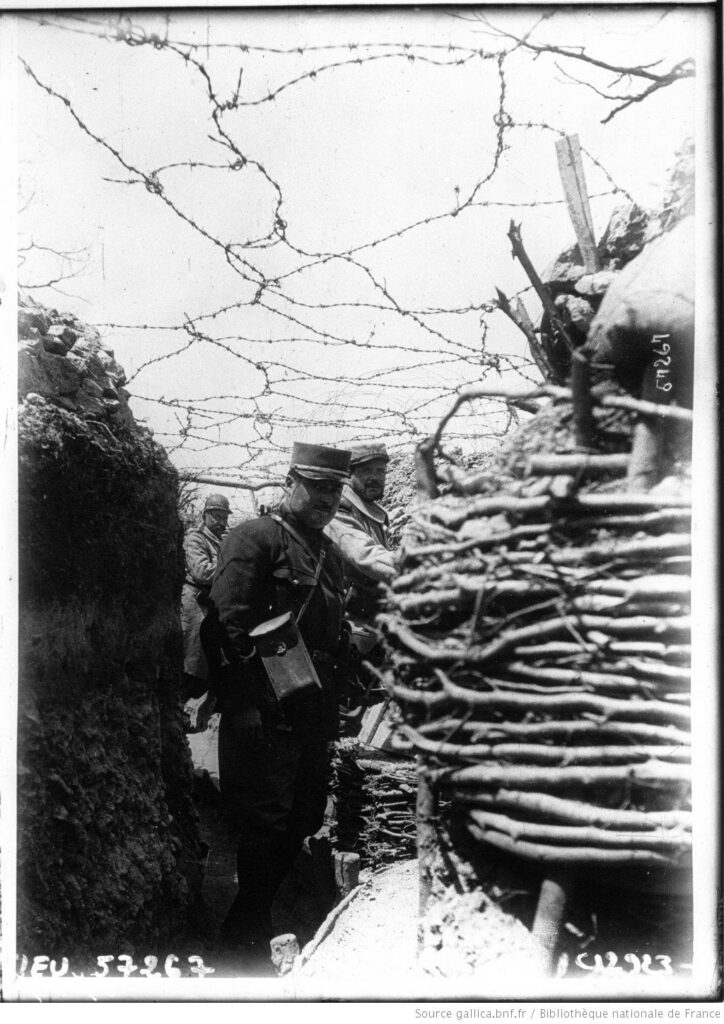
Barbed wire’s military story is uncomfortable in places, but it’s also important. It shows how a simple, scalable invention can move from farm to battlefield and become embedded in the infrastructure of conflict.
It also reminds us that history isn’t always made by dramatic machines alone. Sometimes it’s made by the quiet tools that change movement, reshape space, and enforce decisions—one barrier at a time.
Let’s Make History—one hard lesson at a time.