For centuries, feeding a baby has been both a daily act of love and an ongoing experiment in design. Every culture developed its own methods for nourishing infants — from simple spoons and pap boats to the sophisticated glass bottles that became standard by the 20th century.
Today, nursing bottles — once ordinary household tools — have become quiet witnesses to history. To collect them is to trace not only the evolution of infant care but also the shifting balance between innovation, science, and the enduring tenderness of parenthood.
Why Collect Nursing Bottles?
Collectors are drawn to nursing bottles for many reasons: the variety of materials, the artistry of their forms, and the stories hidden in their glass. A single bottle can reveal clues about class, regional manufacture, and medical knowledge of its time.
Early examples, made from pewter, horn, tin, or ceramic, demonstrate the ingenuity of caregivers who did their best with the materials available. Their designs were guided by practicality rather than hygiene, reflecting pre-modern understandings of health and nutrition. By contrast, later glass and rubber models embody the rise of germ theory, industrial production, and the 19th-century movement toward “scientific motherhood.” Each design marks a cultural moment — a shift in how society thought about the care of its youngest members.
For collectors, that layered history is part of the allure. To hold a 19th-century feeding bottle is to touch a piece of domestic life that rarely appears in grand historical narratives, yet shaped everyday existence in profound ways.
What Makes Them Collectible?
Nursing bottles vary dramatically in form and material, which is part of their charm. The earliest examples were simple vessels — sometimes little more than a hollowed animal horn fitted with a linen or chamois teat. By the late 18th and early 19th centuries, glass and earthenware versions became common. Some were tall and narrow; others were flat, curved, or boat-shaped to rest comfortably in a baby’s hands or beside a caregiver.
Among collectors, several iconic designs stand out:
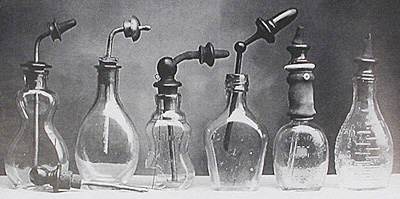
- “Banjo” bottles, named for their round body and long neck, were popular from the mid-19th century onward.
- “Boat” or “banana” feeders featured curved shapes intended to lie flat beside a sleeping infant.
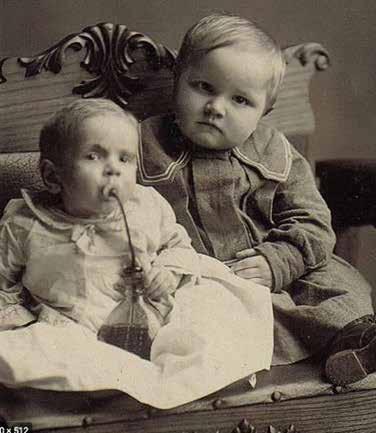
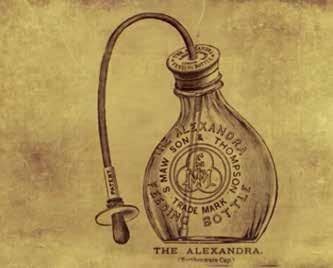
- “Murder bottles,” as they were grimly nicknamed, used narrow tubes and rubber hoses that were nearly impossible to clean. Despite their danger, they were widely sold in the late 1800s before the spread of hygiene awareness.
- Porcelain feeders from the Victorian era were often hand-painted with floral motifs, cherubs, or pastoral scenes, blending sentiment and functionality.
Each variation tells us something about its maker and moment. A well-engineered bottle might speak to advances in sanitation science, while a decorated one reflects the Victorian fascination with ornamentation in even the most practical objects.
Finding and Identifying Pieces
Part of the joy of collecting is the hunt. Nursing bottles often turn up in antique shops, flea markets, estate sales, and family attics. Because they were everyday items, many survived by accident — forgotten in cupboards or toy boxes long after their usefulness had passed.
When identifying bottles, look for embossed maker’s marks, patent dates, or inscriptions, which can help determine where and when they were made. Early examples may lack markings altogether, while late 19th- and early 20th-century pieces often include names like Allen & Hanburys, S. Maw & Son, or Pyrex (for later glass types).
Tips for identification:
- Shape and construction: Hand-blown bottles from the early 1800s have thicker, irregular glass and pontil marks on the base, while later factory-made pieces are uniform and mold-blown.
- Color: Clear glass became standard after 1900. Earlier bottles may appear aqua, green, or amber due to the minerals used in glassmaking.
- Accessories: Surviving rubber teats, cork stoppers, or cloth tubing are rare and add value.
- Condition: Cracks or heavy staining can affect value, but a bottle with wear or residue can still hold historical appeal — often telling a more authentic story than a pristine example.
Caring for the Collection
Antique nursing bottles require careful handling. Glass can weaken over time, and painted or ceramic surfaces may flake if scrubbed. Follow these basic preservation guidelines:
- Avoid harsh cleaners or abrasives. Use mild soap and warm (not hot) water with a soft brush.
- Do not sterilize antique rubber parts. Heat and moisture will cause them to crumble. Clean them gently and store them separately.
- Handle with care when drying. Avoid pressure on necks or spouts, which can be fragile.
- Display thoughtfully. Nursing bottles look striking in small, thematic groups — arranged by era, shape, or material — alongside other domestic artifacts such as pap boats, apothecary jars, or early medical glassware.
- Protect from sunlight. Prolonged exposure can fade painted decoration and weaken glass.
Collectors who enjoy photography may find these bottles particularly rewarding subjects — their curves and surfaces catch light in ways that highlight both fragility and craftsmanship.
What Nursing Bottles Tell Us
Every feeding bottle tells a story of adaptation. In its simplest form, it was an object designed to meet a basic human need. Yet behind that simplicity lies a long evolution of care and culture. From the handcrafted horn feeders of the 1700s to the hygienic, machine-made glass bottles of the 1930s, these objects trace the intertwined progress of science, domestic life, and motherhood.
They also carry deep emotional resonance. A mother’s effort to feed her child — using whatever vessel she could find — transcends time and circumstance. When collectors handle these bottles today, they are not just preserving glass; they are honoring that universal act of nurture.
One 19th-century midwife’s diary mentions “the little boat of tin, shaped to pour at the lips, that my mother used before me,” a touching reminder that such objects were handed down through generations. In a world where most bottles today are disposable, antique feeders offer a rare glimpse of endurance and continuity — material testaments to care made tangible.
Where to Learn More
For those eager to explore further, several excellent references and museum collections document this history in greater detail:
- Deborah Jean Warner, The History of Infant Feeding (Smithsonian Institution Archives of American Science and Technology)
- Gillian Avery, “Feeding Bottles Through the Ages,” History Today, 1985
- Museum of London and Science Museum Group (UK), which hold large collections of early feeders, pap boats, and novelty nursing bottles
- Alimentarium Museum (Switzerland), which provides an online history of feeding vessels and infant-care artifacts
- Federation of Historical Bottle Collectors and Antique Bottle Collectors’ Monthly, both of which feature identification guides and collector profiles
A Quiet Legacy
In the end, nursing bottles are not merely curiosities — they are touchstones of human care. They bridge the space between medical innovation and maternal instinct, between necessity and sentiment.
To collect them is to remember that history is not only written in wars and inventions, but also in the quiet, daily acts of love that sustain life. Whether made of porcelain, horn, or glass, each bottle carries within it the reflection of that timeless care. Let’s Make History-one baby at a time.