Few events capture the public imagination like a royal coronation. From the grandeur of Westminster Abbey to the cheering crowds lining The Mall, each coronation becomes both a sacred ritual and a shared national celebration—and, for collectors, a glittering milestone in the story of royal memorabilia.
The Birth of a Souvenir Tradition
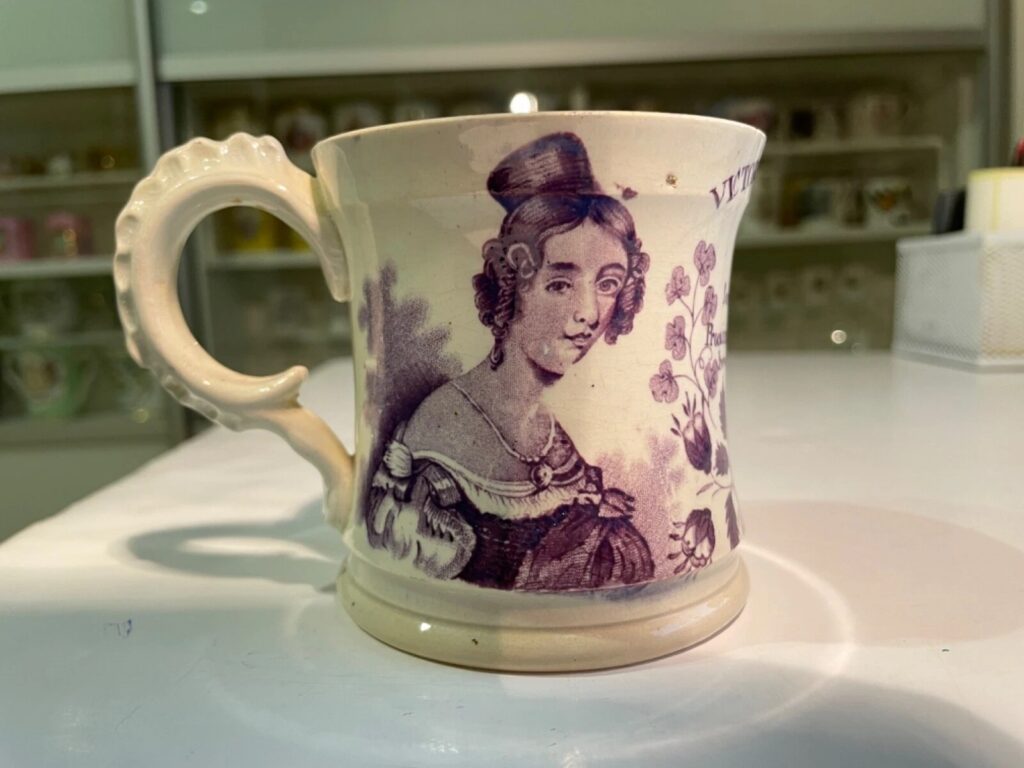
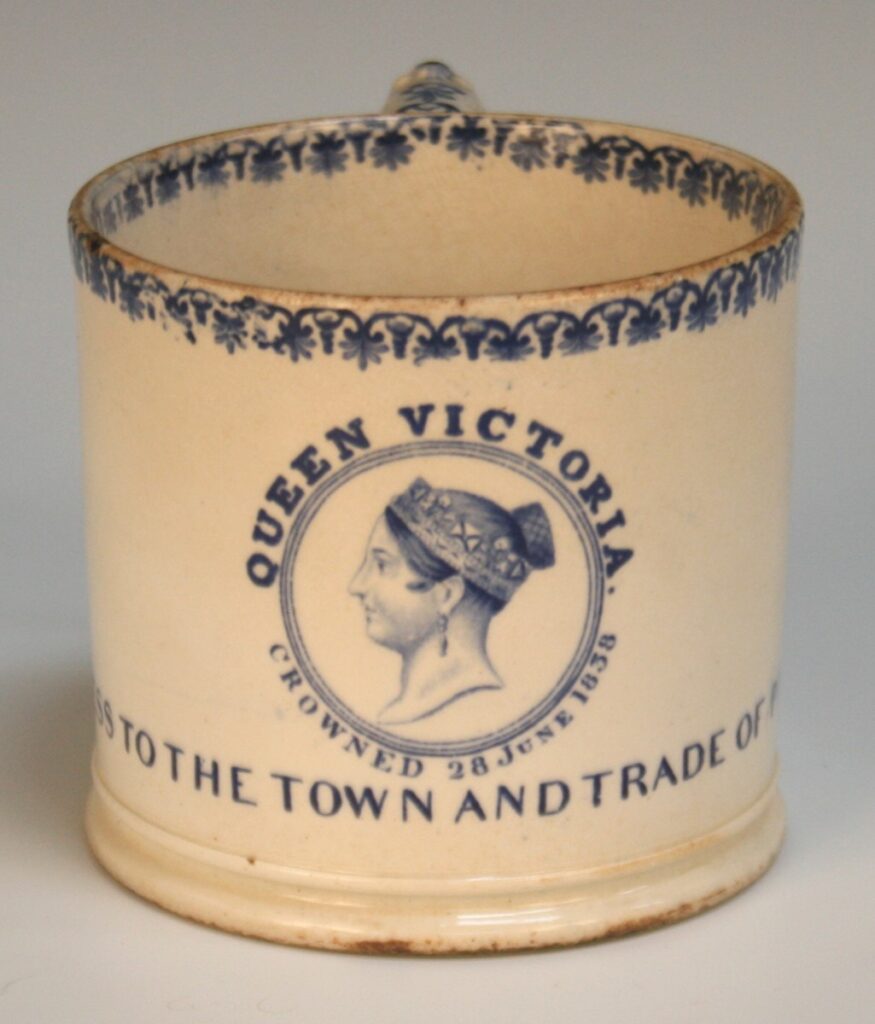
Royal souvenirs existed long before the Victorians—commemorative medals for earlier monarchs survive—but Queen Victoria’s coronation in 1838 truly transformed the practice. The Industrial Revolution had made printing, molding, and pottery transfer techniques cheap enough to produce commemorative items on a scale never seen before. Suddenly, ordinary Britons could own a token of royalty: something tangible to mark their part in a historic day.
Among the most recognizable pieces from Victoria’s reign are small pottery mugs, printed silk handkerchiefs, and medallions bearing her youthful likeness. Many were sold by London street vendors along the coronation route. For working-class families who could never glimpse the ceremony in person, these keepsakes offered a way to feel connected to the grandeur.
Collectors often repeat a bit of market folklore—that a street seller’s penny mug could fetch several times its price the following week. Whether true or not, it reflects an early awareness that such souvenirs were more than trinkets: they were touchstones of national pride.
Edwardian Elegance and Industrial Expansion
By the time Edward VII ascended the throne in 1902, the souvenir trade was thriving. Factories across Britain turned out enamel badges, pressed glass, printed postcards, and decorative tins. Some confectionery companies even released “coronation biscuits,” packaged in tins decorated with portraits of Edward and Queen Alexandra—an early pairing of branding and patriotism, though not the first instance of royal-themed packaging.
Designs of the era reflected Edwardian refinement: garlands, royal crests, and floral motifs of roses, thistles, and shamrocks. Even mass-produced items carried a graceful artistry. A 1902 biscuit tin or mug may not fetch a high price today, but its craftsmanship and charm make it a favorite among collectors. Many families still have such pieces tucked away, passed down more for their memories than their monetary value.
Between Wars: From George V to George VI
The 20th century saw coronation collectibles evolve alongside technology and taste. George V’s 1911 coronation yielded pressed-glass dishes, commemorative plates, and coins—objects that mixed modern production with traditional imagery. Companies such as Sowerby and Davidson made affordable decorative glassware that still turns up at car-boot sales and antique fairs.
By 1937, when George VI and Queen Elizabeth were crowned, souvenir makers faced a unique challenge. Edward VIII’s abdication the previous year had left warehouses full of items bearing the wrong monarch’s portrait. Many were destroyed or reworked, and surviving examples with Edward’s image are now prized rarities. Dealers occasionally tell stories of someone discovering a faded Edward VIII mug in an attic, unaware it marks one of the shortest reigns in modern British history.
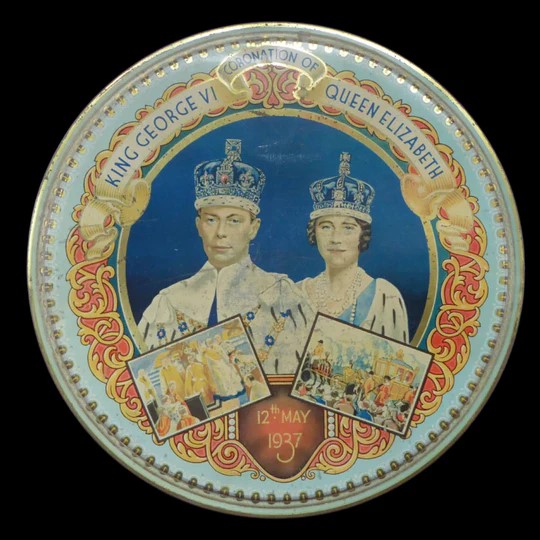
The 1937 coronation itself sparked a boom in production—tins for tea and biscuits, jigsaw puzzles, and fine china by Royal Doulton and Wedgwood. With the event broadcast by radio and covered in newsreels, the appetite for royal souvenirs reached new heights. A painted “Coronation Toffee Tin” featuring George VI and Queen Elizabeth remains one of the most common yet beloved artifacts of the era.
1953: A Coronation in Every Living Room
Queen Elizabeth II’s 1953 coronation marked a golden age of souvenir production. Britain, still recovering from wartime austerity, celebrated with boundless enthusiasm. Though the broadcast was in black and white—not colour—it was the first coronation widely televised, allowing millions to witness the ceremony from home. Shops overflowed with commemorative goods: bone-china mugs, flags, programs, and silver spoons.
Major potteries such as Wedgwood, Royal Doulton, and Paragon created elegant designs that balanced dignity with optimism. For most buyers, these pieces were not investments but family keepsakes. Even today, many British homes still hold a slightly faded 1953 coronation mug, cherished for its memories rather than its monetary worth.
Collectors speak fondly of their personal connections to these objects. One enthusiast discovered her grandmother’s souvenir spoon tucked inside a recipe book—an everyday item turned heirloom by sentiment. Another prizes a chipped glass from a street stall, its imperfection a reminder of rain-soaked crowds and patriotic cheer.
Design Through the Decades
Coronation memorabilia also mirrors the changing design sensibilities of each era. Victorian exuberance gave way to the clean geometry of the 1930s, followed by the bright modernism of the 1950s. The materials themselves tell a social story: porcelain and silver for the well-to-do, tin and printed paper for the masses, and later plastics reflecting postwar innovation. Even humorous or satirical commemoratives appear, showing that affection for the monarchy has always coexisted with a touch of British wit.
The Collector’s Eye Today
Modern collectors enjoy an expansive field. While rare mint-condition pieces from famous potteries can fetch impressive sums, many enthusiasts focus on humbler treasures—the corner-shop mug, the paper flag waved by a child, or the folded newspaper supplement saved for decades. These objects bring the human side of history into focus: each was once held by someone celebrating a hopeful day.
Interest surged again during Queen Elizabeth II’s Platinum Jubilee in 2022 and the coronation of King Charles III in 2023. British firms such as Emma Bridgewater and Halcyon Days released new limited-edition wares, blending nostalgia with modern design. Vintage pieces have likewise seen a revival among younger collectors drawn to their mix of history, sustainability, and story. A single coronation mug on a bookshelf now serves both as décor and as conversation starter—a link between past and present.
The hunt remains part of the thrill. Estate sales and online auctions often yield surprises: a 1911 pressed-glass dish under £20, a 1953 tin still gleaming with its original paint, or a Canadian-made mug with a slightly different crest. Occasionally, collectors stumble upon mysteries—unmarked plates or undocumented designs—sparking lively debates in collector circles over whether they were private commissions or unlicensed copies.
Holding History in Your Hands
The enduring appeal of coronation memorabilia lies in its power to make history personal. Each mug, medallion, or newspaper supplement once marked a living moment—a bridge between palace pomp and everyday life. A Victoria medallion speaks of empire and optimism; a George VI tin reflects resilience between wars; an Elizabeth II teacup evokes postwar hope. All remind us that the monarchy’s story is written not only in crowns and ceremonies but in the keepsakes cherished in ordinary homes.
As collectors, we don’t just preserve objects—we preserve moments. A chipped mug, a tin tray, a folded newspaper clipping: all are fragments of the same story, one of continuity, celebration, and memory.
Let’s make history—one keepsake at a time.