
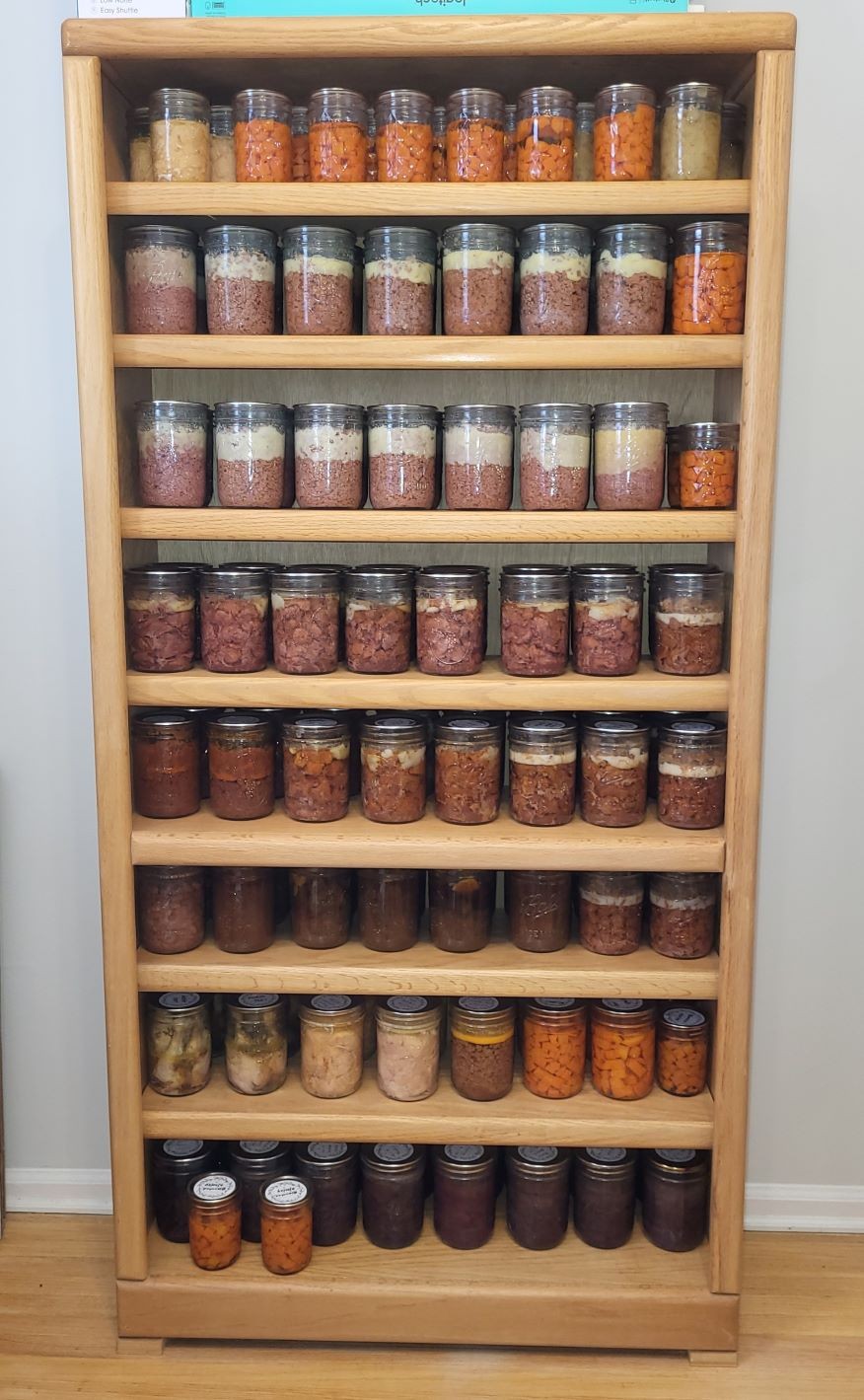
Open an old kitchen cupboard in your imagination and you can almost hear it: the clink of glass on wood, the soft scrape of a metal lid, the familiar shapes that once lived on every pantry shelf. Canning jars and household bottles aren’t just “containers.” They’re everyday tools that tell you how people cooked, cleaned, stored, and stretched resources—especially before modern packaging made everything uniform and disposable.
For collectors, this category is a sweet spot because it blends history with practicality. A single jar can show you changes in glassmaking, closures, branding, and even how homes were organized. And because these items were used hard, condition and authenticity cues are often right there in your hands—rim wear, seam lines, base marks, and the quirks that come from real-life use.
This post breaks down the core types of canning and household bottles, the closure systems collectors most often encounter, and how to evaluate, display, and care for these pieces responsibly.
What Counts as a “Canning” Jar vs. a “Household” Bottle?
Before we dive into details, it helps to separate two related—but slightly different—collecting lanes.
Canning and preserving jars
These were made to create a tight seal for preserved foods and to survive heat processing. They’re usually wide-mouthed compared to beverage bottles and often have:
- threaded necks (for screw lids), or
- bail-and-clamp systems (for glass lids), or
- specialized closures designed for home use
Household bottles
These were everyday containers used around the home, including:
- kitchen staples (vinegar, oil, extracts, spices, sauces)
- dairy (milk and cream bottles)
- household products (bluing, cleaning solutions, early toiletries)
- utility bottles (ink, medicine droppers, small storage bottles)
Collectors often group these together because they share the same appeal: domestic history in glass, with lots of variation in form, embossing, and era.
Why Glass Became the Hero of Home Preservation
Home preservation existed before modern canning jars, but glass made it easier to store food in a way that was repeatable and visible. With a jar, you can:
- see what’s inside,
- spot spoilage,
- reuse the container,
- and (with the right closure) create a reliable seal.
As households leaned into home canning—especially as an economic strategy during hard times and as a seasonal rhythm when gardens and orchards were abundant—jars became part of kitchen infrastructure. That’s why so many families ended up with cupboards full of “mixed jars,” and why estate sales still turn them up by the box.
The Mason Jar and the Rise of the Threaded Closure
When collectors talk about classic canning jars, the Mason-style threaded jar is usually at the center of the conversation. The big breakthrough was a jar with a threaded neck designed to work with a screw-on cap and sealing ring. That basic idea became foundational for much of American home canning jar history.
Early Mason-style jars often used:
- a threaded glass neck
- a metal cap (commonly zinc in early examples)
- a sealing ring or liner to help create an airtight seal
Collector note: many early jars were made in aqua or blue-green glass because of natural impurities in the glass batch. That color alone doesn’t “date” a jar, but it’s a common look for older utilitarian glass.
Closure Systems Collectors See Again and Again
Closures are one of the most fun parts of collecting canning jars because they’re a blend of clever engineering and practical kitchen needs. Here are the closure families most collectors encounter frequently.
One-piece zinc lids with liners
Many early Mason-style jars used zinc lids paired with liners (often glass inserts or other lining systems depending on the jar type). These are instantly recognizable: bright metal lids, often heavier than modern lids, sometimes with age-darkening or corrosion.
What collectors look for:
- threads that match properly
- liners present (when the system requires one)
- no cross-threading damage on jar necks
Two-piece canning lids (lid + band)
Later developments brought the two-piece style many people recognize today: a flat lid with a sealing compound, held in place by a screw band. This approach helped create a consistent sealing method and became widely used for home canning over time.
Collector note: jars with modern-style two-piece lids can still be vintage and collectible. The presence of a two-piece lid doesn’t automatically make a jar “new”—it just points to a later chapter in canning-jar evolution.
Lightning / bail-style closures (glass lid + clamp)
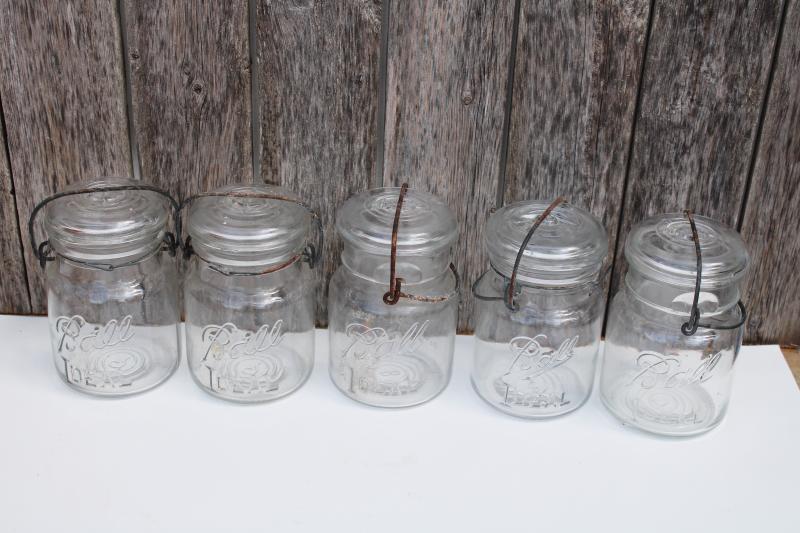
Bail closures are a collector favorite because they’re visually distinctive and mechanically satisfying. These jars typically have:
- a glass lid
- a rubber gasket (or gasket groove)
- a metal wire clamp/bail mechanism
They also make great display pieces because the lid system looks “complete,” almost like a built-in accessory.
What collectors look for:
- matching lid (the right size and type for the jar)
- intact wire hardware (no breaks or missing clamps)
- no chips on sealing surfaces (very common on well-used jars)
Wire-bail jars with branded identities
Some bail-style jars became closely associated with specific brands and styles. These often show embossed names and patents on the glass, making them popular with both jar collectors and kitchen décor collectors.
Collector tip: always check the rim and the lid seat. A tiny chip on the sealing surface can be easy to miss but important for condition grading.
European-style glass-lid systems (rubber gasket + clips)
Collectors in the U.S. increasingly recognize European-style canning jars with:
- a glass lid
- a rubber gasket
- removable metal clips
These are widely used in Europe and have a distinct look compared to American screw-lid jars. In collecting terms, they often end up displayed alongside Mason and bail jars because they “fit” the canning story visually.
How to “Read” a Jar Like a Collector
If you want to sort a pile of mixed jars quickly, focus on four areas: the mouth, the threads or closure seat, the seams, and the base.
Mouth and sealing surface
This is where damage happens. Look for:
- chips and fleabites on the rim
- cracks radiating from the mouth
- wear on the sealing surface (especially on bail jars)
Threads and neck finish
Threaded jars can show:
- crisp, clean threads (good)
- cross-threading wear or chips (common with heavy use)
- unevenness in older, less standardized examples
Seams
Seams can tell you a lot about manufacturing method. You don’t need to pin a jar to an exact year to benefit from seam reading—just note:
- whether seams are obvious and continuous
- whether seams stop below the lip or run through it
- whether the jar has a very uniform machine-made look
Base details
The underside often reveals:
- maker marks or logos
- mold numbers
- wear patterns from shelf use
Collector tip: underside photos are essential when buying online. They help confirm base color, wear, and markings.
Household Bottles: The Pantry, the Washstand, and the Workbench
Canning jars are the headline, but household bottles are where the home really comes alive.
Kitchen and pantry bottles
These include bottles for:
- vinegar and oil
- flavoring extracts
- sauces and condiments
- spices and baking-related goods
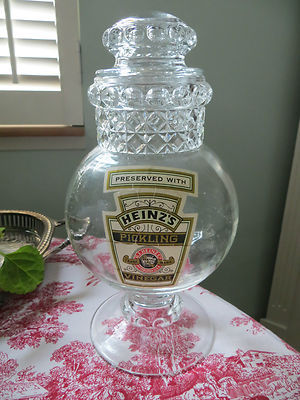
Many have label panels or embossed branding, and they’re often smaller and more specialized in shape than canning jars. Their charm is how specific they are—designed for a particular household rhythm.
Collector note: residue is common in pantry bottles. Treat it with caution and don’t assume it’s harmless.
Dairy bottles: local history in glass
Milk and cream bottles are a subcategory all their own. Collectors love them because they can be:
- embossed with dairy names and towns
- tied to specific local businesses
- produced in recognizable shapes and sizes
They’re also some of the easiest “local history” items to find: even small towns had dairies, and many bottles circulated regionally.
Collector tip: look for chips around the lip and heavy base wear—milk bottles were handled constantly.
Household products and “utility” bottles
Bluing bottles, cleaning bottles, toiletry containers, and small utility bottles often show unusual shapes and bold embossing. They’re fun because they bring back forgotten household routines—laundry day, ink wells, cleaning solutions, and early packaged household goods.
Safety note: never open or handle unknown residues casually. If a bottle still contains material, treat it as potentially hazardous and keep it sealed.
What Collectors Look For
Condition (and where damage hides)
For jars and household bottles, the most common condition issues are:
- rim chips and hairline cracks
- base bruises and chips
- staining, cloudiness, or mineral deposits
- rusted or incomplete hardware (bail jars)
If a piece is meant for display, small flaws may be acceptable. If you’re buying for higher-end collecting, the rim is usually the make-or-break area.
Completeness (especially for closure jars)
Bail jars and specialty canning jars are far more desirable when complete:
- correct lid
- intact wire hardware
- gasket channel in good condition
Embossing and regional identity
Embossed dairy bottles, local product bottles, and jars with clear maker names are popular because they’re easier to research and more satisfying to label in a collection.
Shape and “display presence”
Some pieces simply look better on a shelf:
- strong silhouettes
- bold embossing
- unusual colors
- classic jar forms (especially when grouped)
Care and Display: Keeping Glass Beautiful Without Overdoing It
Cleaning basics
For most empty bottles and jars:
- start with warm water and mild soap
- use a soft bottle brush
- avoid harsh abrasives that can scratch glass
For stubborn mineral haze, collectors often use gentle approaches and lots of patience—always avoiding anything that could etch or damage the glass. If you’re unsure, test on a less valuable piece first.
Hardware care (bail jars)
- remove loose dust gently
- avoid aggressive scrubbing on old wire
- be careful reattaching lids; forcing hardware can bend or snap it
Display tips
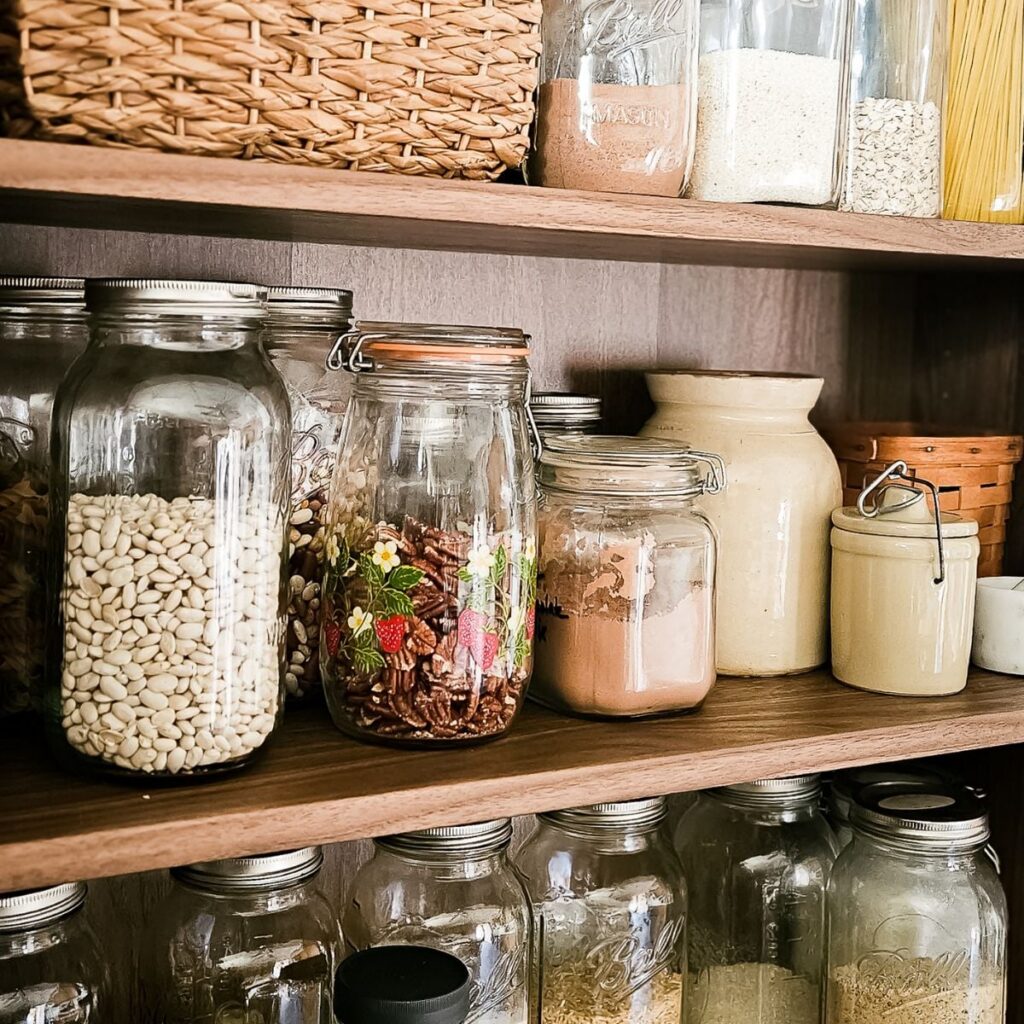
- avoid direct sunlight for long-term display (especially for colored glass)
- use stable shelving; jars are heavier than they look
- group by type for a curated feel: all bail jars together, all dairy together, all pantry bottles together
Important: antique jars are best treated as display objects. If you want to use jars for modern food storage or canning, use modern jars designed and rated for that purpose.
Canning and household bottles are domestic history in its most honest form—built to be handled, reused, and relied on. When you collect them, you’re collecting the rhythm of everyday life: pantry shelves, cellar storage, laundry day, and the simple satisfaction of a well-stocked home.
Let’s Make History—one pantry shelf at a time.