Bitters bottles and medicine bottles are two of the most satisfying corners of bottle collecting because they sit right where everyday life meets marketing, manufacturing, and changing ideas about health. These were bottles people handled constantly—kept in kitchen cupboards, tucked into bedside drawers, stored behind pharmacy counters, and carried in travel kits. Today, they’re still compelling for the same reasons: bold embossing, distinctive shapes, and a lot of clues you can read directly from the glass.
But “bitters” and “medicine” aren’t identical categories. Bitters often straddle the line between remedy and beverage—herb-infused tonics frequently sold for digestive complaints—while medicine bottles cover everything from pharmacy compounds to proprietary “cures,” many of them sold in standardized sizes with label panels designed for heavy advertising.
This post will help you sort the two categories, recognize the most common bottle types, understand why some shapes became famous, and collect them responsibly—especially when it comes to condition, residue, and safe handling.
What Are “Bitters” in Collector Terms?
In historical terms, bitters were often marketed as tonics—herbal mixtures frequently associated with digestive support—and many were alcohol-based. In the late 19th and early 20th centuries, bitters were widely bottled and sold as proprietary products, sometimes in straightforward mold-blown bottles and sometimes in novelty shapes meant to stand out on a shelf.
In collector terms, a bitters bottle is often:
- embossed with the word “bitters,” or
- associated with a known bitters product by shape, embossing, or label history, or
- a recognized “bitters-style” form (especially in the classic era of proprietary tonics)
Why bitters bottles are so collectible
Bitters products were marketed aggressively, and bottlers understood shelf appeal. That’s why you’ll see:
- tall, bold profiles designed to look substantial
- deep embossing meant to stay readable even after years of handling
- unusual shapes created to be instantly recognizable
For collectors, bitters bottles are the perfect combination of graphic design and industrial history.
Medicine Bottles: The Everyday Containers of the “Patent Medicine” Age
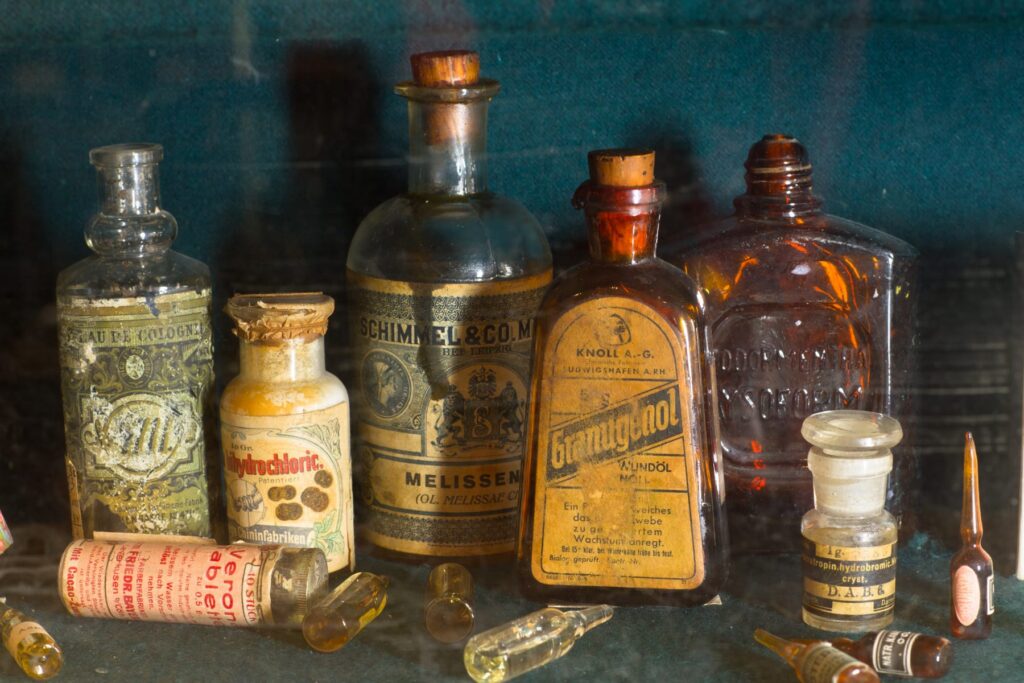
Medicine bottles include a wide range of items sold through druggists, general stores, and mail-order advertising. Some were legitimate preparations; many were marketed with extravagant claims. Packaging mattered because the bottle was part of the “brand”—especially when the label promised everything from pain relief to vitality.
In collector terms, medicine bottles often fall into a few broad groups:
- Proprietary/patent medicine bottles (branded, mass-marketed)
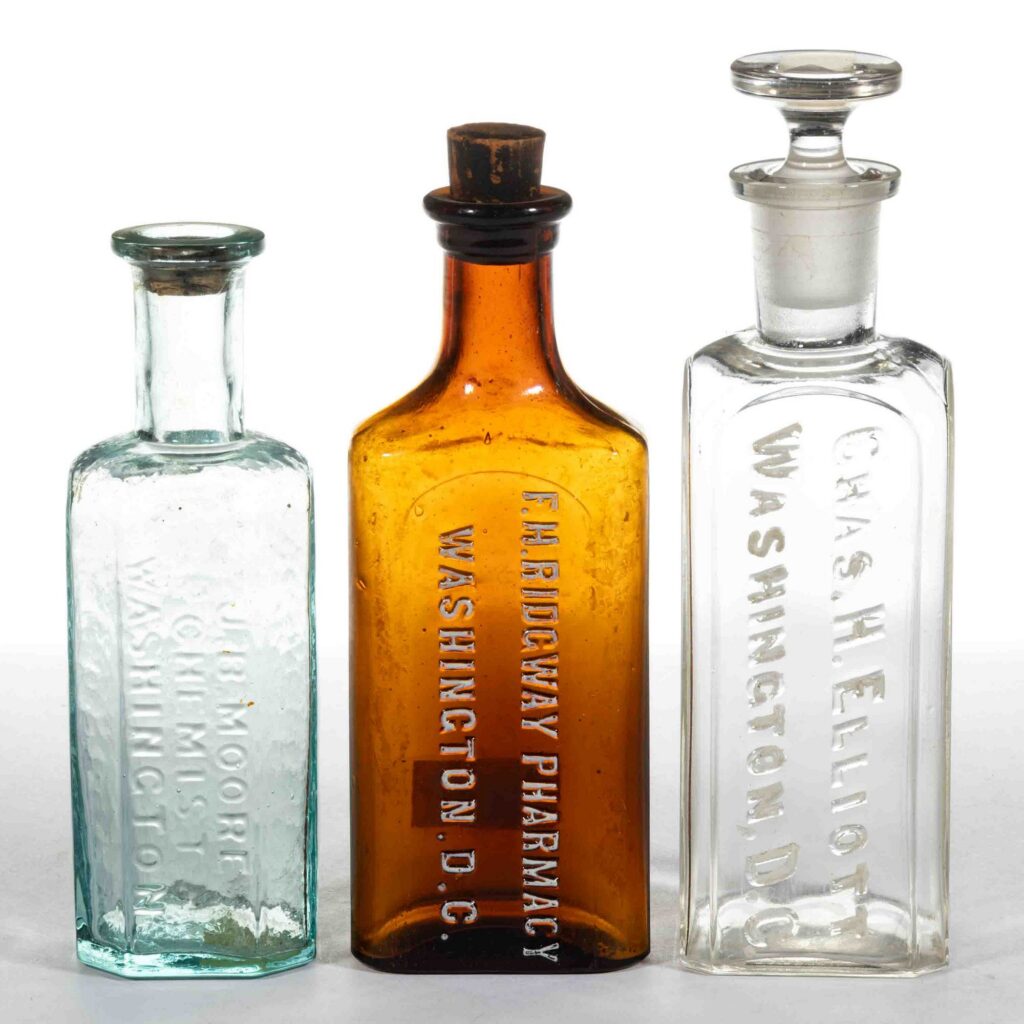
- Druggist/pharmacy bottles (often local, sometimes embossed with a city and druggist name)
- General medicine bottles with label panels (made in standard shapes for paper labels)
- Specialty forms (poison bottles, ointment jars, small vials, etc.)
If bitters bottles are often the “showpieces,” medicine bottles are the category that can fill your shelves with local history and endless variety.
The Big Visual Difference: How Bitters and Medicine Bottles Tend to Look
There’s overlap, but a few common visual patterns help you sort them quickly.
Bitters bottles often lean bold and “display-forward”
Common traits:
- taller forms
- strong shoulders and a confident silhouette
- heavy embossing or distinctive shapes meant to be noticed
Medicine bottles often lean practical and standardized
Common traits:
- smaller sizes (especially for dosage-style products)
- rectangular or oval bodies with label panels
- designs that prioritize space for printed labels
Collector tip: When you’re unsure, ask yourself what the bottle seems built to do. Be a countertop “statement” (bitters) or a label-first product container (many medicines)?
Famous Forms: The Shapes That Define These Categories
You don’t need to memorize dozens of pattern names, but it helps to recognize the types that show up repeatedly.
Classic Bitters Forms
Tall rectangles and strong shoulders
Many bitters bottles are tall, often rectangular or squared, with a presence that reads like “tonic” even before you read the embossing. These forms were practical to pack and ship, but they also looked authoritative on a shelf.
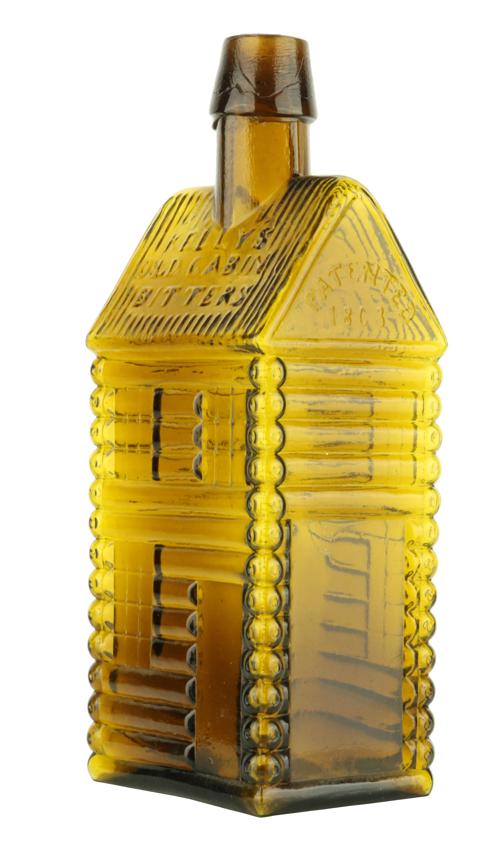
Figural bitters: when the bottle becomes the advertisement
Figural bitters bottles are a special collecting lane because the bottle itself is the marketing hook. You’ll see bottles shaped like:
- cabins
- barrels
- drums
- pineapples
- and other novelty forms that made a product instantly recognizable
Collector note: figural bottles are a place where condition and authenticity scrutiny matters. Because they’re popular, they’ve also been copied and reproduced in modern times.
Common Medicine Bottle Types
Label-panel bottles
These are the workhorses of medicine bottle collecting: bottles made specifically with flat panels to hold a paper label. The glass may be plain or only lightly embossed, because the label did the selling.
Embossed proprietary bottles
Some proprietary medicines were sold in heavily embossed bottles that served as brand protection and advertising. Even when the paper label is gone, the bottle still “says” what it was.
Druggist bottles (local pharmacy history)
Druggist bottles are favorites because they often include:
- the druggist name
- the city and state
- sometimes the street address or “successor” language
They’re small-city history you can hold in your hand.
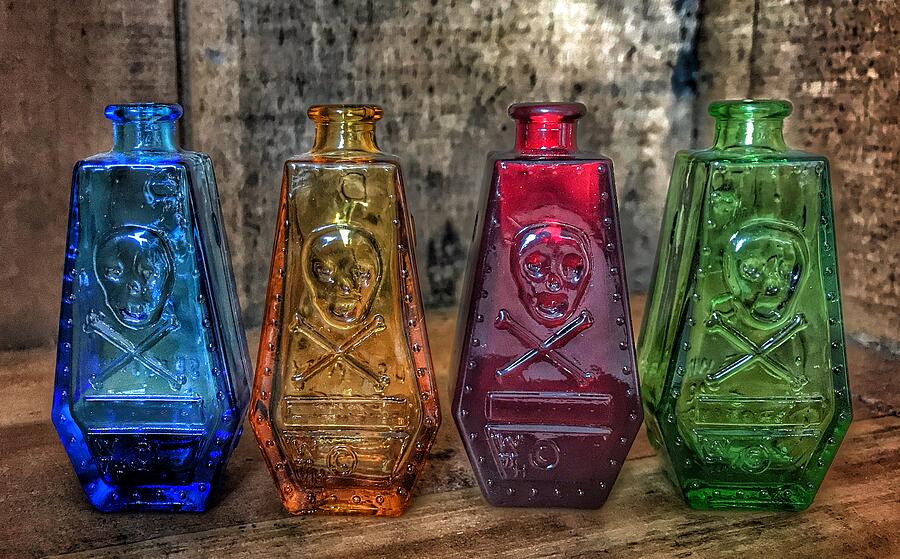
Poison bottles (a subcategory with its own rules)
Poison bottles were often made with distinctive shapes or textures intended to be recognizable by touch. Collectors love them, but they also require extra caution because residues (and cautionary labeling) can be part of their history.
Color and Glass: Why Amber and Cobalt Show Up So Often
You’ll see a lot of amber in bitters and medicine bottles, and it’s not just for looks. Darker glass can help reduce light exposure to contents that were sensitive or meant to be stored longer. It also became part of the visual language of “medicine” in packaging.
You’ll also see:
- aqua and light blue-green in many older utilitarian bottles
- clear glass in a wide range of later standardized forms
- cobalt in certain household/medicine categories (and sometimes for strong shelf appeal)
Collector tip: Color alone rarely “dates” a bottle. Use color as one clue, but confirm with seams, finish, base marks, and overall manufacturing character.
Dating Clues You Can Use Without Overclaiming
For bitters and medicine bottles, the most reliable “field dating” is observational: describe what you see rather than forcing an exact year.
Finish and lip
Older bottles often show more handwork in the finish:
- slightly uneven rim thickness
- tool marks
- a finish that looks “worked” rather than perfectly uniform
Mold seams
Seams are one of the quickest tells:
- seams that stop below the top can suggest a hand-finished lip
- seams running cleanly through the finish often suggest later, more standardized production
Base details
Look for:
- mold numbers
- maker marks
- wear patterns
- distinctive base shapes (push-ups/kick-ups)
Collector tip: When buying online, insist on clear photos of the rim and base. Those two views prevent most regrets.
The Regulation Shift: Why 1906 Matters to Bottle History
The early proprietary medicine era is inseparable from changing consumer protection laws. A major pivot point came with the Pure Food and Drug Act of 1906, which prohibited misbranded or adulterated food and drugs in interstate commerce and required disclosure of certain ingredients (including alcohol and several narcotic substances) on labels.
What that means for collectors is simple:
- packaging and labeling practices changed over time
- the “anything goes” advertising style gradually faced more scrutiny
- many products reformulated, rebranded, or disappeared as regulation tightened in the decades that followed
You don’t need a law degree to collect this category—just an awareness that bottles reflect a shifting marketplace, not a static one.
What Collectors Look For
Embossing and readability
Deep embossing, crisp letters, and clear brand or druggist information tend to be highly desirable. Even common bottles become more interesting when the embossing is sharp and well-centered.
Completeness (when it applies)
Some bottles are most desirable when they retain:
- original closure components (stoppers, caps)
- intact labels (rare, but valued)
- boxed packaging (uncommon, but a major plus)
Condition priorities
For bitters and medicine bottles, watch:
- chips on the rim (especially around the mouth and finish)
- cracks (including subtle stress cracks near the neck)
- heavy interior staining (common; not always a dealbreaker)
- glass sickness/haze (can affect display)
Collector tip: A bottle can be “dug” (excavated) and still be a fantastic collectible, but dug bottles often come with wear and staining. Price and expectations should match that reality.
Authenticity cautions for high-demand shapes
Because figural bitters bottles and certain iconic embossed medicines are popular, they also attract:
- reproductions
- fantasy pieces
- altered bottles (old glass with new engraving/marking, or married parts)
Safe practice:
- learn what “real wear” looks like at high points and base edges
- compare seam behavior and overall molding quality
- buy expensive examples from sellers who provide strong photos and stand behind their descriptions
Safety and Residue: A Non-Negotiable Collector Topic
Many medicine bottles once held substances you do not want on your skin or in your home environment. Even when a bottle appears empty, residue can remain.
Basic safety habits:
- do not taste or intentionally smell residues
- avoid opening sealed bottles unless you know what you’re doing
- handle unknown contents as potentially hazardous
- if a bottle still contains liquid or powder, keep it sealed and consider professional guidance for disposal if needed
This is especially important for poison bottles, chemical bottles, and any bottle with unidentified contents.
Display and Care Tips That Keep Glass Looking Great
Cleaning (gentle first)
- warm water and mild soap for ordinary grime
- soft bottle brushes, no abrasive scrubbers
- avoid harsh chemicals that can etch glass or worsen haze
If a bottle has heavy interior staining, it’s often better to accept it as part of the object’s life rather than risk damaging the glass with aggressive cleaning.
Display
- avoid direct sunlight (especially for colored glass)
- use stable shelving; bottles can be heavier than they look
- group by type for a curated look: bitters together, druggist bottles together, label-panel medicines together
A great display trick: place a small light source nearby (not hot, not direct sun). The embossing and glass color become dramatically more readable.
Why This Category Never Gets Old
Bitters and medicine bottles are collecting at its most “readable.” You can learn to interpret the glass: the marketing, the local history, the manufacturing clues, and the changing consumer world behind it. One bottle can be a design object, an advertising artifact, and a snapshot of how people tried to manage health and comfort in an earlier era—all at once.
Let’s Make History—one bottle label at a time.