
Barbed wire isn’t the kind of collectible you casually set on a shelf. It’s sharp, often rusty, sometimes brittle, and usually tied to big stories—land, labor, conflict, agriculture, expansion, and the hard edges of “this side” versus “that side.” And yet, that’s exactly why collectors love it. A short length of historic wire can carry more context than a lot of larger objects.
This post is a practical guide to preserving barbed wire safely and responsibly: how to handle it, how to slow deterioration, how to display it without turning your home into a hazard zone, and how to document what you have so the story stays attached to the object.
Start With the Reality: Barbed Wire Is a Hazardous Artifact
Before we talk about beauty or history, it’s worth stating plainly: barbed wire can injure you. Rusty points can puncture skin. Old wire can snap unexpectedly. Coils can spring. Even “small” pieces can catch clothing, scratch floors, or snag curious hands.
Collector mindset shift: treat barbed wire like you would a sharp antique tool—something to preserve, not something to casually handle.
Basic safety habits:
- Wear sturdy gloves when handling.
- Protect your eyes if you’re cutting, unwinding, or repositioning wire.
- Keep it away from children and pets, even temporarily.
- Avoid flexing old wire; age and corrosion can make it brittle.
Preservation Goals: Stabilize, Don’t “Make It New”
With barbed wire, preservation is usually about stabilization. Most collectors are not trying to strip wire down to bright metal. In fact, aggressive cleaning can remove surface history and accelerate future corrosion if done carelessly.
A good preservation goal is:
- remove loose dirt and debris,
- stop active deterioration where possible,
- and store/display the piece in a way that limits moisture and physical stress.
In other words: keep it intact, readable, and safe.
Handling and Transport: How to Move It Without Regrets
Moving barbed wire is where most accidents happen—because wire behaves unpredictably.
For short straight sections
- Use gloves and hold at stable points between barbs.
- Keep the points oriented away from your body.
- Wrap sections in heavy paper, cardboard sleeves, or thick fabric before transporting.
For coils
Coils can unwind and “spring” if not controlled.
- Secure the coil with multiple ties (wire ties, zip ties, or twine) before moving.
- Carry it in a rigid container when possible.
- Never lift by a single strand.
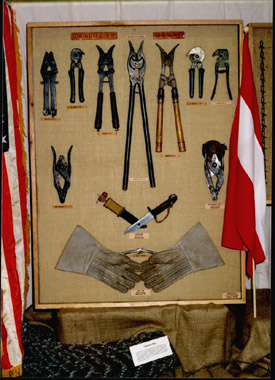
Cutting and sampling (if you must)
Some collectors take short samples for display boards. If you do:
- Use proper cutters rated for the wire thickness.
- Stabilize the wire first so it doesn’t whip.
- Consider capping or containing cut ends so you don’t create a fresh hazard point.
If the piece has strong provenance or is already rare within your collecting goals, consider leaving it intact rather than cutting it down.
Cleaning: Gentle Methods That Respect the Artifact
Cleaning barbed wire is less about shining it up and more about removing what can trap moisture or hide pattern detail.
Step 1: Dry cleaning first
- Use a soft brush to remove loose soil.
- A wooden skewer or similar tool can help flick out debris lodged near twists and barbs (carefully).
Step 2: Minimal wet cleaning (only if needed)
If the piece is muddy or coated in grime, use limited moisture:
- Lightly damp cloth, minimal water.
- Dry immediately and thoroughly.
Avoid soaking, long water exposure, or leaving moisture in twisted strands.
What to avoid
- Aggressive wire-wheeling or heavy abrasives (can remove material and character).
- Strong chemical cleaners unless you know exactly what you’re doing.
- Heavy polishing that removes the surface story.
A good rule: if your cleaning method changes the wire’s look dramatically in five minutes, it’s probably too aggressive for a historic collectible.
Rust and Corrosion: When to Leave It, When to Intervene
Rust is common. Some rust is stable and “part of the look.” The concern is active corrosion that flakes, spreads, and weakens the wire.
Signs of active deterioration
- Flaking rust that drops off in layers
- Soft, crumbling metal at barbs or twists
- Wire that snaps easily with minor pressure
Stabilization approach
Many collectors focus on:
- removing loose flake (gently),
- keeping the piece dry,
- and storing it where humidity stays low.
If you’re dealing with a piece that’s actively shedding or structurally fragile, you may want to consult conservation-minded guidance rather than experimenting aggressively. Barbed wire isn’t rare as a general material, but a specific pattern or provenance can be.
Storage: The Best Preservation Is Often Boring
The single biggest preservation factor is environment.
Keep it dry
Humidity accelerates corrosion. Store wire in a dry area with stable conditions. Avoid basements that get damp or spaces that swing wildly in temperature.
Avoid direct floor contact
Concrete floors can contribute to moisture issues. Use shelves, sealed containers, or mounts that keep the wire off the ground.
Contain it to prevent damage
Even in storage, barbed wire can snag and scratch. Use:
- heavy cardboard sleeves,
- rigid plastic bins (with padding),
- or wrapped bundles secured so they can’t shift.
Label storage clearly so you (and anyone else) knows what it is before opening.
Display Options: Safe, Attractive, and Collector-Friendly
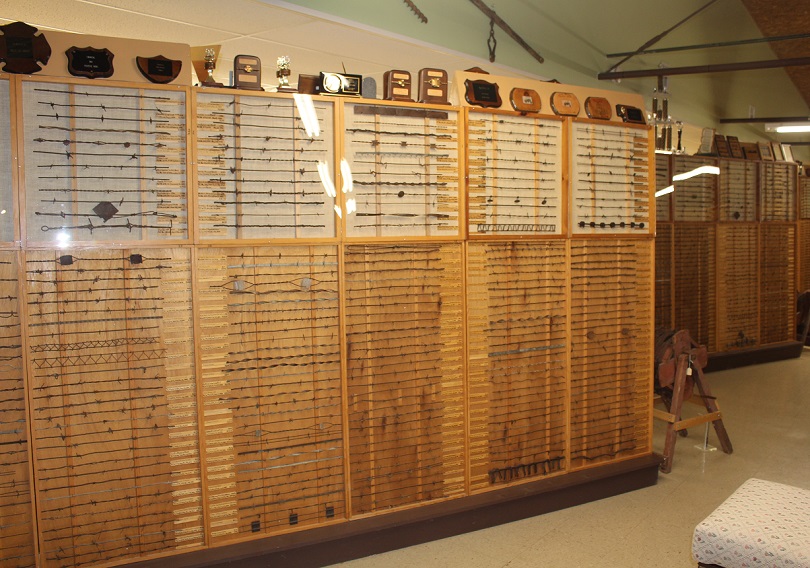
Barbed wire displays best when it’s contained and readable. You want people to see the pattern and understand the story—without being able to touch points by accident.
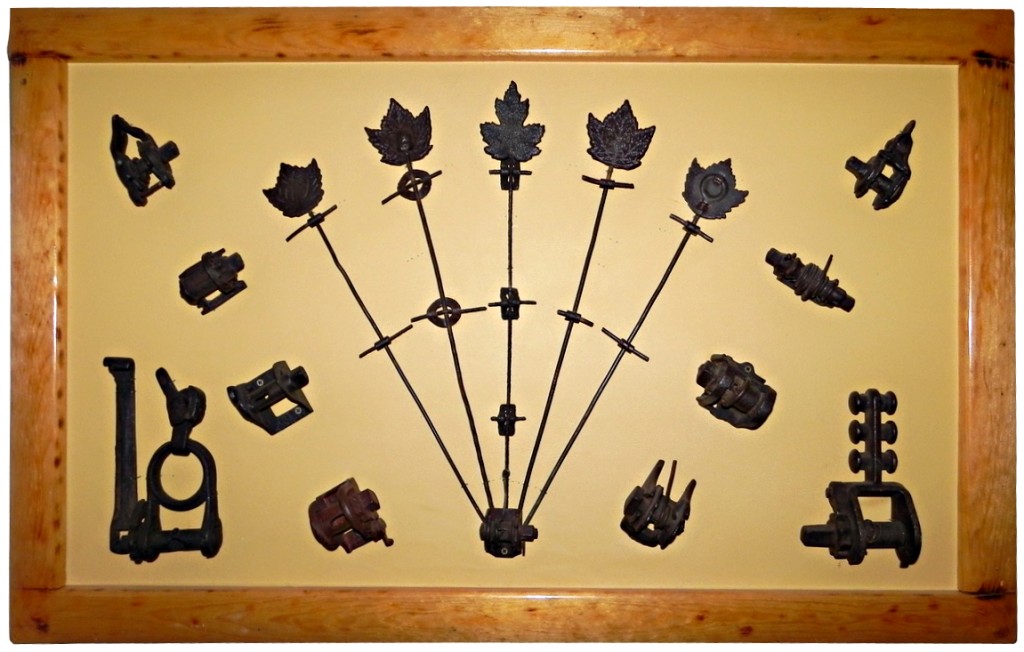
1) Shadow box display (best all-around)
A deep shadow box lets you mount a section inside a protective frame. Benefits:
- barbs contained behind glass/acrylic
- easy to label
- strong “museum” feel
Mounting tips:
- Use secure fasteners that don’t stress the wire.
- Keep the wire slightly off the backing so shadows show the pattern depth.
- Leave enough clearance so barbs don’t touch the glazing.
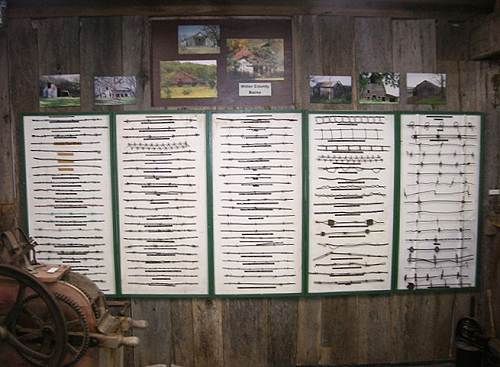
2) Mounted board pattern display
If you collect patterns, a board display is ideal.
- Mount several short samples in rows.
- Label each with what you know (location found, approximate era, pattern notes).
- Use a rigid backing (wood or thick composite) and sturdy anchors.
For safety, consider placing the board in a frame or behind a clear cover—especially if it’s in a hallway, office, or shared space.
3) Deep frame “artifact strip”
If you want a cleaner look:
- mount one short section with a minimalist label,
- frame it in a deep box frame,
- and keep the focus on shape and texture.
This works especially well for a visually striking barb style where the pattern reads clearly.
4) Outdoor display (usually not recommended)
It sounds fitting—wire belongs outdoors—but outdoor display accelerates deterioration. If you want that “fence line” feel, consider an indoor vignette using reclaimed wood and a protected frame.
Labeling and Documentation: Preserve the Story Along with the Wire
This is the part collectors often skip, and it’s the part future you will appreciate most.
A short label card can include:
- Where it came from (state/county/property type if known)
- How you acquired it (estate find, farm removal, flea market, etc.)
- Any known date range or context (even approximate)
- Pattern notes (two-strand twist, four-point barbs, sheet-metal style, unusual spacing, etc.)
- Acquisition date (your date, not necessarily the wire’s date)
If you want to go one step further, take photos:
- close-up of the barb
- close-up of the twist
- a full-length view
- any packaging/provenance notes
That documentation helps with identification later, but it also prevents the piece from becoming “mystery wire” after a few years.
Ethics and Sensitivity: Context Matters
Barbed wire intersects with difficult histories—land disputes, labor control, confinement, warfare. Not every piece has that context, but the material has been used in ways that are heavier than simple fencing.
If you display wire with military or confinement associations:
- be accurate about what you can verify,
- avoid sensational claims,
- and consider a label that frames the object respectfully.
The goal is to preserve history, not to romanticize harm.
A Simple Preservation Checklist
If you want a quick, repeatable system:
- Handle with gloves; avoid flexing old wire.
- Dry-clean first; use minimal moisture only when necessary.
- Keep it dry in storage; avoid damp basements.
- Contain it so it can’t snag, scratch, or spring loose.
- Display behind glass/acrylic when possible.
- Label what you know now—before details get lost.
Why Display Matters
Barbed wire is easy to overlook because it’s “just wire.” Display changes that. A thoughtful presentation makes people pause and recognize what they’re looking at: an invention that altered landscapes, a pattern that represents a patent race, and an artifact that shows how a simple object can shape human behavior.
Preserving barbed wire well means respecting both sides of it:
- the physical reality (sharp, corroding, hazardous),
- and the historical reality (powerful, consequential, deeply tied to change).
Let’s Make History—one safely framed strand at a time.