
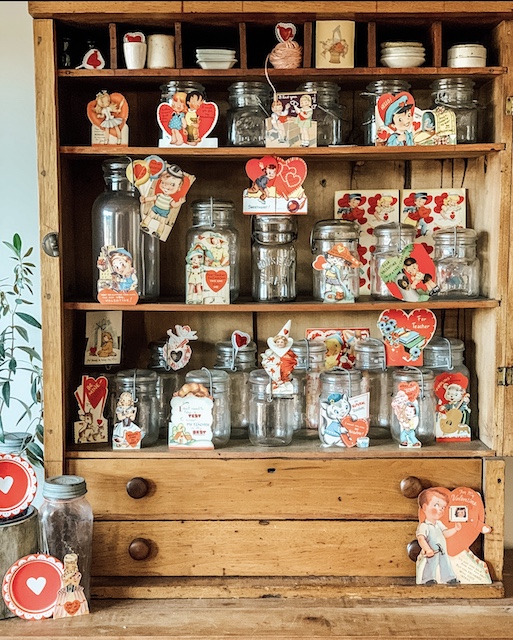
Valentines are easy to underestimate. They are small, light, and often made from the most fragile materials: thin paper, lace borders, glue, ribbon, tissue, glitter, and ink. But for collectors, that fragility is exactly what makes them powerful. A valentine survives because someone saved it. Someone tucked it into a drawer, pressed it in an album, kept it with letters, or left it in a box long enough for a future collector to unfold the story.
Over this series, we’ve followed valentines from handwritten notes to printed lace, from Victorian mechanical cards to vinegar valentines, and from early commercial designs to 20th-century classroom exchanges. This final post steps back and asks why these little paper objects still matter.
Because in the end, valentines are more than decorations. They are love, humor, rejection, memory, and social history—preserved in paper form.
Continue reading “Love in Paper Form”