
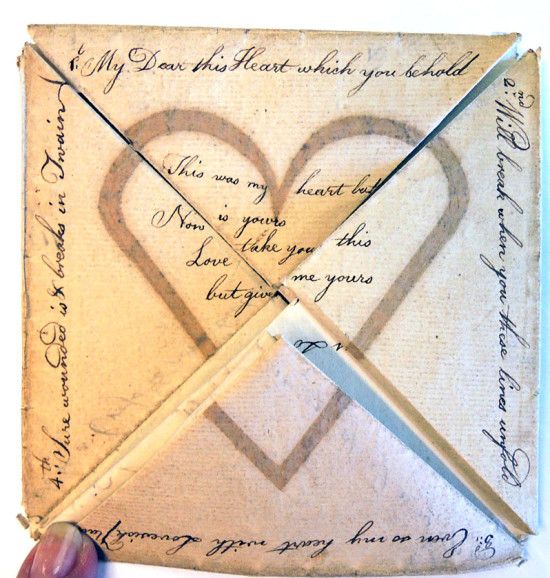
Before valentines became classroom exchanges, drugstore card racks, and heart-shaped boxes of chocolates, they were personal pieces of paper—sometimes handwritten, sometimes folded like puzzles, sometimes trimmed with lace, ribbons, and tiny scraps of printed color. That is what makes antique valentines so appealing to collectors: they are fragile, sentimental, and deeply human.
A Valentine card is not just paper. It is a message someone chose, bought, wrote, folded, sealed, saved, or tucked away. Some were romantic. Some were shy. Some were elaborate enough to feel like miniature stage sets. Others were simple, sincere notes written in ink and folded by hand.
This first post in our Valentines series looks at the journey from handwritten love tokens to printed lace-paper valentines—the foundation for the Victorian mechanical cards, vinegar valentines, and commercial favorites we’ll explore next.
Continue reading “From Handwritten Notes to Printed Lace”