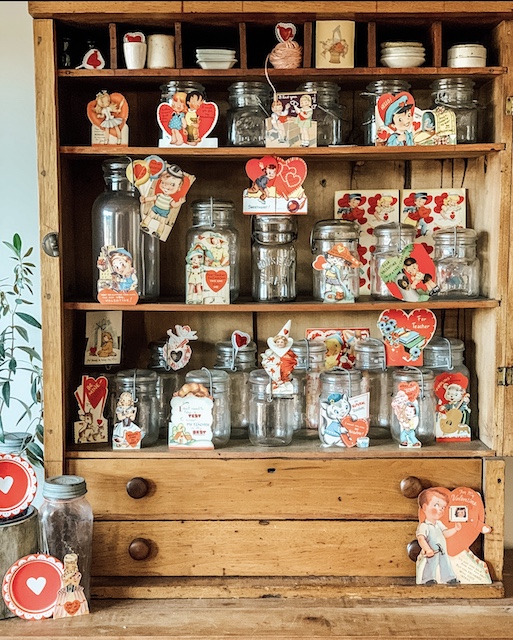
Valentines are easy to underestimate. They are small, light, and often made from the most fragile materials: thin paper, lace borders, glue, ribbon, tissue, glitter, and ink. But for collectors, that fragility is exactly what makes them powerful. A valentine survives because someone saved it. Someone tucked it into a drawer, pressed it in an album, kept it with letters, or left it in a box long enough for a future collector to unfold the story.
Over this series, we’ve followed valentines from handwritten notes to printed lace, from Victorian mechanical cards to vinegar valentines, and from early commercial designs to 20th-century classroom exchanges. This final post steps back and asks why these little paper objects still matter.
Because in the end, valentines are more than decorations. They are love, humor, rejection, memory, and social history—preserved in paper form.
Why Valentines Matter as Collectibles
Valentines sit at the intersection of personal feeling and popular design. They tell us what people thought love should look like, how courtship was expressed, what jokes were acceptable, what symbols were familiar, and how ordinary people participated in a holiday that grew more commercial over time.
A single valentine can reveal:
- Printing and paper technology
- Popular symbols and sentimental language
- Courtship customs and social expectations
- Humor, satire, and rejection
- Childhood rituals and school traditions
- Family history through names, dates, and handwriting
That combination is what makes valentines such rewarding ephemera. They are not just “old cards.” They are small records of how people communicated affection—or sometimes annoyance—across generations.
From Private Message to Public Tradition
The earliest valentines collectors discuss were often intimate things: handwritten verses, folded papers, personal notes, or decorated tokens exchanged between individuals. They were private, sometimes anonymous, and often deeply personal.
As printing expanded, valentines became easier to buy and send. Lace-paper cards, printed scraps, chromolithographs, postcards, greeting cards, and boxed classroom sets gradually widened the tradition. Valentine’s Day moved from private romance into a broader social ritual.
That evolution is one of the most interesting parts of collecting. A handwritten note and a mid-century classroom card may look completely different, but they belong to the same long tradition: paper carrying feeling from one person to another.
The Language of Hearts, Flowers, Birds, and Lace
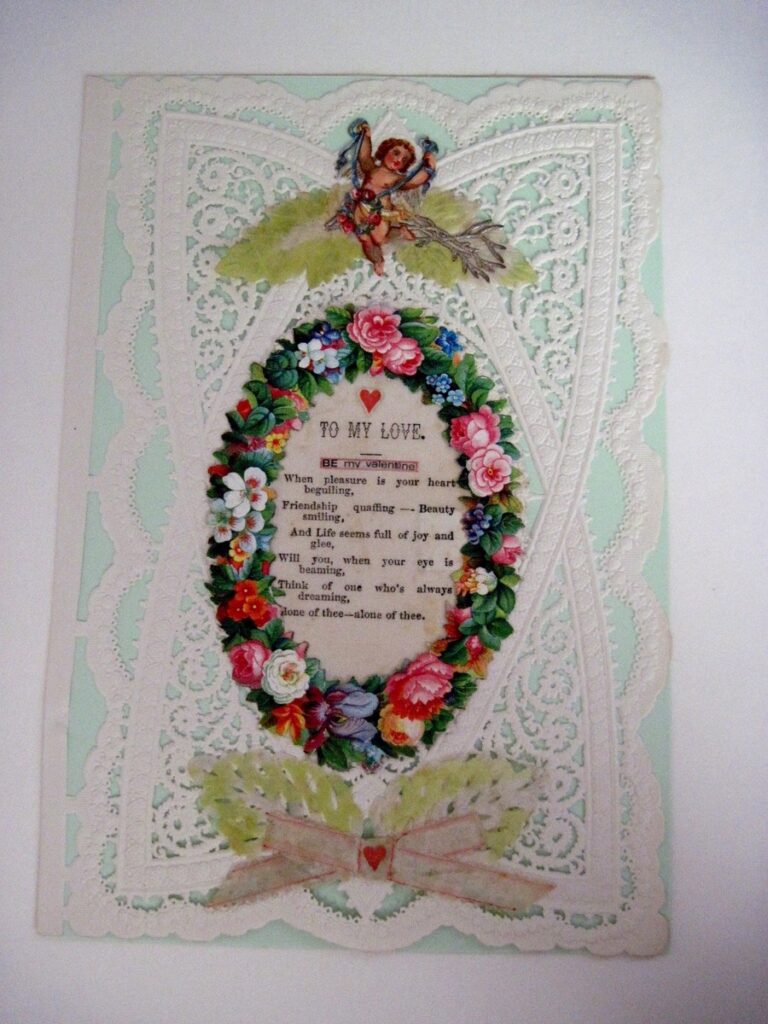
One reason valentines are so recognizable is their visual language. Hearts, flowers, cupids, birds, ribbons, arrows, hands, envelopes, and lace appear again and again across centuries.
These symbols created a kind of shortcut. A sender did not need to write a long declaration if the card already said “romance” before the verse was even read.
Hearts
The heart remains the most direct symbol, but antique examples often use it with more variety than modern cards do. Hearts may be embossed, pierced into lace paper, printed in red, hidden in borders, or used as a frame for a verse.
Flowers
Roses, forget-me-nots, and mixed bouquets appear often because flowers carried sentimental associations. They softened the message and made the card feel special.
Birds
Doves, songbirds, and messenger birds suggested devotion, harmony, or communication across distance.
Lace and borders
Paper lace gave valentines a refined, keepsake quality. It transformed a simple card into something that looked costly, delicate, and worthy of saving.
Collectors learn to read these symbols almost like a vocabulary. The more you look, the more you notice how each era reused, softened, exaggerated, or modernized the same romantic language.
The Human Touch: Handwriting, Names, and Envelopes
A valentine with no writing can be beautiful. But a valentine with handwriting becomes personal.
A simple “From Clara,” a schoolchild’s printed name, a penciled address, or a dated envelope can transform a card from a decorative object into a trace of a real relationship. Sometimes the handwriting is the most moving part of the piece—not because it is fancy, but because it is ordinary.
Collectors often value:
- Original envelopes
- Postmarks and stamps
- Names of sender and recipient
- Dates or schoolroom inscriptions
- Family notes or album placement
- Messages written in pencil, ink, or childish crayon
These details do not always increase market value dramatically, but they increase story value. For many collectors, that matters just as much.
Sweet, Sour, Funny, and Strange
One of the best reasons to collect valentines is variety. They are not all romantic lace and roses.
This series has shown several emotional categories:
Sweet valentines
These include handwritten love notes, lace-paper cards, sentimental verses, and romantic greeting cards. They are what most people expect from the holiday.
Mechanical valentines
These add surprise: pull-tabs, lift-up flaps, cobweb devices, dimensional layers, and moving parts. They turn the card into an experience.
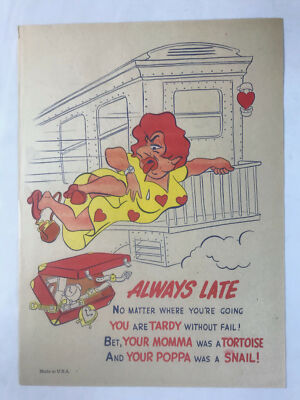
Vinegar valentines
These are the sour side: comic, mocking, and sometimes cruel cards designed to reject or ridicule. They reveal the sharper social edge of the Valentine tradition.
20th-century commercial valentines
These include postcards, greeting cards, classroom cards, novelty cards, and boxed sets. They show how the holiday became broader, more affordable, and more familiar.
Together, these categories remind us that Valentine’s Day has never been one-note. It has always included romance, playfulness, social rules, embarrassment, humor, memory, and commerce.
What Makes a Valentine Collectible?
Not every old valentine is rare, but almost every old valentine can be interesting. Collectibility usually comes from a combination of age, design, condition, maker, subject, and story.
Age and era
Earlier examples often attract attention, especially handwritten, lace-paper, mechanical, or Victorian cards. But newer pieces can also be collectible when they have strong design, nostalgia, or unusual subject matter.
Visual impact
A bold image, intricate lace border, dimensional construction, or clever novelty feature can make a card stand out immediately.
Subject matter
Some themes are especially popular:
- Cupids and hearts
- Cats, dogs, birds, and other animals
- Children and classroom cards
- Occupations and trades
- Transportation, space-age, and mid-century designs
- Vinegar valentines with memorable caricatures
- Mechanical or pop-up features
Maker or publisher
Known makers can add interest, especially for collectors who specialize in a period or company. Still, an unmarked card can be highly desirable if the design and condition are strong.
Personal history
A card with a name, date, postmark, or original envelope carries its own provenance. It may not be famous, but it is grounded in a real exchange.
Condition: The Paper Collector’s Balancing Act
Valentines were made to be handled, mailed, opened, folded, displayed, and saved. Some wear is normal. The question is whether the wear adds age or interrupts the object.
When evaluating condition, look for:
- Tears, especially through faces, verses, or central designs
- Missing tabs, flaps, scraps, or mechanical pieces
- Crushed lace paper or damaged honeycomb tissue
- Foxing, staining, fading, or water damage
- Tape repairs or glue residue
- Brittle paper or splitting folds
- Missing envelopes or separated set pieces
A little corner wear may be acceptable on a common card. A missing pull-tab on a mechanical valentine is a bigger issue. A vinegar valentine with a sharp image and readable verse can still be collectible with edge wear, while a lace-paper card with missing layers may lose much of its display value.
The key is to judge condition according to the type of card.
How to Store and Display Valentines Safely
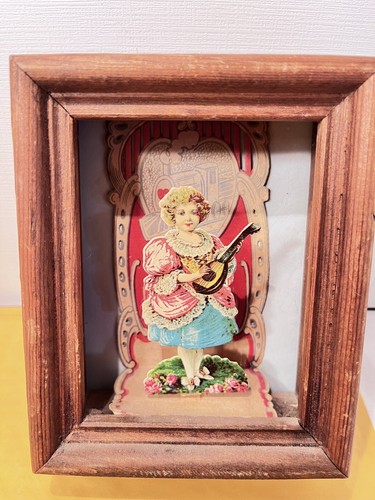
Paper survives best when collectors give it stable conditions.
Storage basics
Use acid-free folders, archival sleeves, or flat storage boxes. Keep cards away from damp basements, hot attics, and direct sunlight. Avoid packing dimensional cards so tightly that lace, tabs, or honeycomb tissue gets crushed.
Handling
Wash and dry hands before handling, or use clean cotton or nitrile gloves for fragile pieces. Support the entire card from underneath, especially with lace-paper or mechanical examples. Never lift by a corner, tab, or pierced border.
Framing
If framing, use acid-free matting and UV-protective glass or acrylic. Do not tape the card to the backing. Archival photo corners or conservation mounts are much safer.
Repairs
Avoid household tape, glue sticks, and pressure-sensitive labels. They yellow, stain, and become difficult to remove. Valuable or fragile cards should be repaired only by someone familiar with paper conservation.
Building a Valentine Collection with Purpose
Because valentines come in so many styles, a collection can grow quickly. A little focus helps keep it from becoming a shoebox of unrelated paper.
Here are a few collecting approaches:
Collect by era
Handwritten and early printed examples, Victorian lace, mechanical cards, postcards, mid-century classroom cards, or late 20th-century nostalgia.
Collect by format
Postcards, folded cards, mechanical valentines, boxed classroom sets, vinegar valentines, or dimensional paper pieces.
Collect by theme
Animals, cupids, flowers, occupations, transportation, school cards, humor, or romantic verse.
Collect by story
Cards with envelopes, handwriting, postmarks, or known family history.
Collect by display color
Red-and-white cards, pastel lace cards, bright mid-century cards, or black-and-white comic valentines.
The best collection is one you can explain. If someone asks, “Why these?” you should be able to answer with more than “they were all cute.”
Why Valentines Still Feel Personal
Modern collectors are surrounded by digital messages—texts, posts, emails, and disappearing images. Antique and vintage valentines feel different because they are physical. They have weight, texture, folds, stains, handwriting, and edges. They age.
That physicality is part of the emotional pull. A valentine is an object that once carried a feeling. Even if the romance is long gone and the people are unknown, the card remains.
That is why a cheap classroom card can move someone as much as a Victorian lace showpiece. Both say: someone chose this, signed it, gave it, received it, and saved it.
The Collector’s Takeaway
Valentines are love in paper form—but they are also memory, humor, design, commerce, and social history. They show how people expressed affection when words felt risky, how children learned holiday rituals, how publishers turned sentiment into an industry, and how even a sharp insult could be folded into the Valentine tradition.
Collect them for the lace, the color, the mechanics, the joke, the handwriting, or the nostalgia. But collect them with care. Paper is fragile, and every surviving valentine has already beaten the odds.
Let’s Make History—one saved sentiment at a time.