Before valentines became classroom exchanges, drugstore card racks, and heart-shaped boxes of chocolates, they were personal pieces of paper—sometimes handwritten, sometimes folded like puzzles, sometimes trimmed with lace, ribbons, and tiny scraps of printed color. That is what makes antique valentines so appealing to collectors: they are fragile, sentimental, and deeply human.
A Valentine card is not just paper. It is a message someone chose, bought, wrote, folded, sealed, saved, or tucked away. Some were romantic. Some were shy. Some were elaborate enough to feel like miniature stage sets. Others were simple, sincere notes written in ink and folded by hand.
This first post in our Valentines series looks at the journey from handwritten love tokens to printed lace-paper valentines—the foundation for the Victorian mechanical cards, vinegar valentines, and commercial favorites we’ll explore next.
A Message Before It Was a Card
The idea of sending a written valentine is older than the decorative cards most collectors handle today. One often-cited early surviving valentine is a 15th-century poem written by Charles, Duke of Orléans, to his wife while he was imprisoned in the Tower of London after the Battle of Agincourt. It was not a card in the modern sense, but it shows the heart of the tradition: words of affection sent across distance.
For centuries, valentines were often more about verse than decoration. A person might write a poem, copy a sentimental line, or compose a private note. These early paper tokens were personal and sometimes quite plain. The important part was the message.
That is one reason even simple handwritten valentines can be collectible today. They carry the immediacy of a real hand: uneven ink, personal spelling, folded creases, and sometimes the faint impression of a seal or address.
The Handmade Valentine: Personal, Clever, and Labor-Intensive
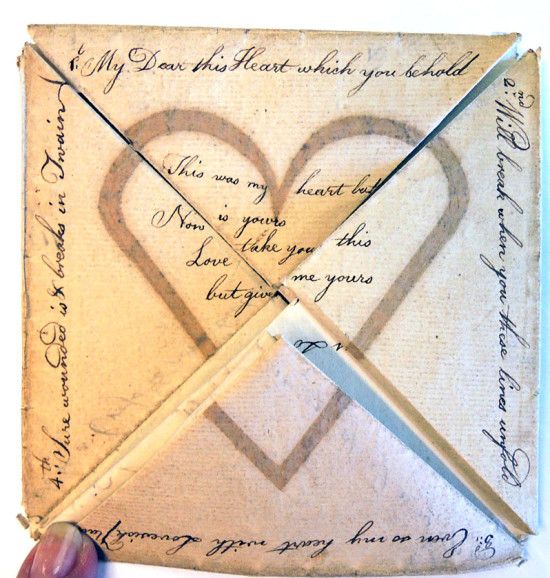
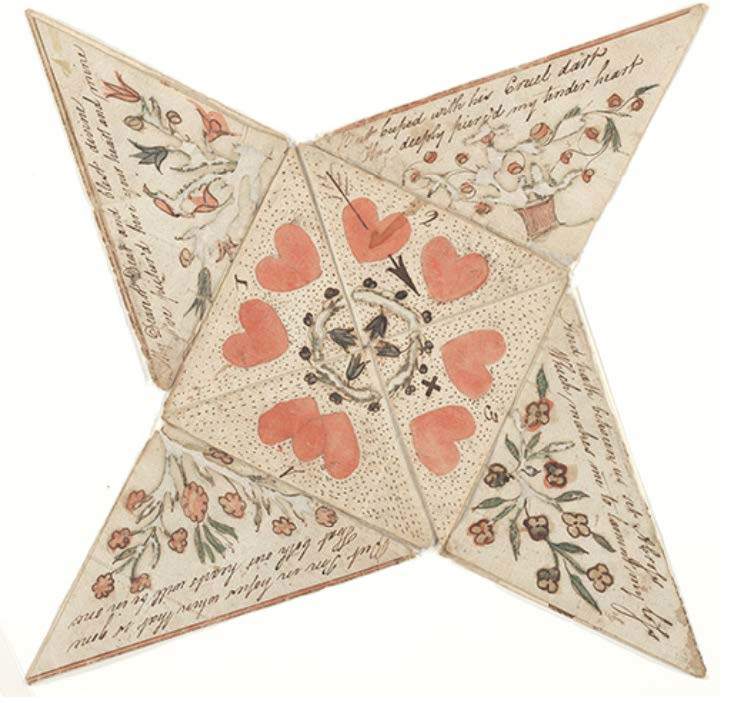
Before printed valentines became widely affordable, handmade examples could be surprisingly creative. Some were decorated with drawn or painted hearts, flowers, birds, arrows, and cupids. Others used folded-paper formats that made the recipient interact with the message.
One especially charming type is the puzzle purse valentine, made from folded paper that opens in stages. These often combine handwritten verses, small drawings, and symbolic imagery. The format turns the card into an experience: the recipient unfolds the layers to reveal the message inside.
Collectors love handmade valentines because no two are exactly alike. Even when the wording follows a familiar sentimental formula, the execution is personal. The handwriting, folding, spacing, and small decorative choices all become part of the object’s story.
When Printing Changed the Valentine
Printed valentines began to change the tradition in the late 18th and early 19th centuries, especially in Britain. Rather than relying entirely on handwritten decoration, buyers could purchase cards with printed designs, engraved imagery, woodcut elements, or ready-made verse.
This did not instantly replace handmade valentines. In fact, many early printed cards still invited personal additions. A sender might write a name, add a line of poetry, paste on an extra image, or embellish the card with a ribbon or scrap.
That mix—part manufactured, part personal—is one of the great joys of collecting early valentines. They sit at the crossroads of private sentiment and emerging mass production.
The 1840 Postal Revolution
One major reason valentines became more widely exchanged was the reform of postal systems. In Britain, the introduction of the Uniform Penny Post in 1840 made sending letters more affordable and predictable. Around the same period, prepaid postage and envelopes helped make private correspondence easier.
For valentines, this mattered enormously. A card no longer had to be hand-delivered, slipped under a door, or sent through complicated and expensive arrangements. It could travel through the mail.
That helped valentines become more democratic. They were no longer only the province of the wealthy or the poetically ambitious. More people could send them, and more printers and stationers had reason to produce them.
For collectors, this postal context is important. If you find an old valentine with an address, stamp, postmark, envelope, or folded mailing marks, those details help tell the card’s journey.
The Rise of Lace Paper
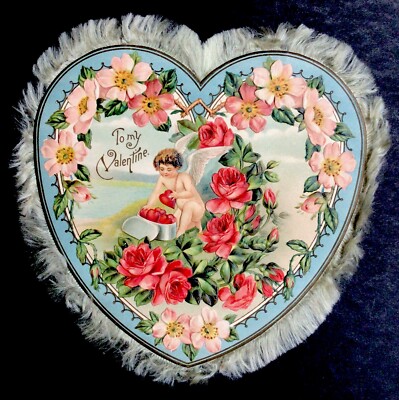
When people picture a Victorian valentine, they often imagine lace paper—delicate, pierced borders that look like fabric lace but are actually cut or embossed paper. This was one of the great visual shifts in Valentine collecting.
Lace-paper valentines could be simple and flat, but many were layered and dimensional. A typical example might include:
- A pierced lace-paper border
- A printed or chromolithographed scrap
- A sentimental verse
- A small illustration of flowers, birds, cupids, or lovers
- Ribbon, foil, fabric, or hand-colored details
The effect could be theatrical. The card became less like a folded note and more like a miniature shrine to affection. Some examples are so intricate that collectors handle them almost like fine textiles.
Why Lace-Paper Valentines Were So Appealing
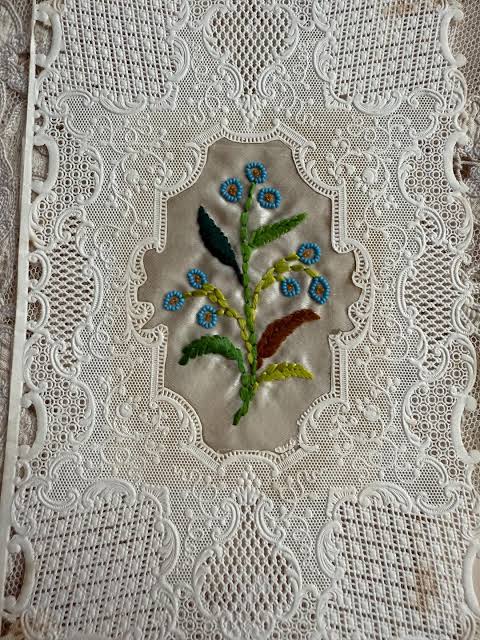
Lace paper gave valentines a romantic language that was instantly readable. Lace suggested refinement, delicacy, and special occasion. It also made the card feel expensive—even when production methods made decorative cards more accessible.
The appeal was partly visual and partly tactile. A lace-paper valentine has depth: cut edges, lifted layers, shadows, and sometimes paper springs that raise one layer above another. These cards were meant to be admired, displayed, and saved.
That is why so many survived in albums, boxes, and family papers. They were not ordinary correspondence. They were keepsakes.
Esther Howland and the American Valentine
In the United States, Esther Howland of Worcester, Massachusetts, became one of the most important names in Valentine history. Often called the “Mother of the American Valentine,” Howland began producing elaborate valentines in the mid-19th century after seeing imported English examples.
Her cards often used lace paper, colored papers, printed scraps, ribbons, and layered construction. She also helped turn Valentine-making into an organized business, using an assembly-line approach with women workers creating different parts of the cards.
For collectors, Howland matters because she represents the shift from imported luxury valentines to a strong American commercial Valentine industry. Her work helped prove there was a market for beautiful, sentimental cards made at scale.
Common Motifs in Early Printed and Lace Valentines
Early printed and lace-paper valentines have a visual vocabulary collectors quickly learn to recognize.
Hearts
The heart is the obvious symbol, but in antique cards it may appear subtly: tucked into borders, printed in red, pierced into the lacework, or hidden within a verse.
Cupids and arrows
Cupid imagery appears frequently in romantic cards. A small cupid with a bow and arrow could instantly identify the card as a love token.
Flowers
Roses, forget-me-nots, and mixed bouquets were common sentimental symbols. Flowers suggested beauty, affection, remembrance, and courtship.
Birds
Doves and songbirds appear often, especially in cards that emphasize devotion, harmony, or messages carried across distance.
Hands, letters, and envelopes
Cards sometimes depict the act of sending or receiving love itself—a hand holding a note, a sealed letter, or a messenger motif.
Understanding these themes helps collectors date, describe, and display valentines more confidently.
What Collectors Look For
Antique valentines are paper collectibles, so condition and completeness matter a great deal. A small tear may be acceptable on a common card, while damage to lacework or missing layers can affect value significantly.
When evaluating a handwritten or lace-paper valentine, look for:
- Completeness: Are all layers, flaps, scraps, and attachments present?
- Paper condition: Is there heavy foxing, brittleness, staining, or fading?
- Edges: Are lace borders torn, crushed, or missing sections?
- Writing: Is the inscription clear and interesting?
- Color: Are printed scraps and hand-colored areas still bright?
- Provenance: Is there an envelope, date, name, album page, or family context?
Collectors often accept some age-related wear. These pieces were made from fragile materials, and many are well over a century old. The key is whether the wear adds history or interrupts the design.
Handwritten vs. Printed: Which Is More Collectible?
There is no single answer. It depends on the collector.
A handwritten valentine may appeal because it is personal and unique. A lace-paper valentine may appeal because it is visually spectacular. A printed card from a known maker may appeal because it fits into a broader history of publishing and design.
The strongest examples often combine several strengths: a beautiful printed or lace-paper structure with a personal inscription, original envelope, or strong condition.
For Dear June Collectibles readers, the best advice is simple: collect what speaks to you, but learn enough to understand what you’re buying. A modest handwritten note can be just as meaningful as a large lace-paper showpiece if the story is there.
Displaying and Storing Antique Valentines
Because valentines are paper, preservation matters.
Avoid displaying antique cards in direct sunlight, which can fade inks and weaken paper. If framing, use acid-free materials and UV-protective glass when possible. For storage, acid-free folders, archival sleeves, or flat boxes are best.
Never tape a torn valentine with ordinary household tape. It yellows, stains, and becomes difficult to remove. If a valuable piece needs repair, consult a paper conservator.
When handling lace-paper cards, support the whole piece from underneath. Do not lift by a corner or pierced edge. Those delicate borders are often the first place damage happens.
The Collector’s Takeaway
The journey from handwritten notes to printed lace is really the story of how private affection became collectible paper art. Early valentines began as words—poems, messages, folded secrets—and gradually became layered objects filled with imagery, craftsmanship, and commercial design.
That is what makes them so wonderful to collect. They are intimate, decorative, and historically revealing all at once. Whether you love a simple inked verse or a lace-paper confection layered with flowers and cupids, antique valentines remind us that love has always found its way into paper form.
Let’s Make History—one paper heart at a time.