
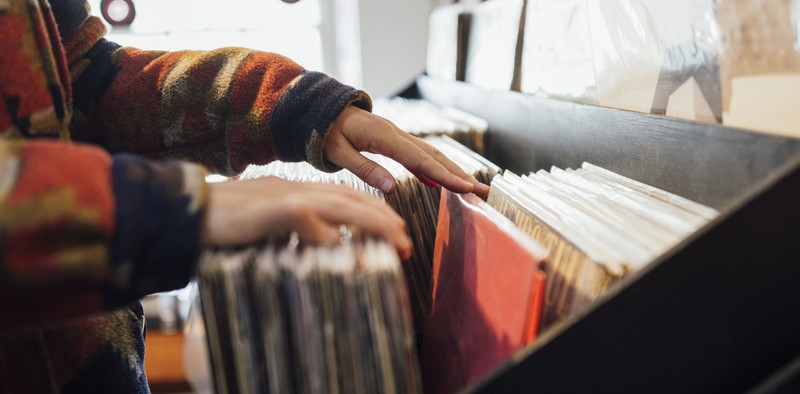
Rock and roll has always lived in sound, but it also lives in objects. For many collectors, nothing captures that better than vinyl records and the test pressings that come before them. A record is both music and artifact. It carries the songs, the artwork, the label design, and even tiny markings in the runout groove that tell part of its story. A test pressing goes one step further: it sits right at the moment when a record is about to become real.
Why Vinyl Still Matters to Rock Collectors
For much of the rock era, vinyl was one of the main ways people owned the music they loved. LPs and singles shaped how albums were sequenced, how bands thought about “Side A” and “Side B,” and how listeners experienced a record from start to finish. Even as new formats appeared, the image of a rock fan flipping through crates of records remained familiar and recognizable.
Every record brings several layers of interest:
- The sound – the specific mastering and pressing of that copy.
- The object – label variations, vinyl color, weight, and format.
- The artwork – jackets, inner sleeves, inserts, and posters.
- The history – when and where it was pressed, who owned it, and how it moved through the world.
That mix makes vinyl a natural centerpiece for many rock memorabilia collections. You’re not just looking at a relic. You can also play it and hear the music as it was presented on that particular pressing.
A Quick Look at Vinyl in Rock History
Vinyl records became a dominant music format in the mid-twentieth century. The 33⅓ rpm LP allowed longer programs than earlier shellac 78 rpm discs, which helped rock bands and other artists move beyond singles and into full album statements. The 45 rpm single remained important for hit songs and jukebox play, but the LP became the canvas for many classic rock albums and concept records.
Over the decades, other formats rose and fell—8-tracks, cassettes, CDs, downloads, and streams. Vinyl never disappeared completely, especially among DJs, audiophiles, and collectors. Interest in records increased again in the twenty-first century, often referred to as a “vinyl revival.” New rock releases still appear on vinyl, and older albums are regularly reissued, sometimes with bonus material or updated mastering.
For collectors, that long span of vinyl history creates many points of focus. Some people chase early pressings of well-known albums. Others concentrate on particular labels, countries, or scenes. Many combine new records and vintage copies on the same shelves. In all cases, the physical disc remains a central piece of the story.
What Makes a Vinyl Record Collectible?
Not every record in a thrift store bin is a hidden gem, but several features can make a copy especially interesting in a rock collection:
- Pressing and edition – Earlier pressings, especially from the original label and country of release, often attract more attention than later reissues. Matrix numbers and markings in the runout area can help identify these.
- Condition – Records and jackets in clean, well-preserved condition are generally more desirable. Collectors pay close attention to surface marks, warps, ring wear, seam splits, and writing on labels or covers.
- Variations – Misprints, label changes, different cover art, or small design differences can make one pressing stand out. Some albums also appear on colored vinyl, picture discs, or special limited editions.
- Content differences – Certain pressings include alternate mixes, track lists, or edits. In some cases, an early pressing may include a track or version that later pressings omit or replace.
- Provenance – A record owned by a notable person, signed by the artist, or connected to a specific event can have added historical interest.
None of these factors alone guarantees high value, but together they help explain why some copies become sought-after while others remain common.
How a Vinyl Record Gets Made
Understanding test pressings starts with the basic manufacturing process. Details vary by plant and era, but a typical chain for a new record looks something like this:
- Mastering for vinyl – A mastering engineer prepares the audio with the physical limits of vinyl in mind. This can involve equalization choices, level adjustments, and spacing between tracks.
- Cutting the lacquer – The mastered audio feeds a cutting lathe that carves a continuous groove into a lacquer disc (or, in some systems, a metal master in a direct-metal-mastering process). This lacquer functions as the first physical version of the record.
- Electroplating and stampers – The lacquer is coated and electroplated to create metal parts. Through several steps, metal stampers are produced. These stampers go into the pressing machines.
- Pressing the vinyl – Heated vinyl “pucks” or “biscuits” are squeezed between stampers to form each side of the record, with labels attached during the press. The records are then cooled, trimmed, inspected, and packed into sleeves and jackets.
At a key point in this process, before a full production run starts, the plant and label usually create test pressings.
What Is a Test Pressing?
A test pressing is a small batch of records pressed from the new stampers before regular production begins. These copies go to the label, the artist, the producer, or the mastering engineer so they can check things like:
- Is the audio free from obvious pressing defects such as skips or severe non-fill?
- Does the mastering translate well to vinyl on an actual disc?
- Are the sides in the correct order and properly labeled?
- Are there mechanical or surface-noise problems that need attention?
Test pressings usually have simple labels, often plain or with minimal printed information such as the catalog number, side marking, and pressing plant name. They might come in generic inner sleeves, sometimes inside a plain white or company jacket.
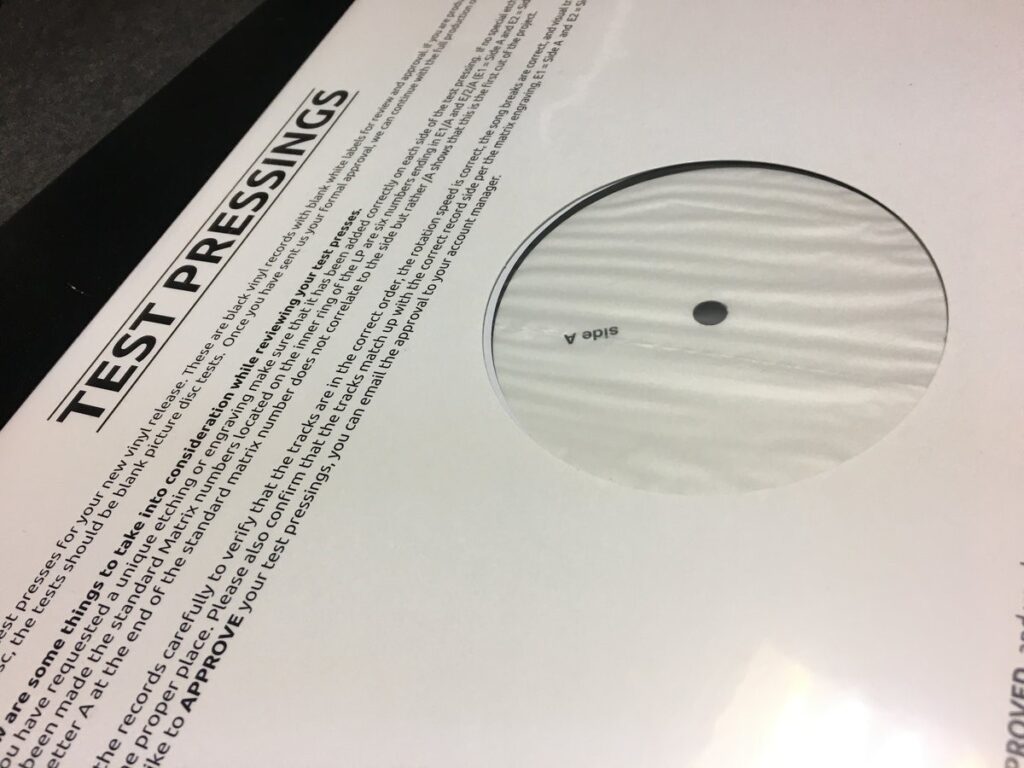
Only a small number are typically made compared to the full production run, which is one reason collectors find them interesting. Exact quantities vary by project and plant, but test pressings exist primarily to check quality rather than to sell in stores.
If the tests sound acceptable, the label approves the pressing, and full production goes ahead. If not, the plant or mastering engineer addresses the issues, and another round of tests may follow.
Why Collectors Care About Test Pressings
From a memorabilia standpoint, test pressings sit at a useful crossroads of rarity and function.
1. They mark the moment before release
A test pressing comes from early stampers for a particular cut. It represents the point where the record moves from tapes or files into physical form. That connection to the production process gives it historical interest, especially for notable albums.
2. They often exist in small numbers
A full production run can produce thousands or more copies. A test run usually produces far fewer. While the exact numbers differ from one project to another, test pressings were not designed for wide distribution. Most stayed with labels, plants, and people directly involved in the record.
3. They can reveal different versions
Not every test pressing matches the final commercial release. Sometimes the track order changes between the test stage and the official version. In other cases, the mastering might be adjusted for level or tone. When changes are significant, an earlier test pressing can preserve a version of the album that never reached stores.
4. They can document the production process
Handwritten notes on labels or sleeves—such as dates, initials, and comments—can show who listened and what they checked. For researchers and deep collectors, those details help trace how a release came together.
Because of all this, test pressings by well-known rock artists often rank highly in vinyl collections. They combine relative scarcity, a direct link to the production chain, and, in some cases, distinct audio.
Test Pressings vs. Promos and White Labels
It’s easy to mix up different kinds of “special” records. A few categories matter here:
- Test pressings – Internal checks for audio and manufacturing quality, usually with plain or minimal labels and basic sleeves.
- Promotional copies – Records pressed for radio stations, journalists, or industry use, often marked “Promotional,” “Not For Sale,” or similar wording. These usually look close to the final retail version.
- White label promos or white label editions – Official promo or special editions with plain or mostly plain labels, often used for DJs and radio play. Some genres, such as dance and club music, use these heavily.
All of these can attract collectors, but they serve different roles. Test pressings in particular belong to the quality-control step between mastering and mass production.
Listening vs. Preserving
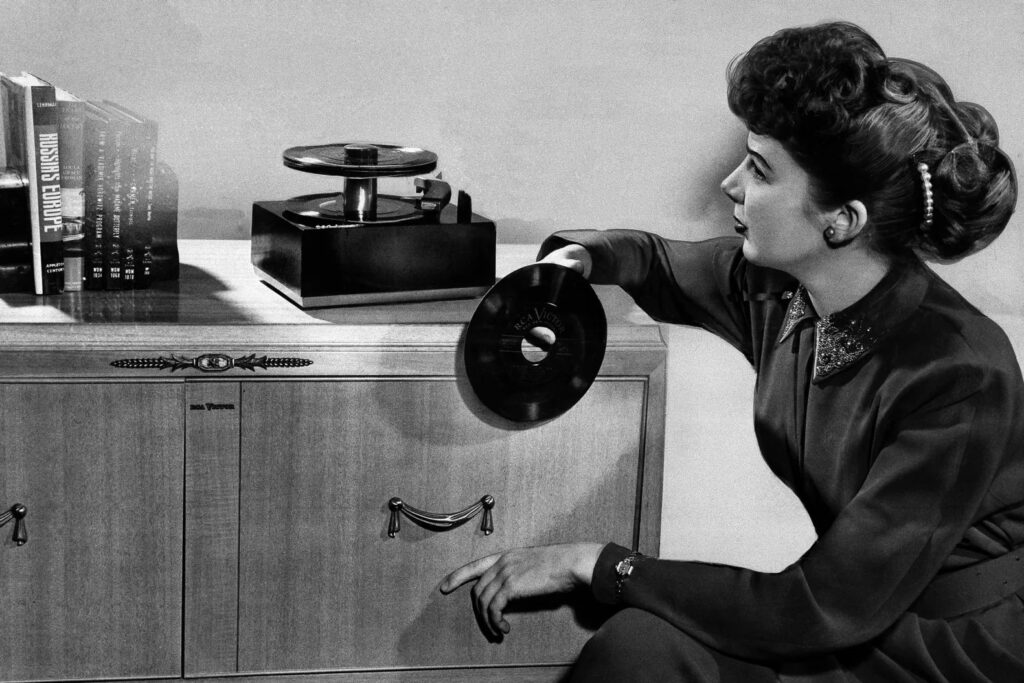
One of the ongoing questions with vinyl, especially rare pieces, is simple: do you play it or protect it?
Different collectors answer in different ways. Some test pressings and rare first pressings get played very rarely, if at all, to avoid wear. Others are handled carefully but still used, because they were made to be heard. There isn’t a single correct approach, but a few widely recommended practices help:
- Use a clean, well-set-up turntable and stylus.
- Handle the record by the edges and label, not the grooves.
- Keep records in good inner sleeves and store them vertically.
- Avoid heat, direct sunlight, and damp storage areas.
These basics apply whether you’re playing a brand-new pressing or a decades-old test copy.
Building a Focused Vinyl and Test Pressing Collection
The world of vinyl can feel huge, so many collectors narrow their focus. A few common approaches include:
- Concentrating on a single band or artist, including studio albums, live releases, test pressings, and promos.
- Focusing on a particular era, such as classic rock of the 1960s and 1970s, or a specific regional scene.
- Collecting by label, building a run of releases from one imprint.
- Focusing on particular formats, such as twelve-inch LPs, seven-inch singles, or only test pressings and promos.
Within that kind of focus, test pressings often become highlight pieces. A shelf of standard releases tells part of the story. A test pressing adds a behind-the-scenes chapter.
Why Vinyl and Test Pressings Belong at the Heart of Rock Memorabilia
Concert posters and tickets show you where the music happened. Vinyl records and test pressings let you bring that music back into the room.
A regular pressing carries the songs, the artwork, and the label design that fans saw in shops. A test pressing captures the moment when those elements first came together on a physical disc. Both matter, but in different ways. Together they allow collectors to trace a record from early production to finished release.
If you enjoy rock memorabilia, adding vinyl and test pressings to your world doesn’t just mean more things on shelves. It means more ways to hear and understand the albums that shaped the music you love.
Drop the needle, read the runout, and listen for the history in the grooves. With every spin, every sleeve, and every test copy we bring into the light, we’re experiencing history. So, Let’s Make History, one turn at a time.