If you’ve ever seen a Navajo (Diné) textile in person, you know the feeling: the design reads bold from across a room, but the closer you get, the more you notice—tight, even weaving; deliberate color choices; clean edges; and a sense of balance that feels both artistic and intentional. These aren’t just “blankets” in the casual sense. They’re textiles shaped by skill, tradition, adaptation, and a deep visual language that has continued—generation after generation—into the present.
For collectors, Navajo weaving sits in a special place. It can be an heirloom, a work of art, a historical document, and a living tradition all at once. That means the most rewarding way to learn it is not just by chasing patterns or dates, but by understanding the craft itself: what makes these textiles structurally distinct, how they’re made, what materials matter, and why design choices look the way they do.
This post is an introduction to the art of Navajo weaving—how it works, what it’s made from, and how to approach it with the curiosity and respect it deserves.
A Living Tradition, Not a “Lost Art”
One of the most important things to know at the start is that Navajo weaving is not a closed chapter. Diné weavers are creating textiles today—ranging from deeply traditional approaches to contemporary works that expand color, scale, and design in exciting ways. When collectors talk about “old blankets,” it’s easy to accidentally frame weaving as something that happened only in the past. In reality, weaving has a history, but it also has a present.
That matters for how we collect and talk about these pieces. A textile can be historic and still part of a living cultural practice. The best collecting starts with that awareness.
What Makes Navajo Weaving Distinct?
Many Diné textiles are what textile folks call weft-faced weaving. In simple terms, that means the weft (the horizontal threads) visually dominates the surface. You don’t typically “see” the warp (the vertical threads) the way you might in some other fabrics. That weft-faced structure is a big reason the designs look so solid and graphic—like painted fields of color rather than a simple grid.
A few key traits collectors often notice:
- Strong geometry and clarity: designs are meant to read clearly, even at a distance.
- Clean pattern edges: sharp transitions between colors are part of the visual power.
- Borders and framing: many textiles use borders to hold a design together and give it structure.
- Durability: these textiles were made to be used, worn, traded, and lived with—not only admired.
Origins and Influences: How the Tradition Took Shape
No single paragraph can summarize centuries of cultural exchange and innovation, but a few broadly accepted points help frame the development of Navajo weaving:
- Diné people have longstanding relationships—peaceful and complex—with neighboring Pueblo communities, and loom-based weaving knowledge is often discussed in connection with those interactions.
- After sheep were introduced to the Southwest by Spanish colonists, wool became a major fiber source for Diné weaving.
- Over time, Diné weavers developed a distinct approach to structure, design, and finish that collectors recognize immediately today.
You’ll sometimes also hear Diné weaving discussed through traditional teachings that trace weaving to holy beings such as Spider Woman. When people mention this, it’s best understood as part of Diné worldview and cultural tradition—one way of expressing that weaving is more than “craft.” It’s knowledge with meaning.
The Loom: Upright, Simple, and Brilliantly Effective
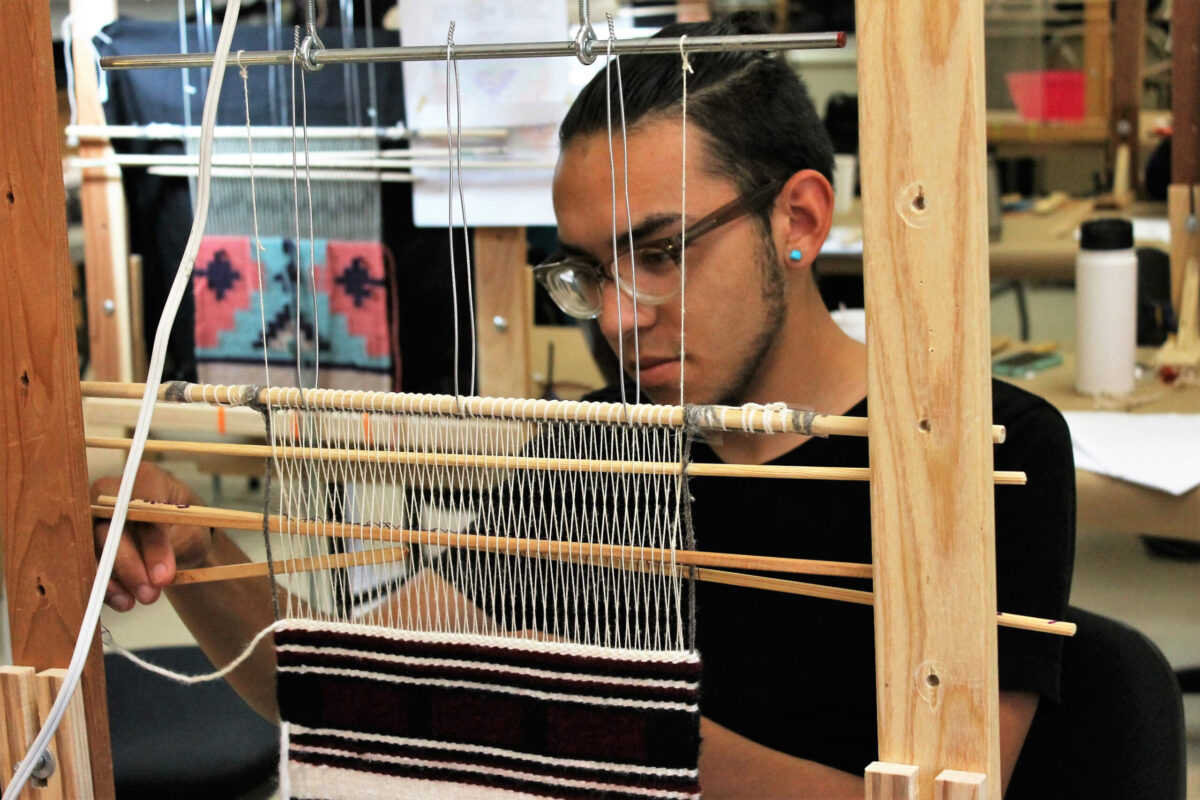
Traditional Navajo weaving is commonly done on an upright (vertical) loom. If you ever watch a skilled weaver work, you’ll notice how much of the artistry happens through rhythm and control—tension, spacing, beating down the weft, and building a design line-by-line.
A simplified view of the loom setup:
- Warp threads are stretched vertically under tension.
- The weaver passes the weft yarn back and forth, building the textile row by row.
- The finished portion is advanced as the weaving grows.
This format allows for very tight, even weaving and helps support the crisp geometry that Navajo textiles are famous for.
Tools of the Weaver: Spinning and Weaving Implements
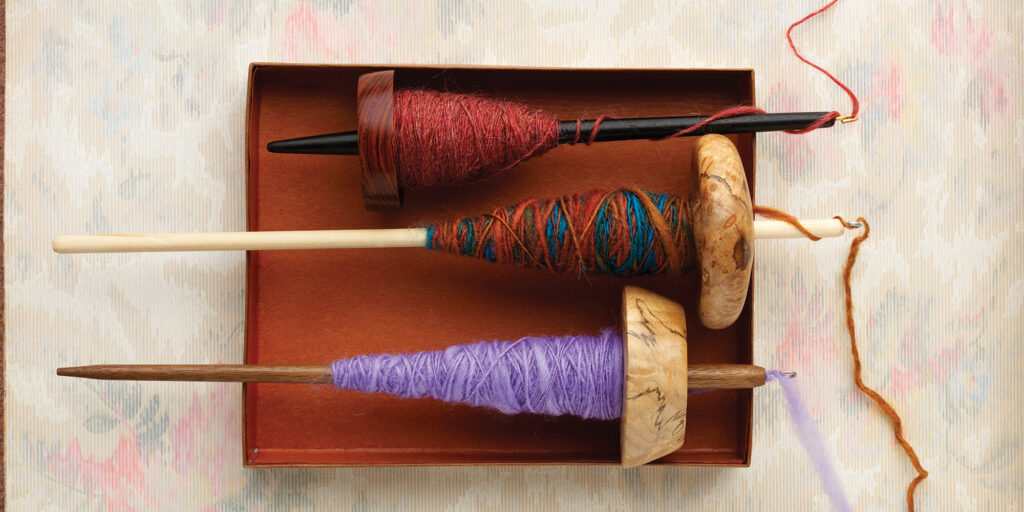
You don’t need a room full of machines to make a remarkable textile. Traditional Diné weaving relies on a small set of essential tools—simple in concept, powerful in effect.
Common tools include:
Spindle and spindle whorl
Used for spinning wool into yarn. Handspun yarn is one of those details collectors learn to recognize because it often has character—slight variation, a lively texture, and a sense of “made by hand” that machine yarn doesn’t replicate.
Weaving batten
A flat tool used to help separate warp threads and to pack the weft into place.
Weaving comb (or beater)
Used to beat down each row of weft so the textile becomes dense, even, and durable.
If you’re ever evaluating a textile and wondering why it feels so “solid,” this is a big part of the answer: careful beating and consistent tension create that firm, finished structure.
Fibers and Yarns: From Sheep to Textile
The fiber story matters in Navajo weaving because materials shifted over time, depending on what was available and what the market wanted. But a few foundational materials show up again and again in discussions of classic Diné textiles.
Wool (including Navajo-Churro wool)
Wool is central to many Navajo textiles. Navajo-Churro sheep—descended from early Spanish Churra sheep—are widely associated with Diné pastoral and weaving traditions. Their wool is often described as long-stapled and well-suited to hand spinning, which helps explain why it became such an important fiber in historic weaving.
Cotton (often used in warp)
In many historic examples, cotton was used as warp, with wool used for weft. This combination can influence everything from drape to durability.
Raveled yarns and traded cloth
Historic weavers also used yarns pulled from traded cloth—often prized for strong color. Red “bayeta” cloth and other imported materials show up in the color history of older blankets and wearing textiles.
Commercial yarns (later periods)
By the late 19th century into the early 20th century, commercially produced yarns became more common in many regions, and they changed the look and feel of some textiles. (We’ll talk more about these shifts in later posts, especially when we get into trading posts and market change.)
Color: Natural Wool, Natural Dyes, and New Options
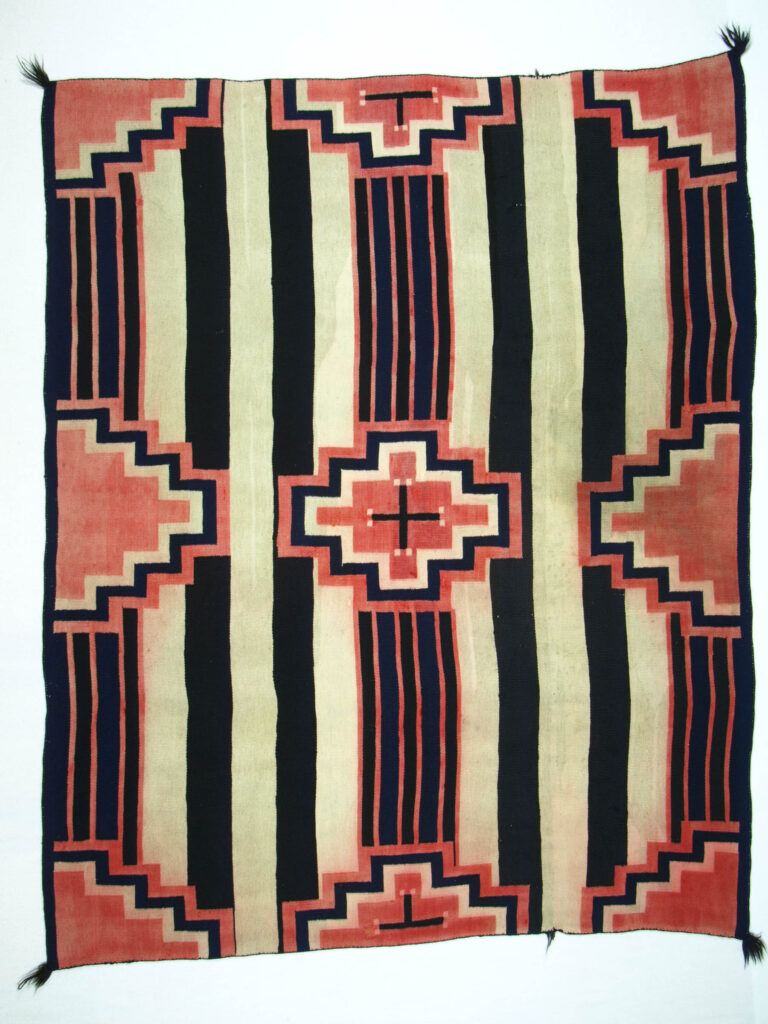
Color is one of the great joys of collecting Navajo textiles, and it’s also one of the trickiest topics—because “traditional” doesn’t mean “only one method.” Diné weavers have always been adaptive, using what worked, what was available, and what created the visual impact they wanted.
Here are the big, collector-friendly categories of color sources:
Natural fleece colors
Many sheep produce wool in a range of natural tones—creams, browns, grays, blacks. Textiles that rely heavily on natural fleece colors can have a grounded, elegant look, and the palette often highlights structure and pattern clarity.
Natural dyes
Historic dyeing could involve local and traded dye materials. Indigo blues and insect-based reds (from dyes like cochineal and related sources) appear in the broader history of Southwestern textiles, including in the re-use of dyed yarns from imported cloth.
Commercial dyes and yarn color
Later, new commercial dyes and brightly colored yarns expanded the palette dramatically. This is one reason some textiles feel earthy and restrained while others feel vivid and high-contrast. Neither is “more real” on its own; they often reflect different time periods, regional tastes, and economic contexts.
Design as a Visual Language
Even when you don’t know a pattern name, you can often recognize a design “logic” in Navajo weaving. That logic tends to show up in a few recurring approaches:
Symmetry and balance
Many textiles organize their visual weight carefully—mirrored elements, centered medallions, or repeated bands that stabilize the composition.
Borders and framing
Borders aren’t just decoration. They can control the eye, prevent a design from “spilling out,” and create a finished, intentional look.
Geometric patterning
Diamonds, stepped shapes, zigzags, serrations, and stacked forms show up frequently. These aren’t random; they’re part of a design vocabulary that can be regional and period-influenced.
Negative space and breathing room
Some of the most powerful designs use restraint—large fields of a single color, or an open background that makes a central motif feel bold rather than busy.
As a collector, one of the most rewarding skills you can develop is simply learning to see how a textile is organized. The more you notice structure and balance, the more impressive the work becomes.
What Collectors Should Look For (Beyond “It’s Pretty”)
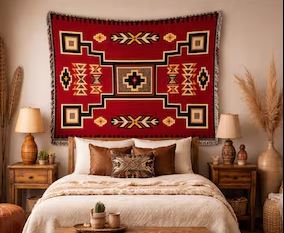
If you’re shopping for Navajo textiles—whether for collecting, decorating, or resale—these are practical points that help you evaluate pieces responsibly.
Construction and weave quality
- Is the weaving dense and even?
- Do the edges look straight and controlled?
- Are color changes clean or fuzzy?
Condition issues common to woven textiles
- Wear at fold lines (from long storage)
- Fringe loss (if present)
- Edge fraying
- Stains or fading from light exposure
- Moth or insect damage (especially in wool)
Materials clues
- Does the yarn look handspun or commercially uniform?
- Do colors look like natural fleece, dyed wool, or later commercial yarn palettes?
- Does the textile have the “hand” (feel) of a dense, weft-faced weave?
Provenance and respectful sourcing
Whenever possible, value pieces with clear origin information—where they came from, how they were acquired, any documentation. And when you can, prioritize sourcing that supports Native artists and ethical collecting practices. These textiles aren’t just décor; they’re cultural works.
Appreciating the Art With Cultural Respect
Navajo weaving is admired worldwide, and that admiration is deserved. But collecting it well also means collecting it thoughtfully. That starts with language (acknowledging Diné weavers), with avoiding assumptions, and with remembering that many designs and techniques are part of a living community, not a detached “trend.”
If you keep that mindset, collecting becomes deeper: you’re not only hunting for a beautiful textile—you’re learning a craft tradition that has endured, adapted, and continued.
Let’s Make History—one woven tradition at a time.