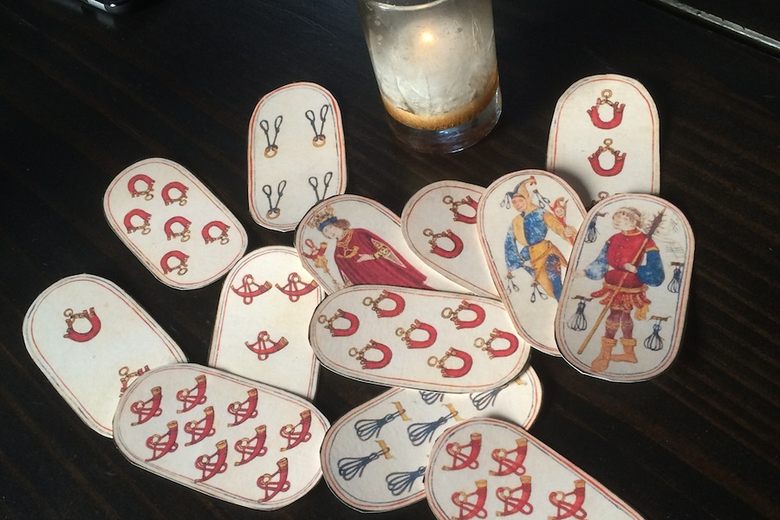
A deck of playing cards is one of those everyday objects that feels almost too familiar to question. We shuffle them, deal them, stack them in junk drawers, tuck them into travel bags, and pull them out for holidays, game nights, solitaire, magic tricks, and rainy afternoons. But behind that ordinary deck is a long, winding history of trade routes, regional styles, handmade artistry, printing technology, gambling, education, and entertainment.
For collectors, playing cards are especially rewarding because they are small objects with huge stories. A deck can reflect where it was made, what games people played, what images were fashionable, what printing methods were available, and even what kinds of entertainment were considered respectable—or not.
The modern deck did not appear all at once. It evolved across cultures and centuries, changing shape as it moved from early card traditions in Asia to the Islamic world and then into medieval Europe. By the time playing cards became common in Europe, they had already begun the journey from luxury objects to household staples.
The Earliest Roots: Cards Before the Modern Deck
The earliest history of playing cards is difficult because the first card-like objects were fragile, heavily used, and not always clearly described in surviving records. Many historians connect the origins of playing cards to China, where paper, printing, and game traditions created the right environment for cards to develop.
These early cards were not identical to the modern 52-card deck. They may have been connected to money-suited games, domino-style games, or other paper gaming pieces. The important collector takeaway is this: the idea of using portable, printed or painted pieces for games developed long before the familiar hearts, diamonds, clubs, and spades.
That makes “origin” a layered story rather than one neat invention date. Playing cards were shaped by materials, printing, leisure, and trade. They spread because they were practical, social, and endlessly adaptable.
Cards Travel West: Trade, Courts, and New Designs
As card games moved westward, they changed. Scholars often point to routes through Central Asia, Persia, the Islamic world, and Egypt before playing cards became established in Europe. One especially important bridge is the tradition of Mamluk playing cards, associated with the Islamic world and preserved in later surviving examples.
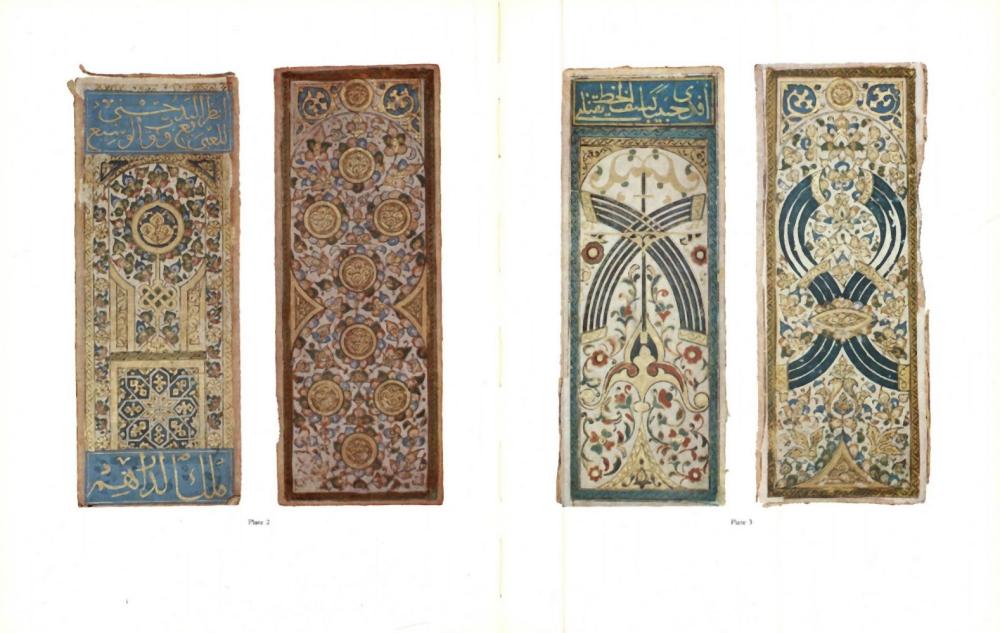
Mamluk-style cards used suit systems that look surprisingly close to some early European suit families. Instead of hearts and spades, these cards included suits such as cups, coins, swords, and polo sticks. When cards reached Europe, those ideas adapted to local tastes, materials, and games.
Collectors love this part of the story because it reminds us that a deck of cards is a travel object. The cards themselves may be small, but their history crosses regions, languages, and centuries.
Playing Cards Arrive in Europe
Playing cards appear in European records in the late 1300s. Once they arrived, they spread quickly. Early European cards were not standardized the way modern decks are. Different regions used different suits, different court figures, different numbers of cards, and different artistic styles.
In some places, suits followed the Latin tradition: cups, coins, swords, and batons. In parts of German-speaking Europe, suit systems developed around symbols such as acorns, leaves, bells, and hearts. Over time, the French system of hearts, diamonds, clubs, and spades became especially influential, eventually shaping the standard deck familiar in much of the English-speaking world.
For collectors, regional suits are one of the most fascinating areas of playing card history. They show that the “normal” deck is only normal because one tradition became dominant. Many older and regional decks preserve different ways of organizing the same basic idea: ranked cards divided into suits.
From Hand-Painted Luxury to Printed Entertainment
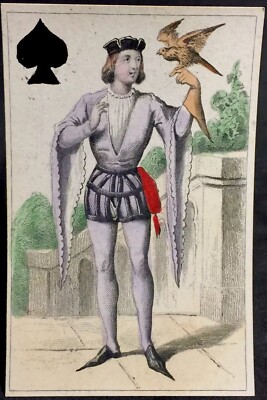
Early European playing cards could be luxury objects. Some were hand-painted, richly decorated, and made for elite patrons. Others were more practical and produced for wider use as printing methods improved.
The rise of woodblock printing and later more efficient production methods helped playing cards become more affordable and widely available. This shift matters because it transformed cards from rare or expensive items into everyday entertainment.
That democratization is one reason playing cards are so collectible today. They were used by many kinds of people, in many kinds of settings:
- Courts and aristocratic households
- Taverns and inns
- Family parlors
- Traveling game kits
- Gambling tables
- Educational settings
- Advertising and souvenir markets
A deck can be elegant, humble, comic, educational, or promotional—and still belong to the same broad collecting category.
How the Familiar Deck Took Shape
The modern Anglo-American deck usually has 52 cards divided into four suits: hearts, diamonds, clubs, and spades. It also uses court cards—king, queen, and jack—and an ace in each suit. Jokers are a later addition tied to specific games and deck traditions, which is why older or specialty decks may handle them differently.
But the standard deck was not inevitable. It is the result of many practical choices made over time:
- Four suits create a manageable structure.
- Numbered cards allow many kinds of games.
- Court cards add hierarchy and visual interest.
- Two red and two black suits make sorting and recognition easier.
- Repeated symbols make mass production more efficient.
For collectors, these details are worth noticing. A deck’s suit symbols, court card style, indices, backs, finish, box, tax stamps, printing marks, and jokers can all help tell its story.
Why Collectors Love Early and Historic Decks
Playing cards are one of the most accessible forms of printed history. Unlike a large sign, a jukebox, or a piece of furniture, a deck is small enough to store in a drawer—but it can still hold tremendous historical value.
Collectors may focus on:
Age and printing method
Older decks, especially those with identifiable printing details, can be highly desirable. Handmade, woodblock, engraved, lithographed, and early industrially printed cards each tell a different production story.
Regional suit systems
Latin, German, French, and other regional suit patterns appeal to collectors who enjoy comparing how familiar objects developed differently across cultures.
Complete decks
Completeness matters. A full deck with original box, instructions, jokers, inserts, or advertising material is often more desirable than loose cards.
Artwork and design
Court cards, back designs, color palettes, and themed imagery can make a deck collectible even when it is not especially old.
Historical context
A deck tied to a known maker, era, event, place, or style can become much more interesting than an unmarked deck with no context.
What to Look For When Buying Vintage Playing Cards
Playing cards were made to be handled, shuffled, bent, and played with. Condition tells you how a deck lived.
When evaluating a vintage deck, check:
- Are all cards present?
- Are the jokers included, if the deck originally had them?
- Is the box original?
- Are there instructions, score cards, advertising inserts, or tax stamps?
- Are the cards warped, stained, torn, or heavily creased?
- Do the backs show excessive wear or fading?
- Is the deck clean enough to handle safely without further damage?
A little age and handling can be charming. Heavy water damage, moldy odor, missing cards, or severe warping can make a deck less desirable unless it is especially rare or visually interesting.
Storing and Displaying Playing Cards
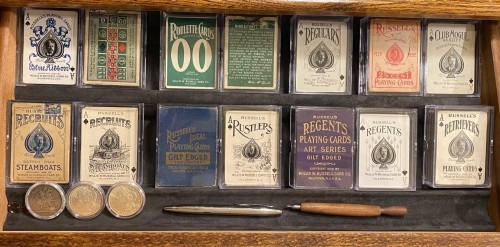
Cards are paper collectibles, so care matters. The goal is to protect them from the things that paper dislikes most: light, moisture, heat, pressure, and rough handling.
Good storage habits include:
- Keep decks in their boxes when possible.
- Store loose cards in archival sleeves or acid-free envelopes.
- Avoid damp basements and hot attics.
- Keep cards out of direct sunlight to prevent fading.
- Do not rubber-band decks; bands can stain, dent, and damage edges.
- Store decks flat or upright in a way that avoids crushing the box.
For display, consider rotating decks seasonally. A framed spread of sample cards can look beautiful, but long-term light exposure is risky. If you display cards, use copies or lower-value examples when possible, and keep your best decks safely stored.
A Gentle Collector’s Checklist
Before buying a vintage or antique deck, ask:
- Is the deck complete?
- Does it have the original box or packaging?
- Are there jokers, instructions, tax stamps, or inserts?
- Is the condition stable enough for storage?
- Does the deck fit my collecting lane: age, region, maker, artwork, souvenir, advertising, or novelty?
- Am I buying it for confirmed history, or because I simply love the design?
Playing cards are proof that ordinary objects can carry extraordinary history. They have crossed continents, survived changing tastes, and remained one of the simplest ways people gather, compete, laugh, and pass the time.
Let’s Make History—one shuffled deck at a time.