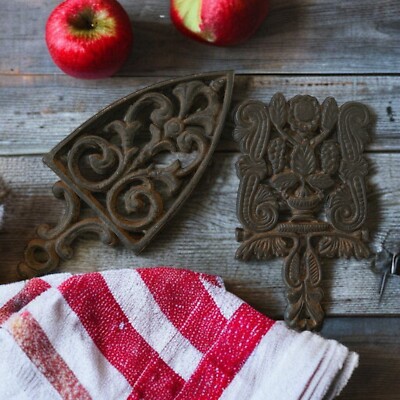
Trivets are the kind of collectible that sneaks up on you. You start with one—maybe a sweet little tile trivet from a favorite trip, or a heavy cast-iron piece that looks like it belonged in your grandmother’s kitchen—and suddenly you’re noticing them everywhere. In antique malls. In estate lots. Hanging on walls as “kitchen art.” Tucked into souvenir boxes like a forgotten postcard.
And that’s the charm: decorative and souvenir trivets sit right at the intersection of usefulness and memory. They’re small enough to display, sturdy enough to survive decades of kitchens, and personal enough to feel like a tiny time capsule.
Let’s talk about what makes these trivets special, how to spot the good ones, and why they’re one of the most satisfying (and display-friendly) categories to collect.
What makes a trivet “decorative” or “souvenir”?
At its simplest, a trivet protects a surface from heat—hot dishes, kettles, pans, teapots, coffee pots, you name it. But collectible trivets tend to fall into two overlapping lanes:
Decorative trivets
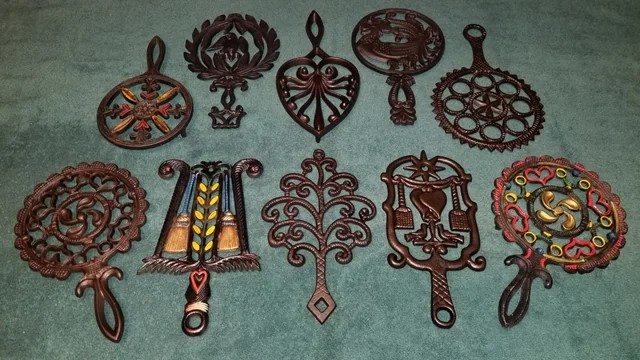
These are made to be pretty first and practical second (even if they can still do the job). Think ornate scrollwork, figural designs, fancy metalwork, stylized animals, seasonal motifs, florals, geometric patterns, and statement pieces meant to sit out on the counter.
Souvenir trivets
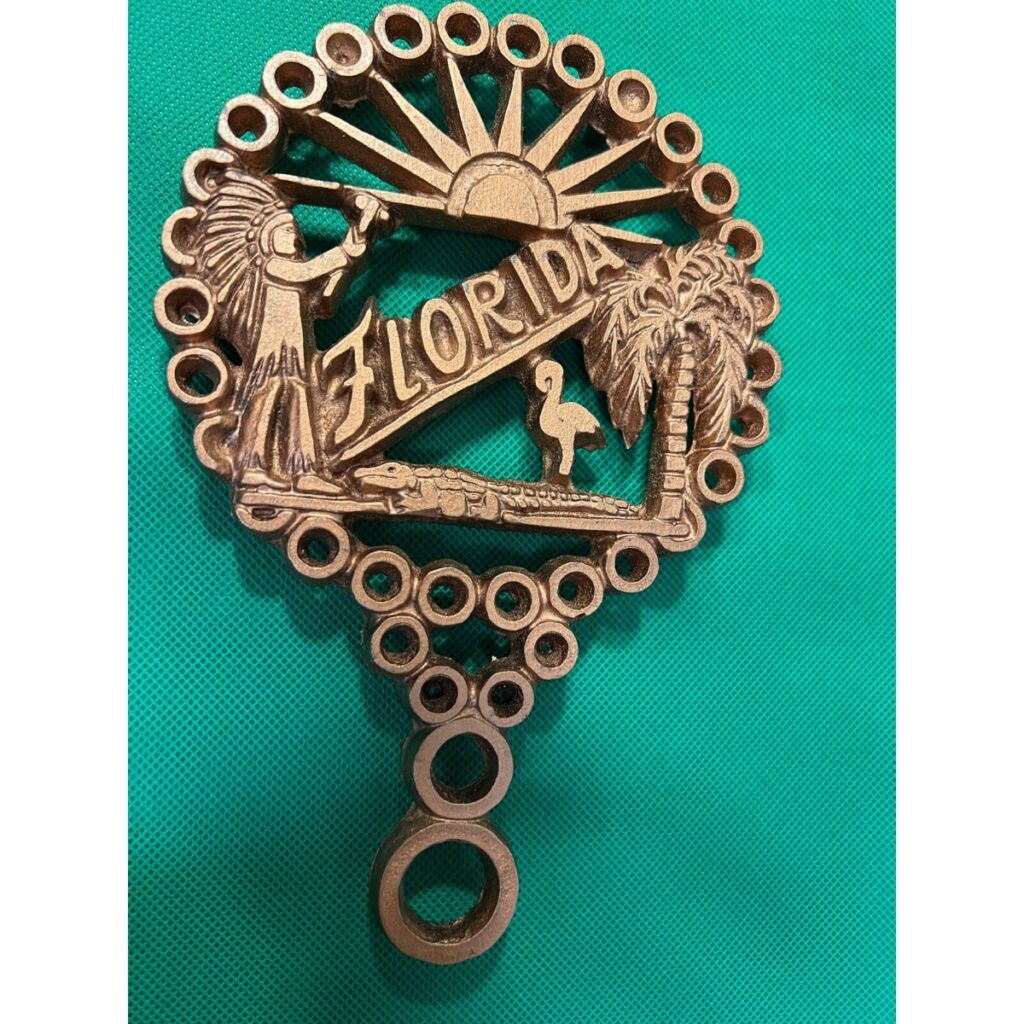
These are memory-keepers: a place, an attraction, an event, a hotel, a national park, a World’s Fair, a state outline, a scenic tile, a famous landmark. Many souvenir trivets feel like “travel ephemera,” only sturdier—and much more likely to still be around decades later.
The fun part is that a single trivet can be both: a gorgeous cast-metal frame holding a scenic tile from a trip, or a decorative piece that also happens to advertise a destination.
A quick (and very human) history of why these exist
Trivets go back to the practical realities of open-hearth cooking—raising pots above coals and giving hot vessels a safe resting place. Over time, as kitchens changed, so did trivets. Once they weren’t strictly necessary for hearth cooking, they didn’t disappear… they evolved.
By the time you get into the era most collectors encounter most often, trivets had become:
- Household tools (table protection, stovetop use, holding hot irons in some settings)
- Decorative accents (because kitchens became a place to live in, not just work in)
- Giftable souvenirs (small, affordable, packable, and tied to a place or event)
That last point is key. A trivet is the perfect souvenir: it’s flat, durable, and useful—exactly the kind of object people brought home and actually kept.
The classic looks: materials you’ll see again and again
One of the best things about trivet collecting is variety. You can build a cohesive collection—or go delightfully eclectic—without feeling “off theme.”
Cast iron: the workhorse collectible
Cast-iron trivets are often the first thing people picture: heavy, dark, solid, and satisfying to hold. You’ll find simple geometric shapes and ornate patterns, but also lots of figural and novelty designs—animals, hearts, flowers, baskets, and sometimes designs that feel almost architectural.
Collector note: cast iron can be genuinely old, but it’s also one of the most commonly reproduced styles. That doesn’t make repros “bad” (many are charming!), but it does mean condition, markings, and finish matter when you’re buying.
Brass, bronze-tone, and other warm metals
These often read “traditional” and can feel right at home in colonial, English country, or classic Americana decor. Some are elegant and minimal; others are deeply ornate with scrollwork and feet that lift the piece above the table.
Cast aluminum and lightweight metal
If cast iron is the brick, aluminum is the postcard. Lightweight metal trivets show up often in souvenir categories—sometimes embossed with landmarks, sometimes designed like plaques or hot pads. They’re especially common for mid-century souvenir styles and event pieces.
Ceramic tile trivets (often with a metal frame)
This is the iconic souvenir format: a ceramic tile featuring a scene, map, flower, or landmark, mounted into a metal frame with little feet and sometimes a hanging hook.
Tile trivets can lean:
- touristy (bold lettering, “Greetings from…”)
- scenic (painted landscapes, historic buildings)
- decorative (botanicals, folk-art style scenes, geometric patterns)
Some were made as giftware, some as travel souvenirs, and many were meant to be displayed on the wall when they weren’t in use.
Wood, cork, and mixed materials
Less common in strictly “antique” terms, but very present in vintage and modern decor trends. These can be beautiful, but if you’re collecting for function, always make sure they’re truly heat-safe and not just decorative.
The “postcard on the table” appeal of souvenir trivets
Souvenir trivets are collectible for the same reason postcards and travel patches are: they tell a story.
Some of the themes collectors love most include:
- States and state outlines (often with icons, flowers, or a map-style design)
- National parks and scenic landmarks (mountains, canyons, waterfalls, wildlife)
- Historic sites (colonial buildings, forts, famous homes, monuments)
- Events and expositions (World’s Fairs, special anniversaries, festivals)
- Hotels, restaurants, and attractions (especially anything roadside, resort, or theme-park related)
- International travel (city scenes, countryside motifs, and sometimes stamped “Made in …” on the back)
What I love about these is that they’re often dated indirectly. Even if the front doesn’t say a year, the style can hint at the era—typefaces, color palettes, framing, and even what the destination chose to highlight.
How to evaluate decorative and souvenir trivets like a collector
Here’s where this category gets really satisfying: you don’t need a microscope or a lab. You just need a good eye, a careful hand, and a few consistent habits.
1) Check the feet (and the table-contact points)
Feet tell you a lot. Are they:
- intact and stable?
- worn in a way that makes sense?
- padded (felt/rubber/cork), and if so, does that look original or later?
Wobbly feet aren’t a dealbreaker, but they affect both function and display.
2) Look for markings—then don’t overinterpret them
Many older trivets aren’t marked at all, especially simple cast pieces. But souvenir and later decorative pieces often are.
Common places for marks:
- on the back of a metal frame
- stamped into the underside
- printed or stamped on the back of a tile/ceramic insert
- foil labels (often missing)
If you see a clear country-of-origin stamp or phrase like “Made in ___,” that can help narrow the era—especially with mid-century imports and postwar giftware. (And yes, it’s normal for souvenir pieces to be imported even if the destination is American.)
3) For tile trivets, inspect the insert like you would a plate
Check for:
- chips along corners and edges
- hairlines or cracks
- surface crazing (fine crackle lines in the glaze)
- staining (especially if it was used under hot dishes repeatedly)
A little crazing can be normal on older glazed ceramics, but big cracks affect value and usability.
4) Separate “meant to be used” from “meant to be displayed”
Some souvenir hot pads/trivets were made with thin decorative surfaces (foil-style, light composite boards, etc.). They can be fantastic collectibles, but they may not be safe for real heat.
A good rule: if it feels lightweight and delicate, treat it as decor unless you’re sure it’s heat-rated.
5) Buy the design, not the hype
In this category, the best pieces aren’t always the oldest. A joyful 1960s souvenir tile from a quirky roadside stop can be more collectible (and more fun to display) than a generic “older” trivet with no personality.
What makes one trivet worth more than another?
Value in decorative and souvenir trivets tends to be driven by a few consistent factors:
- Condition (especially unchipped tiles, stable feet, minimal rust)
- Visual appeal (bold design, crisp casting, strong color, great subject matter)
- Rarity of location or theme (small towns, discontinued attractions, limited events)
- Maker recognition (when present)
- Completeness (original hangers, intact frames, matching sets)
And then there’s the wildcard: nostalgia. Certain places and themes have passionate collector bases—parks, fairs, specific states, specific attractions—so the right trivet can have surprisingly strong demand.
Cleaning and care: keep it collectible and usable
A few gentle guidelines go a long way:
Cast iron
- Keep it dry—don’t soak it.
- Dust and wipe with a barely damp cloth, then dry immediately.
- If rusty, a soft brush and careful rust removal is safer than aggressive grinding.
- A very light protective coating (like wax) can help if you’re displaying in a humid space.
Brass and warm metals
- Avoid harsh polishing that strips character or creates uneven shine.
- A gentle clean is often better than chasing a mirror finish.
- If you do polish, do it lightly and evenly, and keep residue out of crevices.
Tile and ceramic
- Clean with mild soap and a soft cloth.
- Avoid thermal shock (don’t go from cold surface to screaming-hot pot).
- If it’s a wall display piece, consider keeping it decorative-only to prevent heat stress.
Mixed-material souvenir pieces
- Treat foil surfaces gently—no abrasives.
- Avoid moisture on paper-backed items.
- Display out of direct sunlight to prevent fading.
Display ideas collectors actually use
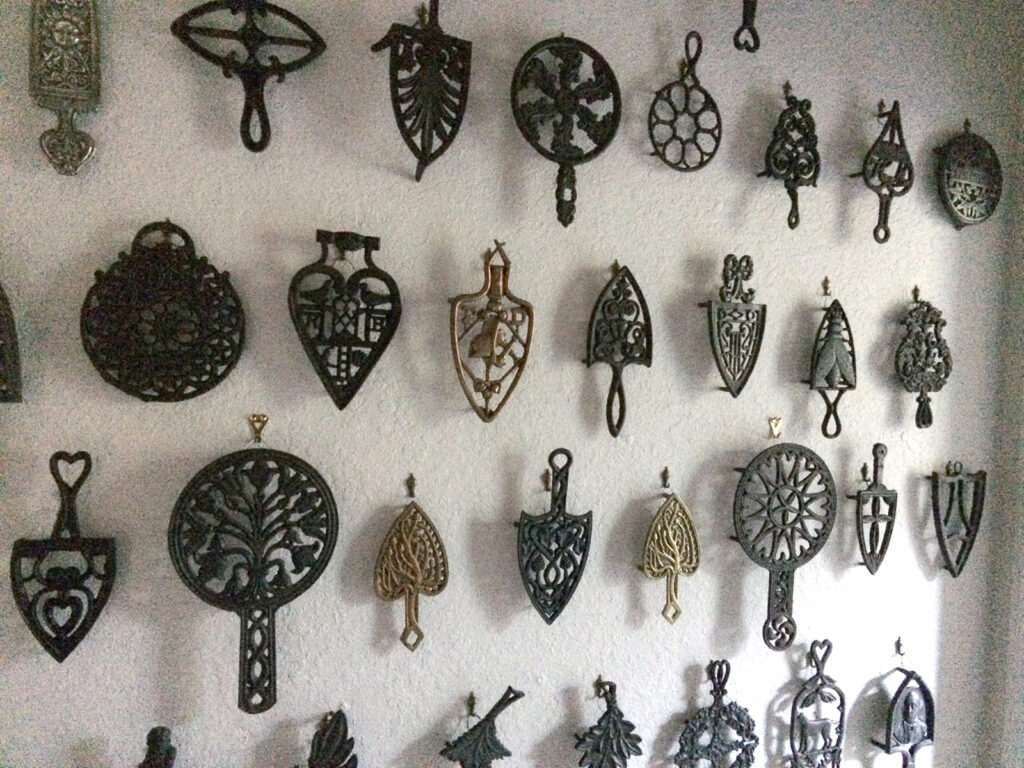
If you’ve ever wondered why trivets are such a popular collectible, the answer is: they’re easy to live with.
A few favorite display options:
- Gallery wall in the kitchen (mix tiles, iron, and novelty shapes)
- Plate stands on open shelving (swap seasonally)
- Shadow boxes for travel collections (especially if you’re pairing with postcards or brochures)
- A “memory wall” by region (New England trips, Southwest parks, coastal towns, etc.)
- Functional decor: keep two or three in rotation on your counter and hang the rest
Trivets are one of those categories where storage and display are practically the same thing—and that’s a big part of the fun.
A quick buying checklist (save this for thrifting days)
When you spot a decorative or souvenir trivet in the wild:
- Is it stable on its feet?
- Any cracks, major chips, or missing pieces?
- Does the design make you smile? (Seriously—this matters.)
- Are there markings that help you identify era or origin?
- Will you use it, display it, or both?
- Is the price fair for condition and charm?
If it checks most of those boxes, you’ve probably found a good one.
Trivets don’t take up much space, but they hold a lot: meals, memories, old kitchens, old roads, and the little everyday details that end up telling the biggest stories.
Let’s Make History—one tabletop at a time.