
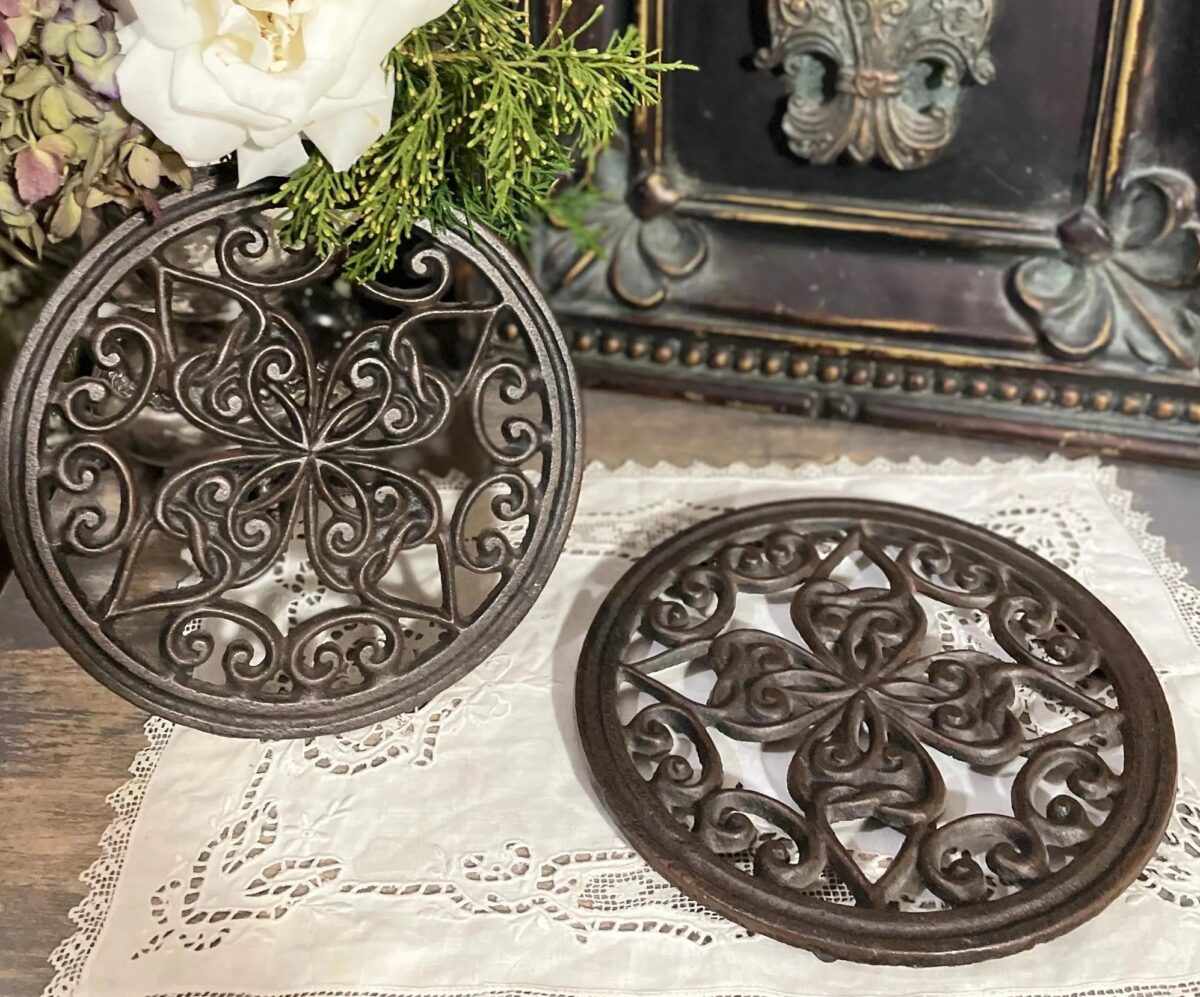
There’s a special kind of collectible that earns its keep. It doesn’t just sit on a shelf looking pretty—it shows up when you’re serving a hot casserole, plating a Dutch oven, or setting a teapot on the table. Trivets live right at that sweet spot where “useful” and “beautiful” overlap, and that’s exactly why so many collectors get hooked.
At first glance, a trivet can seem like a humble household helper—just something that keeps heat off the table. But once you start paying attention, you’ll notice how much design history is hiding in plain sight: scrolling ironwork, geometric Arts & Crafts patterns, playful mid-century motifs, clever advertising, and tilework that looks like it belongs on a gallery wall.
Let’s take a collector’s walk through trivets as functional art—where they came from, why they’re so collectible, and what to look for when you’re hunting.
From Hearth Tool to Tabletop Essential
The word “trivet” is rooted in the idea of three feet—a tripod stand meant to lift a pot or pan above a surface. That origin matters, because trivets didn’t begin as décor. They began as pure problem-solving.
In earlier kitchens—especially hearth kitchens—controlling heat meant managing distance. Cooks used stands and supports to raise cookware above coals or to shift it away from direct flame. Over time, the same basic concept traveled from the hearth to the stove, and eventually to the dining table, where the goal became protecting furniture finishes from scorch marks.
And here’s the fun part: once the trivet moved into the “public” parts of the home (the table, the sideboard, the tea service), design started to matter more. That’s when “functional object” gradually became “functional art.”
Why Trivets Became So Decorative
A trivet is small—but it’s also highly visible. It sits under the star of the show (the serving dish), which means it’s constantly on display during meals and gatherings.
That made trivets a perfect canvas for:
- Ornamental pattern work (especially in cast iron and brass)
- Motifs with meaning (fruit, florals, animals, patriotic symbols)
- Stylized lettering (mottoes, kitchen sayings, advertising)
- Tile imagery (Arts & Crafts, scenic, folkloric, and geometric designs)
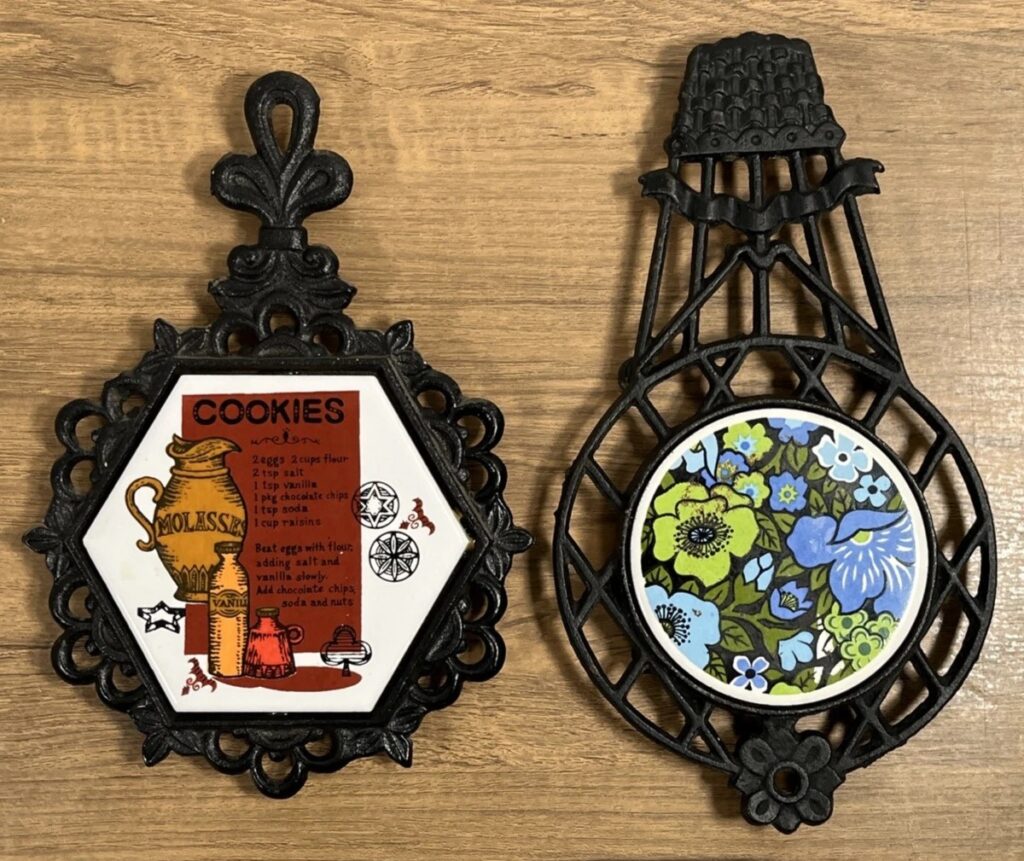
Collectors love them for another reason: trivets often survive. They’re tough. They were made to take heat, weight, and daily use—which means many examples still turn up in antique malls, estate lots, and kitchenware collections.
The Big Categories Collectors Love
Cast Iron Trivets: The Workhorses With Style
If you picture an “antique trivet,” you’re probably picturing cast iron—and for good reason. Many American antique trivets from the 1800s into the early 1900s were cast iron. They were practical, affordable, and easy to produce with repeating patterns.
Cast iron trivets show up in a few common forms:
- Footed tabletop trivets with openwork designs
- Stove-top trivets that raised pots for gentler heating
- Tall “hearth” trivets meant for fireplaces (often with longer legs)
- Iron rests/stands used around laundry and ironing setups
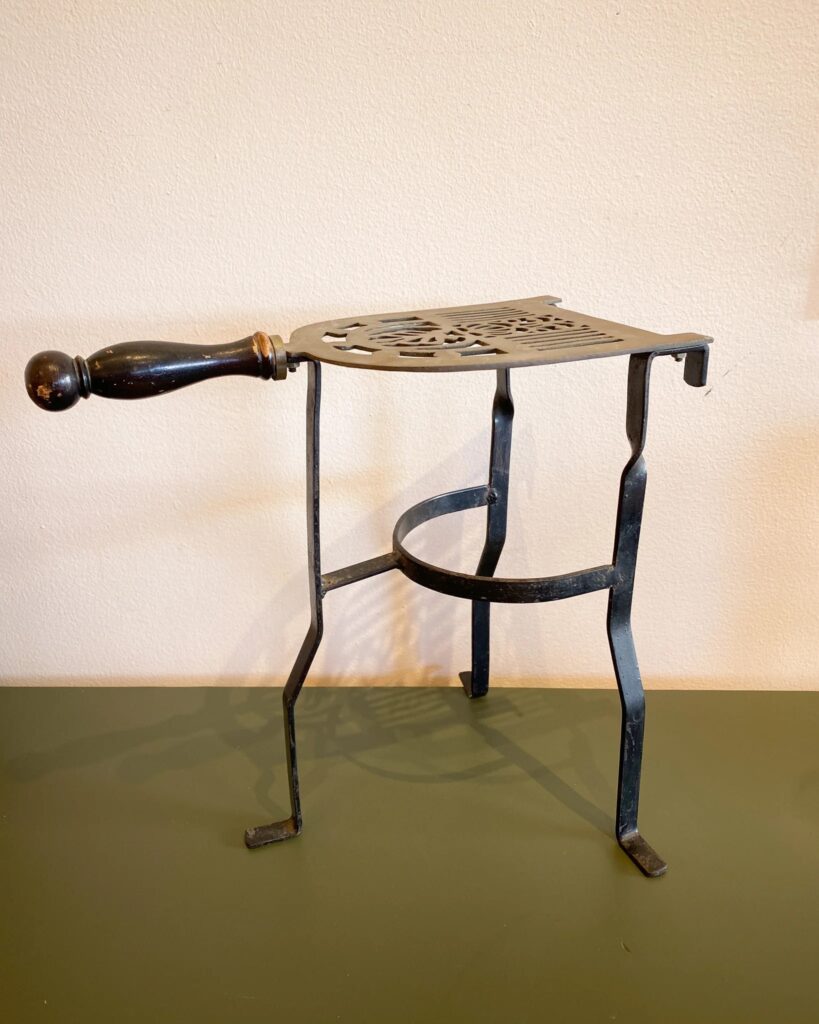
Collector appeal often comes down to pattern. Some designs feel architectural and geometric; others are lacy and Victorian; others lean folksy or patriotic. You’ll also see figural forms—animals, ladies, fruits—where the trivet becomes a tiny sculpture.
What collectors look for
- Crisp, readable design (not worn smooth)
- Feet intact and stable (no wobble)
- No cracks, major repairs, or missing sections
- Original surface/finish when possible (but gentle restoration is common)
Brass, Bronze, and “Golden Glow” Trivets
Brass trivets bring a different vibe—lighter, often more ornate, and sometimes associated with parlor or tea service aesthetics. You’ll see pierced patterns, elegant curves, and occasionally engraved detail.
They can feel “dressier” than cast iron, and they pair beautifully with antique tea sets, samovars, and polished wood furniture.
Collector tip: Brass often shows age through patina and darkening. Many collectors enjoy that mellow look. If you polish, do it carefully and consistently—spotty polishing can look harsher than leaving it alone.
Tile Trivets: When a Hot Pad Becomes a Picture
Tile trivets are where “functional art” becomes unmistakable. These can be ceramic or art tile mounted into a frame or backing (metal, wood, cork, or felt). They often reflect major design movements:
- Arts & Crafts / Mission-style: earthy glazes, stylized nature, medieval-inspired patterns
- Art Nouveau: flowing organic lines, florals, and feminine profiles
- Early 20th-century decorative tiles: scenic, folkloric, geometric, and animal themes
- Mid-century looks: bold color blocks, atomic-era patterns, playful typography
Tile is also a collector-friendly medium because it can be maker-marked, numbered, or associated with specific workshops. Pieces connected to Arts & Crafts studios tend to get special attention, especially when the tilework is high quality and the glazing has depth.
What collectors look for
- No cracks through the tile (hairlines are common, but value depends on severity)
- Minimal glaze loss or chips on corners
- A sturdy backing and intact feet/felt/cork
- Clear maker marks when present
Trivets With a Second Job: The Sad Iron Stand
One of the most interesting “functional art” crossovers is the trivet used in ironing—specifically as a stand for a sad iron (the old style of flat iron heated on a stove).
A heated iron needed a safe place to rest between passes. Trivet-like stands helped protect surfaces and kept the iron stable. Some were very plain, but many were decorative cast iron with a strong silhouette—because even utility objects could be made attractive.
This category can be especially fun for collectors who like items with a clear household story: you can picture it in use.
How to Tell Age, Quality, and Authenticity
Trivets are widely reproduced, and some reproductions are honestly charming—but if you’re buying as an antique or paying antique pricing, you’ll want to slow down and look closely.
Here are practical clues collectors use.
1) Check the casting and finish
Older cast iron often shows:
- Smooth wear on high points from years of use
- A surface that looks “worked in,” not freshly coated
- Patina in crevices where hands and heat didn’t constantly touch
Modern reproductions may look:
- Too crisp with no softening of edges
- Uniformly coated in a shiny paint-like finish
- Rough in odd ways (pitting that doesn’t match natural wear)
2) Look underneath
Feet, screw holes (for framed tile trivets), and backs can tell a story.
- Are the feet evenly worn?
- Do the screws look period-appropriate for the piece?
- Is the backing aged in a believable way, or brand-new?
3) Markings help—but don’t obsess
Some trivets are clearly marked with a maker or pattern number. Others aren’t marked at all. Marked doesn’t automatically mean “better,” but it can help with identification and dating.
4) Trust the “feel” test
This sounds vague, but collectors know it’s real: quality trivets feel stable. They sit flat. The materials make sense. The design is balanced for weight and heat.
Decorating With Trivets Without Turning Your Home Into a Museum
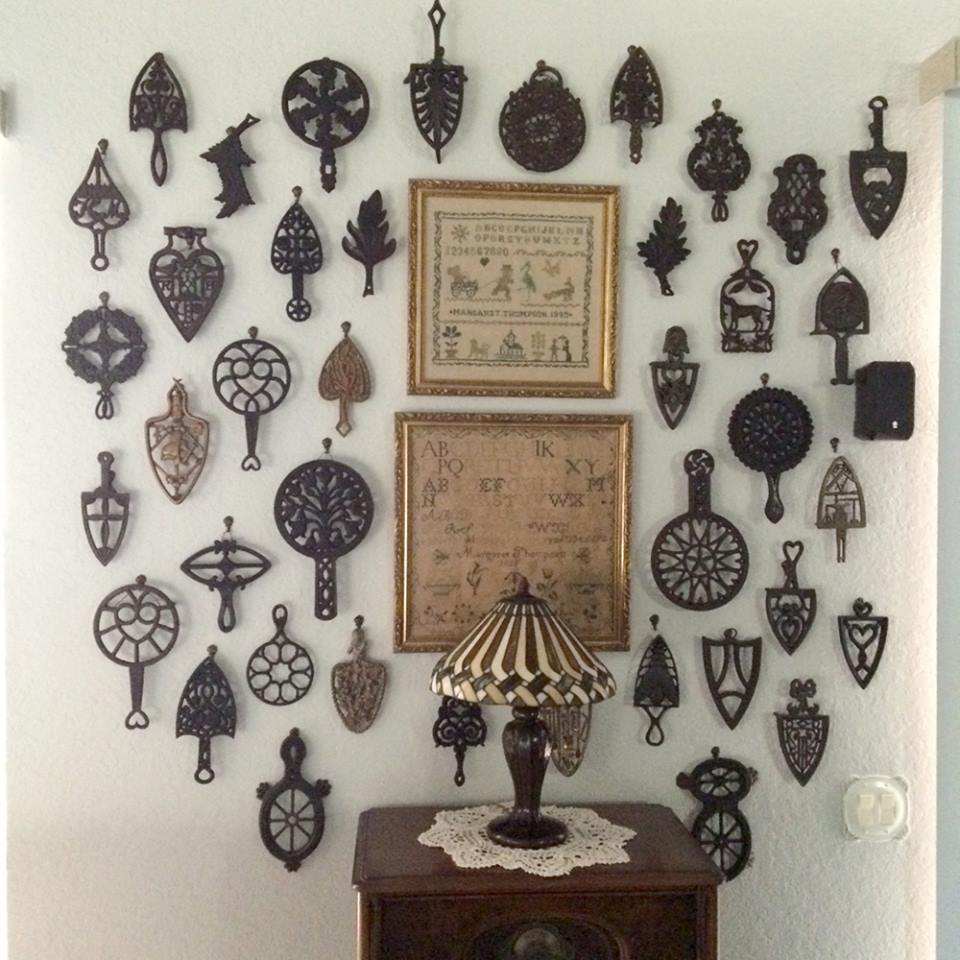
One reason trivets are so beloved is that they display beautifully—without taking up much space.
A few easy, collector-friendly ways to show them off:
- Lean tile trivets on open shelves like small framed art
- Hang cast iron trivets in a kitchen vignette (they look great in groups)
- Use brass trivets on a bar cart under decanters or serving pieces
- Rotate seasonal designs—harvest motifs in autumn, florals in spring
- Create a “working collection”: display them, but actually use them
Functional art should get to function, after all.
Care Tips: Keep Them Beautiful (and Safe to Use)
Cast iron
- Keep dry; moisture is rust’s best friend
- If you wash, dry immediately and thoroughly
- A very light coat of oil can help stabilize the surface
- Avoid aggressive wire-brushing unless you’re intentionally restoring
Brass/bronze
- Decide whether you love patina or prefer shine
- If polishing, use a gentle method and don’t overdo it
- Avoid harsh abrasives that can scratch or remove detail
Tile and ceramic
- Don’t soak for long periods
- Be gentle around edges and corners (chips happen there first)
- Make sure backing and feet are intact before using on fine furniture
What Makes a Trivet “Collectible” (Not Just Old)
Not every old trivet is rare—but many are collectible because they check at least one of these boxes:
- Strong design (you’d display it even if it weren’t useful)
- Clear connection to a design movement (Arts & Crafts, Art Nouveau, etc.)
- A maker, mark, or identifiable workshop
- A theme collectors chase (animals, fruit, advertising, holiday motifs)
- Excellent condition with honest age
And the truth is—sometimes you just fall in love with one. That’s the best reason of all.
The Collector’s Takeaway
Trivets are proof that everyday life has always had room for artistry. Whether it’s a heavy cast iron piece that once lived near a hearth, a brass stand that elevated tea service, or a tile trivet that feels like a miniature painting, these objects were built to be used—and designed to be seen.
If you’re building a collection, start with what you’re drawn to: ironwork patterns, tile imagery, specific eras, or simply “the ones that make you smile.” The best collections usually begin with a practical purchase that turns into a fascination.
Let’s Make History—one hot dish at a time.