
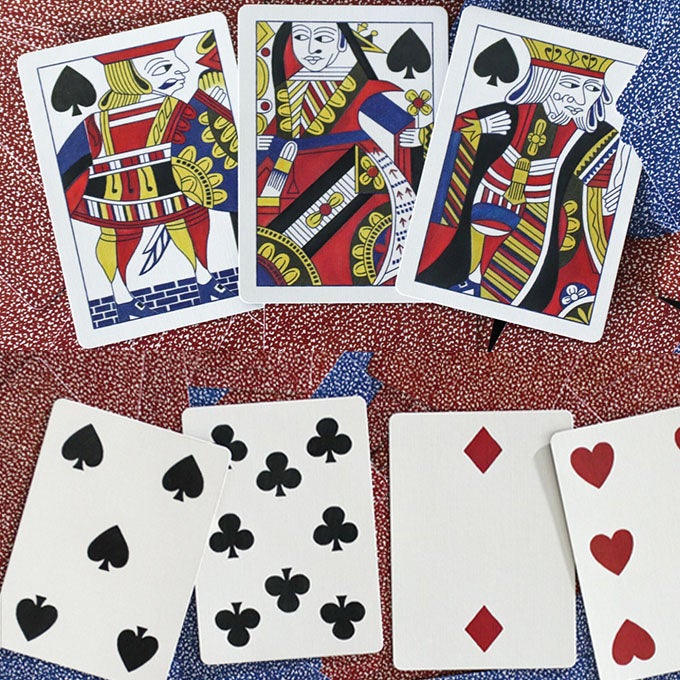
Playing cards have always lived two lives. On one hand, they are harmless household entertainment: euchre at the kitchen table, solitaire on a quiet afternoon, bridge night with friends, a deck tucked into a travel bag “just in case.” On the other hand, they have a long association with risk, saloons, gaming rooms, card sharps, riverboats, and the thrill of a wager.
That tension is exactly what makes gambling and Americana decks so collectible. They are small paper objects that carry big cultural stories: frontier mythology, casino design, American manufacturing, patriotic imagery, advertising, family game nights, and the visual language of luck itself.
For collectors, this category can be approached in many ways. Some people hunt for casino-used decks. Others love Old West and faro-related designs. Some collect patriotic or regional Americana decks, while others focus on classic American brands like Bicycle, Bee, Tally-Ho, and Congress. Wherever you begin, gambling and Americana decks are a reminder that playing cards are never just cards. They are objects of play, chance, identity, and memory.
Cards, Chance, and American Leisure
Card games came to North America before the United States existed, but American playing card culture developed its own character over time. Imported decks, early domestic production, regional games, social clubs, and gambling establishments all shaped what people used and saved.
By the 19th century, cards were part of both respectable and questionable entertainment. They appeared in parlors and taverns, military camps and riverboats, hotels and gaming halls. The same deck could be used for a quiet family game or a high-stakes wager.
That dual purpose is part of the appeal. Gambling decks and Americana decks let collectors explore the blurry line between ordinary recreation and risk-taking culture.
Faro, Poker, and the Old West Imagination
When people picture gambling in the Old West, they often imagine poker. Poker certainly belongs to the story, but collectors should know that faro was one of the most important gambling games associated with 19th-century American gaming rooms and saloons.
Faro was played with a single deck, often using a layout on the table rather than players holding hands in the modern poker sense. It became strongly linked with professional gambling, saloon culture, and the phrase “bucking the tiger,” a nickname tied to faro imagery and gambling-house advertising.
For collectors, faro-related material can include:
- Squared-corner or faro-style decks
- Layouts and gaming-table ephemera
- Gambling chips and counters
- Advertising or saloon-related paper
- Reproduction decks made for historic interpretation
True period faro decks and gambling artifacts can be scarce and expensive, but they make a fascinating collecting lane because they connect cards to a very specific American mythology: the saloon table, the professional dealer, and the public performance of chance.
Classic American Card Brands
American playing card collecting often overlaps with brand collecting. Some names became household staples, while others were marketed toward more specialized uses.
Bicycle
Bicycle playing cards were introduced in the 1880s and became one of the most recognizable American playing card brands. For collectors, Bicycle decks are appealing because they exist across many eras, back designs, box styles, seals, and special editions.
Common collector angles include:
- Back design variations
- Older boxes and seals
- Tax-stamped decks
- Specialty game decks
- Advertising or commemorative Bicycle issues
Because Bicycle is so well known, it is also heavily reproduced and reinterpreted. That makes careful dating and condition checking especially important.
Bee
Bee cards are strongly associated with casino and gambling use, partly because of their borderless diamond-back style. Casino decks often use custom backs, logos, cancellations, or cuts to show they are no longer in active play.
Collectors often look for:
- Casino-used Bee decks
- Sealed older Bee decks
- Custom casino backs
- Canceled decks with drilled holes or clipped corners
- Decks with original boxes and tax stamps
Tally-Ho and Congress
Tally-Ho has a strong following among card collectors, magicians, and design-focused collectors. Congress decks are often associated with attractive decorative backs, bridge sets, gift boxes, and more refined social card play. Both can fit beautifully into an Americana collection depending on the theme.
A collector might build a “classic American makers” shelf with one strong example from each major brand, then add supporting pieces like boxes, jokers, inserts, and advertising.
Casino Decks: Used, Canceled, and Still Collectible
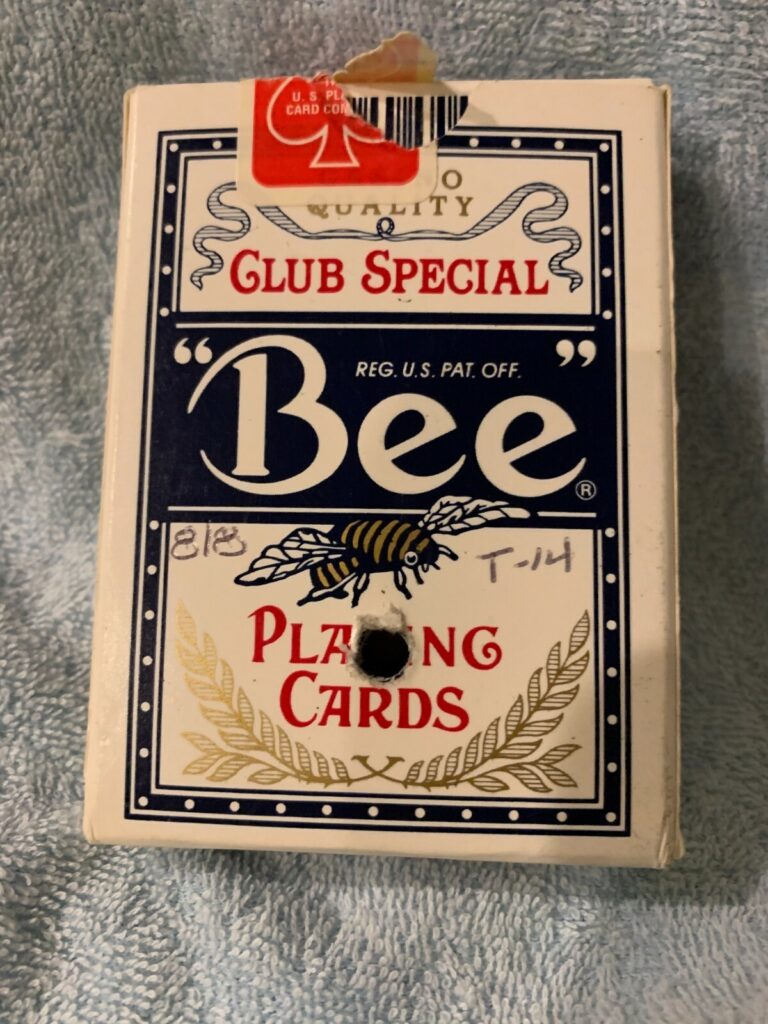
Casino decks are one of the most accessible gambling-related playing card categories. Casinos typically retire decks after use, and many are canceled before being sold or given away. Cancellation methods may include drilled holes, cut corners, notched edges, or other marks that prevent the cards from being returned to live play.
Collectors like casino decks because they often provide:
- A clear place connection
- Bold logos and graphic backs
- A link to gambling history without needing rare 19th-century material
- Affordable entry points into the category
Condition still matters. A casino-used deck may show handling, but it should still be complete unless the seller clearly states otherwise. The box, jokers, rules cards, advertising cards, or casino inserts can add interest.
If you collect by place, casino decks are a natural fit. You might focus on Las Vegas, Atlantic City, riverboat casinos, tribal casinos, cruise ships, or closed casinos that now carry extra nostalgia.
Americana Decks: Patriotism, Travel, Advertising, and Everyday Life
Not every collectible American deck is gambling-related. “Americana decks” can include any playing cards that reflect American identity, places, businesses, leisure, or popular culture.
Popular Americana themes include:
- Patriotic decks with flags, eagles, presidents, or national symbols
- State and city souvenir decks
- National park and roadside attraction decks
- Railroad, airline, hotel, and travel decks
- Advertising decks for banks, gas stations, breweries, insurance companies, and local businesses
- Military or wartime-themed decks
- Folk, Western, cowboy, and frontier imagery
These decks are often charming because they were made to be used, given away, or brought home as souvenirs. A deck from a hotel, resort, local bank, or roadside attraction may not be rare in the high-end sense, but it can be wonderfully collectible if it captures a place and time.
Tax Stamps, Seals, and Dating Clues
Older American decks often include packaging clues that help collectors estimate age. Tax stamps and seals are especially useful, though they should be treated as clues rather than absolute proof.
Things to look for include:
- U.S. Internal Revenue stamps on sealed packages
- Company seals or later stamp-like closures
- Box typography and address information
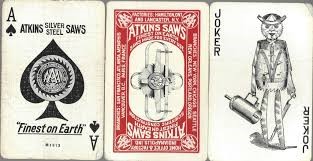
- Ace of spades details
- Joker style and number of jokers
- Rule cards, inserts, or score pads
- Barcodes on later packaging
A sealed deck with an intact tax stamp can be very appealing, but collectors should remember that packaging can outlast the exact period of card production, and old stock was sometimes sold later. Still, seals, stamps, and box design are some of the best tools for understanding a deck’s era.
What Collectors Look For
Whether you are buying gambling decks, casino decks, or Americana decks, the same practical questions apply.
Completeness
A complete deck is usually more desirable than a partial one. Check for all expected cards, jokers, extra advertising cards, instruction cards, and original packaging.
Condition
Playing cards were meant to be handled, so light wear is normal. Watch for:
- Heavy staining
- Warping
- Water damage
- Torn or creased cards
- Missing cards
- Musty odor
- Box crushing or split corners
Context
The more a deck tells you about place, purpose, maker, or era, the more interesting it becomes. A generic deck can be attractive, but a deck tied to a casino, town, hotel, event, or brand has an added story.
Display value
Great backs, bold jokers, unusual court cards, and strong box art can make a deck display-worthy even if it is not especially rare.
Building a Coherent Collection
This category can get broad quickly, so focus helps.
Try one of these lanes:
- Casino and gambling decks: casino-used decks, faro-inspired decks, poker-related material
- American brand history: Bicycle, Bee, Tally-Ho, Congress, and related makers
- Patriotic Americana: flags, presidents, eagles, military and civic themes
- Travel Americana: hotels, airlines, railroads, roadside attractions, national parks
- Local business advertising: banks, stores, restaurants, gas stations, community businesses
- Old West and frontier imagery: cowboy, saloon, Western, and “bucking the tiger” themes
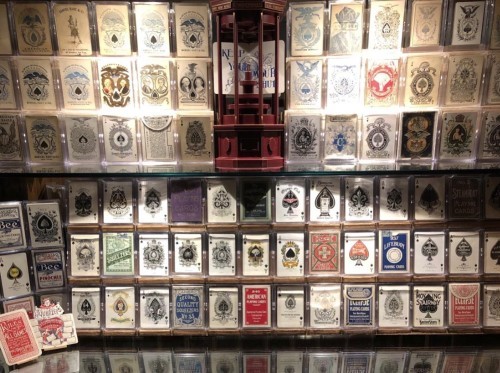
A strong collection does not need to include everything. In fact, it usually looks better when it doesn’t. One well-defined lane can turn a shoebox of decks into a story.
Care and Storage Tips
Playing cards are paper collectibles, so they need simple but consistent care.
- Store decks in their boxes when possible.
- Avoid rubber bands, which can dent and stain cards.
- Keep decks dry and away from damp basements or hot attics.
- Store loose cards in archival sleeves or acid-free envelopes.
- Keep display decks out of direct sunlight to prevent fading.
- Handle sealed decks carefully; broken seals can affect collector interest.
- If displaying cards, consider using lower-value examples and rotating them occasionally.
For casino decks and modern souvenir decks, gentle handling is usually enough. For older tax-stamped or fragile paper decks, treat them more like ephemera than game-night supplies.
A Gentle Collector’s Checklist
Before buying a gambling or Americana deck, ask:
- Is the deck complete?
- Does it include the original box, jokers, inserts, or tax stamp?
- Does the theme fit my collection: gambling, casino, patriotic, travel, advertising, or brand history?
- Is the condition stable enough for storage and display?
- Does the deck have a clear place, maker, casino, or historical connection?
- Am I paying for verified age and rarity, or mainly for visual appeal?
Gambling and Americana decks remind us that playing cards are more than game pieces. They are small portraits of American leisure—part risk, part design, part souvenir, and part story.
Let’s Make History—one winning hand at a time.