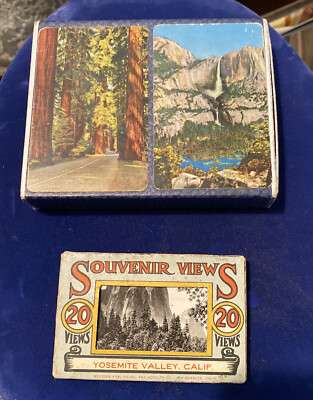
Some playing cards were made for the game table. Others were made to travel.
Souvenir and advertising decks are among the most charming corners of playing card collecting because they are small, practical, and full of place-based personality. They can remind you of a long-gone hotel, a favorite vacation spot, a railroad line, a local bank, a state fair, an airline route, or a business that wanted its name sitting in someone’s kitchen drawer for years.
That is the real genius of these decks: they were useful enough to keep. A postcard might be tucked into an album, and a brochure might be thrown away, but a deck of cards could stay in circulation for decades. Every time someone dealt a hand of rummy or bridge, the sponsor’s name, city view, tourist attraction, or company logo came back out onto the table.
For collectors, souvenir and advertising decks offer a perfect mix of paper ephemera, graphic design, local history, and everyday nostalgia.
Why Souvenir and Advertising Decks Are So Collectible
At first glance, a souvenir deck may seem like a simple novelty. But look closer and it becomes a pocket-sized time capsule.
These decks can tell us:
- Where people traveled
- What businesses wanted remembered
- How cities and attractions promoted themselves
- What design styles were popular in a given era
- How advertising moved into everyday household objects
They are also wonderfully accessible. Many souvenir and advertising decks are still affordable, especially compared with rare antique playing cards or major casino decks. That makes them a great collecting category for people who enjoy history but do not necessarily want to spend heavily.
A deck from a local motel, an airline, a state park, or a regional business may not be rare in a museum sense—but if it captures a place, time, or story you care about, it can be a deeply satisfying collectible.
Souvenir Decks: Travel You Can Shuffle
Souvenir playing cards became popular because they made sense as travel keepsakes. They were compact, useful, easy to pack, and more interactive than a simple postcard. A family could buy a deck on vacation, use it during the trip, then bring it home as a reminder of where they had been.
Common souvenir deck themes include:
- City skylines and landmark buildings
- State maps, flags, flowers, birds, or regional symbols
- National parks and scenic views
- Tourist attractions and roadside stops
- Resorts, hotels, and motels
- Ocean liners, railroads, airlines, and cruise ships
- Historical sites and museums
Some decks feature one repeated image on the back. Others include different images on the faces, turning the deck into a small photo album. These multi-view decks are especially fun because they combine a card game with a miniature travel brochure.
Collector tip: if you love place-based collecting, souvenir decks are one of the easiest ways to build a collection around a town, state, region, or travel theme.
Advertising Decks: The Business Card That Became a Game
Advertising decks are exactly what they sound like: playing cards made to promote a company, product, service, event, or organization. They were often given away to customers, sold as promotional goods, or used as practical branded items in offices, hotels, restaurants, and travel settings.
Popular advertising categories include:
- Banks and insurance companies
- Gas stations and oil companies
- Breweries and beverage companies
- Hotels, restaurants, and resorts
- Railroads, airlines, and bus lines
- Agricultural and seed companies
- Hardware stores and local businesses
- Political campaigns and civic organizations
- Trade shows and corporate events
The appeal is partly visual, but it is also historical. Advertising decks preserve businesses that may not exist anymore. A deck from a local hardware store or regional hotel can be one of the few surviving pieces of everyday commercial history from that place.
Railroads, Airlines, and the Golden Age of Travel
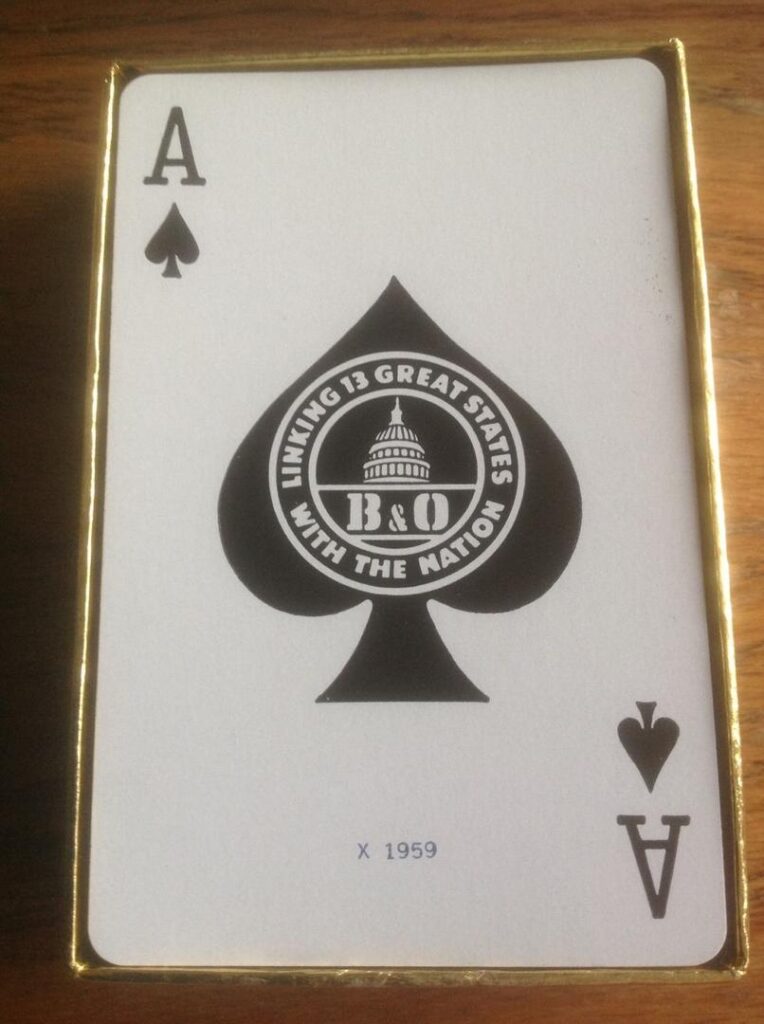
Travel-related decks deserve their own spotlight because they combine two strong collecting lanes: transportation and playing cards.
Railroad and airline decks were practical. Travelers had long stretches of time to fill, and card games were portable entertainment. A deck branded with a railroad, airline, steamship line, or hotel chain worked as both amusement and advertising.
Collectors often look for:
- Railroad line names and logos
- Airline insignia and route-era branding
- Ocean liner or cruise ship decks
- Hotel and resort decks from well-known destinations
- Scenic backs showing landmarks or transportation imagery
- Original boxes, score pads, or inserts
These decks can be displayed beautifully alongside timetables, luggage labels, postcards, menus, or travel brochures. A single deck becomes much more interesting when paired with related ephemera from the same route, city, or travel era.
Local Business Decks: Small-Town History in a Box
Some of the most delightful advertising decks are not from famous companies at all. They are from local businesses:
- The town bank
- The neighborhood pharmacy
- A motel along the highway
- A real estate office
- A funeral home
- A lumber yard
- A farm supply store
- A restaurant that “everyone used to go to”
These decks are often overlooked because they are not glamorous. But from a collector’s perspective, they can be fantastic. They preserve names, addresses, phone numbers, slogans, and graphic choices that might otherwise disappear.
Local decks are also excellent for regional collections. If you collect New Jersey, Pennsylvania, roadside Americana, small-town advertising, or local business ephemera, advertising decks can add depth without taking up much space.
What Collectors Look For
Souvenir and advertising decks are common enough that condition and completeness matter, but interesting enough that there is room for flexibility.
Completeness
A complete deck is usually preferred. Check for:
- All 52 standard cards
- Jokers, if originally included
- Extra advertising cards
- Instruction cards or score cards
- Original box or case
Some promotional decks include unusual extras, so compare what is present with similar examples when possible.
Box and packaging
The box is often part of the advertising. A plain deck with a great box can still be very collectible, especially if the box carries the business name, location, slogan, or artwork.
Look for:
- Clear graphics
- Stable corners
- Readable text
- Original tax stamps or seals on older decks
- Minimal crushing or tearing
Graphic appeal
A deck does not have to be rare to be display-worthy. Strong typography, bold colors, attractive backs, unusual jokers, or great local advertising can make an ordinary deck worth saving.
Place and story
A deck tied to a specific location, attraction, or business often has more charm than a generic deck. Collectors love pieces that answer basic questions: Where was this from? Who used it? What was it promoting?
Dating Clues: How to Read a Deck
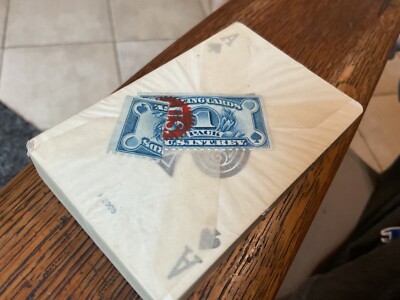
Dating souvenir and advertising decks is not always exact, but there are clues.
Look for:
- ZIP codes, which became standard in U.S. addressing in the 1960s
- Phone number formats, especially older exchange names or shorter numbers
- Barcodes, which indicate later commercial packaging
- Tax stamps or seals on older sealed decks
- Company names or logos that changed over time
- Travel branding tied to specific airline, railroad, or hotel eras
- Paper quality, printing style, and box design
A deck does not need a precise year to be collectible, but narrowing it to a decade can help you understand its place in a collection.
Building a Coherent Collection
Because souvenir and advertising decks cover so many subjects, focus helps.
Try one of these collecting lanes:
Place-based
Collect decks from one state, city, region, or travel route.
Examples:
- New Jersey shore towns
- Pennsylvania Dutch Country
- Las Vegas hotels
- National parks
- Route 66 attractions
Business category
Collect by type of advertiser.
Examples:
- Banks and insurance
- Hotels and motels
- Breweries and beverage brands
- Railroads and airlines
- Local restaurants
Visual theme
Collect decks for their design.
Examples:
- Mid-century typography
- Scenic photography
- Patriotic graphics
- Roadside Americana
- Novelty jokers
Pairing with related ephemera
This is one of the best ways to make a deck collection feel curated. Pair a deck with:
- A postcard from the same attraction
- A hotel key tag
- A matchbook
- A brochure
- A menu
- A luggage label
- A timetable
A small grouping can tell a complete story on a shelf or in a display case.
Care and Storage Tips
Playing cards are paper collectibles, so their biggest enemies are moisture, sunlight, pressure, and rough handling.
Good habits include:
- Store decks in their original boxes when possible.
- Avoid rubber bands, which can dent cards and stain edges.
- Keep decks away from damp basements and hot attics.
- Store fragile or loose cards in archival sleeves or acid-free envelopes.
- Keep display decks out of direct sunlight.
- Do not over-clean cards; surface wear is part of their life.
- Store boxes carefully so corners do not collapse.
If you display cards, consider using lower-value duplicates or rotating what is on display. The best deck in your collection should not spend years fading in a sunny room.
A Gentle Collector’s Checklist
Before buying a souvenir or advertising deck, ask:
- Is the deck complete?
- Does it have the original box?
- Are jokers, inserts, or extra advertising cards included?
- Does the deck connect to a place, business, route, or theme I collect?
- Is the condition stable enough for storage and display?
- Does the graphic design make it interesting even if it is not rare?
- Can I pair it with related ephemera to tell a fuller story?
Souvenir and advertising decks prove that good collecting does not always require large objects or expensive finds. Sometimes history fits neatly in a box small enough to hold in your hand.
Let’s Make History—one souvenir shuffle at a time.