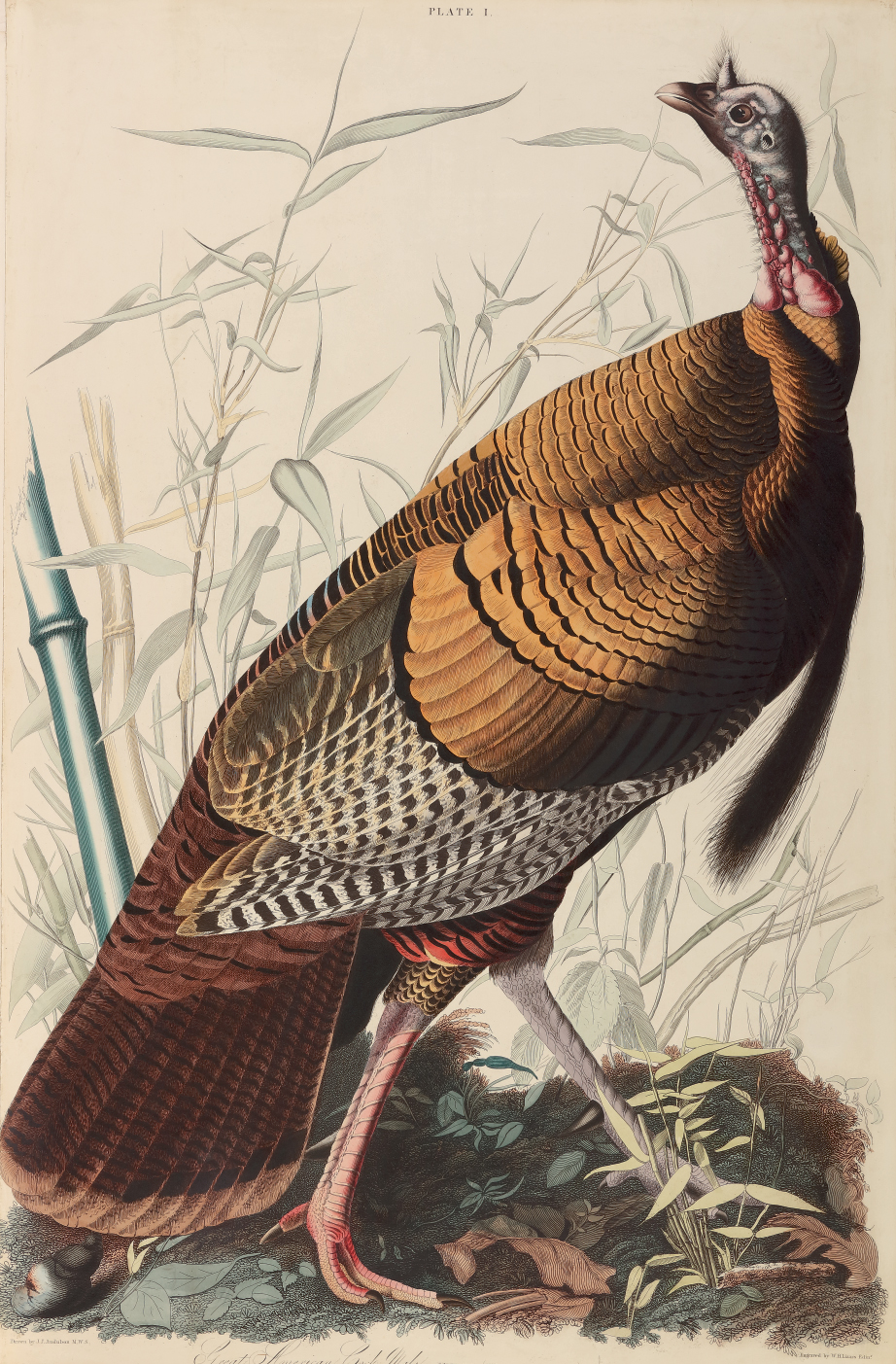
Wildlife prints have a special kind of pull for collectors. They are decorative, yes—but they are also records of curiosity. Long before photography made animal images easy to reproduce, artists and naturalists had to observe, sketch, describe, engrave, print, and hand-color the creatures they studied. A bird on a branch or a butterfly on a leaf was not just pretty wall art. It was a way of sharing knowledge.
In that world, few names loom larger than John James Audubon. His dramatic bird images helped shape how generations imagined American wildlife: full of motion, personality, and grandeur. But Audubon was not working in a vacuum. He belonged to a much longer tradition of natural history art—one that included explorers, engravers, botanists, ornithologists, publishers, and colorists who turned nature into prints collectors still admire today.
Wildlife art before photography
Before cameras, printed wildlife images served several purposes at once. They helped scientists identify species, allowed readers to see animals they might never encounter, and brought the natural world into libraries, parlors, classrooms, and studies.
Early wildlife art often appeared in books rather than as standalone wall prints. These volumes could include birds, insects, mammals, reptiles, plants, and landscapes. The images were usually created through engraving, etching, wood engraving, or lithography, then sometimes finished by hand with watercolor.
That handmade color is one reason early natural history prints still feel alive. Even when the same plate was printed multiple times, each hand-colored impression could have small variations.
The naturalist-artist tradition
The best early wildlife artists were often part scientist, part traveler, part illustrator, and part storyteller. They needed to show enough accuracy to be useful, but also enough beauty to capture attention.
A few important figures helped shape the tradition Audubon inherited:
Maria Sibylla Merian
Maria Sibylla Merian, working in the late 17th and early 18th centuries, is remembered for her detailed studies of insects, plants, and metamorphosis. Her 1705 work on the insects of Suriname combined careful observation with beautiful composition. For collectors, her work is a reminder that natural history art was never only about birds or large animals. Insects, flowers, and life cycles were also part of the visual record of nature.
Mark Catesby
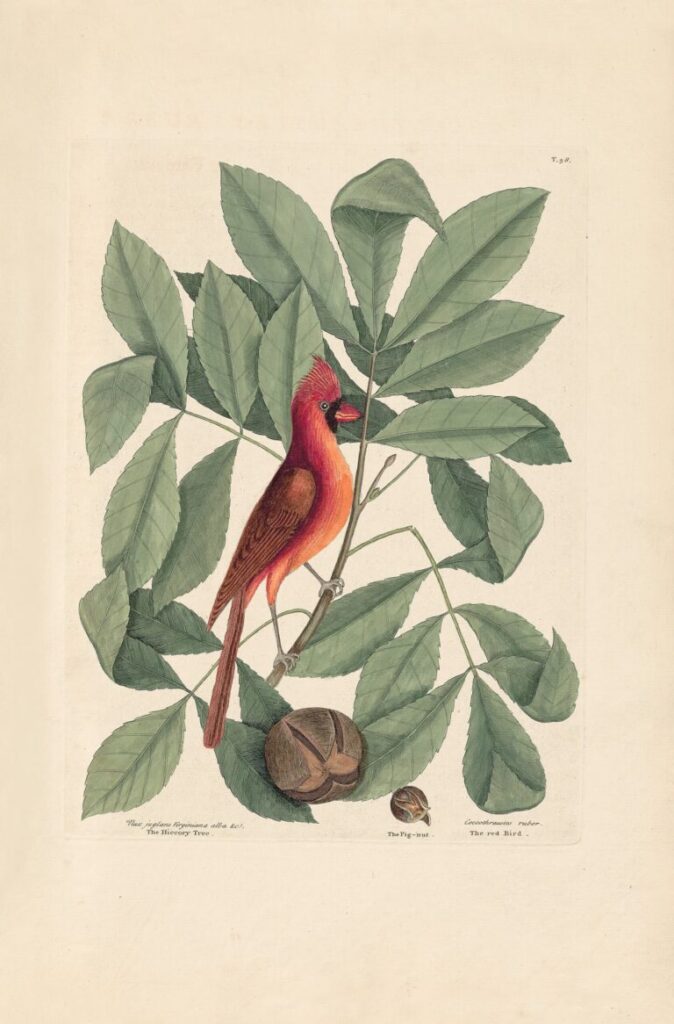
Mark Catesby’s illustrated work on the natural history of Carolina, Florida, and the Bahama Islands became one of the major early printed records of southeastern North American wildlife and plants. His plates often paired animals with plants, giving viewers a richer sense of environment. That pairing—bird and branch, snake and foliage, insect and flower—became part of the visual language of natural history prints.
Thomas Bewick
In Britain, Thomas Bewick became famous for his wood engravings of birds and animals. His work showed that wildlife art did not always need to be large and luxurious to be memorable. Small, sharply observed images could carry enormous charm, especially when printed in books meant for a wider audience.
Alexander Wilson
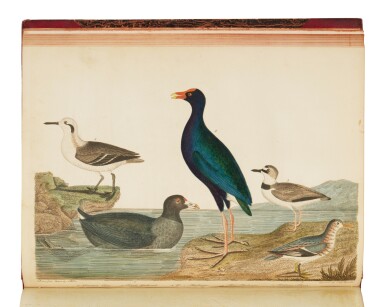
Alexander Wilson’s American Ornithology, published in the early 19th century, was a major achievement in American bird illustration before Audubon’s great project appeared. Wilson’s work helped establish ornithology in the United States and gave readers a structured visual record of American birds.
Audubon would eventually become the more famous name in popular memory, but Wilson remains essential to the story.
John James Audubon: drama, scale, and movement
John James Audubon’s great work, The Birds of America, was published in London between 1827 and 1838. It contained 435 hand-colored plates and was issued in the enormous “double elephant folio” format, allowing many birds to be shown at or near life size.
That scale mattered. A heron, eagle, flamingo, or swan could dominate the page with a presence that smaller books simply could not match. Audubon’s birds often twist, hunt, feed, call, or interact with one another. Compared with many earlier static natural history images, they feel theatrical.
For collectors and art lovers, this is part of Audubon’s continuing appeal. His prints are not merely identification images. They are compositions.
How Audubon prints were made
Audubon’s original watercolors were translated into printed plates through a complex publishing process. Engravers and printers played a major role, especially Robert Havell Jr., whose name is closely tied to the most famous edition of The Birds of America.
The process generally involved:
- preparing an engraved or etched plate based on Audubon’s artwork
- printing the image on large sheets of paper
- applying color by hand
- issuing the prints as part of a subscription publication
This means original Audubon prints are not simply “copies” in the modern sense. They are part of a collaborative 19th-century printmaking process involving artist, engraver, printer, publisher, and colorist.
Audubon’s complicated legacy
It is possible to recognize Audubon’s artistic influence while also acknowledging that his personal legacy is morally complicated. Historical research has brought increased attention to his racism, his ownership and sale of enslaved people, and his opposition to abolition.
For collectors, this does not erase the importance of The Birds of America in wildlife art history, but it does encourage a fuller view. The prints matter. The artistry matters. The history also matters.
Objects are often most meaningful when we allow them to carry the whole story—not only the beautiful parts.
Early wildlife prints as collectibles
Most collectors will not encounter an original double elephant folio Audubon print casually. Original Havell-edition Audubon prints are valuable and usually handled through specialized dealers, auctions, and institutions. But the wildlife print field is much broader than that.
Collectors may find:
- later Audubon editions and reproductions
- 19th-century and early 20th-century bird prints
- botanical and insect prints
- book plates removed from natural history volumes
- chromolithographs and educational prints
- modern decorative reproductions of historic wildlife art
Each category has its own appeal. Some collectors want original antique prints. Others prefer affordable decorative examples that capture the look of early wildlife art without the high cost.
What collectors should look for
When evaluating wildlife prints, start with the basics.
Image quality
Look for clear lines, strong detail, and pleasing color. In older hand-colored prints, the color should feel integrated with the image rather than sitting awkwardly on top of it.
Paper condition
Common issues include foxing, toning, mat burn, stains, tears, and trimming. A little age is expected. Heavy damage, poor framing, or severe fading can reduce both value and display appeal.
Margins and plate marks
For engraved or etched prints, margins can matter. A visible plate mark—the impression left by the printing plate—can be a useful feature. Trimmed margins may affect value, especially for more desirable prints.
Text and page source
Many wildlife prints were originally book plates. Sometimes that is perfectly acceptable, especially if the print was already separated long ago. Collectors should still understand whether they are buying a standalone print, a book plate, a later reproduction, or a modern decorative print.
Framing quality
Old framing is not always good framing. Watch for acidic mats, direct contact with glass, moisture damage, and fading from sunlight. A beautiful wildlife print deserves archival materials and protection from direct light.
Original, later edition, or reproduction?
This is one of the most important questions in wildlife print collecting.
An original antique print was made during the period of the original publication or edition. A later edition may still be old and collectible, but it was produced after the first issue. A reproduction may be recent and decorative rather than antique.
None of these are automatically bad. The problem comes when a reproduction is presented as something older or rarer than it is.
When shopping, ask:
- What edition or publication is it from?
- Is it hand-colored, printed in color, or modern reproduction?
- What is the paper like?
- Are there publisher marks, plate numbers, or text on the back?
- Has it been trimmed?
The more expensive the piece, the more documentation matters.
Displaying wildlife prints at home
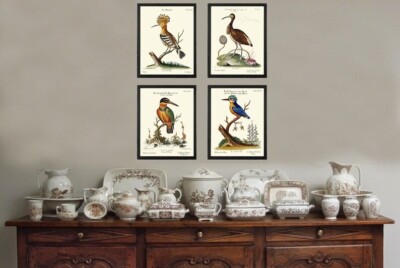
Wildlife prints are wonderfully displayable because they work in so many spaces. A single bird print can feel classic in a study, cheerful in a kitchen, or serene in a bedroom. A group of smaller prints can create the feeling of an old naturalist’s cabinet.
Good display ideas include:
- a pair of bird prints hung symmetrically
- a gallery wall mixing birds, botanicals, and insects
- a single large statement print over a mantel or desk
- small framed book plates in a hallway
- seasonal rotations: songbirds in spring, waterfowl in autumn
Use mats and frames that let the artwork breathe. Wildlife prints often have delicate linework, so crowding them with heavy frames can overpower the image.
Why early wildlife art still speaks to collectors
Early wildlife art sits at the meeting point of science, travel, printmaking, and decoration. It reminds us of a time when seeing a printed image of a bird or animal could feel like discovery. Audubon gave that tradition drama and scale, but he was part of a much wider story—one shaped by many artists and naturalists who tried to make the living world visible on paper.
For collectors, that is the real magic. A wildlife print is not just a bird, butterfly, or fox in a frame. It is a record of looking closely.
Let’s Make History—one wild print at a time.