
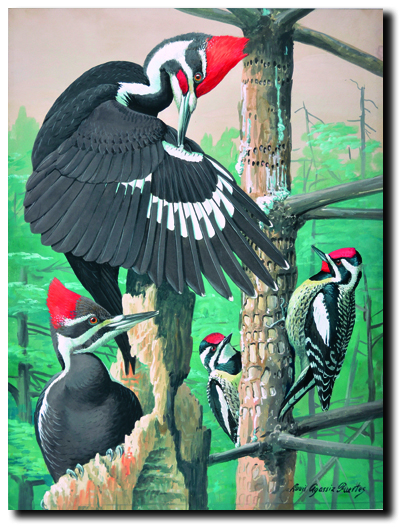
By the 20th century, wildlife art had changed dramatically. It was no longer only the world of grand natural history folios, engraved plates, and luxury books. Wildlife images appeared in field guides, museum dioramas, conservation posters, magazine illustrations, duck stamps, limited-edition prints, and home décor.
That shift matters for collectors. A 20th-century wildlife print may not have the age of an early Audubon-era engraving, but it can carry just as much cultural meaning. These works reflect a century when more people were birdwatching, visiting national parks, supporting conservation, decorating with nature themes, and learning to identify wildlife in the field.
In short, wildlife art moved from the rare book room into everyday life—and collectors are still following the trail.
From Natural History Plate to Field Guide
Early wildlife art often focused on documentation: showing a species clearly enough for study. In the 20th century, that scientific purpose remained, but it became more public and portable.
Field guides changed the way people interacted with wildlife images. Instead of admiring a bird plate in a large book at home, a reader could take a guide outdoors and compare the illustration with what they saw in the trees, marshes, or backyard feeder.
That is one reason 20th-century wildlife art can feel so intimate. It was not only made to impress. It was made to help people look closer.
Louis Agassiz Fuertes: The Bridge from Audubon to Modern Bird Art
Louis Agassiz Fuertes belongs partly to the 19th-century tradition and partly to the 20th-century world of modern bird illustration. Born in 1874 and active into the early 20th century, Fuertes became one of America’s most respected bird artists.
Collectors often admire Fuertes because his birds feel alive without becoming overly theatrical. Where Audubon’s work often emphasized drama and scale, Fuertes brought a more natural, observational quality. His birds sit, stand, turn, and breathe in a way that feels grounded in field experience.
Fuertes helped establish a standard for ornithological art that influenced later field guide illustrators and bird artists. For collectors, prints after Fuertes can be desirable not only for their beauty, but for their place in the evolution of American bird art.
Roger Tory Peterson and the Art of Identification
Roger Tory Peterson’s influence reaches far beyond art collecting. His 1934 field guide helped popularize a practical visual system for identifying birds, using clear illustrations, field marks, and comparison-friendly layouts.
For collectors, Peterson-related material can include:
- field guides and later editions
- book plates and printed illustrations
- posters and educational materials
- signed or collectible publications
Peterson’s work reminds us that wildlife art does not have to be framed as “fine art” to matter. Sometimes the most influential images are the ones people carried into the field, marked up, studied, and used.
Francis Lee Jaques and the Museum Diorama Tradition
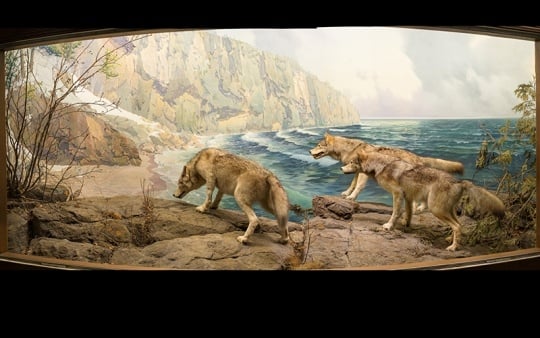
Francis Lee Jaques was one of the great names in 20th-century wildlife and habitat art. He is especially remembered for museum dioramas and habitat scenes that placed animals within convincing landscapes.
This is an important shift. Rather than isolating an animal against a blank or simple background, habitat-focused art shows wildlife as part of an environment: water, marsh, prairie, forest, sky, and season.
Collectors drawn to Jaques and artists like him often appreciate:
- atmospheric landscapes
- strong sense of place
- birds and animals shown in natural settings
- prints that feel both scientific and painterly
This style works especially well in home décor because it creates mood, not just identification.
Bob Hines and Government Wildlife Art
Robert “Bob” Hines had a long career with the U.S. Fish and Wildlife Service and became closely associated with public wildlife education. His work appeared in government publications, conservation materials, and educational projects.
This is one of the underappreciated collecting lanes in wildlife art: the practical public image. Government wildlife art was designed to teach, encourage conservation awareness, and make species recognizable to a broad audience.
Collectors may find:
- wildlife pamphlets
- educational posters
- booklets and agency publications
- fish, bird, and mammal illustrations
- reprinted line art and public information graphics
These pieces can be affordable, historically interesting, and visually appealing—especially for collectors who enjoy the overlap between art, science, and public education.
Maynard Reece and the Duck Stamp Tradition
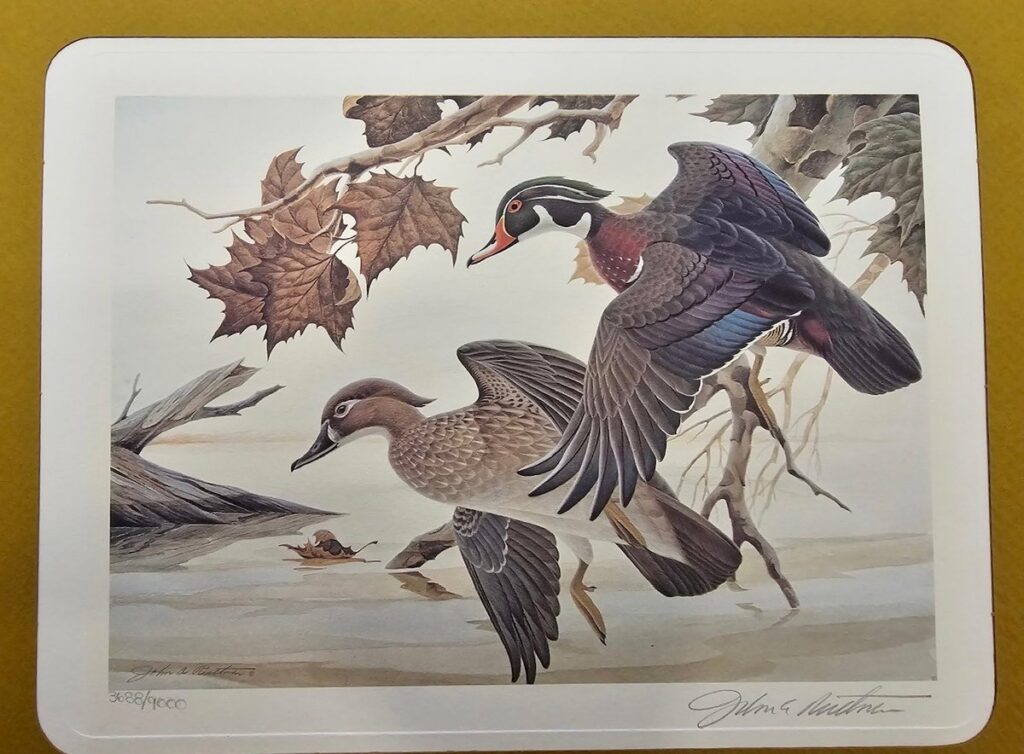
The Federal Duck Stamp program became one of the most important links between wildlife art and conservation collecting in the United States. Beginning in 1934, the program required waterfowl hunters to purchase a stamp, with funds supporting habitat conservation.
Wildlife artists became central to this tradition because each stamp needed a design. Maynard Reece is one of the most celebrated duck stamp artists, known for multiple winning designs in the Federal Duck Stamp competition.
For collectors, duck stamp-related material can include:
- stamps
- signed prints
- artist proofs
- conservation prints
- state duck stamp art
- associated ephemera and programs
This category has its own collector base, and details matter. Signatures, edition numbers, condition, documentation, and whether a print is tied to a specific stamp issue can all affect interest.
Charley Harper and “Minimal Realism”
Charley Harper brought a completely different energy to wildlife art. His style, which he described as “minimal realism,” reduced birds, insects, mammals, and ecosystems into bold shapes, clean lines, and strong color.
Harper’s work is especially appealing to collectors of mid-century and modern design. His animals are recognizable, but simplified. A bird becomes a curve, a beak, a wing shape, a color relationship. The result is playful, graphic, and instantly displayable.
Collectors often look for:
- wildlife posters
- conservation and park-related prints
- book illustrations
- serigraph-style works and reproductions
- bold graphic compositions suitable for modern décor
Harper is a good reminder that “wildlife art” does not have to mean realism. Sometimes the essence of an animal can be captured with less, not more.
Robert Bateman and Late-20th-Century Realism
Robert Bateman, a Canadian wildlife artist and naturalist, became one of the best-known wildlife artists of the late 20th century. His realistic style often places animals within carefully observed natural settings, with attention to light, mood, and habitat.
Bateman’s popularity helped make wildlife prints a major home décor category in the late 20th century. His work also connects strongly with conservation themes, which became increasingly important to wildlife art collectors during that period.
For collectors, Bateman pieces may include:
- signed limited-edition prints
- open-edition prints
- books and exhibition materials
- framed decorative prints
- conservation-related publications
As with many popular print artists, the key is knowing exactly what you have. “After Bateman,” “open edition,” “signed limited edition,” and “original” are not interchangeable descriptions.
What Collectors Look For in 20th-Century Wildlife Prints
Because this category is so broad, condition and identification matter.
Artist and subject
Name recognition helps, but subject can matter just as much. Birds of prey, waterfowl, songbirds, big mammals, and familiar backyard species all have their own audiences.
Edition information
For prints, check whether the piece is:
- signed
- numbered
- titled
- an artist proof
- an open edition
- a later reproduction
A limited edition is not automatically valuable, but clear edition information helps buyers understand what they are purchasing.
Paper and printing quality
Look for fading, foxing, mat burn, rippling, water stains, and discoloration. Poor framing can damage even a good print.
Frame and mat
Older frames may be attractive, but acidic mats and backing boards can harm paper. If the artwork matters, archival framing is worth considering.
Documentation
Certificates, original receipts, gallery labels, publisher information, or provenance can all help—especially with signed limited editions.
Displaying 20th-Century Wildlife Art
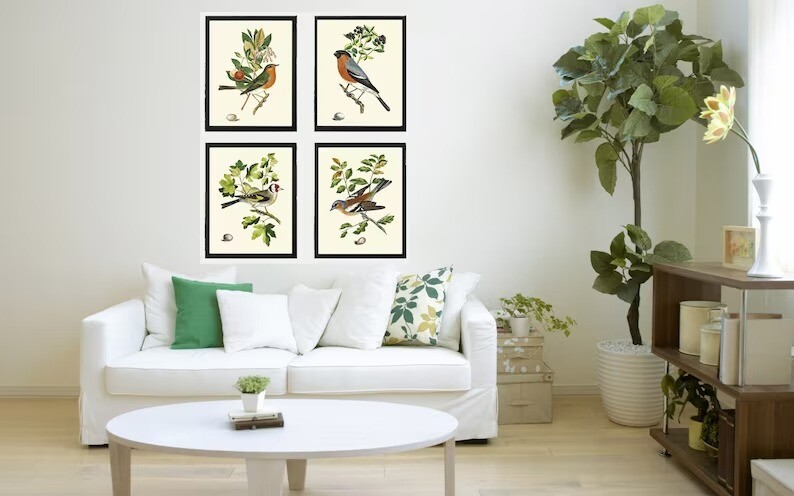
Wildlife prints are easy to live with because they fit so many rooms. A realistic waterfowl print can feel right in a study or den. A Charley Harper-style graphic bird print can brighten a modern space. A group of field-guide-style prints can create a naturalist’s wall in a hallway, office, or reading nook.
Good display approaches include:
- grouping prints by animal type
- mixing birds, botanicals, and insects
- pairing a large statement print with smaller field-guide images
- creating a conservation-themed wall with stamps, prints, and ephemera
- using simple mats and frames so the artwork stays the focus
As always, keep prints out of direct sunlight. Wildlife art often depends on subtle color, and fading can quietly flatten the whole image.
Why 20th-Century Wildlife Artists Still Matter
The 20th century gave wildlife art new jobs. It still decorated homes, but it also taught people to identify birds, supported conservation, illustrated public education, promoted parks, and brought nature into everyday visual culture.
That is why collectors should not overlook this period. A 20th-century wildlife print may be a field guide plate, a duck stamp print, a museum-style habitat scene, a graphic poster, or a realistic limited edition. Each one reflects a different way people learned to see animals—and a different reason they wanted to keep those images close.
Wildlife art is not only about the animal in the frame. It is about the human desire to notice, name, protect, and remember the living world.
Let’s Make History—one wild image at a time.