By the 20th century, the Valentine had already lived many lives. It had been a handwritten love note, a folded puzzle, a lace-paper keepsake, a mechanical surprise, and even a sharp-tongued insult. But in the 1900s, valentines became something even more familiar to modern collectors: a commercial holiday tradition.
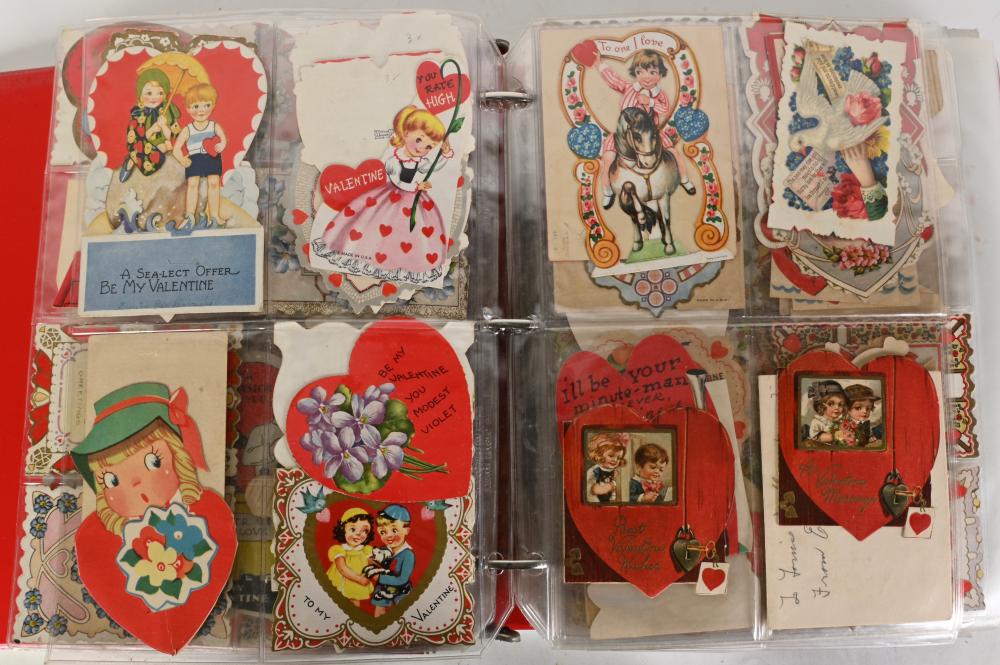
This is the era of postcard valentines, drugstore displays, boxed classroom exchanges, die-cut children’s cards, glossy greeting cards, and designs that moved from romantic courtship into friendship, family, humor, and nostalgia. For collectors, 20th-century valentines are especially rewarding because they are often affordable, highly visual, and full of everyday memory. They are the cards many people remember from childhood—and the ones that still turn up in scrapbooks, estate boxes, school keepsakes, and old desk drawers.
This post looks at how valentines became commercially popular in the 20th century, what styles collectors recognize, and how to evaluate these cheerful little pieces of paper history.
Not Invented by Card Companies—But Definitely Shaped by Them
A common joke is that Valentine’s Day is a “card company holiday.” That is not historically true. People were exchanging written valentines long before the modern greeting card industry. The tradition grew through handwritten notes, printed verses, lace-paper cards, and Victorian-era commercial production.
What did happen in the 20th century is that greeting card companies made valentines easier to buy, easier to mail, easier to give in large numbers, and easier to tailor to different relationships.
Instead of one elaborate card for a sweetheart, a buyer could now find:
- A romantic card for a spouse or fiancé
- A humorous card for a friend
- A sentimental card for a parent or child
- A classroom pack for every student
- A novelty card with a pun, animal, toy, or pop-culture theme
Commercial production did not create the valentine—but it changed how people used it.
The Postcard Valentine Boom
In the early 20th century, postcards were everywhere. They were inexpensive, collectible, easy to mail, and often beautifully printed. Valentine postcards fit perfectly into that world.
Collectors often find early 1900s Valentine postcards with:
- Embossed hearts and flowers
- Cupids and cherubs
- Children in romantic or comic scenes
- Doves, roses, forget-me-nots, and ribbons
- Short printed poems or greetings
- Handwritten addresses and brief messages
These postcards can be especially satisfying to collect because they offer both image and evidence of use. A postmark, address, or short note gives the card a life beyond the artwork. It tells us where it traveled, who sent it, and sometimes even how casually people used valentines as part of everyday correspondence.
Postcard valentines also bridge the Victorian and modern worlds. Many still use older symbols—cupids, lace-like borders, floral garlands—but the format is simpler, more affordable, and more suited to mass mailing.
From Elaborate Romance to Everyday Exchange
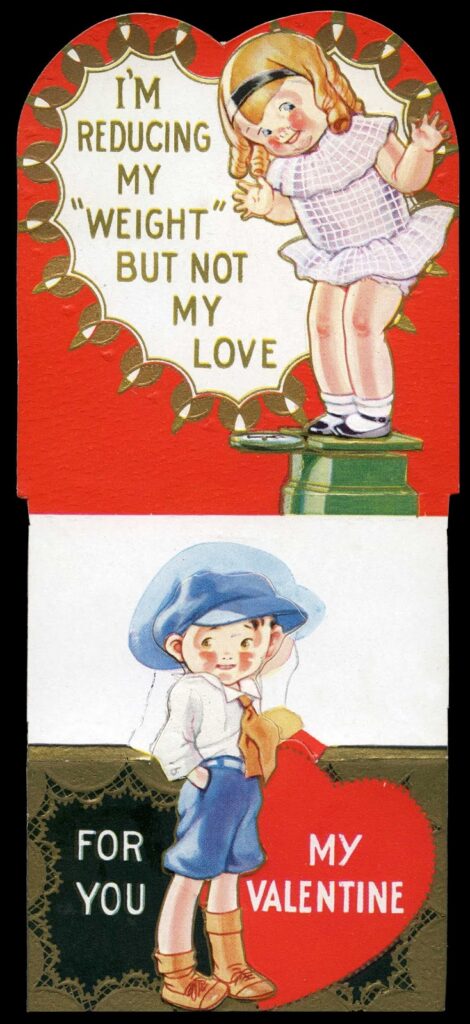
One of the biggest 20th-century shifts was that valentines moved beyond courtship. Romantic cards remained important, of course, but commercial valentines expanded the audience.
Cards were now marketed for:
- Husbands and wives
- Sweethearts and fiancés
- Mothers, fathers, grandparents, and children
- Friends and neighbors
- Teachers and classmates
- “Secret admirers” and playful crushes
That expansion changed the tone. Cards did not always need to confess deep love. They could be cheerful, silly, friendly, or lightly sentimental. A child could give a card to every classmate. A daughter could give one to her mother. A coworker could send a joke card. Valentine’s Day became broader, less formal, and more social.
For collectors, this means 20th-century valentines come in a much wider emotional range than many earlier examples. They can be romantic, cute, comic, patriotic, school-themed, or simply friendly.
Hallmark and the Modern Greeting Card Model
Hallmark is one of the major names in 20th-century Valentine history. The company began selling Valentine-related postcards and cards in the early 1900s and soon became closely associated with the modern greeting card industry.
What matters for collectors is not just the brand name, but the shift Hallmark represents: valentines became part of an organized retail system. Cards could be designed, printed, distributed, displayed, and purchased at scale. The experience of shopping for a valentine became familiar: browse the rack, choose the right sentiment, sign your name, and send or hand-deliver it.
This retail model helped standardize the modern Valentine card while still leaving room for variety. Humor, romance, family affection, religious sentiment, cute children, and decorative design all found places within the card rack.
Other 20th-Century Greeting Card Makers
Hallmark may be the best-known name, but collectors should keep an eye out for other makers too. Companies such as Rust Craft, Norcross, Gibson, and others helped shape the greeting card landscape during the 20th century.
These makers produced cards in many styles:
- Folded greeting cards with printed verse
- Die-cut novelty cards
- Cards with flocking, foil, glitter, or ribbon details
- Pop-up or dimensional cards
- Children’s exchange cards
- Humorous and pun-based designs
A maker’s name can help with dating, collecting focus, and resale description, but it is only part of the story. A common maker can produce a wonderful card, and an unmarked card can still be highly collectible if the design, subject, and condition are strong.
The Classroom Valentine Takes Over
For many people, the most nostalgic 20th-century valentines are classroom exchange cards. These were often sold in boxed sets and designed so a child could give one to every classmate.
The classic classroom valentine usually has a few recognizable traits:
- Small size
- Bright colors
- Simple puns
- Cute children, animals, toys, or occupations
- A space to write “To” and “From”
- Sometimes a slot for candy or a folded stand-up feature
These cards turned Valentine’s Day into a school ritual. Instead of sending one special valentine, children prepared a whole stack. The goal was not private romance—it was participation.
For collectors, classroom valentines are especially fun because they preserve childhood humor and design trends. A set might feature cowboys, astronauts, nurses, puppies, baseball players, trains, telephones, robots, or cartoon-style animals. The themes often reflect what was popular, charming, or aspirational at the time.
Puns, Humor, and the Softer Side of Comic Valentines
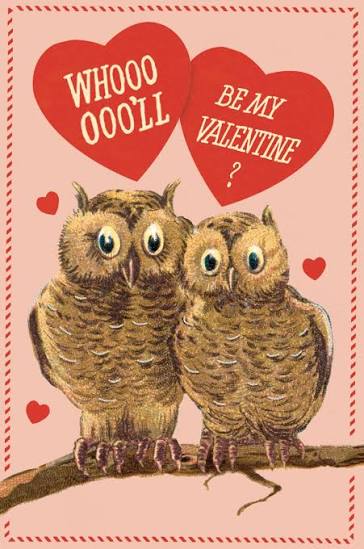
Vinegar valentines were harsh, but 20th-century comic valentines usually became gentler. The insult card did not disappear entirely, but the mainstream market leaned toward puns and playful jokes.
A card might say something like:
- A bee-themed pun for “bee mine”
- A train card about being “on track” for love
- A food pun using candy, fruit, or vegetables
- A doctor or nurse card about “curing” a heartache
- A cowboy card about being “roped in” by affection
These puns can be corny, but that is part of their charm. They are cheerful, easy to understand, and perfect for children’s exchanges. They also make 20th-century valentines excellent display pieces because the artwork and wording work together immediately.
Materials and Novelty Features Collectors Notice
Commercial popularity brought experimentation. Valentine cards were still paper, but they were no longer just flat sheets.
Collectors may find:
- Die-cut shapes: hearts, animals, children, cars, rockets, tools, and toys
- Honeycomb tissue: expandable paper decorations that open into skirts, balloons, or hearts
- Flocking: velvety texture on animals, clothing, or accents
- Foil and metallic papers: shiny highlights for hearts, trim, and lettering
- Glitter: sparkle applied to flowers, hearts, or snow-like effects
- Pop-ups and stand-ups: cards designed to sit upright or open dimensionally
- Moveable parts: simple tabs, wheels, or attached figures
These novelty features add collecting appeal—but they also add condition risks. Honeycomb tissue can crush, glitter can shed, flocking can rub away, and die-cut edges can bend or tear.
What Collectors Look For
With 20th-century valentines, value often comes from a mix of condition, subject, maker, and nostalgia.
Condition
Look for clean color, unbent corners, complete parts, and no heavy staining. Many cards were handled by children, so damage is common.
Completeness
For boxed sets, completeness matters. A full unused box with envelopes is more collectible than scattered singles, though individual cards can still be charming.
Subject matter
Some themes attract stronger collector interest:
- Animals, especially cats and dogs
- Occupations and trades
- Transportation (cars, trains, airplanes, rockets)
- Sports
- Holidays crossed with Valentine themes
- Space-age and mid-century modern designs
- Unusual puns or graphics
Maker and markings
A recognizable maker can help identify era and quality. Check the back, lower edge, or envelope for company names, stock numbers, or copyright information.
Unused vs. used
Unused cards are often cleaner, but used cards have personality. A child’s handwriting, a teacher’s name, or a dated envelope can add warmth and context.
Common Damage Issues
Because 20th-century valentines were often inexpensive and handled casually, condition checks matter.
Watch for:
- Creases through faces or central graphics
- Missing tabs or detached moveable parts
- Torn honeycomb tissue
- Tape repairs
- Glue residue from scrapbook mounting
- Faded construction paper or cheap inks
- Missing envelopes or box lids
- Names written in heavy marker on the front
Some wear is perfectly acceptable, especially for common classroom cards. But if you are paying a premium for a boxed set, early maker, or unusual subject, condition should be noticeably strong.
How to Display 20th-Century Valentines
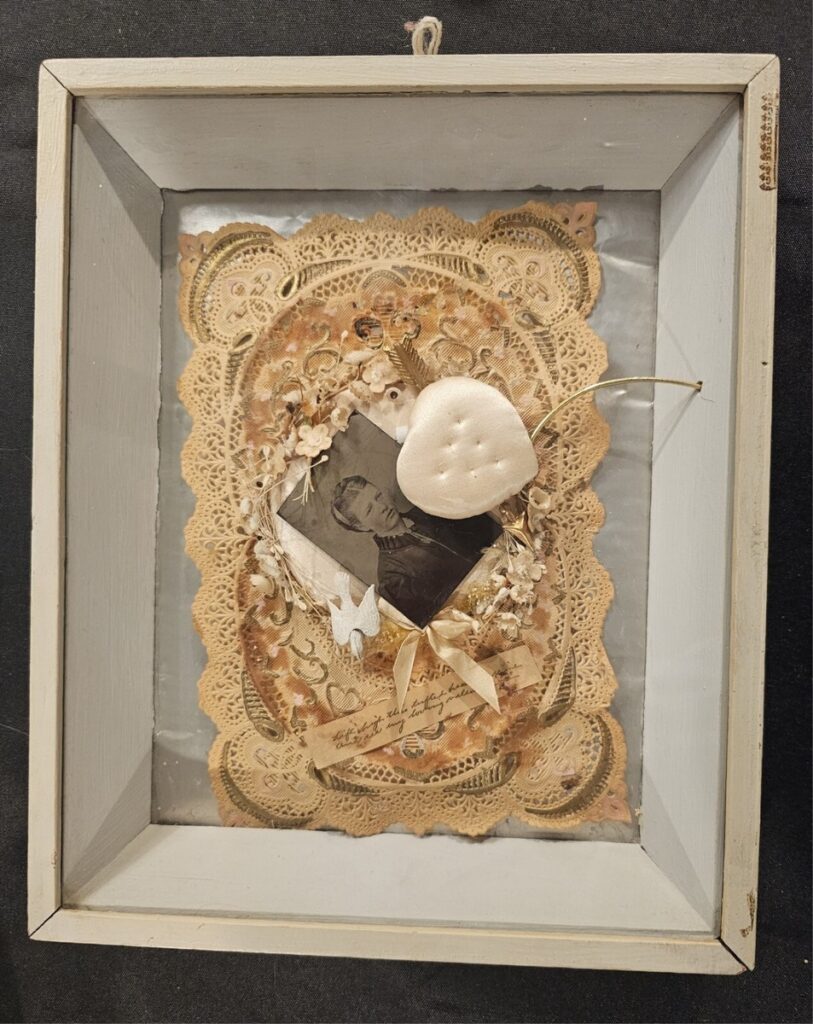
These cards are made for cheerful display. They work especially well in seasonal groupings because they are colorful, small, and easy to rotate.
Display ideas:
- Arrange classroom cards in a shadow box
- Frame a sheet of similar themes, such as animals or transportation
- Display postcard valentines in a tabletop stand
- Fill a small tray with cards, envelopes, and candy boxes for a holiday vignette
- Use archival photo corners so cards can be removed without damage
Avoid direct sunlight, especially for cards with bright reds and pinks. Those colors can fade quickly. If cards have honeycomb or pop-up elements, give them enough depth so they are not crushed.
Why 20th-Century Valentines Are So Collectible
Earlier valentines can feel rarefied—beautiful, fragile, and sometimes expensive. 20th-century valentines feel closer to home. They remind people of school desks, decorated shoebox mailboxes, drugstore aisles, paper doilies, and the thrill of checking who signed which card.
They also offer variety at almost every price point. A collector can focus on postcards, mid-century classroom cards, named makers, boxed sets, animals, puns, mechanical features, or family cards. There is no single “right” way to collect them.
That accessibility is part of their commercial success and their collecting appeal. These cards were made for many people, saved by many people, and rediscovered by people who still feel a small spark when they see a familiar pun or bright red heart.
The Collector’s Takeaway
In the 20th century, valentines became a fully commercial, widely shared tradition—but that does not make them less meaningful. If anything, their popularity gives them a special kind of charm. They show how affection became everyday, affordable, humorous, and social.
From early postcards to Hallmark-style greeting cards, from classroom boxes to mid-century novelty designs, 20th-century valentines turned paper love into a mass-market memory. For collectors, they are colorful reminders that history is not always grand. Sometimes it fits in a tiny envelope signed “From, Tommy.”
Next in the series, we’ll wrap up with Love in Paper Form, looking at valentines as keepsakes, collectibles, and tiny survivors of human feeling.
Let’s Make History—one classroom card at a time.