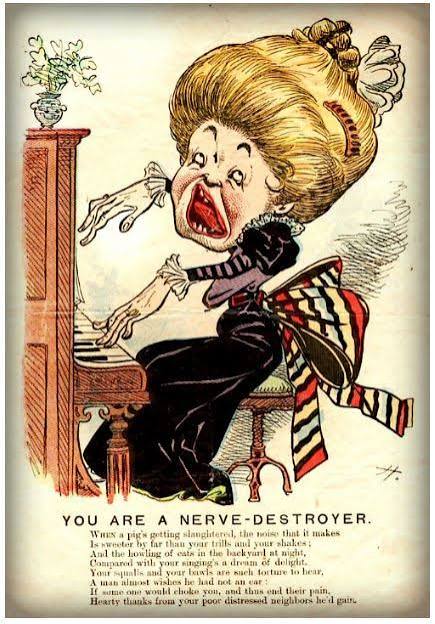
Not every valentine was sweet. For every lace-paper card covered in cupids, flowers, and trembling declarations of affection, there was another kind of Valentine’s Day message waiting in the 19th-century mail: sharp, sarcastic, and sometimes downright cruel.
These were the cards collectors now often call vinegar valentines—cheaply printed insult cards that mocked the recipient’s appearance, habits, job, romantic hopes, or social behavior. They were the opposite of sentimental valentines. Instead of “Be mine,” they said, in effect, “Please go away.”
Today, vinegar valentines are fascinating pieces of paper ephemera because they show us the less polished side of Valentine history. They are funny in a dark way, uncomfortable in places, and deeply revealing about the humor, prejudices, and social tensions of their time.
What Were Vinegar Valentines?
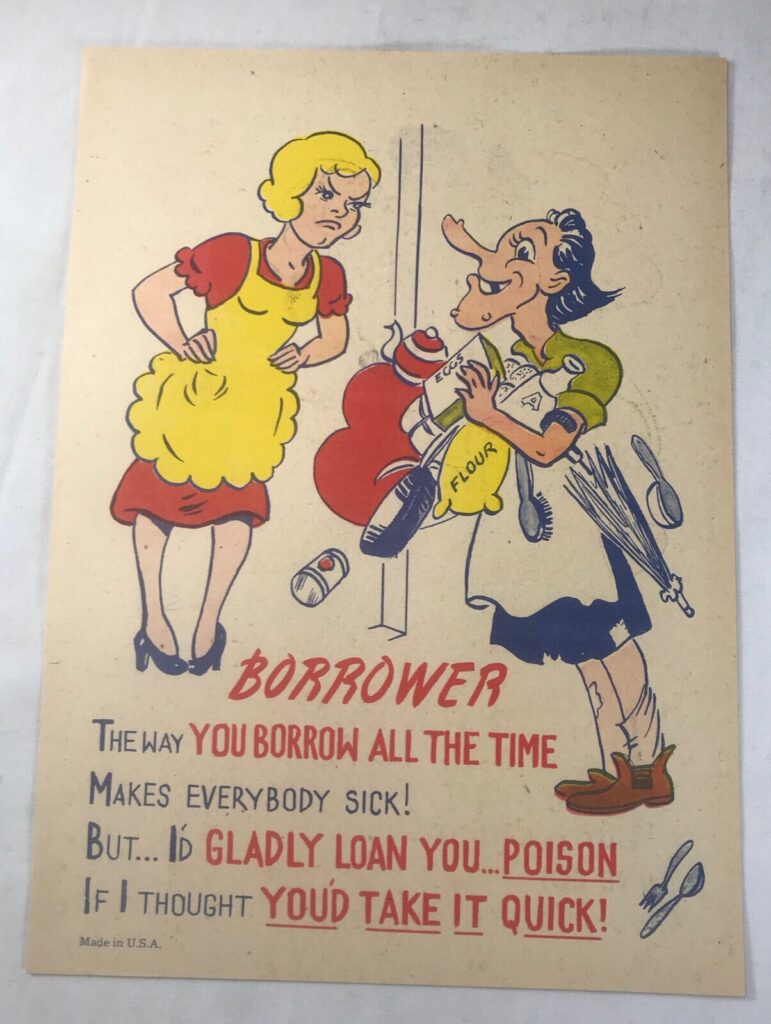
Vinegar valentines were mocking or insulting Valentine cards, especially popular during the 19th century. They were also described as comic valentines, mock valentines, or satirical valentines. Unlike elegant lace-paper valentines, these were usually simpler and cheaper: often a single printed sheet with a caricature-style image and a short insulting verse.
The design formula was straightforward:
- A bold, exaggerated illustration
- A caption or rhyming poem
- A clear target, such as a flirt, gossip, drunkard, miser, lazy worker, boastful suitor, or vain dresser
- A punchline meant to embarrass, reject, or ridicule
They were called “vinegar” because the sentiment was sour instead of sweet. Whether the card was mildly teasing or genuinely nasty depended on the example. Some read like a playful roast. Others are harsh enough that modern readers may wince.
The Other Side of the Valentine Boom
To understand vinegar valentines, it helps to remember how enormous the Valentine trade became in the Victorian period. Postal reform, cheaper printing, and a growing market for greeting cards helped turn Valentine’s Day into a major commercial occasion.
Once publishers and stationers realized there was money in romantic cards, it made business sense to sell the opposite too. Not everyone wanted to confess love. Some people wanted to reject an unwanted admirer, mock a neighbor, tease a coworker, or send an anonymous insult.
Vinegar valentines filled that market. They were inexpensive, easy to mail, and direct. They also fit into a broader 19th-century world of satire, caricature, comic prints, and popular humor. To modern eyes, they can feel like a paper version of a mean meme: cheap, shareable, and designed to sting.
Why Were They Sent?
Vinegar valentines served several social purposes, not all of them pleasant.
Rejection
Some cards were aimed at unwanted suitors. Instead of politely declining attention, the sender could choose a printed insult that made the rejection unmistakable.
Social correction
Others mocked behaviors the sender found annoying: gossiping, vanity, laziness, drunkenness, bad manners, or being too loud, too flirtatious, too cheap, or too self-important.
Class and occupation humor
Many vinegar valentines targeted jobs or trades. A printer might produce cards mocking shopkeepers, servants, clerks, tailors, doctors, lawyers, teachers, or laborers. These cards tell us a lot about what people found funny—or acceptable to ridicule—at the time.
Anonymous cruelty
The anonymous nature of many cards made them especially sharp. A sender could attack someone without taking responsibility. That anonymity is part of what made vinegar valentines notorious.
The Look of a Vinegar Valentine
Compared to the delicate layers of a fancy lace-paper valentine, vinegar valentines usually look blunt and graphic. They were designed to be read quickly.
Common visual features include:
- Thin paper or lightweight card stock
- Black-and-white or simply colored illustrations
- Exaggerated faces and bodies
- Comic stereotypes
- Bold printed captions
- Rhyming insults beneath the image
The artwork often uses caricature rather than beauty. Big noses, wild hair, awkward posture, fussy clothing, and dramatic expressions all appear frequently. The goal was not elegance—it was instant recognition and ridicule.
Collectors should also remember that some examples include imagery or language that reflects the prejudices of the period. These cards are collectible as historical objects, but not every card is comfortable to display or share casually.
Sweet, Sour, and Sometimes Cruel
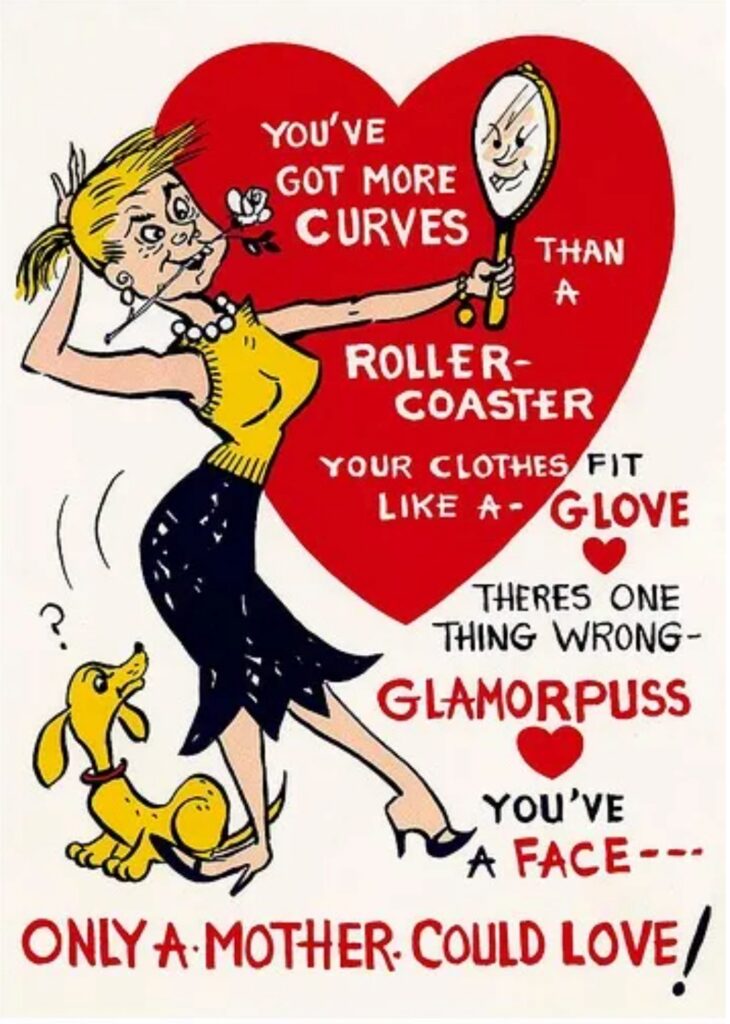
Part of the difficulty with vinegar valentines is that they range widely in tone. Some are silly, rude, or genuinely mean.
A mild card might tease someone for being vain or overly dramatic. A harsher one might mock a person’s age, body, poverty, profession, gender role, or romantic disappointment. Many reflect social anxieties of the Victorian period: who should court whom, how women and men “should” behave, what counted as respectable work, and what traits made someone a target for public embarrassment.
That makes vinegar valentines valuable to historians and collectors alike. They reveal the rules of polite society by showing what happened when people broke—or were accused of breaking—those rules.
Why So Few Survive
Vinegar valentines were once common, but fewer survive than sentimental valentines. There are practical reasons for that.
First, many were printed cheaply. Thin paper does not age as gracefully as heavier card stock, embossed lace paper, or cards saved in albums.
Second, recipients often had little reason to keep them. A beautiful romantic card might be tucked into a scrapbook or memory box. An insulting card might be torn up, burned, or thrown away immediately.
Third, many surviving examples come from printer, stationer, or collector groups rather than lovingly preserved family keepsakes. That changes the way we encounter them today. Some are unused stock, while others were genuinely mailed and carry the extra interest of handwriting, postmarks, or personal context.
What Collectors Look For
Vinegar valentines are paper collectibles, so condition matters—but so does content. A visually strong, sharply printed card with a memorable subject can be more desirable than a dull example in slightly better shape.
When evaluating a vinegar valentine, look at:
Image strength
Is the illustration clear, bold, and expressive? Caricature depends on visual impact.
Text and subject
Is the verse readable? Is the target category interesting—occupation, courtship, vanity, gossip, drinking, fashion, or social behavior?
Printing quality
Even cheap cards can have strong design. Look for crisp lines, good registration if colored, and legible type.
Condition
Check for tears, brittleness, stains, foxing, folds, edge losses, or paper thinning.
Evidence of use
An address, postmark, inscription, or fold pattern can add context. An unused example may be cleaner, but a sent example has a stronger personal story.
Rarity of subject
Some themes appear often, while others are harder to find. Occupational cards, strongly illustrated cards, or cards with unusual social commentary may attract more collector attention.
Red Flags When Buying Online
Because vinegar valentines can be small and cheaply made, they are sometimes misdescribed or poorly photographed.
Watch for:
- “Victorian” used loosely for any old-looking comic card
- Modern reproductions printed on aged-looking paper
- Cropped photos that hide damage
- No image of the back
- Descriptions that avoid mentioning tears or thinning
- Cards mounted to scrapbook pages with glue damage
If a listing claims a card is original, look for signs consistent with old paper: age-appropriate toning, printing method, wear at folds, and no modern printer dot pattern. When in doubt, ask for close-ups of the paper surface, edges, and reverse.
Displaying Vinegar Valentines Thoughtfully
Vinegar valentines can be funny, but they also need context. Some are harmlessly snarky; others are cruel or offensive. If you display them, especially in a shop, booth, or online post, it helps to frame them as historical satire rather than timeless humor.
Good display approaches include:
- Grouping them with sweet valentines to show contrast
- Labeling them as “mock” or “comic” valentines
- Choosing examples that are witty rather than needlessly cruel
- Avoiding cards with demeaning content unless the purpose is clearly educational
- Including a short note about the harsher side of Valentine history
Collectors do not have to sanitize the past, but we can present it responsibly.
Caring for Vinegar Valentines
Because many vinegar valentines were cheaply printed, preservation is important.
- Store flat in acid-free sleeves or folders
- Keep away from direct sunlight
- Avoid pressure that can crack brittle paper
- Do not use tape on tears
- Keep cards away from damp basements and hot attics
- Use archival backing if framing
If a card is mounted in an old scrapbook, do not rush to remove it. Old paper and glue can be fragile. Sometimes the scrapbook page is part of the object’s history, and removal can cause more harm than good.
Why Collectors Still Want Them
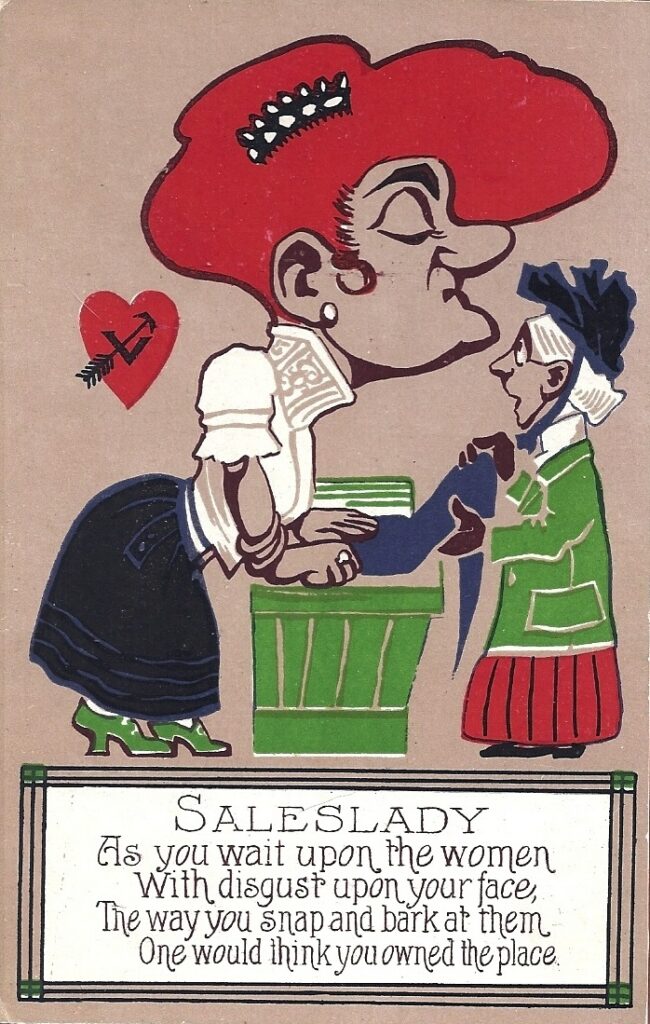
Vinegar valentines are collectible because they complicate the story. They remind us that Valentine’s Day was never only romance and roses. It was also commerce, humor, class tension, rejection, gossip, and public performance.
For paper collectors, they offer several kinds of appeal:
- Bold graphic design
- Social history
- Humor and satire
- Occupational and character themes
- Scarcity due to low survival rates
- A sharp contrast to lace-paper sentimentality
They also connect surprisingly well to modern culture. Anonymous insults, social teasing, exaggerated caricatures, and public rejection are not exactly gone from the world. The format has changed; the impulse is familiar.
The Collector’s Takeaway
Vinegar valentines are the mean little cousins of the Valentine world: cheap, sharp, sometimes funny, sometimes uncomfortable, and always revealing. They show us what people mocked, feared, rejected, and complained about in a period better known for sentimental paper lace and romantic verse.
As collectibles, they deserve both curiosity and caution. Buy them for their design, history, subject matter, and survival—not because every joke has aged well. The best vinegar valentines are more than insults on paper. They are snapshots of social behavior, printed cheaply and meant to sting, but preserved now as evidence of Valentine’s Day’s sour side.
Next in the series, we’ll move into the 20th century, when valentines became even more commercial, colorful, and familiar to modern collectors.
Let’s Make History—one sour little valentine at a time.