
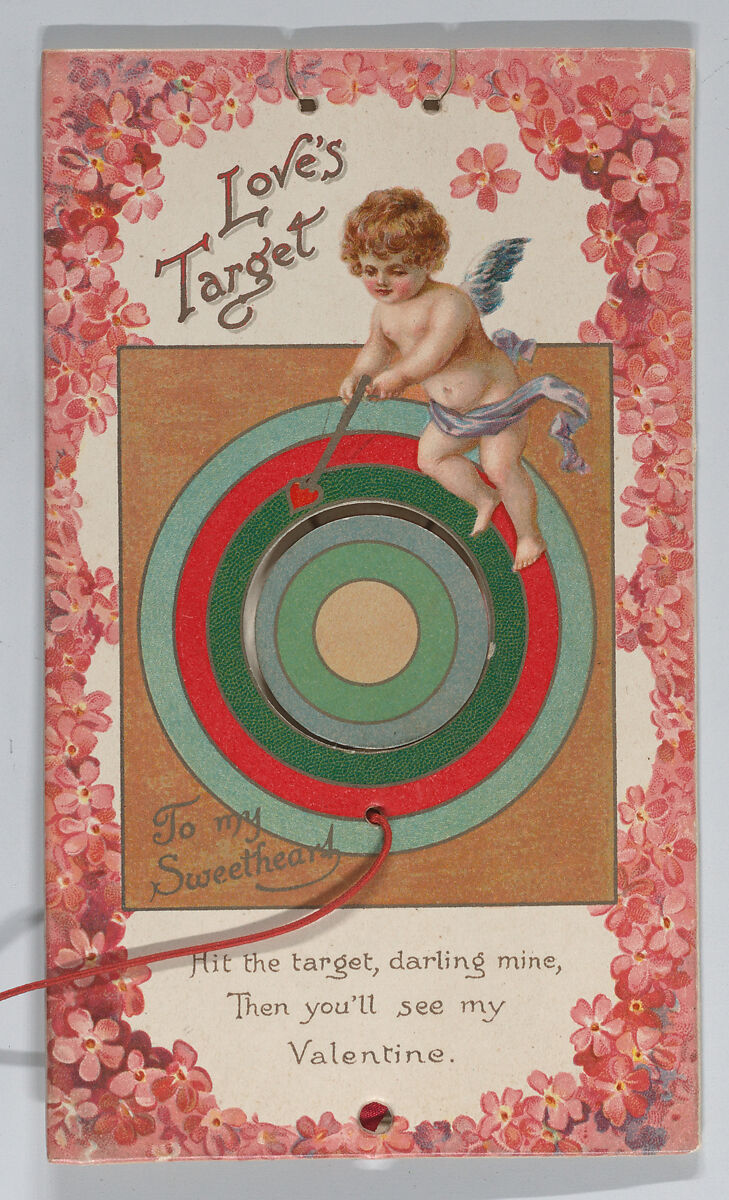
A flat Valentine card can be beautiful. But a Victorian “mechanical” valentine asks for something more: a touch, a pull, a lift, a little curiosity. It might open to reveal a hidden message, raise a paper figure into motion, unfold into layers of lace, or use a tiny tab to make a couple move closer together. These weren’t machines in the modern sense. They were paper engineering—romance with hinges, tabs, springs, layers, and surprises.
For collectors, Victorian mechanical valentines are some of the most charming and fragile pieces of paper ephemera. They combine sentiment, design, printing, hand assembly, and playful movement. They were made to delight the recipient for a few seconds, yet many have survived for well over a century because someone thought they were too special to throw away.
This second post in our Valentines series looks at the world of mechanical valentines: what they are, why Victorians loved them, how they were made, and what collectors should inspect before buying.
What Is a Mechanical Valentine?
A mechanical valentine is a Valentine card with some kind of movable or interactive feature. The movement can be simple or surprisingly elaborate.
Common mechanical features include:
- Pull-tabs that move a figure, reveal a message, or change a scene
- Lift-up flaps hiding verses or pictures
- Fold-out sections that create depth
- Accordion or fan-like paper extensions
- Die-cut figures attached with paper hinges
- Cobweb-style paper devices that lift to reveal hidden images
- Layered paper constructions that create a dimensional “stage” effect
The key idea is interaction. The recipient does not just read the card; they participate in it. A hand pulls, lifts, opens, or unfolds the message.
That interactive quality is exactly why collectors love them—and why condition is so important. The very parts that make mechanical valentines special are the parts most likely to tear, loosen, or disappear.
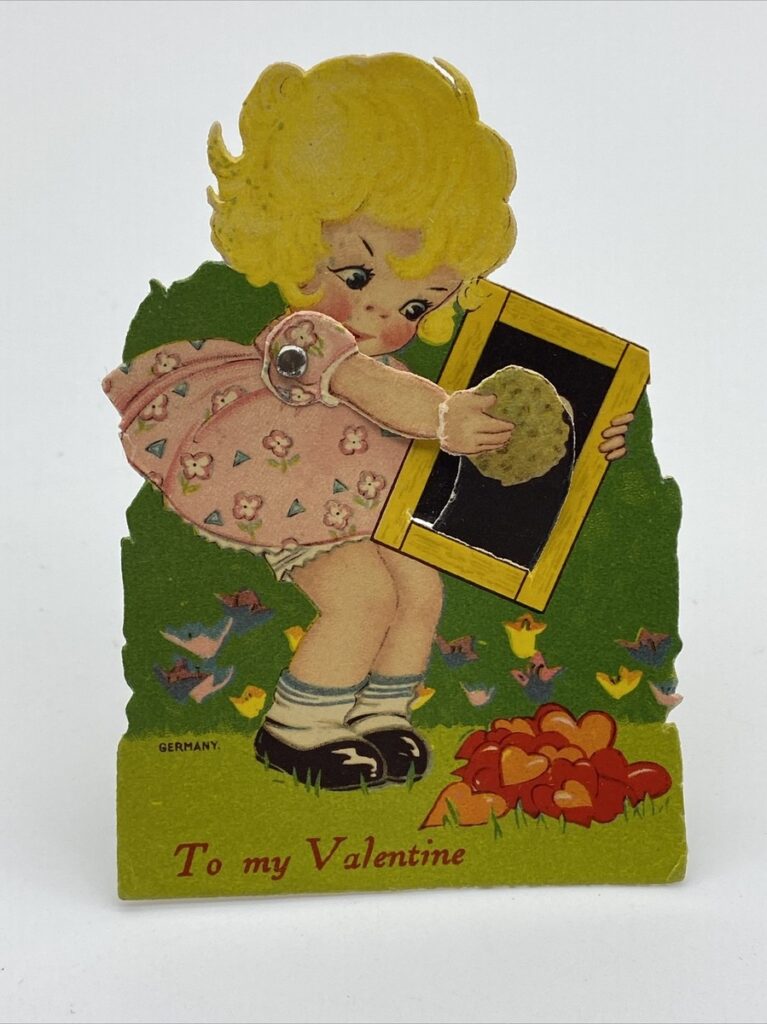
Why the Victorian Era Loved Paper Surprises
Victorian taste embraced sentiment, ornament, and clever design. Cards, albums, scrapbooks, calling cards, paper theaters, and novelty prints were all part of a broader culture of paper keepsakes. A valentine that moved or revealed a surprise fit that world perfectly.
Mechanical valentines also matched the social customs of courtship. Many cards were romantic, but they could be coy rather than direct. A hidden message, a lifted flap, or a moving figure let the sender communicate affection with a little theatricality. The card could flirt without being blunt.
That sense of performance is one of the great pleasures of collecting them today. A mechanical valentine is not simply a printed object. It is a tiny event.
Printing, Die-Cutting, and the Rise of the Fancy Card
Mechanical valentines depended on improvements in printing and paper production. By the mid-19th century, decorative paper goods were becoming more elaborate and more widely available, especially through stationers and paper manufacturers in Britain and the United States.
Two developments mattered especially:
Chromolithography
Chromolithography made bright, multi-color printed scraps and illustrations possible at commercial scale. Those colorful images—cupids, flowers, children, birds, couples, hearts—could be cut out and layered into Valentine designs.
Die-cutting and embossed paper
Die-cut pieces gave cards crisp outlines and intricate shapes. Embossed paper added raised texture: lace borders, cherubs, flowers, scrollwork, and architectural details. When combined with tabs and layers, these materials created cards that felt almost sculptural.
Victorian mechanical valentines often look handmade at first glance because so many were assembled from parts. A printed scrap might be pasted onto lace paper, backed with cardstock, attached with a tab, and finished with a verse. The result is a hybrid object: manufactured materials arranged with hands-on assembly.
The Magic of the Pull-Tab
The pull-tab is one of the simplest and most satisfying mechanical features. A paper tab, often hidden behind the design or sticking out subtly from the side, lets the viewer move part of the card.
A pull-tab might:
- raise a bouquet
- move a character’s arm
- slide a message into view
- change a facial expression
- bring two figures together
- reveal a hidden motto or verse
The motion is usually small, but it transforms the card. A printed scene becomes animated, and the recipient becomes part of the joke, romance, or surprise.
For collectors, pull-tabs require careful inspection. A missing tab can make the card look complete at first, but the mechanism will no longer function. Torn slots, detached paper arms, and replaced tabs are common condition issues.
Cobweb and Lift-Up Valentines
Some of the most admired mechanical valentines use a cobweb device. A cobweb valentine usually includes a paper web or circular cut-paper section that lifts upward—often by a thread or small tab—to reveal an image or message underneath.
The “cobweb” name comes from the delicate, web-like paper structure. These can be simple, but some are wonderfully complex, with layered reveals and multiple hidden images.
Cobweb valentines are especially appealing because they combine surprise with fragility. The web is often thin, finely cut, and easy to damage. When intact, it creates a beautiful moment: what looks like decoration suddenly becomes a secret compartment.
Collector note: cobwebs should be lifted only with great care, if at all. If a web feels stiff, stuck, or brittle, do not force it. A card that survived 150 years can be damaged in one enthusiastic second.
Layered Lace and Dimensional Scenes
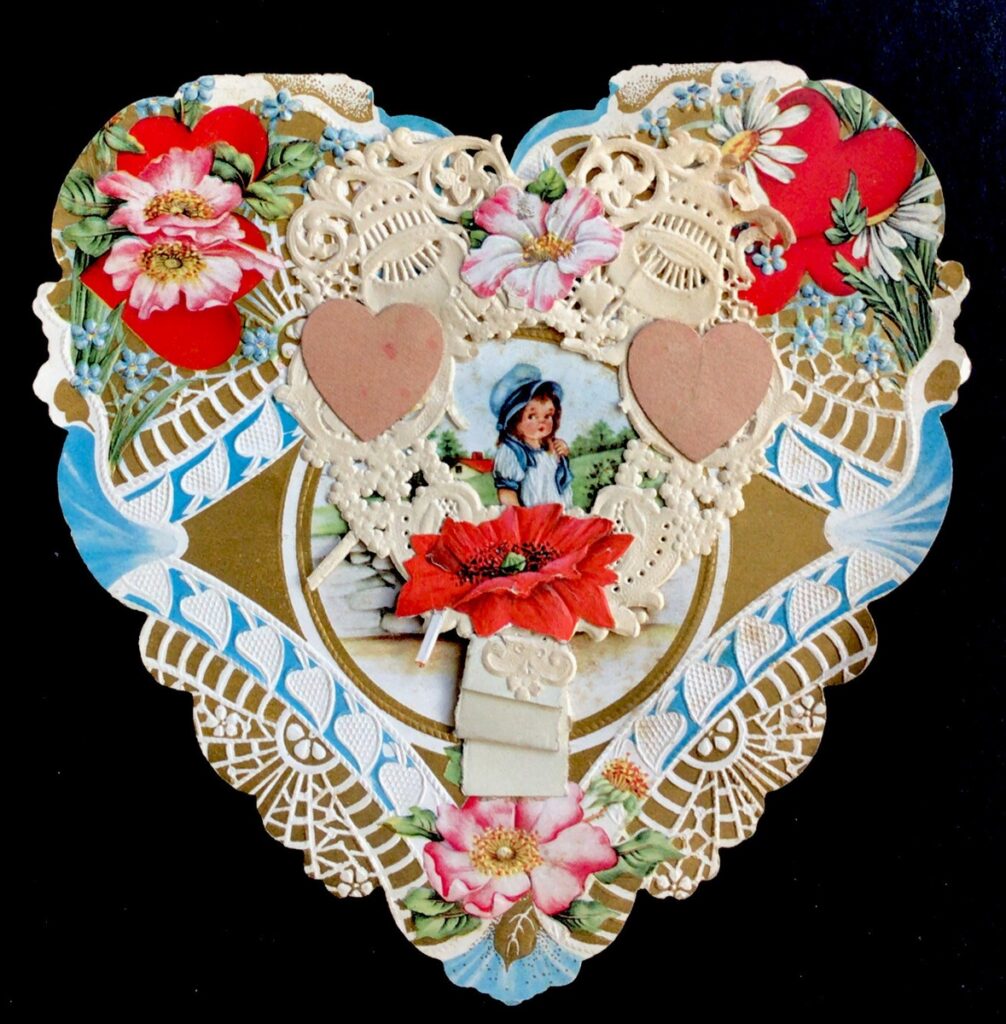
Not all mechanical valentines have moving arms or tabs. Some create interaction through layered construction.
A layered mechanical valentine might include:
- an outer lace-paper frame
- a raised central image
- folded paper supports
- a hidden verse beneath a flap
- a pop-up or tent-like structure
- multiple levels of printed scraps
These cards feel like tiny stage sets. The paper creates depth, and the viewer’s eye moves through layers: lace border, flowers, figures, verse, hidden message.
This dimensional style is a major reason Victorian valentines can be so visually dramatic. Even a small card can feel luxurious when the layers cast shadows and the design opens outward.
Common Images and Themes
Mechanical valentines used many of the same symbols as flat lace-paper cards, but motion added an extra layer of meaning.
Cupids and arrows
Cupid might aim, fly, reveal a heart, or “deliver” the message. Moving cupids are especially charming because the action fits the symbol.
Doors, windows, and curtains
These are natural mechanical motifs. A flap opens like a door, a curtain lifts, or a window reveals the beloved’s image. The structure and symbolism work together: love is hidden, then revealed.
Flowers and bouquets
A bouquet might rise, unfold, or hide a verse. Flowers were already rich with meaning in Victorian visual culture, so they were ideal for sentimental cards.
Couples and courtship scenes
Mechanical movement could turn a static romantic scene into a playful one—two figures approaching, a message appearing between them, or a scene changing from uncertainty to affection.
Children, animals, and humor
Not all mechanical valentines were serious romance. Some used playful children, pets, comic figures, or humorous reveals. These pieces bridge sentimental valentines and the novelty-card market that would grow even larger in the 20th century.
British and American Mechanical Valentines
Many elaborate Victorian valentines were produced in Britain, where fancy paper goods and embossed lace papers were important to the trade. American makers also built a strong Valentine industry, especially as the century progressed.
In the United States, Esther Howland helped popularize elaborate, lace-paper valentines in the mid-19th century. Her work is often associated with layered construction, imported paper materials, and hand assembly. While not every elaborate American card is a Howland card, her success helped create the market for richly decorated valentines on this side of the Atlantic.
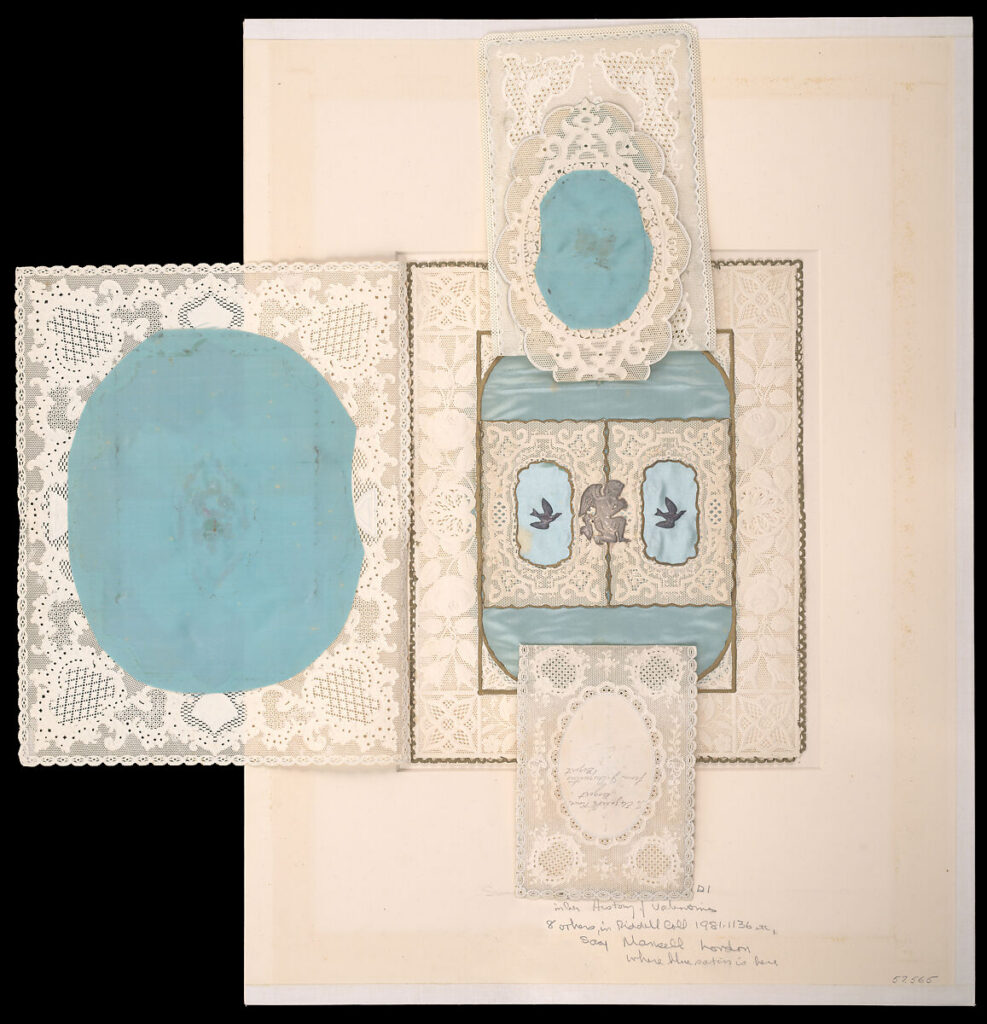
By the later 19th century, American firms were producing and selling a wide range of valentines, including layered, novelty, comic, and mechanical forms. For collectors, the country of origin can matter, but the bigger questions are usually condition, completeness, design quality, and whether the mechanism still works safely.
What Collectors Look For
Mechanical valentines are condition-sensitive because they have more parts than ordinary cards. A flat card can survive with light corner wear; a mechanical card may lose its whole purpose if one tab is gone.
When evaluating a Victorian mechanical valentine, check:
- Mechanism: Does the pull-tab, flap, cobweb, or pop-up still function?
- Completeness: Are all figures, scraps, tabs, strings, and supports present?
- Paper strength: Is the card brittle, split, or weakened at folds?
- Lace edges: Are pierced borders torn or crushed?
- Attachment points: Are hinges, tabs, and glued joints secure?
- Color: Are chromolithographed scraps still bright, or badly faded?
- Writing/provenance: Is there an inscription, envelope, postmark, or family history?
A little wear is expected. These pieces were meant to be handled. But missing parts and broken mechanisms matter, especially on cards priced as complete examples.
Red Flags When Buying Online
Mechanical valentines can photograph beautifully even when they are incomplete. If you’re buying online, ask for more images before paying a premium.
Watch for:
No photo of the mechanism
If the listing says “mechanical” but only shows the front, ask for photos of the tab, back, underside, or open position.
“Works” but no demonstration
If a seller claims the mechanism works, it helps to see the before-and-after positions. A short video is even better.
Suspiciously flat cards
Some valentines are called mechanical simply because they are layered. That may still be collectible, but if there is no movement or reveal, the description should be clear.
Modern repairs
Old paper repairs are common. The issue is whether they are stable and honest. Watch for tape, glossy glue, mismatched replacement scraps, or bright new paper hidden behind old components.
Handling and Displaying Mechanical Valentines
The hardest part of owning a mechanical valentine is resisting the urge to “test” it constantly. These cards are interactive, but they are also fragile.
Best practices:
- Support the whole card from underneath when moving it.
- Never pull a tab if it feels stuck.
- Avoid lifting cobwebs repeatedly.
- Store flat unless the card was designed to stand.
- Keep away from direct sunlight, humidity, and heat.
- Use archival sleeves or boxes, but avoid pressure that crushes dimensional layers.
For display, shadow boxes can work well because they protect depth. Use acid-free materials and avoid pressing the card flat. If the piece is valuable or very fragile, consider photographing the open/mechanical feature and displaying the card closed, with the photo nearby for context.
Why Mechanical Valentines Still Feel Fresh
The charm of a Victorian mechanical valentine is that it feels surprisingly modern. We still love pop-ups, reveal cards, sliding mechanisms, and interactive paper design. The technology is simple, but the emotional effect is familiar: surprise makes the message feel more personal.
That is why these pieces continue to appeal to collectors. They are not just old paper. They are paper performances—tiny, delicate, romantic inventions made for one brief moment of delight.
The next post in this series turns to the opposite side of the Valentine tradition: vinegar valentines, the sharp, insulting cards that prove not every February message was sweet.
Let’s Make History—one moving paper heart at a time.